Inspired by NASA, Rubin Observatory to scan the night sky for 10 years to create a time-lapse of the cosmos

The Rubin Observatory looks to capture the cosmos in detail by using the largest camera ever built and will repeatedly scan the sky for 10 years to create the Legacy Survey of Space and Time (LSST), an ultra-wide, ultra-high-definition time-lapse record of the night sky, according to the Vera C. Rubin Observatory. This ambitious endeavor mirrors the groundbreaking work of missions like NASA's NEOWISE, which has already provided invaluable insights into our dynamic universe through prolonged sky surveys.
Starting later this year, Rubin will begin to #CaptureTheCosmos with the 10-year Legacy of Space and Time (LSST).
— NSF-DOE Rubin Observatory (@VRubinObs) June 23, 2025
Every few nights, it will take a new snapshot of the visible sky, generating the greatest cosmic movie ever made & revolutionizing our understanding of the Universe
The core of the Rubin Observatory's mission, Legacy Survey of Space and Time (LSST), is designed to ceaselessly scan the night sky for a full decade, capturing every discernible alteration in the celestial sphere. This continuous vigilance will allow scientists to detect, track, and analyze subtle and dramatic changes ranging from the movements of distant galaxies to the flickering of variable stars, thereby offering an unparalleled view of cosmic phenomena. At the very heart of this observatory is the LSST Camera, a colossal instrument tasked with recording extremely fine details of distant galaxies, stars, and other celestial bodies. This monumental camera is comparable in size to a small car, with a substantial weight of approximately 6,200 pounds (2,800 kilograms). Each individual image captured by the LSST Camera is vast, encompassing an area of the sky equivalent to 45 full Moons. This immense field of view, combined with its repeated scanning, will provide a striking depth and breadth of observational data.

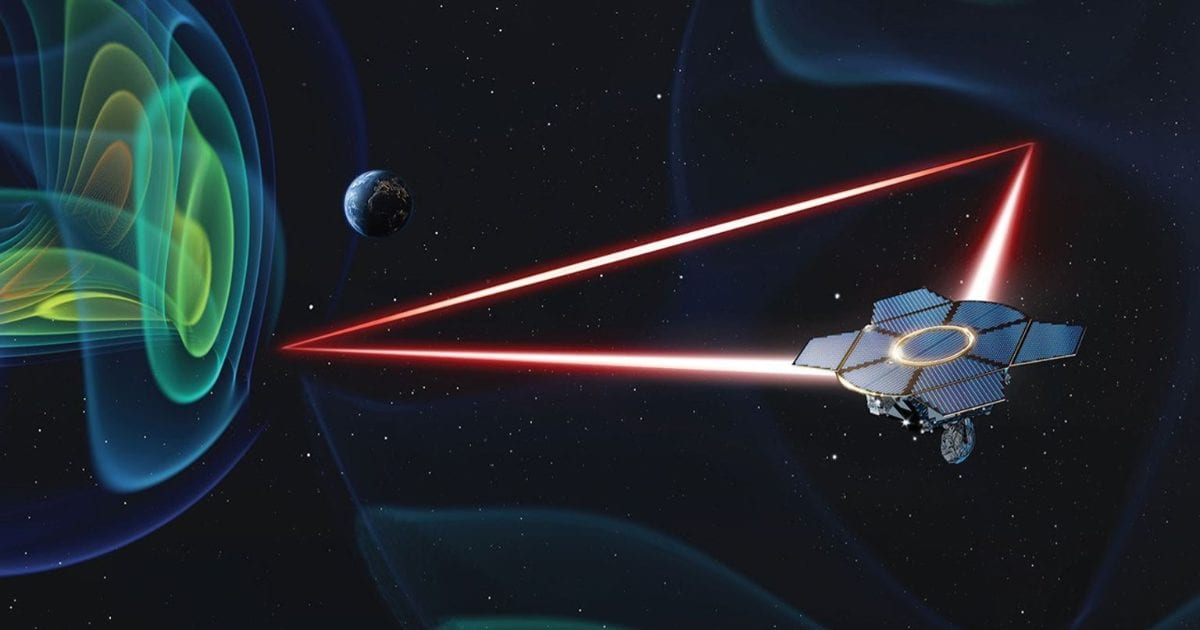
The concept of creating a long-term celestial movie has a precedent in missions like NASA's NEOWISE space telescope. NEOWISE successfully generated a remarkable 12-year time-lapse movie of the entire sky, demonstrating the scientific returns from such extended observations. This mission systematically captured images across all directions every six months, compiling them into comprehensive "all-sky" maps. A total of 18 such maps were meticulously stitched together to construct the decade-long time-lapse, vividly illustrating the changes occurring in the cosmos over that period, per NASA.

These time-lapse records are crucial for unlocking the universe's secrets, as they reveal objects that either shift their positions or fluctuate in brightness. Such dramatic cosmic events, including the movements and transformations of stars and black holes, become apparent through this observational technique. The NEOWISE time-lapse, for instance, led to the discovery of previously undetected brown dwarfs and provided insights into a black hole actively feeding. It showcased a star nearing the end of its life, highlighted a region where new stars are forming, and also documented a star undergoing a significant brightening event. Originally conceived as a crucial data processing component of the broader Wide-field Infrared Survey (WISE) mission, NEOWISE was repurposed in 2013 to focus primarily on tracking asteroids and other near-Earth objects, while continuing its essential semi-annual sky scans.

During its first image release conference, the Vera C. Rubin Observatory also showcased multiple specks of newly discovered asteroids. Within just a few nights of initial data collection, the observatory impressively identified 2,104 asteroids never-before-seen within our solar system. This remarkable early capture included seven near-Earth objects (NEOs), eleven Jupiter Trojans, and nine-Neptunian objects.
Inspired by these profound successes and building upon the foundation laid by missions like NEOWISE, the Rubin Observatory's LSST promises to elevate our understanding of the universe to new heights. By systematically creating an ultra-wide and ultra-high-definition time-lapse, it will offer a living record of the night sky, revealing the subtle and dramatic celestial transformations that continually shape our cosmos over a decade, thereby opening new frontiers in astronomical research.