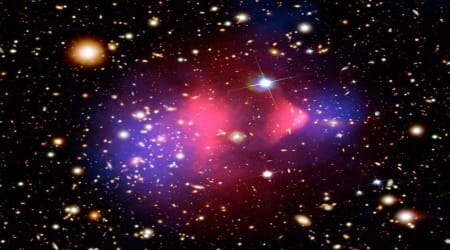
Longest gamma-ray burst ever detected blazed for over seven hours — and astronomers are baffled

Astronomers have confirmed the longest gamma-ray burst (GRB) ever recorded, and it has upended our understanding of these extreme cosmic events. The extremely unusual burst, named GRB 250702B, was first registered by space-based telescopes, including NASA's Fermi, according to NOIRLab.
Astronomers detected the longest-ever gamma-ray burst (GRB)! These rare explosions usually last ~minutes, but GRB 250702B lasted over 7 hours 💪
— NOIRLab (@NOIRLabAstro) December 8, 2025
With data from @GeminiObs and @cerrotololo, scientists are working to determine the origin of this GRB
📸 NOIRLab/NSF/AURA/M. Garlick pic.twitter.com/CkiRt0u3RT
While GRBs are second only to the Big Bang in explosive power, the window of visibility for most of these flashes ranges from a few seconds to a few minutes. This one, however, flared repeatedly over seven hours. Once it had been discovered, an international team rapidly swung into action to analyze the "afterglow" of the event—the fading light emissions that come after the initial, energetic flash of gamma rays. The afterglow contains valuable clues about the cause of the explosion.
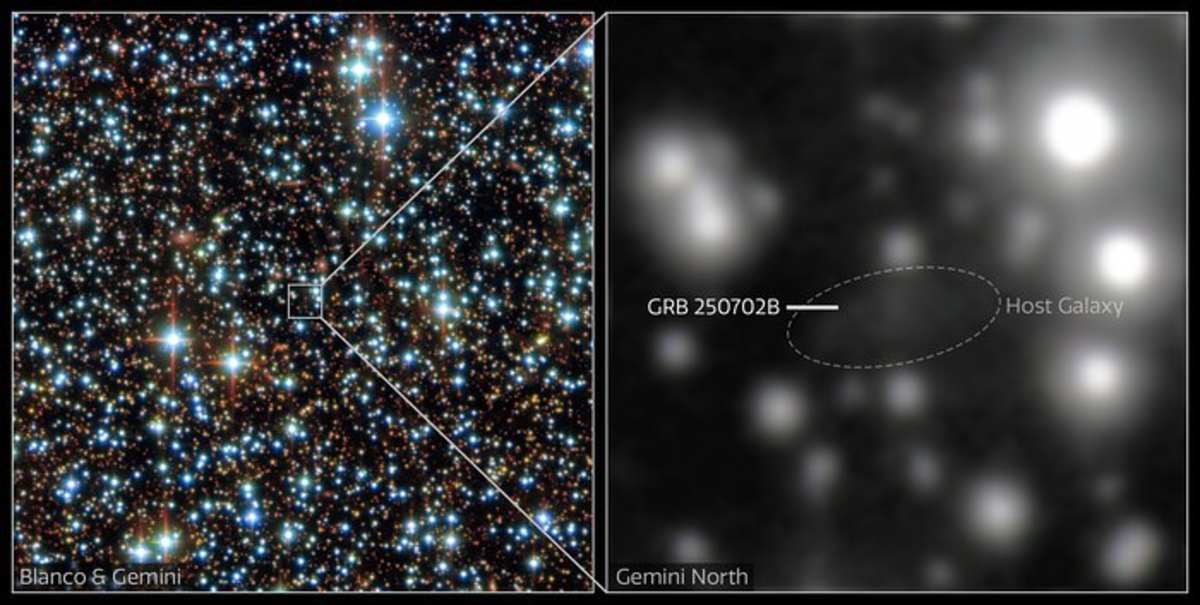
A team led by graduate student Jonathan Carney of the University of North Carolina at Chapel Hill used powerful ground-based observatories: the NSF Víctor M. Blanco 4-meter Telescope and the twin 8.1-meter International Gemini Observatory telescopes. These facilities provided key, quick follow-up observations beginning about 15 hours after the initial alert.
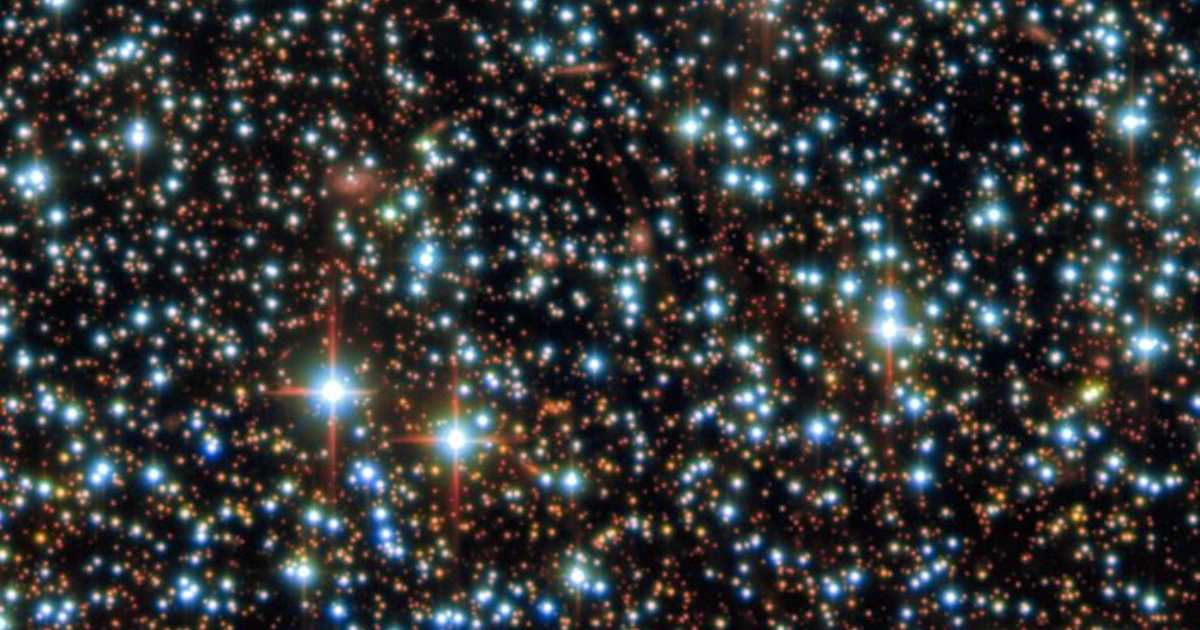
Initial infrared observations from the ESO's Very Large Telescope confirmed that the source was indeed situated within a very distant galaxy. Detailed follow-up observations published on November 26 in The Astrophysical Journal Letters showed that the massive stellar explosion had been enshrouded in equally massive clouds of dust, both interstellar dust within our own Milky Way and, more significantly, dust within the host galaxy itself.
The data confirmed that the initial burst was due to a relativistic jet, a narrow, high-speed beam of material that smashes into the surrounding cosmic environment. Perhaps most surprisingly, the host galaxy itself proved unusually massive for a GRB location. The extreme duration and peculiar environment of GRB 250702B mean it does not fit neatly into any previously known category of GRB origin. Only a half-dozen GRBs come close to this length out of about 15,000 recorded since 1973.
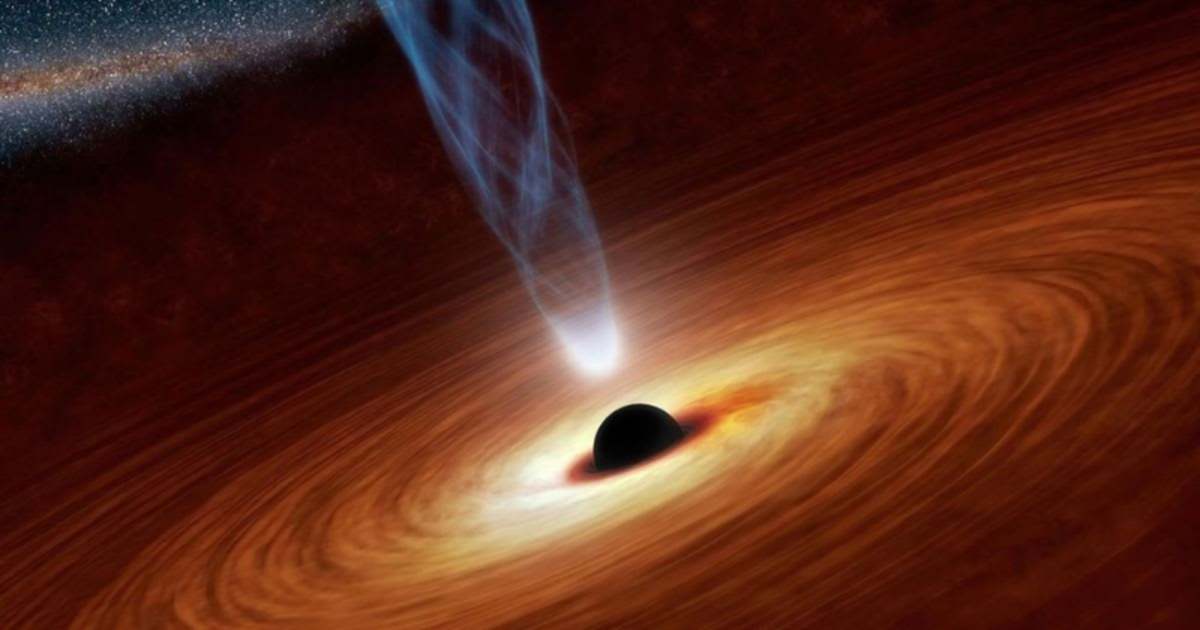
Scientists are now entertaining several unprecedented possibilities for the record-breaking blast. One theory proposes the event was a black hole merging with, or falling into, a star that has already shed its outer hydrogen layer and is now composed primarily of helium. It could also be the result of a micro-tidal disruption event—the disruption of a star or a substellar object like a planet or a brown dwarf because of close contact with a stellar black hole or a neutron star.
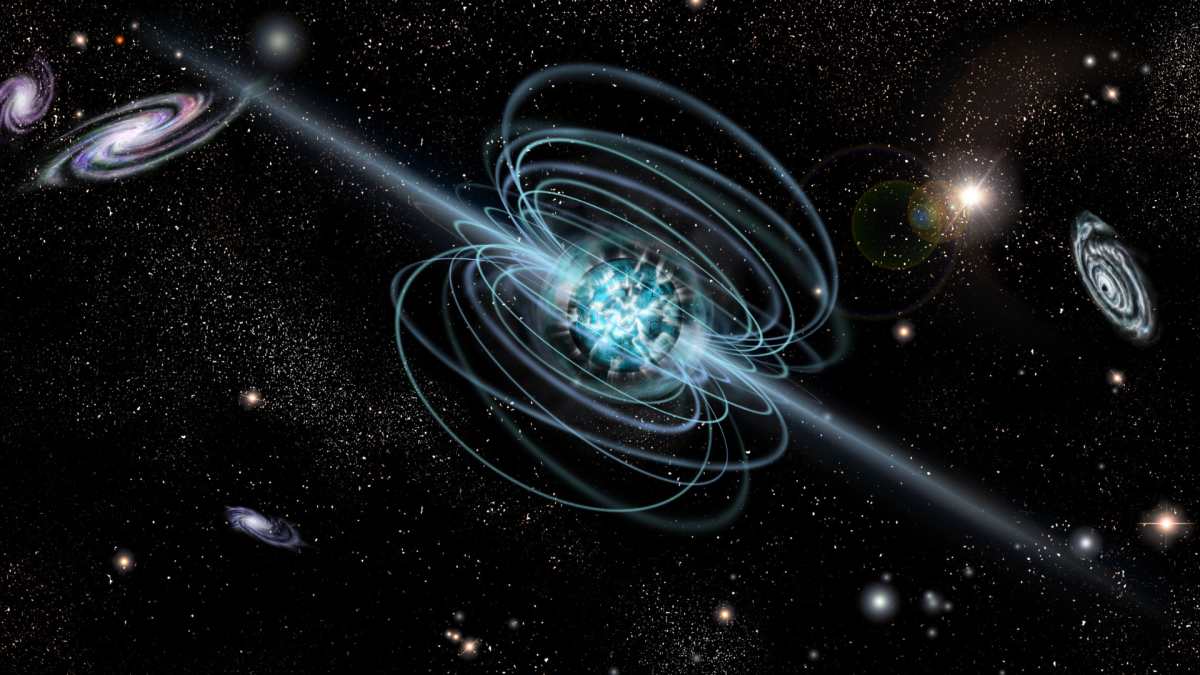
The most revolutionary possibility, however, is the third one. Theoretically, the GRB could have been a result of a star being torn apart in its plunge into an intermediate-mass black hole, predicted to be abundant but difficult to find, holding between 100 and 100,000 times the mass of our Sun. If this proves to be the case, humanity would have directly witnessed something never before seen—an extremely powerful, focused relativistic jet fired by an intermediate-mass black hole in the process of actively consuming a star. "The uncovering of these cosmic mysteries demonstrates how much we are still learning about the Universe's most extreme events and reminds us to keep imagining what might be happening out there,” Carney shared.
More on Starlust
Groundbreaking supercomputer simulations explain why black holes are so bright