India’s uncrewed Gaganyaan test mission getting ready for launch in late 2026, ISRO chief confirms
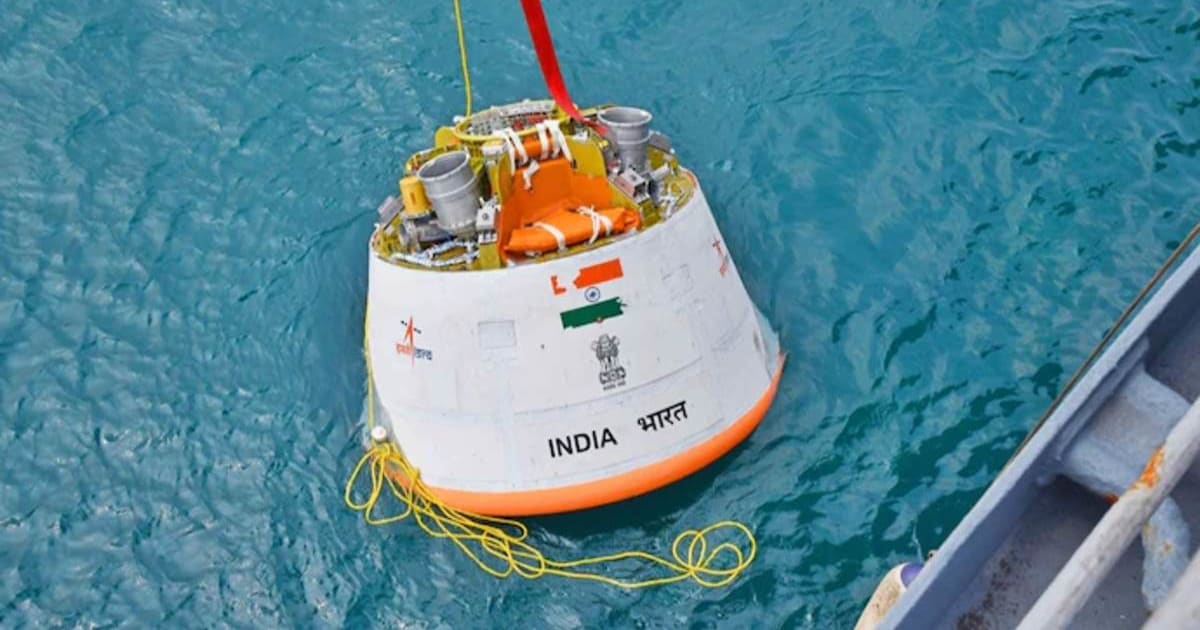
The Chairman of the Indian Space Research Organization (ISRO), V Narayanan, has said that tests are nearly complete for the uncrewed Gaganyaan mission and it is on track to launch later this year. During a press conference after the successful launch of the EOS-05 mission on September 4, Narayanan said that more than 8,000 tests regarding the mission have been completed and the team is advancing with human safety as its utmost priority. Gaganyaan is India’s human space program that aims to send three Indian astronauts to an orbit of 400 km for a three-day mission and bring them back safely to earth.
Sriharikota, Andhra Pradesh: ISRO Chief Dr V Narayanan says, "Gaganyaan, as you are aware, is a technology-intensive mission. So, we have to do the human-rating of the vehicle, followed by the development of the crew escape system and the environmental control system. Till today,… pic.twitter.com/K8gfPxoiqA
— IANS (@ians_india) September 3, 2026
“Gaganyaan, as you are aware, is a technology-intensive mission. So, we have to do the human-rating of the vehicle, followed by the development of the crew escape system and the environmental control system. Till today, around 8,000 tests have been completed,” the ISRO chief told reporters. “Unlike other satellite missions, human beings are involved here, so the safety of human beings is very important. We have planned three uncrewed missions followed by the crewed mission. The first uncrewed mission is getting ready for launch this year. Once we review the results, we will go for two more uncrewed missions, followed by the crewed mission,” he added. If all three uncrewed missions are successful, ISRO will launch astronauts to space in 2027.
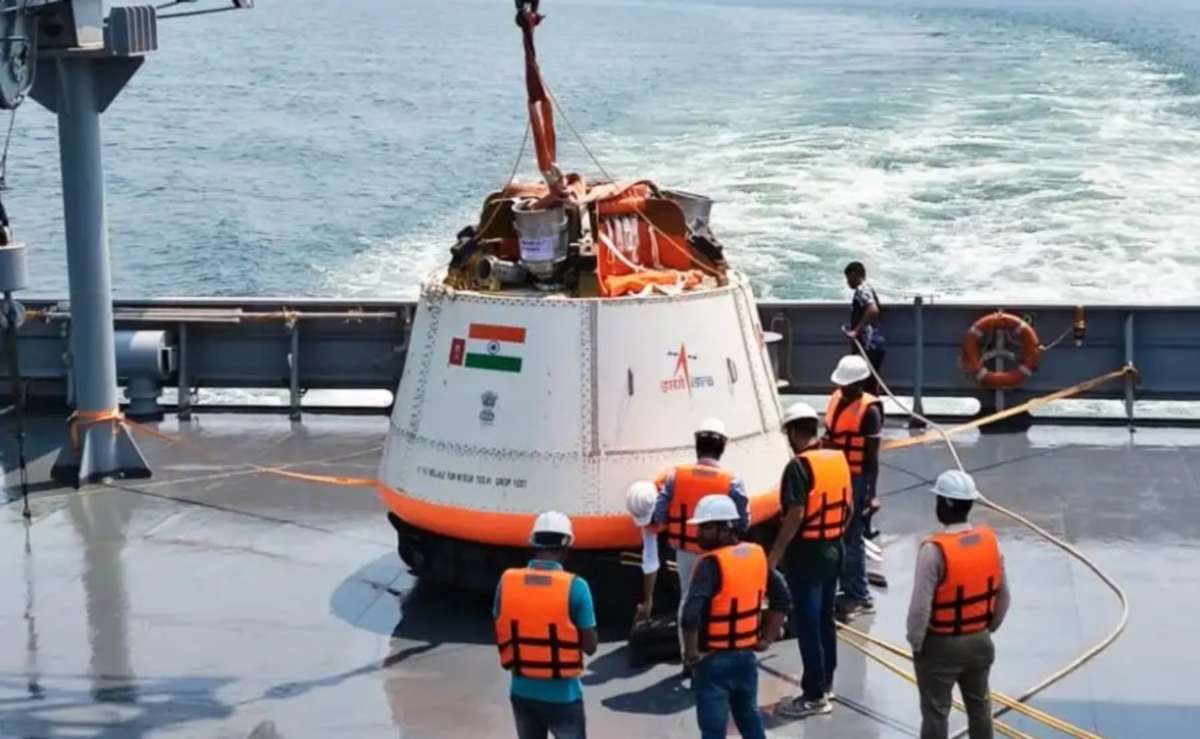
The Gaganyaan program is being developed entirely on homegrown elements including the launch vehicle, the crew module, the service module and the life-support systems. “Human safety is of paramount importance in Gaganyaan mission. In order to ensure the same, various new technologies comprising of engineering systems and Human centric systems are being developed and realised,” the official Gaganyaan page says. ISRO is also preparing the astronauts at its facility in Bengaluru, Karnataka, by providing physical fitness training, simulator training and flight suit training as well as lessons in medical emergencies among other key aspects.
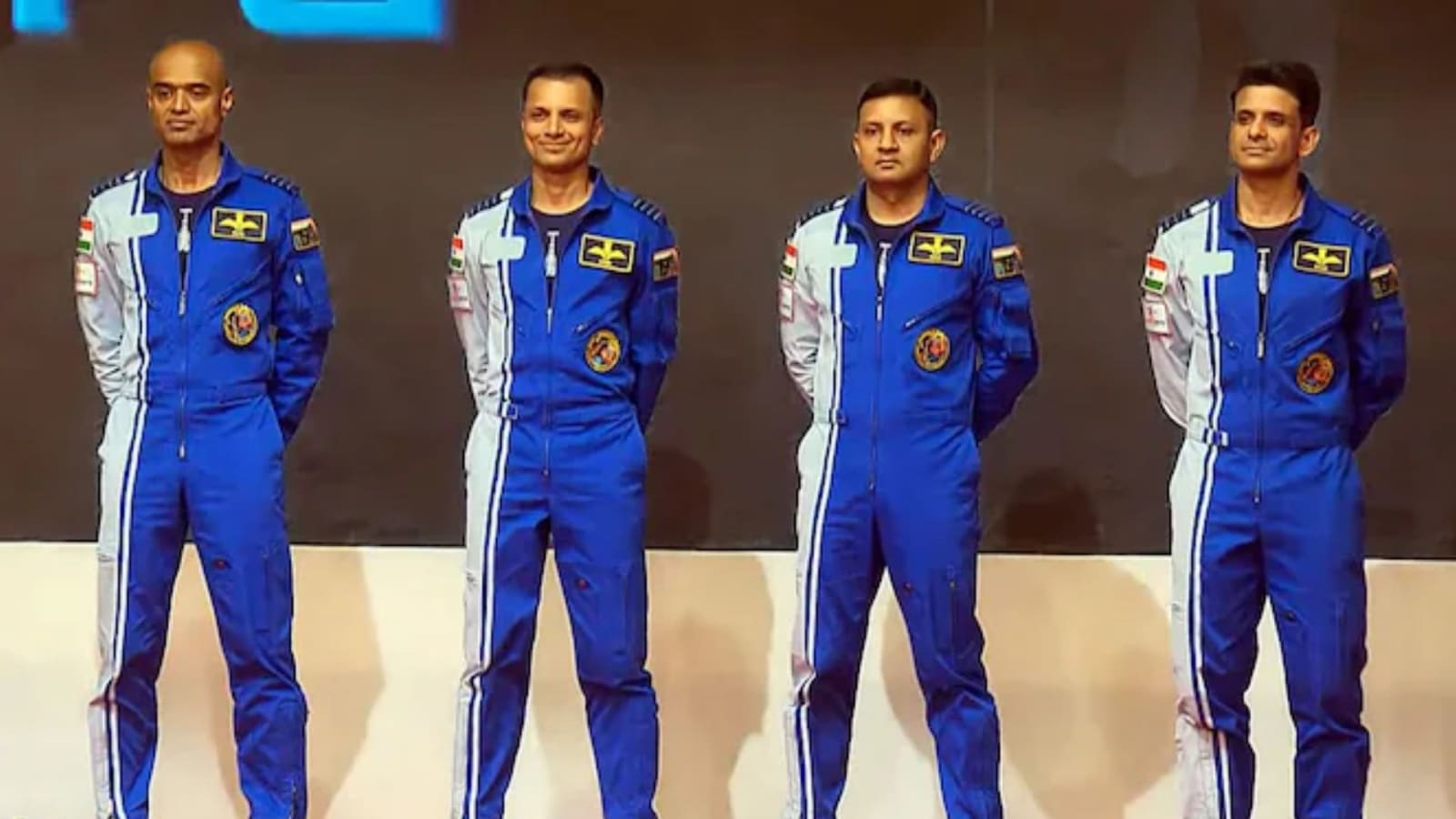
In February 2024, the names of the four astronauts were announced by India's Prime Minister Narendra Modi. The members are Group Captains Prasanth Balakrishnan Nair, Ajit Krishnan, Angad Pratap and Wing Commander Shubhanshu Shukla of the Indian Air Force. Interestingly, Shukla was one of the members of the private Ax-4 mission to the International Space Station (ISS) while Nair served as the backup astronaut. Which three astronauts will fly on Gaganyaan is yet to be announced.
Another giant leap for India in Space!
— Dr Jitendra Singh (@DrJitendraSingh) September 3, 2026
Kudos to Team @isro on the successful launch of GSLV-F17/EOS-05.
EOS-05 is a state-of-the-art Earth Observation satellite and India’s first imaging satellite from Geosynchronous Orbit, enabling advanced imaging across visible, infrared,… pic.twitter.com/1HHJrWM7ze
ISRO is currently celebrating the success of the GLSV launch—it’s first after two consecutive failed missions. The GSLV-F17 successfully placed the EOS-05 satellite, India’s first geosynchronous imaging satellite, into a sub-geosynchronous orbit and it has begun climbing to its planned altitude of about 36,000 kilometers (approximately 22,300 miles). On Saturday, India’s Minister of State for Science, Dr. Jitendra Singh, announced on X that the satellite has completed its first orbit raising operation, increasing its orbit from 171 km × 31,121 km to 20,000 km × 31,129 km (from 106.25 miles × 19,337.9 miles to 12,427.4 miles × 19,342.9 miles).