Hungry star devours its cosmic twin faster than ever observed, baffling scientists
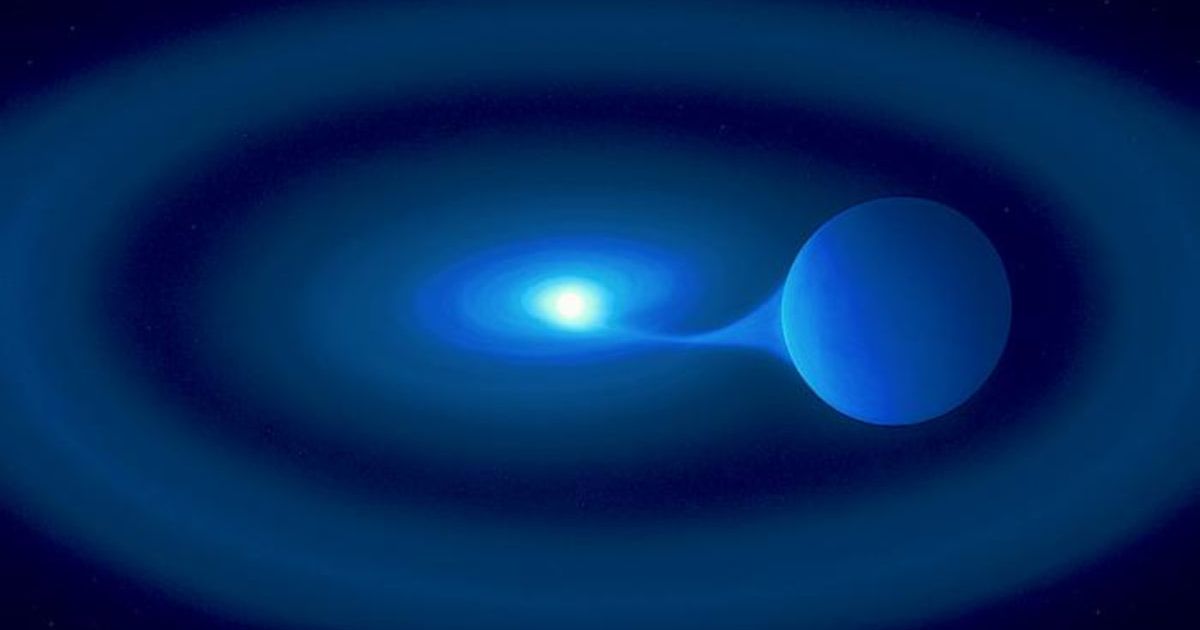
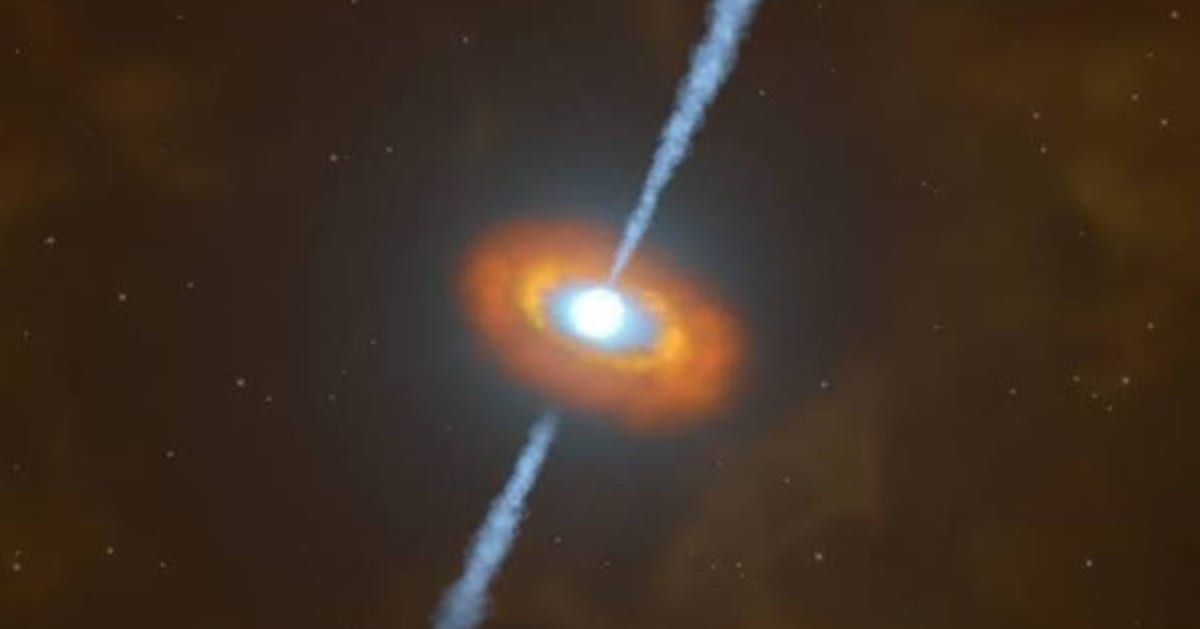
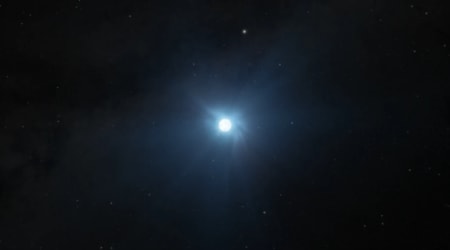
Not far from Earth, scientists spotted a hungry white dwarf star that is munching on its celestial companion at a never-before-seen rate. Study found this to be the double star, named V Sagittae, which is unusually luminous as it burns bright from gorging on its larger twin, as published in the Monthly Notices of the Royal Astronomical Society. The stars are likely caught in a space tango as they orbit each other every 12.3 hours, slowly getting closer. The collision is expected to cause a huge explosion that could shine so bright that it could be seen with the naked eye.

The massive explosion will take place around 10,000 light-years away from Earth. The data was discerned by an international team of astronomers led by Dr Pasi Hakala from the University of Turku in Finland. The team included Professor Phil Charles from the University of Southampton, along with Dr Pablo Rodríguez Gil from the Spanish Instituto de Astrofisica de Canarias and the University of La Laguna. The results are considered to solve a mystery about the dual stars, which had confused astronomers for a century, according to the University of Southampton.
A greedy star not too far from Earth is eating its cosmic twin at a rate not seen before, our space scientists say.
— University of Southampton (@unisouthampton) September 10, 2025
Double star V Sagittae is burning unusually bright as the super-dense white dwarf is gorging on its larger mate in a feeding frenzy.
Discover more 👉… pic.twitter.com/1umlDHtJTU
"V Sagittae is no ordinary star system – it's the brightest of its kind and has baffled experts since it was first discovered in 1902,” stated Charles. “Our study shows that this extreme brightness is down to the white dwarf sucking the life out of its companion star, using the accreted matter to turn it into a blazing inferno,” they added. The process is considered to be incredibly intense, so much so that it going thermonuclear on the white dwarf’s surface, will shine bright like a beacon in the sky. The stars were observed by the powerful European Southern Observatory’s Very Large Telescope in Chile.
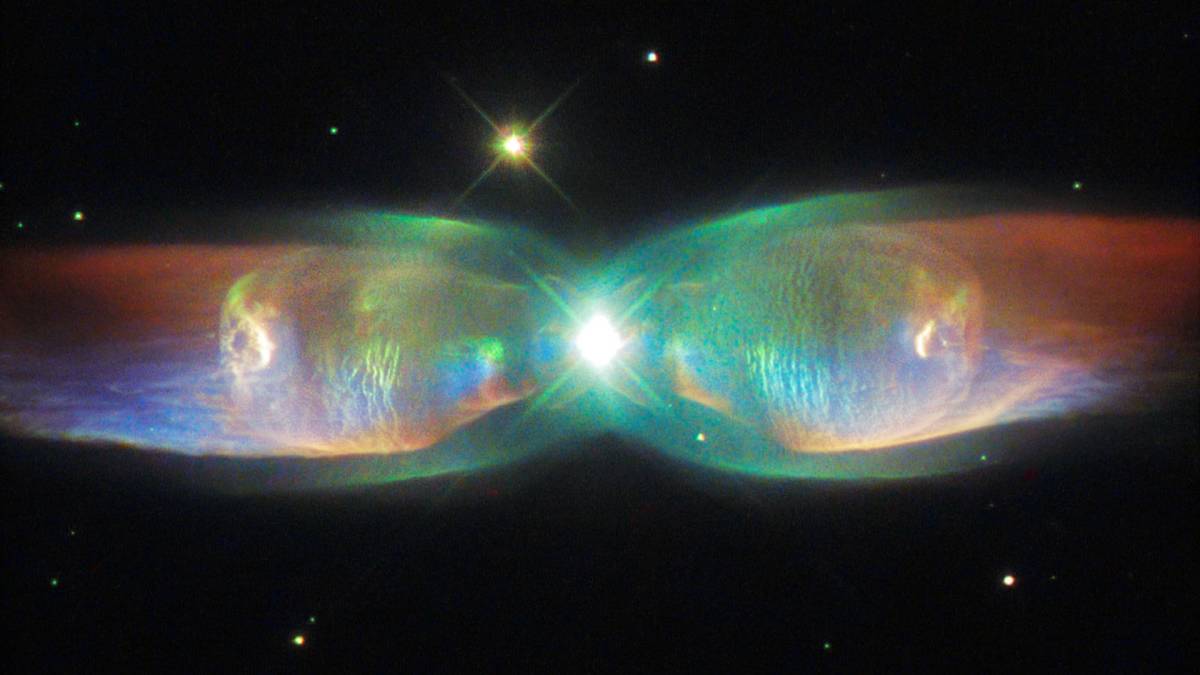
The observation led researchers to another interesting discovery, which revealed a ring of gas around the stars. This giant halo is probably the result of the massive amounts of energy that are being generated by the devouring white dwarf. This ring was unexpected, and it was formed from the debris that was released from the messy dining, hinting at its nature. This insight could influence what was known about how stars live and die, according to lead author Dr Pasi Hakala. This bright cosmic ring is being created by the leftover mass that is being transferred for eating.
“The speed at which this doomed stellar system is lurching wildly, likely due to the extreme brightness, is a frantic sign of its imminent, violent end,” Dr Hakala mentioned. The matter that is getting accumulated on the white dwarf from the residue could generate a nova outburst in the years to follow. This would be the endgame for V Sagittae, an event that would be visible to the naked eye for people on Earth. Experts also predict that the collision of the two stars could be so bright that the remnants and supernova explosion might even be visible during the daytime.
Understanding the cosmic processes provides detailed insight into how elements of our own system function. Knowing about stars, their origins, their collisions, and their demise is a tool into the unanswered questions of the universe. Every stage of this star eating its twin will reveal something new to be studied. This includes its final explosion, which will provide us with data about the minute elements that were transferred from one companion to another and what they are made of. This supernova will also be a special sight in the sky for people and enthusiasts alike.
More on Starlust
'Stripped-to-the-bone' supernova offers first direct look inside a dying star's core