Astronomers surprised to witness a young star's jet backfire, triggering dramatic cosmic explosion
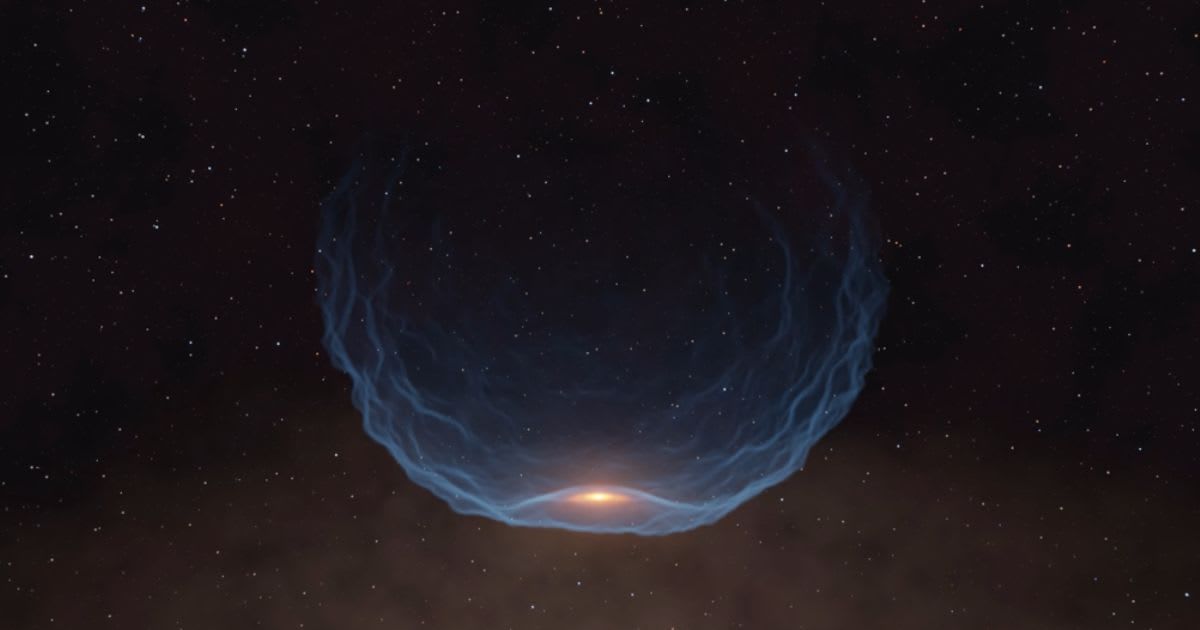
A fiery cosmic explosion, seemingly triggered by a fleeting star, is now crashing back into its creator, according to new research. The unexpected discovery suggests that nascent stars and their developing planetary systems may endure a far more violent existence than previously understood, as per the National Astronomical Observatory of Japan.
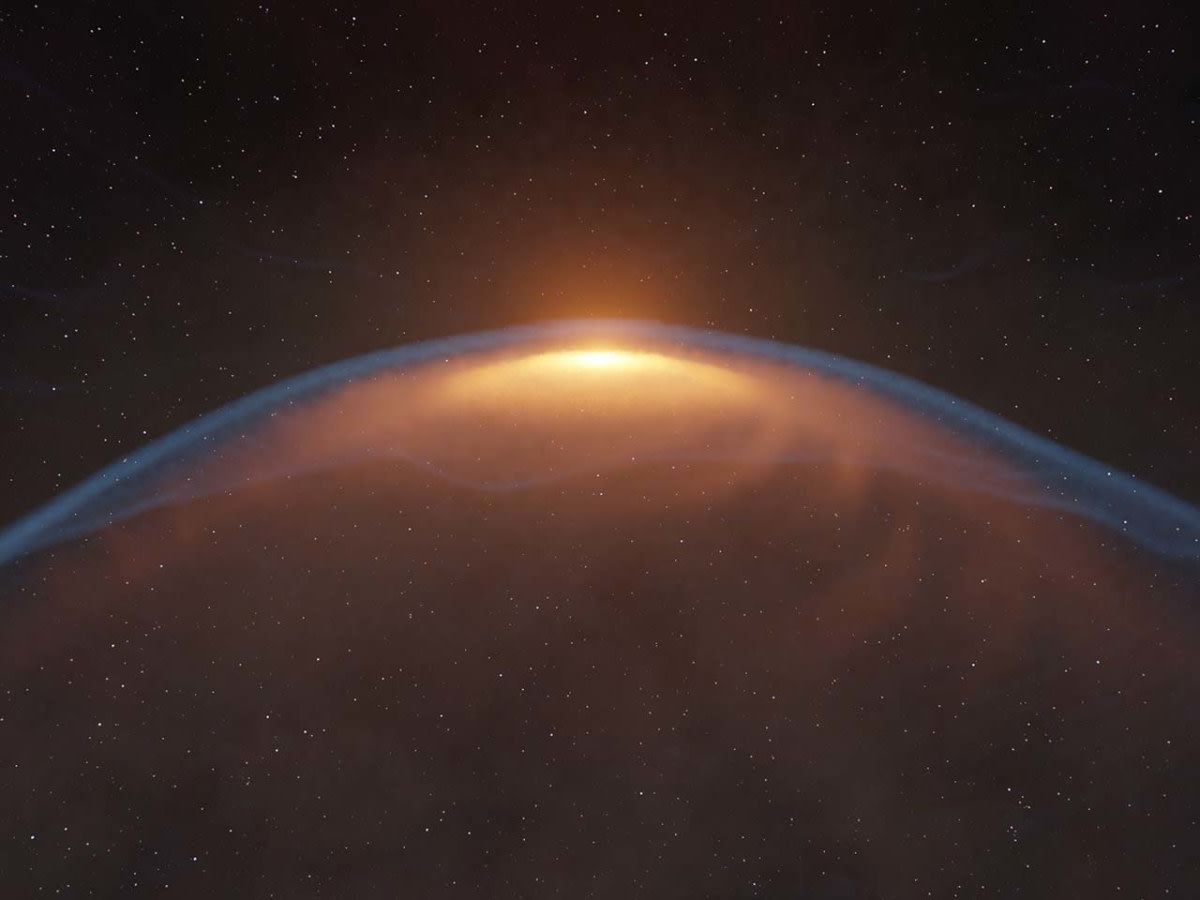
Astronomers from Japan were re-examining data from the Atacama Large Millimeter/submillimeter Array (ALMA) when they noticed something unusual: an expanding gas bubble around a young star's protoplanetary disk, the spinning structure of gas and dust from which planets are born. This star, known as WSB 52, is situated 441.3 light-years away in the constellation Ophiuchus. While expanding bubbles have been spotted around other young stars, this is the first time a shockwave from such a blast has been observed colliding directly with a star's disk. This collision is causing the disk to warp and twist, a phenomenon that has never been predicted by existing astronomical models.
The research team, led by Masataka Aizawa of Ibaraki University, concluded that a high-speed jet of material, launched from the star itself centuries ago, was the likely culprit. The jet slammed into a cloud of nearby gas, triggering a massive compression and subsequent explosion that formed the bubble. Now, the resulting shockwave is ricocheting back, impacting the very star and disk that set it off. “In science fiction, there are scenes where a beam is fired at something to destroy it, causing an explosion with debris flying back at the shooter," Aizawa explained. "Similar things occur in real astronomical phenomena, but with greater intensity." This new finding adds a dramatic and chaotic element to our understanding of how stars and planets form.
As astronomers work to understand the physical forces at play in star and planet formation, new research is also shedding light on the chemical ingredients present in these celestial nurseries. In a breakthrough, scientists have unearthed a trove of complex organic molecules, the very precursors to life's fundamental building blocks, within the disk of a young, outbursting star.
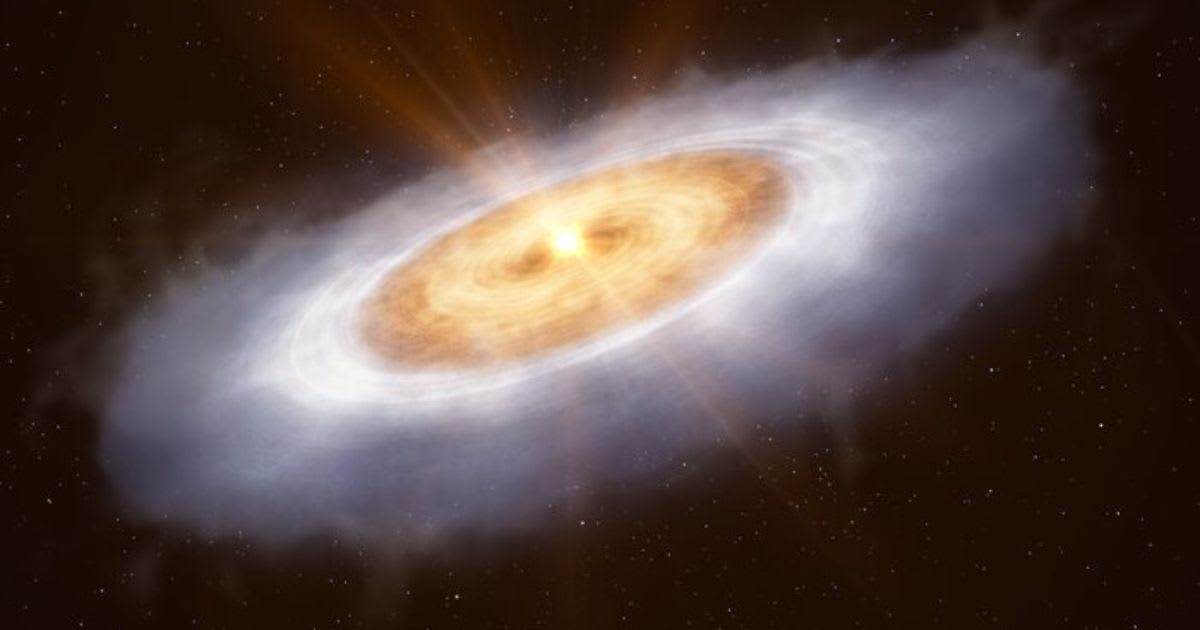
A team led by Abubakar Fadul of the Max Planck Institute for Astronomy (MPIA) used ALMA to identify 17 complex organic molecules (COMs) in the protoplanetary disk of V883 Orionis. Among these, they made the first-ever tentative detection of ethylene glycol and glycolonitrile. The latter is particularly significant, as it is a known precursor to both vital amino acids and adenine, a key component of DNA and RNA.
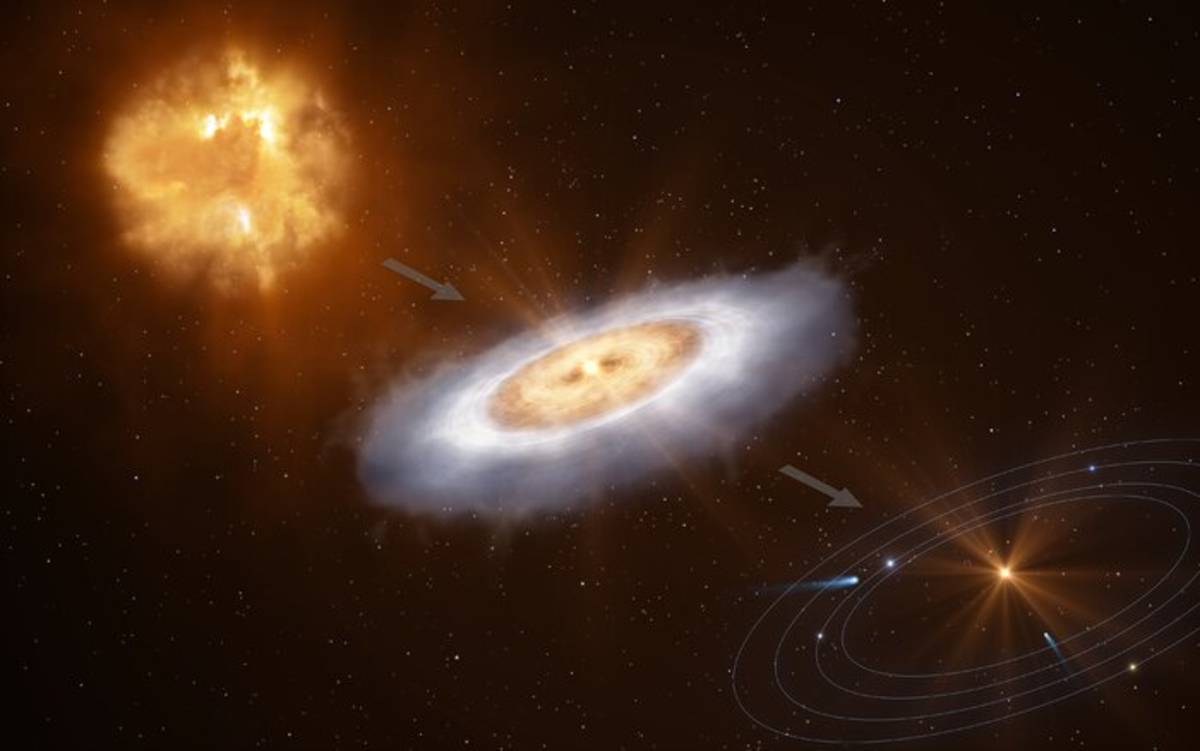
The discovery, published in the Astrophysical Journal Letters, challenged the long-standing "reset" hypothesis. This theory suggested that the intense energy from a star's formation would destroy existing complex chemistry, forcing these molecules to re-form later in the disk. The presence of these complex molecules already in the stellar nursery suggests that the chemistry for life may be more universally present across the cosmos than previously believed. “Our results suggest that protoplanetary discs inherit complex molecules from earlier stages, and the formation of complex molecules can continue during the protoplanetary disc stage,” stated MPIA co-author Kamber Schwarz. This implies a continuous chemical enrichment, with the seeds of life potentially being assembled much earlier in interstellar space.