How to spot the International Space Station with the naked eye before it deorbits in 2030
As the countdown to the ISS's retirement has started, observers on Earth have a limited time left to watch the iconic space station glide across the sky.
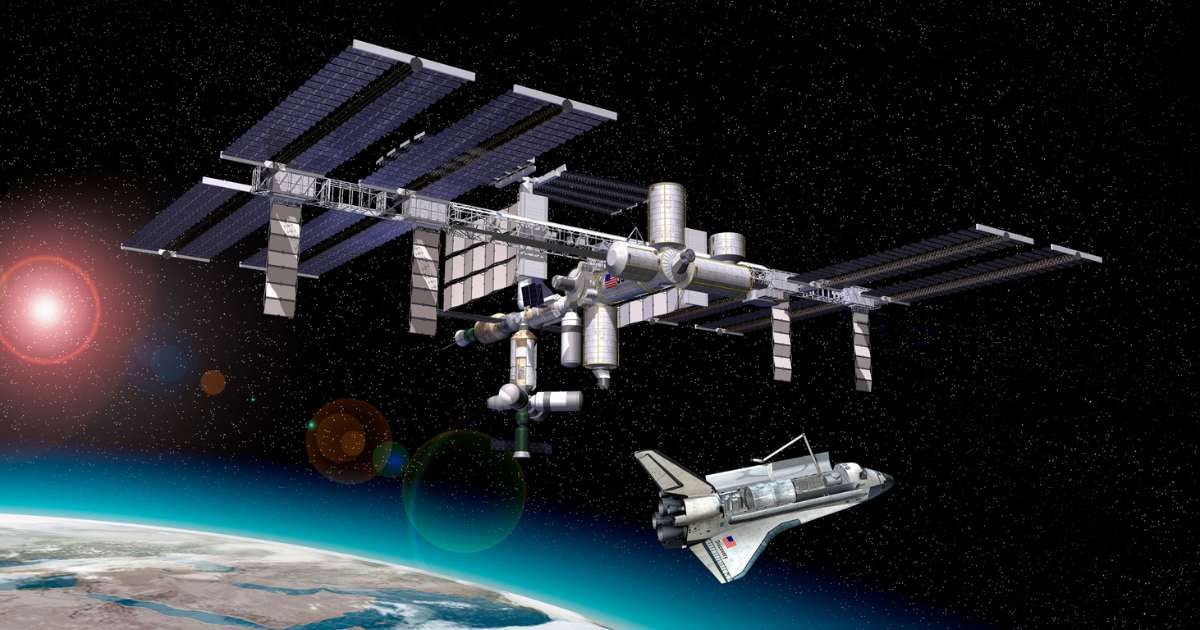
Artwork of the International Space Station and the shuttle (Representative Cover Image Source: Getty | LEONELLO CALVETTI)

The International Space Station has been circling Earth for more than two decades now, serving as humanity's home in orbit, a laboratory, and a one-of-a-kind example of global cooperation in space. But this chapter has almost reached its final phase. NASA has shared that the ISS will be deorbited by the end of 2030, at which point it will be driven into Point Nemo, an isolated area of the Pacific Ocean often used as a spacecraft graveyard. As the countdown to its retirement has started, observers on Earth have a limited time left to watch the iconic space station glide across the sky.

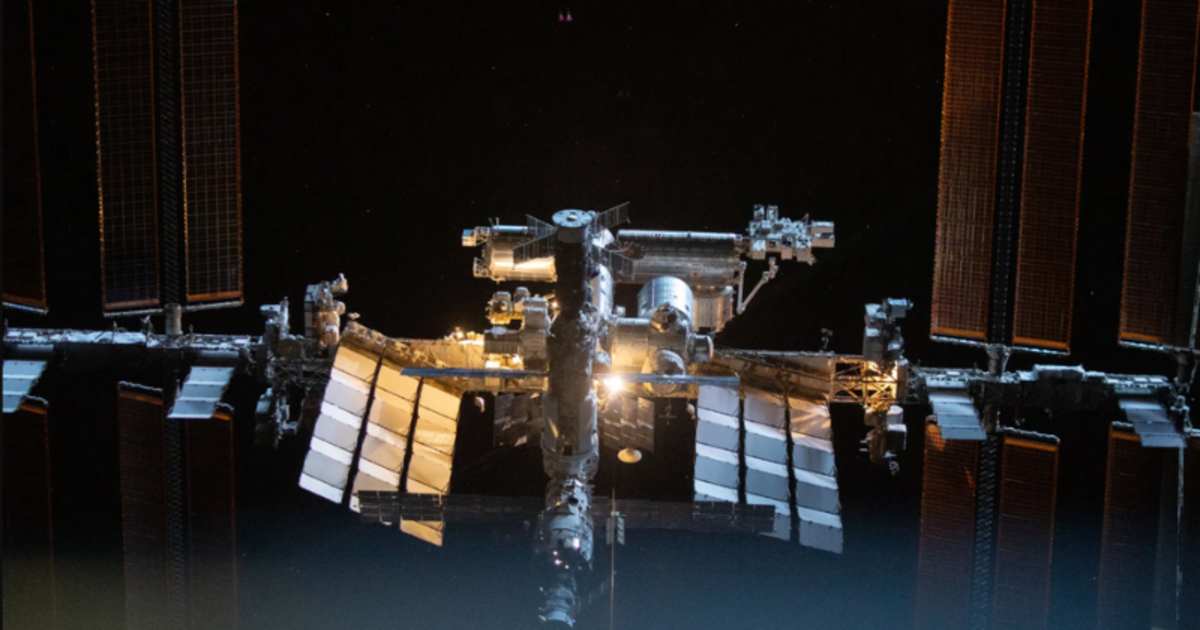
An image of ISS (Image Source: NASA)

Even as NASA prepares to deorbit ISS, its long-term plans have already started. The agency wants to maintain a continuous human presence in low Earth orbit, but now through commercial space stations. Instead of owning and operating the next generation of orbital platforms, NASA intends to be a customer. This shift has been underway since December 2021, when the agency signed agreements totalling $415.6 billion with three companies—Blue Origin, Nanoracks LLC, and Northrop Grumman—to design privately owned and commercially operated stations.
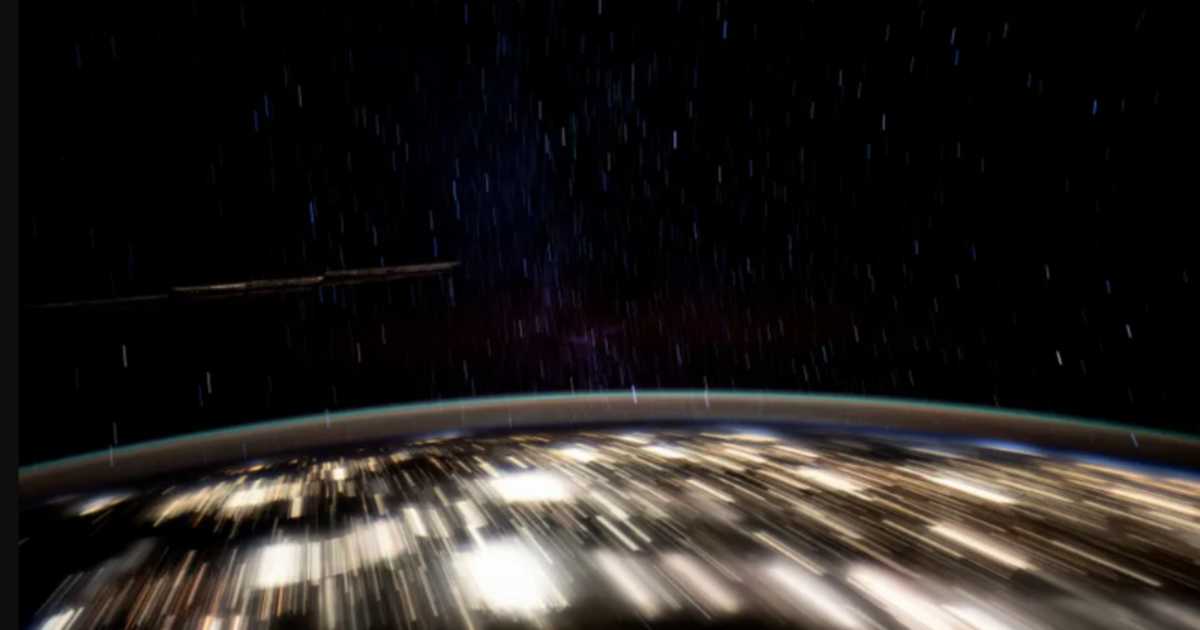
This image is a long-duration photograph of the city lights of Mexico’s Yucatan peninsula, Earth’s atmospheric glow and star trails above, taken from the International Space Station as it orbited 258 miles above (Image Source: NASA)

The ISS has been visited by more than 280 visitors from 26 countries to date and has been home to 4,000+ experiments. With retirement approaching, many sky watchers want to catch a glimpse of it as the space station remains one of the easiest objects to spot with the naked eye. 
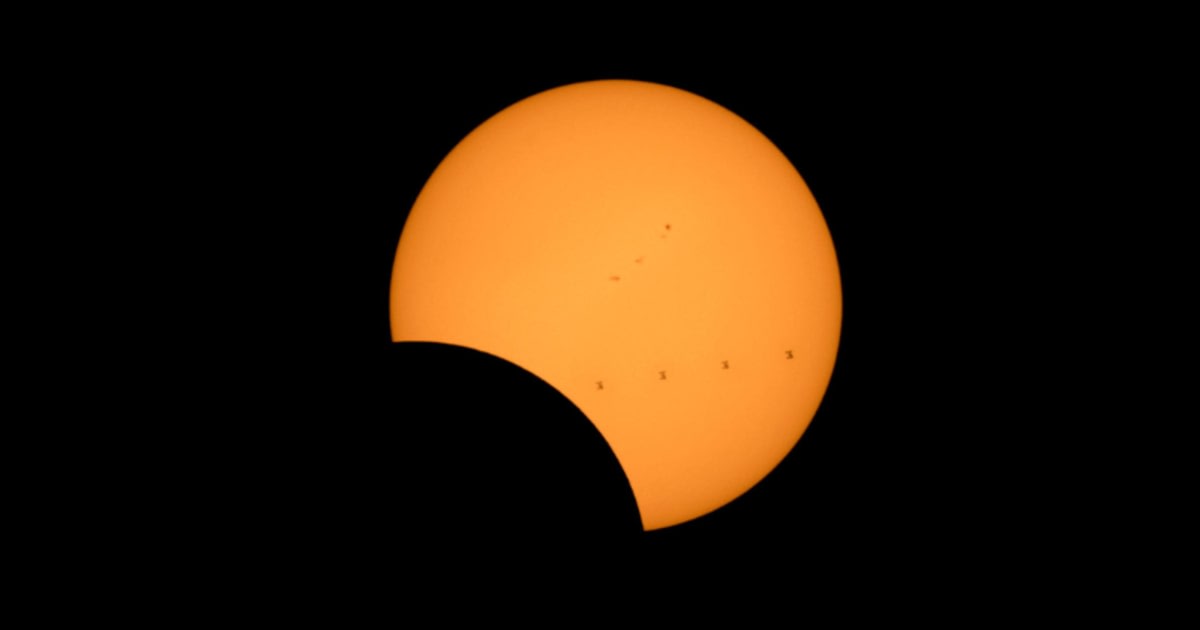
ISS transits the Sun at roughly five miles per second during a partial solar eclipse, Monday, Aug. 21, 2017 (Image Source: Bill Ingalls/NASA via Getty Images)

NASA’s Spot the Station app provides real-time tracking, viewing alerts, and a schedule of upcoming passes based on your location. The ISS completes about 16 orbits per day, traveling at 17,500 mph (28,000 kph) at an orbit inclination of 51.6°, per NASA. 
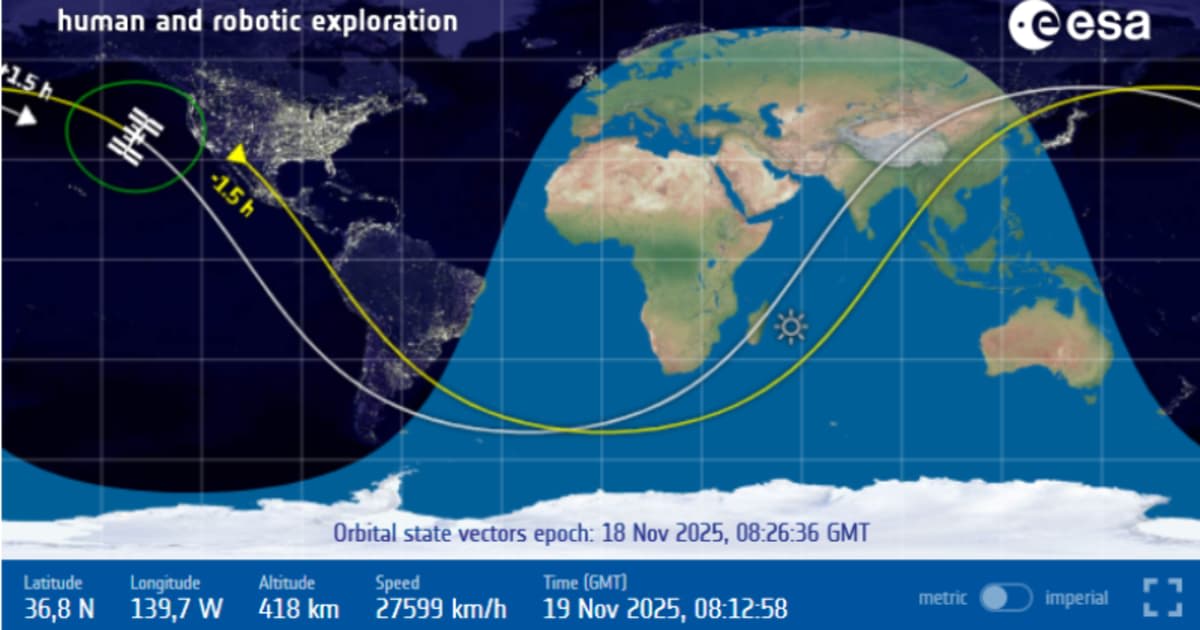
A graphic image of ISS orbit around the Earth (Image Source: NASA)

Viewing opportunities usually occur within a few hours of sunrise or sunset, when sunlight reflects off the station’s structure against a darker sky. In the app, “Time” indicates when the pass begins in your local time zone. “Maximum Height” shows how high it will appear, from 0° at the horizon to 90° directly overhead. “Appears” and “Disappears” mark where in the sky the station will enter and exit your view. For locations north or south of 51.6° latitude, the station won’t travel directly overhead, and the app may occasionally miss certain passes, but a full list of options appears under the “Next Sighting(s) List” on the homepage.
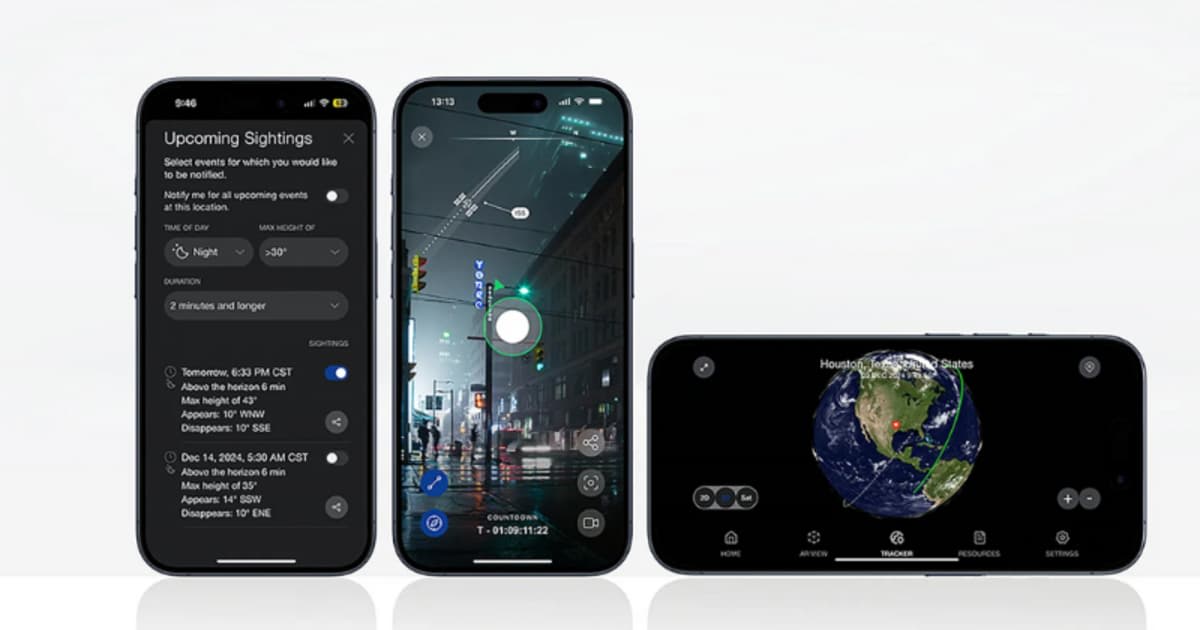
An image of an augmented reality interface of NASA 'Spot the Station' app. It makes it easier for users to locate the International Space Station and provides options for capturing and sharing pictures and videos of their sightings in real-time (Image Source: NASA)

If you’ve never observed it before, the ISS looks like a bright star drifting in a straight line across the sky. Unlike airplanes, it has no blinking lights and doesn’t change direction. The frequency of visibility ranges from once a month to several times a week, depending on the reflection of the Sun's rays off the station as it passes overhead at dawn or dusk at a specified location. Other than NASA’s app, Heavens Above has a 3D interactive tool that tracks the location of the ISS. And in case you are into satellite tracking in general, James Darpinian’s See a Satellite Tonight and Starlink's Satellite Map can help you big time.
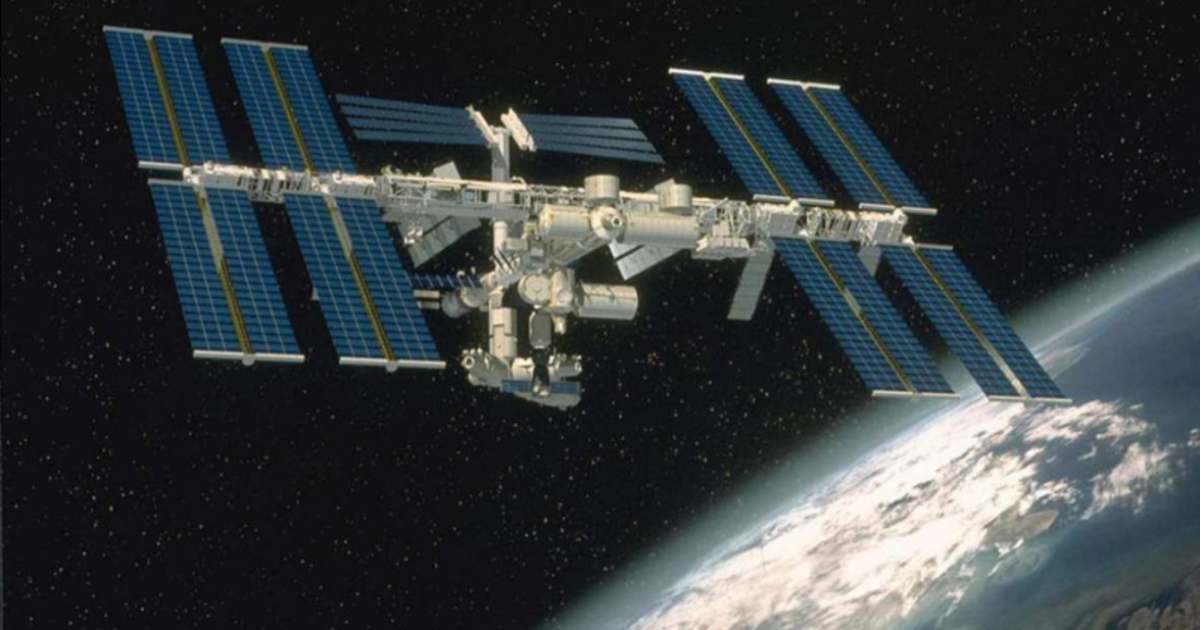
A model image of ISS (Representative Image Source: Alain Nogues/Sygma/Sygma via Getty Images)

With only a few years left before the ISS is guided to its final resting place, now is the perfect time to step outside, look up, and catch one last view of a spacecraft that has shaped a generation of scientific discovery.

More on Starlust

Two Russian cosmonauts just conducted a five-hour spacewalk outside the ISS 

Why NASA was forced to postpone planned docking of private spacecraft Cygnus XL with ISS 
MORE STORIES

The nanotube-based composite blocks radiation, survives extreme temperatures, and can be 3D-printed.
2 days ago
"We're going to marry our success from Ingenuity, all that knowledge, all that skill and success, and couple that with an industry capability. We're going to get this done."
2 days ago
The seven-person also did studies in the areas of biomedicine while also upgrading data hardware.
2 days ago
Apollo 17 astronaut Harrison 'Jack' Schmitt explains why exploring the Moon continues to be important.
2 days ago
"The successful performance of our thruster in this test demonstrates real progress toward sending an American astronaut to set foot on the Red Planet."
3 days ago
The Artemis III core stage will be placed horizontally in the transfer aisle of the VAB before being lifted into a vertical position in High Bay 2.
3 days ago
"A well-known metallurgical behavior was found at the surface of the module, which will be fixed by the end of the third quarter of 2026."
3 days ago
The cargo vehicle carrying essential supplies for the Expedition 74 crew docked with the Zvezda module.
4 days ago
SUPARCO's Earth observation satellite reaches space as Pakistan President Asif Ali Zardari praises China's cooperation.
5 days ago
Launch timing, live stream, and more—here's all you need to know about the return of SpaceX's Falcon Heavy rocket.
5 days ago