Two Russian cosmonauts just conducted a five-hour spacewalk outside the ISS
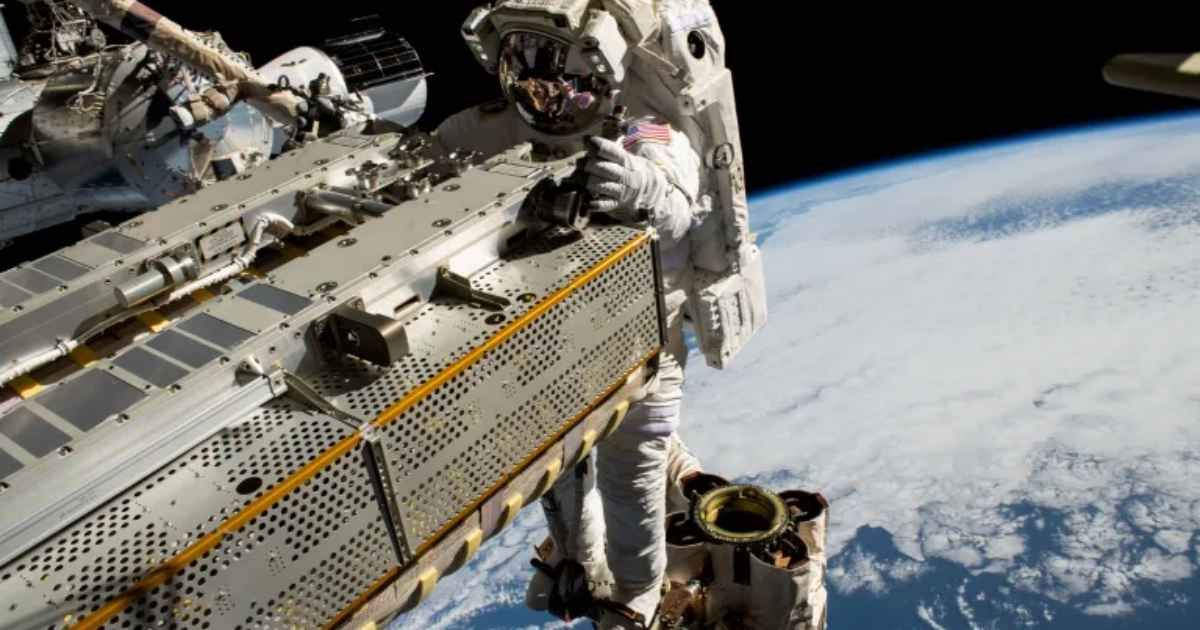
Two Russian cosmonauts, Sergey Ryzhikov and Alexey Zubritskiy, successfully executed a planned extravehicular activity (EVA) outside the International Space Station (ISS) on October 16, concluding a spacewalk lasting approximately five and a half hours, as reported on Space.com.
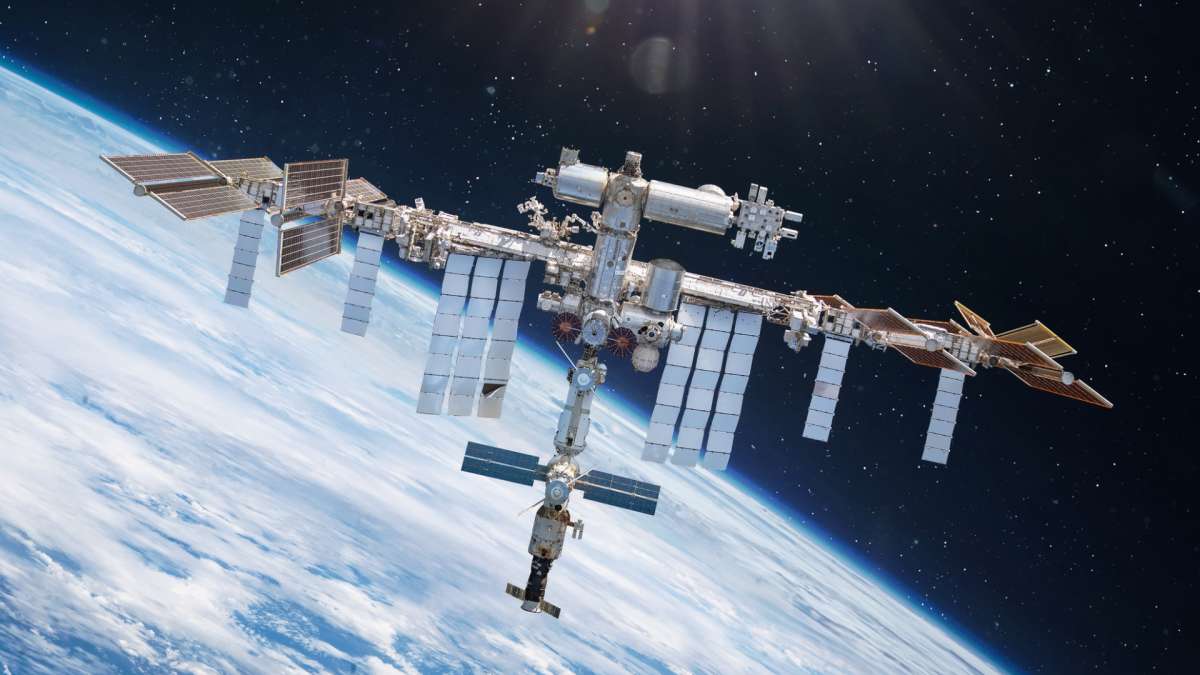
The duo, representing Russia’s state space corporation Roscosmos, officially began their venture at about 12:50 p.m. EDT (1650 GMT). This marks the 276th spacewalk in the history of the continuously crewed International Space Station.

Ryzhikov, commander of the current Expedition 73, and his colleague Zubritskiy performed several key tasks during their time outside the station. Their primary objectives included the installation of a molecular beam experiment on the Nauka Multipurpose Laboratory Module and the removal of a commercial camera platform, which was subsequently jettisoned from the ISS. They also conducted window cleaning operations on the Zvezda Service Module. Inside the station, Roscosmos cosmonaut Oleg Platonov provided crucial support by operating the European Robotic Arm on the Russian segment.
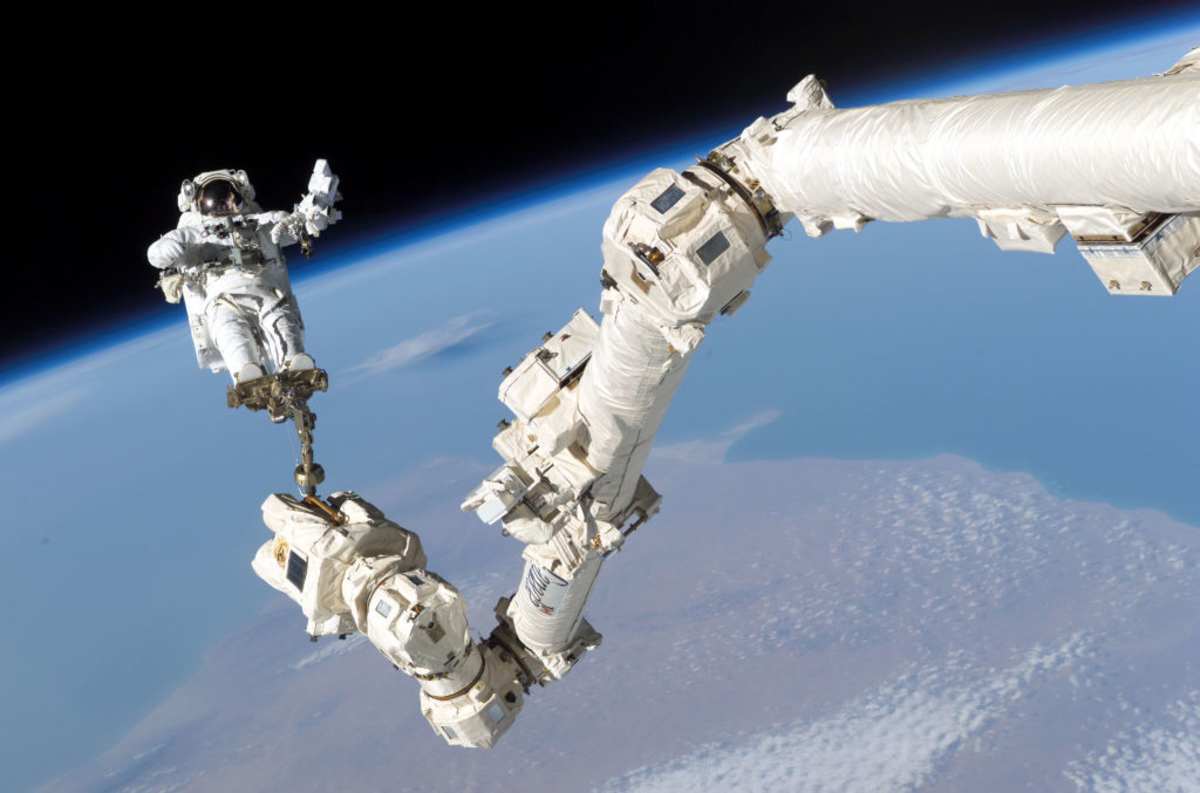
For Ryzhikov, whose suit was identifiable by red stripes, this was his second EVA. Zubritskiy, in a blue-striped suit, completed his inaugural spacewalk. Though NASA's usual operational and public outreach activities are currently curtailed due to a government shutdown impacting the majority of its workforce, the agency streamed the EVA. A statement from NASA News Chief Cheryl Warner noted that the event was considered an "excepted mission operation" related to essential station maintenance, allowing for minimal technical commentary during the broadcast. Other "excepted" activities, like vital weather satellite operations and work on the Artemis program, remain underway despite the shutdown.
The spacewalk was available for public viewing, with coverage commencing at 12:15 p.m. EDT (1615 GMT). The live feed was provided courtesy of NASA and streamed directly through the agency's platforms, allowing observers to follow the cosmonauts' work in real-time.
The milestone Russian EVA adds to a growing catalog of missions to maintain and upgrade the orbital outpost. As per NASA, this year alone, the station’s crew has already conducted three spacewalks from the U.S. segment. On May 1, 2025, Astronauts Anne McClain and Nichole Ayers completed an EVA lasting 5 hours, 49 minutes. On January 30, 2025, a spacewalk performed by Suni Williams and Butch Wilmore spanned 5 hours, 26 minutes. And on January 16, 2025, Nick Hague and Suni Williams spent 6 hours working outside the station. The history of the ISS's external maintenance extends back to its early assembly phase in 1998, which was inaugurated by two lengthy EVAs: December 12, 1998, Astronauts Jerry Ross and James Newman were outside for 6 hours, 59 minutes. And on December 7, 1998, the same pair, Ross and Newman, conducted a prior EVA lasting 7 hours, 21 minutes.
Despite the routine nature of these excursions, EVAs carry inherent risks, as demonstrated by a significant event that occurred over a decade earlier. According to NASA, on July 16, 2013, during U.S. EVA-23, Italian Space Agency astronaut Luca Parmitano and his Expedition 36 crewmate Christopher J. Cassidy were forced to abruptly end their spacewalk due to a life-threatening malfunction. Just 44 minutes into the EVA, Parmitano, the first Italian to conduct a spacewalk, reported feeling water forming at the back of his head. Initially, Mission Control and Cassidy suspected a leaking drink bag was the cause. However, as the volume of liquid rapidly increased, the situation escalated. Ground controllers ordered an immediate termination of the spacewalk, directing Parmitano to return to the airlock while Cassidy followed after securing their equipment.
More on Starlust
NASA conducts fifth all-female spacewalk in latest milestone outside the ISS