NASA’s Europa Clipper experiments with star-tracking camera and catches a bonus view—Uranus
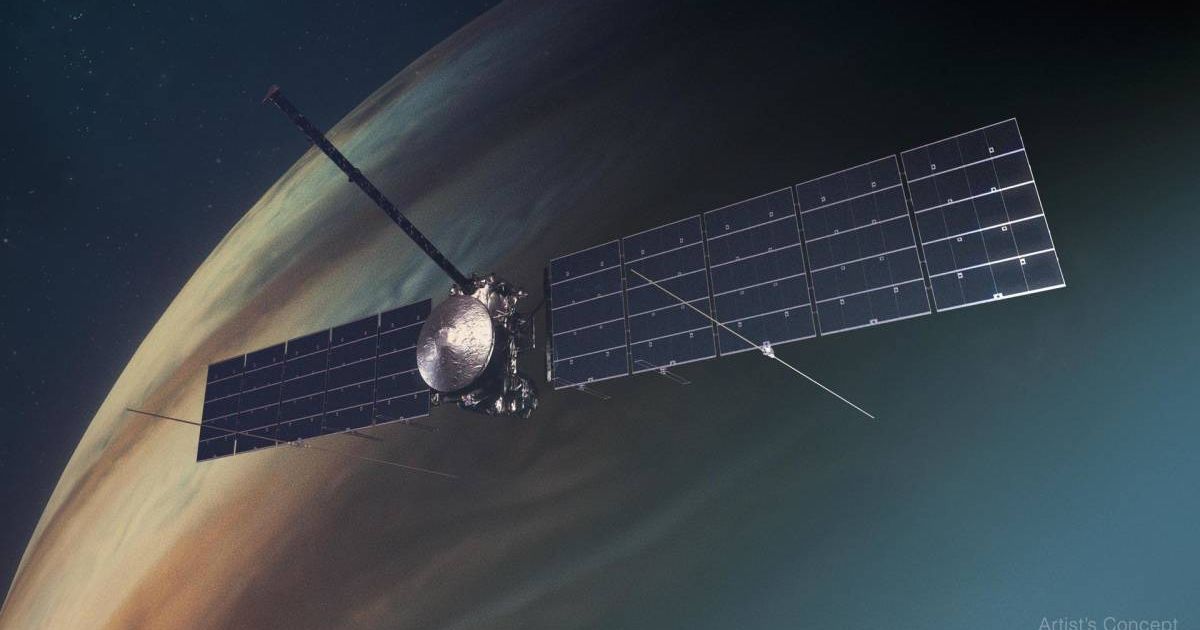
The spacecraft is on its way to study Jupiter's moon Europa.
This artist's concept depicts NASA's Europa Clipper spacecraft in orbit around Jupiter (Cover Image Source: NASA Image and Video Library | NASA)

NASA’s Europa Clipper spacecraft is on its cruise to explore Jupiter’s mysterious ice moon, Europa. On this path, it clicked a spectacular image of a starfield and Uranus. This cosmic image, shared by NASA, was captured on November 5, 2025, while the spacecraft experimented with one of its two stellar reference units or star-tracking cameras.
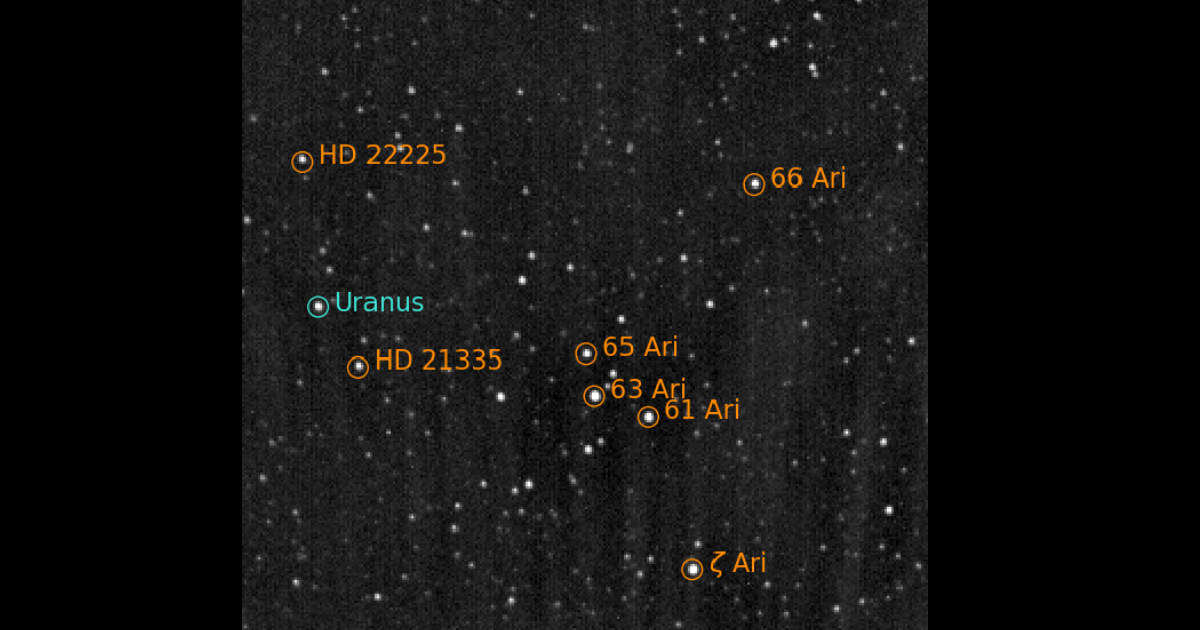
An annotated version of the image with Uranus and several background stars labeled. (Image Credit: NASA/JPL-Caltech)

The field of view points to 0.1% of the full sky around it, and these star-tracking cameras are used for maintaining spacecraft orientation. When the spacecraft captured the image, it was around 2 billion miles away from Uranus. The Europa Clipper was launched in October 2024 and is expected to arrive at the Jupiter system in 2030, and will conduct around 50 flybys of Europa.
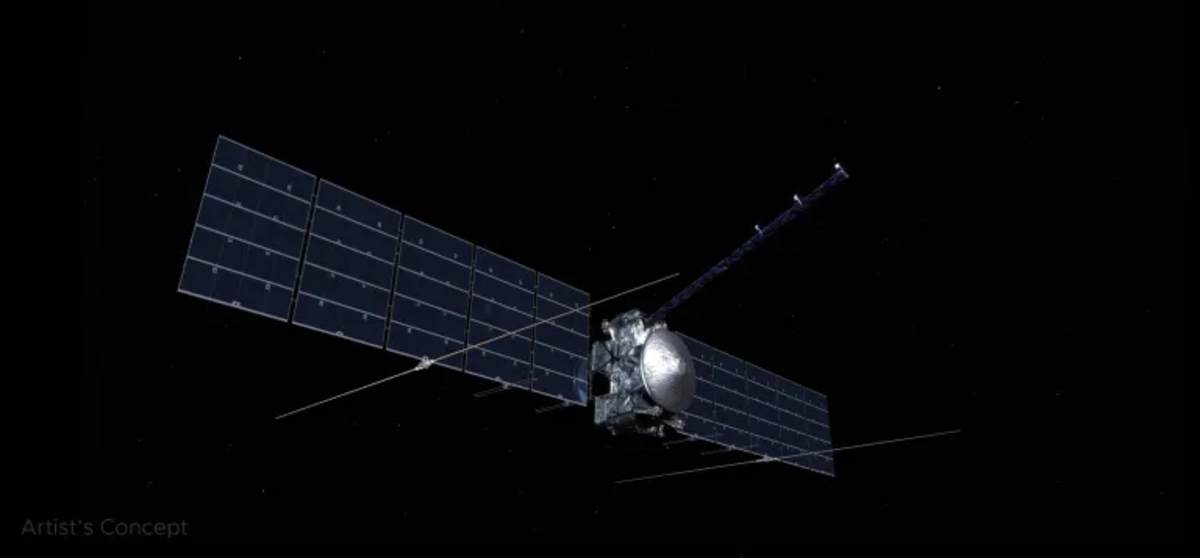
In this artist’s concept, Europa Clipper’s radar antennas — seen at the lower edge of the solar panels — are fully deployed. The antennas are key components of the spacecraft’s radar instrument, called REASON (Image Source: NASA/JPL-Caltech)
In this artist’s concept, Europa Clipper’s radar antennas are fully deployed. (Representative Image Source: NASA/JPL-Caltech)

The main goal of the scientific endeavor is to discover whether there are places below Europa’s surface that have the potential to support life. The main goals of the mission are to learn about the moon’s icy shell and its thickness, its surface interaction with the ocean below, to look into its composition, and to characterize its geology. This study of Jupiter is mainly being done to discern whether there is a hint of astrobiological potential for habitable worlds beyond our planet.
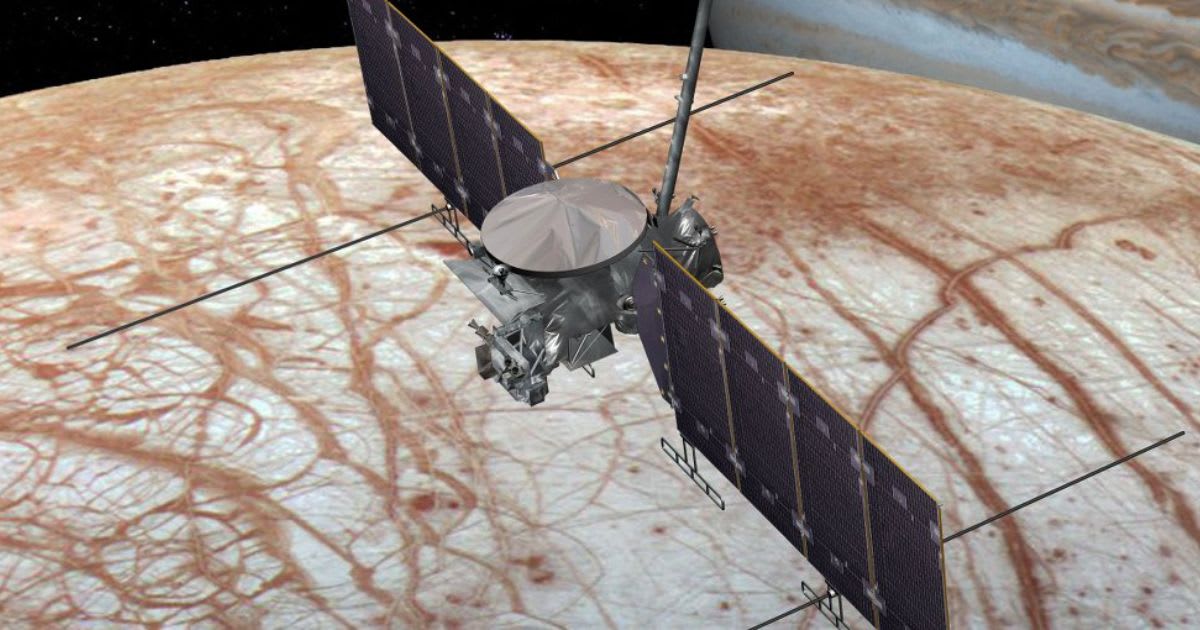
Europa Clipper will conduct detailed reconnaissance of Jupiter's moon Europa and investigate whether the icy moon could harbor conditions suitable for life (Cover Image Source: NASA)
Europa Clipper will conduct a detailed reconnaissance of Jupiter's moon Europa and investigate whether the icy moon could harbor conditions suitable for life (Representative Image Source: NASA)

The Europa Clipper will travel 1.8 billion miles to Jupiter and has nine science instruments, along with a gravity experiment using the telecommunications system. All of the craft’s science instruments will operate simultaneously on every pass, according to NASA. The flybys will happen at closest-approach altitudes as low as 16 miles above the surface. The craft will be focusing on a different location in each flyby so that it can scan almost the entirety of the moon. The Europa Clipper is the largest spacecraft NASA has ever developed for a planetary mission.
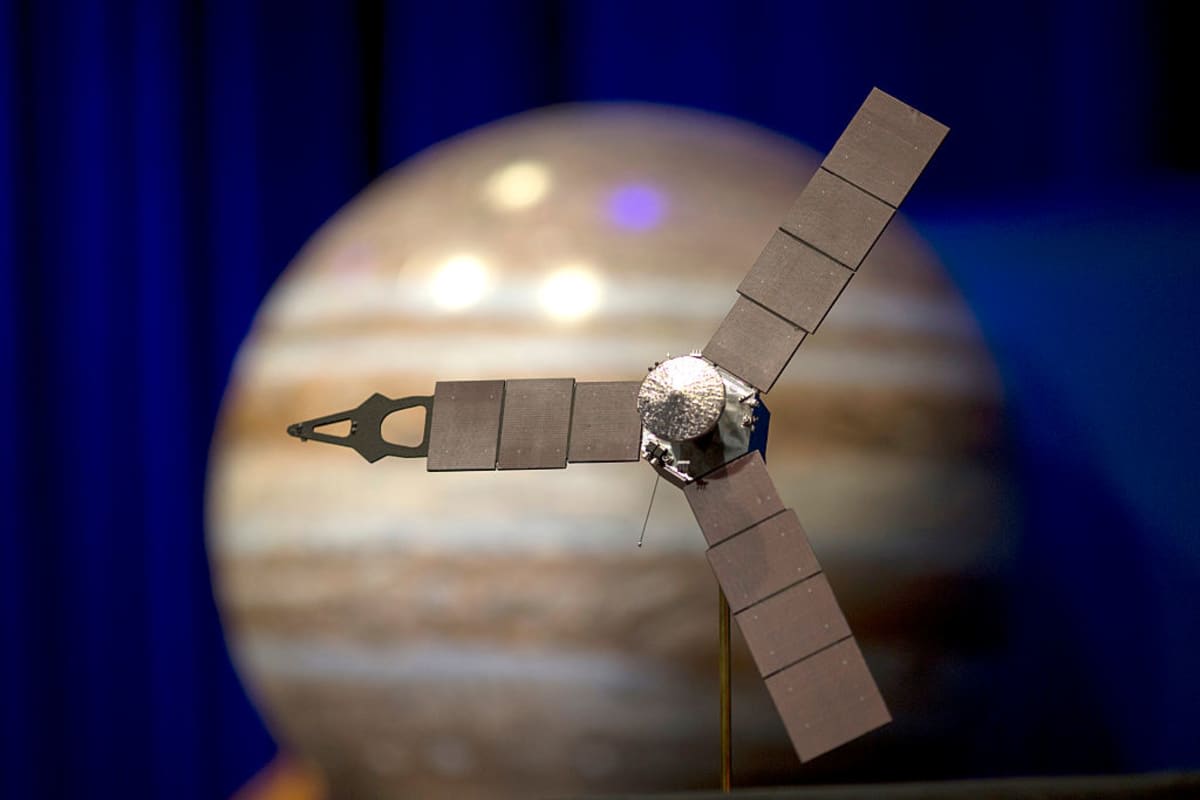
A desktop model of the Juno spacecraft is seen as NASA officials and the public look forward to the Independence Day arrival of the Juno spacecraft to Jupiter (Image Source: Getty | David McNew)

The spacecraft spans around 16 feet in height and will reach more than 100 feet with its arrays deployed. The spacecraft also has a dry weight, the mass without any propellant in the tanks, of 7,145 pounds. It carries massive solar arrays and radar antennas, large enough to collect enough light that is needed to fulfill its power requirement. As Europa experiences radiation and is caught in Jupiter's magnetic field, the craft’s payload and electronics are kept in a thick-walled vault. This strategy of enclosure was first developed successfully for NASA’s Juno spacecraft.
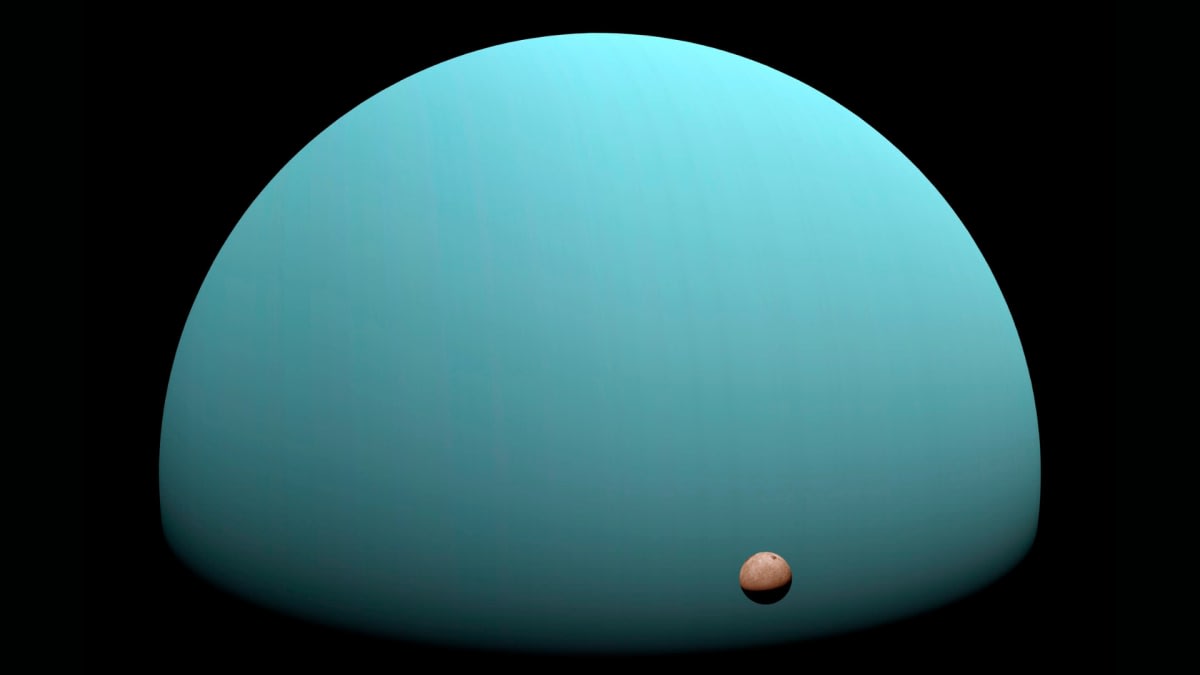
Illustration of the planet Uranus and its Moon (Representative Image Source: Getty Images | Photo by FreelanceImages / Universal Images Group / SCIENCE PHOTO LIBRARY)

The vault walls are made of titanium and aluminum, acting as a radiation shield against most of the high-energy atomic particles. This will help slow down the degradation of the spacecraft’s payload and its equipment by dramatic proportions. While all these materials are being sent to study the moon of Jupiter, the journey brings along some great surprises. Uranus getting caught in the starfield view of the camera is one such surprise, but obviously a happy one.

More on Starlust

NASA's Europa Clipper successfully completes critical radar test for Jupiter's moon Europa: 'We got everything we dreamed'

Europa Clipper en route to Jupiter captures stunning image of Mars with moons Phobos and Deimos
MORE STORIES

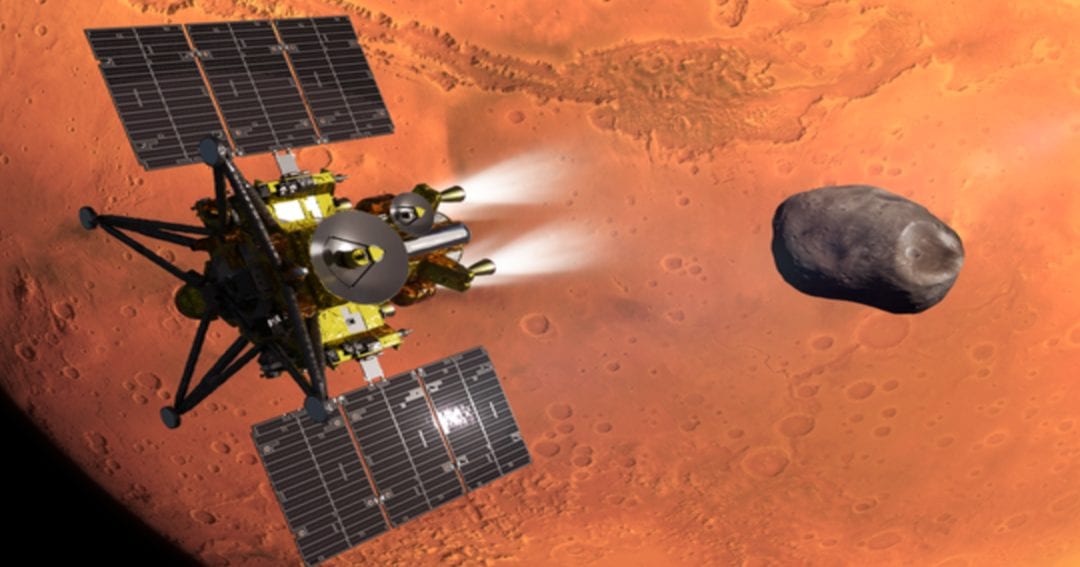
The origins of Mars' moons remain unclear. Could NASA's MEGANE instrument on JAXA's MMX spacecraft finally reveal whether Phobos is a captured asteroid or debris from an ancient impact?
6 hours ago
This accomplishment is monumental as the telescope is currently in its commissioning phase and hasn’t even begun its operations.
12 hours ago
NASA's Nancy Grace Roman Space Telescope, which is currently about a million miles from Earth, recently went through a series of tests and calibrations.
1 day ago
Blue Origin's tool might help reveal the origins of the two Martian moons which have been shrouded in mystery.
1 day ago
On October 11, Perseverance broke the off-world driving distance record set by NASA's Opportunity rover, which operated on Mars from 2004 to 2018.
3 days ago
The LISA mission will include three telescope-equipped spacecraft that will be deployed more than a million miles apart from each other. Together these spacecraft will help scientists detect gravitational waves that aren't possible to detect from Earth.
4 days ago
The Martian images show mysterious formations called yardangs, whose origins are unknown.
Oct 7, 2026
The Coronagraph made its first observation on September 22 and followed it up with another one on September 27.
Oct 1, 2026
DAVINCI may reveal why Venus, also known as Earth’s twin, is so different from our planet today.
Sep 30, 2026
According to NASA, Hubble has made over 1.7 million observations since its launch in 1990.
Sep 24, 2026