NASA’s Mars-bound ESCAPADE twins to conduct historic flyby of Earth soon: Here's how to spot it from the U.S.
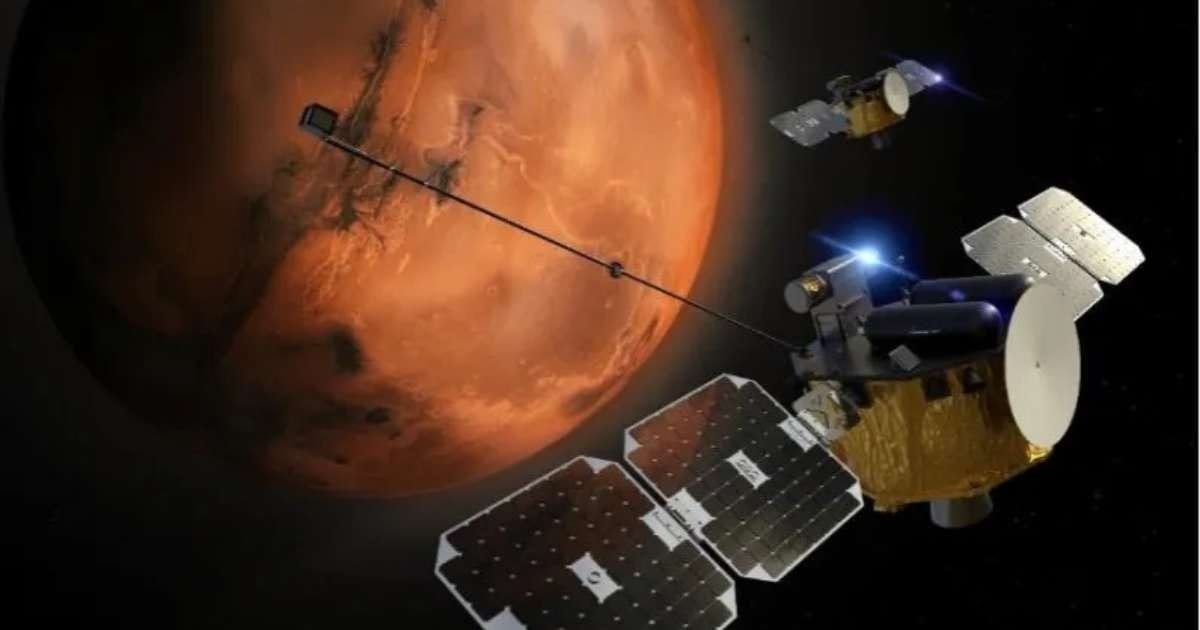
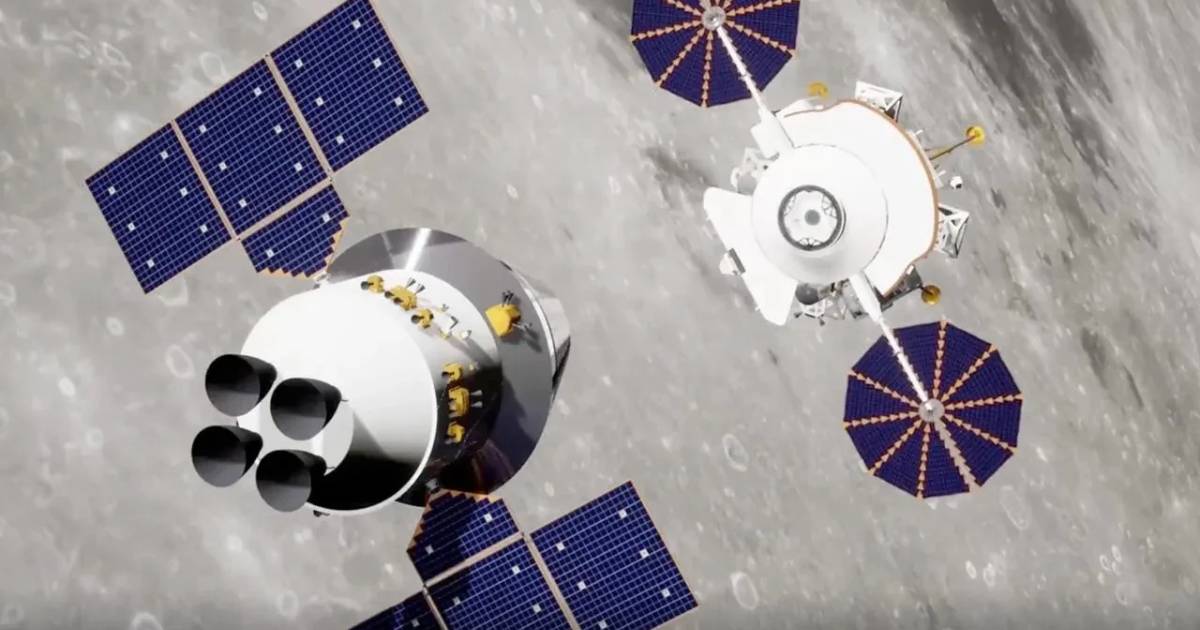
NASA’s twin spacecraft are preparing for an unprecedented journey to Mars, where they will perform a first-of-its-kind powered flyby of Earth this month before cruising toward the Red Planet. As shared in an update by NASA yesterday, the two spacecraft, part of the agency’s ESCAPADE (Escape and Plasma Acceleration and Dynamics Explorers) mission, will combine the planet’s gravitational pull with a powerful engine burn during this flyby to propel themselves toward Mars.
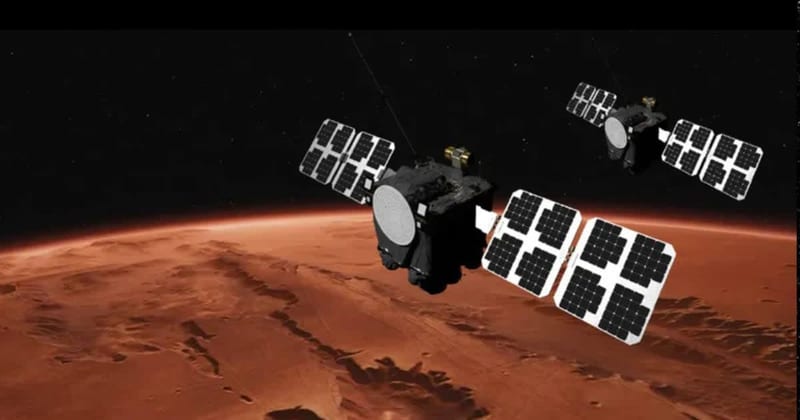
According to NASA, the first spacecraft will make its closest approach to Earth and perform its engine burn at approximately 5 a.m. EST on November 7, while its twin will follow two days later, at approximately 6 a.m. EST on November 9. Following these encounters, where the spacecraft will pass between 600 and 1,100 miles (965 and 1,770 kilometers) above Earth's surface, the twins will then embark on a 10-month cruise to Mars, with arrival at the Red Planet expected on September 7 and September 9, 2027, respectively.
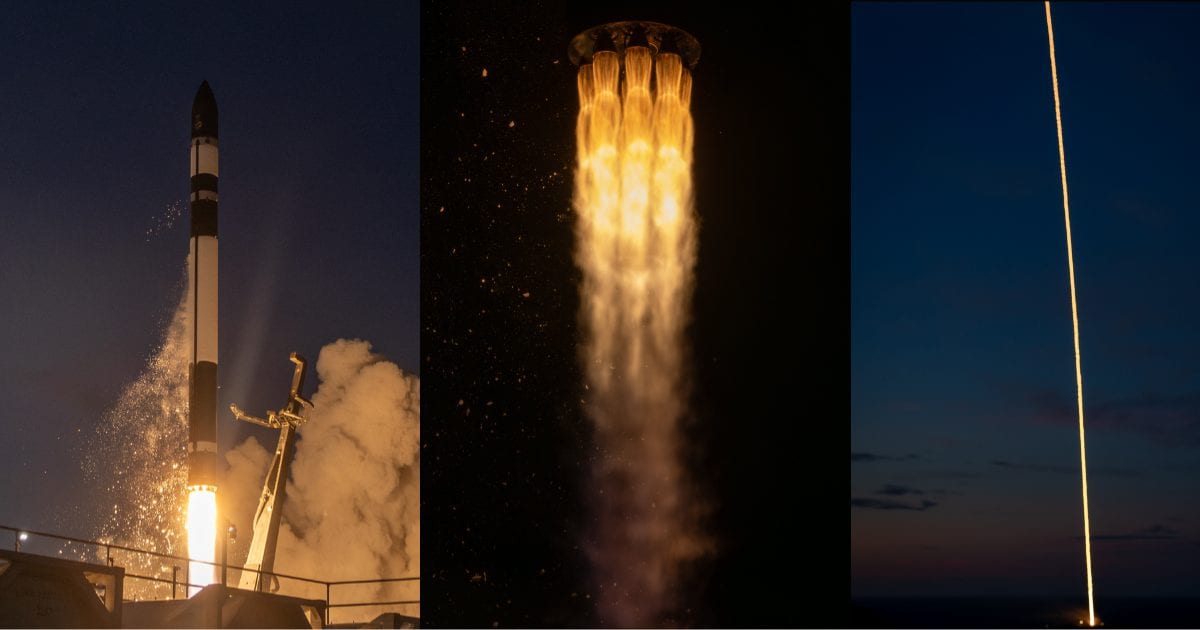
The two refrigerator-sized ESCAPADE spacecraft—namely Blue and Gold—were designed by Rocket Lab and launched aboard Blue Origin's New Glenn rocket on November 13, 2025, from Cape Canaveral Space Force Station in Florida. While most Mars missions take advantage of a launch window that opens roughly once every 26 months, when Earth and Mars are suitably positioned for an energy-efficient journey, ESCAPADE broke away from this conventional approach by lifting off from Earth when the two planets were on opposite sides of the Sun. And rather than heading straight for Mars, the twin probes traveled in a kidney-bean-shaped loop around the Earth-Sun Lagrange Point 2 before looping back toward Earth this month so that they can slingshot themselves towards Mars by using the planet's gravitational pull once Earth and Mars are favorably aligned, which is now. ESCAPADE will combine Earth's gravity with an approximately nine-minute engine burn, which will raise each spacecraft's speed by more than 1,000 mph, taking it from approximately 6.3 miles per second to 6.7 miles per second. This technique, known as a powered flyby or an Oberth maneuver, has not been successfully attempted before by any Mars-bound spacecraft.
When the twin ESCAPADE spacecraft arrive at Mars in September 2027, they will study how the solar wind interacts with the Martian environment and how that drives atmospheric loss at the Red Planet. https://t.co/ighZ4rnvCZ
— NASA Mars (@NASAMars) July 24, 2026
The ESCAPADE twins will be visible from Earth during the flyby
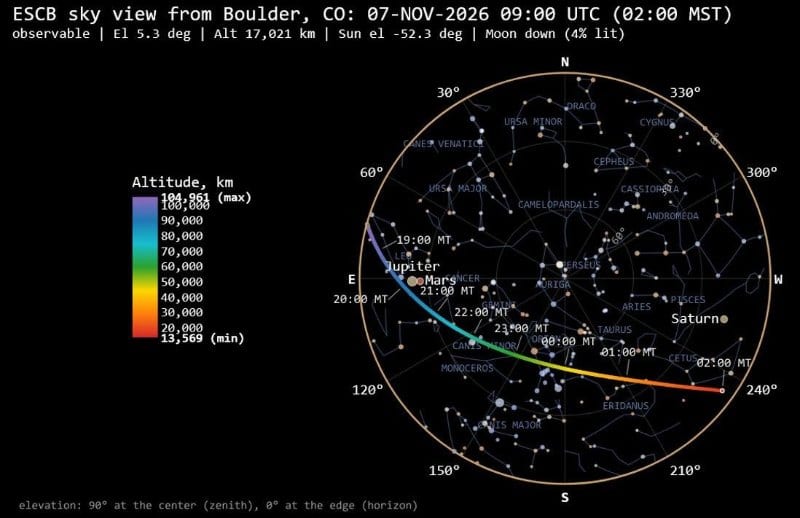
NASA says that skywatchers may be able to catch a glimpse of the spacecraft during these flybys, though a telescope will be required to spot them in the form of dim, slow-moving points of light. The twins will be visible over southern Australia around 4:51 a.m. EST (8:51 p.m. AEDT) on November 7 and 5:51 a.m. EST (9:51 p.m. AEDT) on November 9, when they start their respective engine burns. They may also be visible over the western U.S. about an hour before these burns, following which they'll disappear below the horizon. The best time to watch the first spacecraft (when it's at its brightest) will thus be between midnight and 1 a.m. PST on November 7, and that for the second spacecraft will be between 1 and 2 a.m. PST on November 9.
ESCAPADE's mission
ESCAPADE has four main goals: to examine Mars' "hybrid" magnetosphere, track the solar wind’s long-term erosion of the atmosphere, understand how the solar wind interacts with the magnetic environment, and chart key features of Martian space. Per researchers, Mars was once Earth-like, with vast oceans, until its core cooled billions of years ago and its protective magnetosphere collapsed. The solar wind then stripped away the atmosphere, taking away the water with it. By pinpointing how this happened, ESCAPADE might also show whether Earth could one day meet a similar end.
More on Starlust
'Rosetta stone' of Mars: Two-pound rock turns out to be 4-billion year old piece of red planet
Humans can make a round trip to Mars within 153 days, new study reveals