What's really inside a black hole? Physicist Clifford Johnson explains
The other side of a black hole
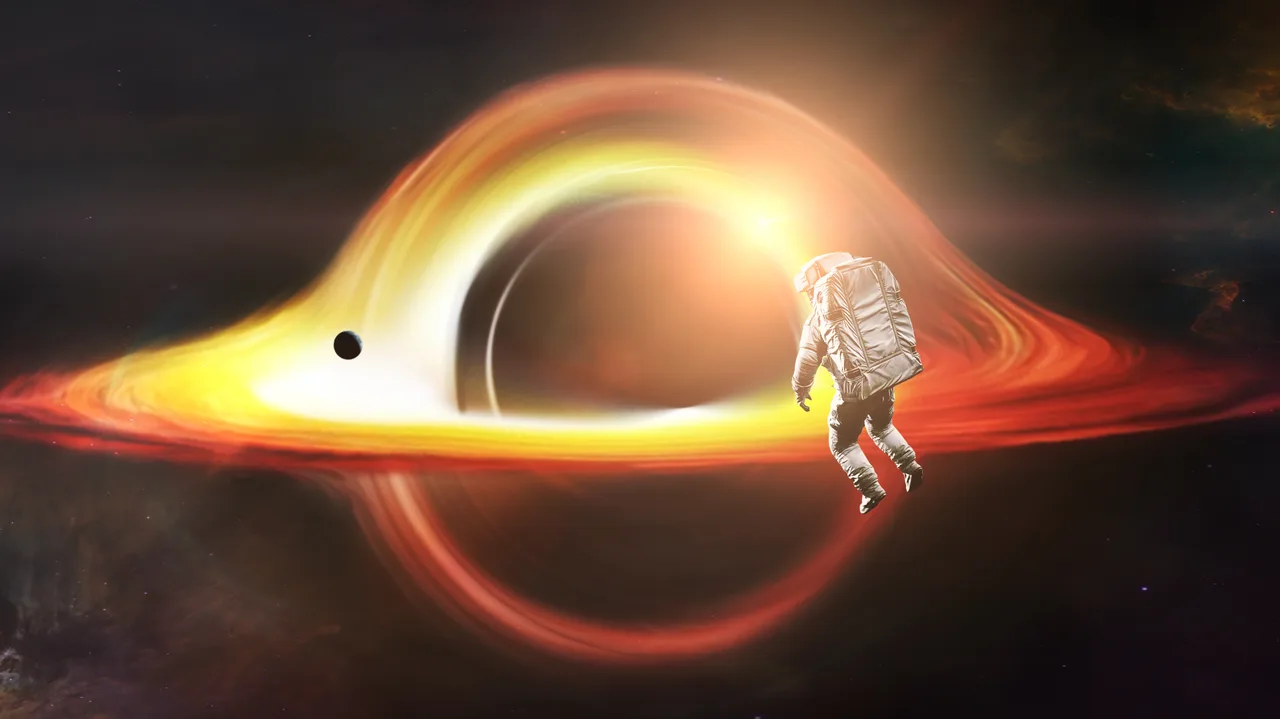
In our universe, black holes are known to be some of the strangest objects. They form when massive stars collapse in on themselves, and they pack an enormous amount of mass into an incredibly small space. As a result, their gravity becomes so powerful that once something crosses a boundary known as the event horizon, nothing (not even light) can escape.
So, what actually lies inside a black hole? Scientists have been trying to answer this question for years. On the topic, USC physics and astronomy professor Clifford Johnson has shared his own theory. Here's what he believes.
Does anything ever escape a black hole?
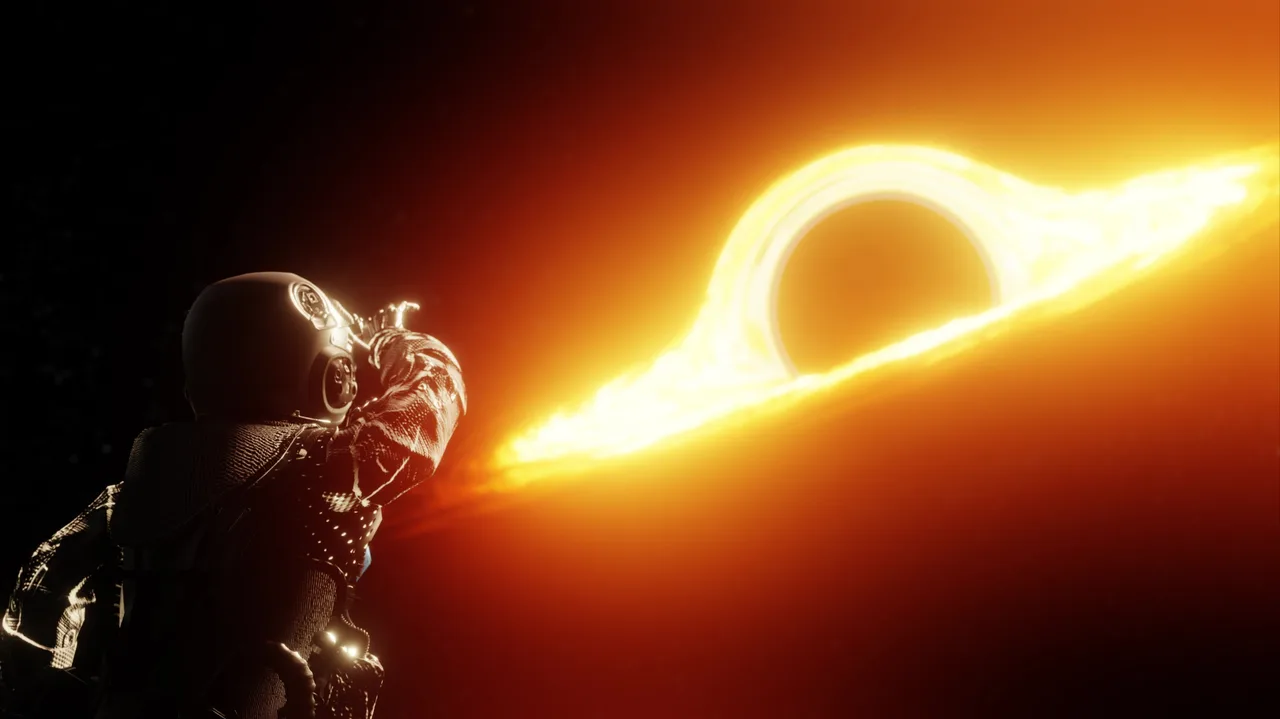
On an episode of the “What If’ podcast, USC physics professor Clifford Johnson shared his take on a tricky question: could we ever see through a black hole, and if we did, what would be waiting on the other side?
His first point was that a black hole isn't going to let anything escape from inside it, so we shouldn't expect to see anything coming from within. This is because you will reach the point of no return around a black hole, known as the event horizon. Once you're past it, nothing can make it back out to tell the rest of the universe what's actually going on inside it.
What would you actually see inside a black hole?
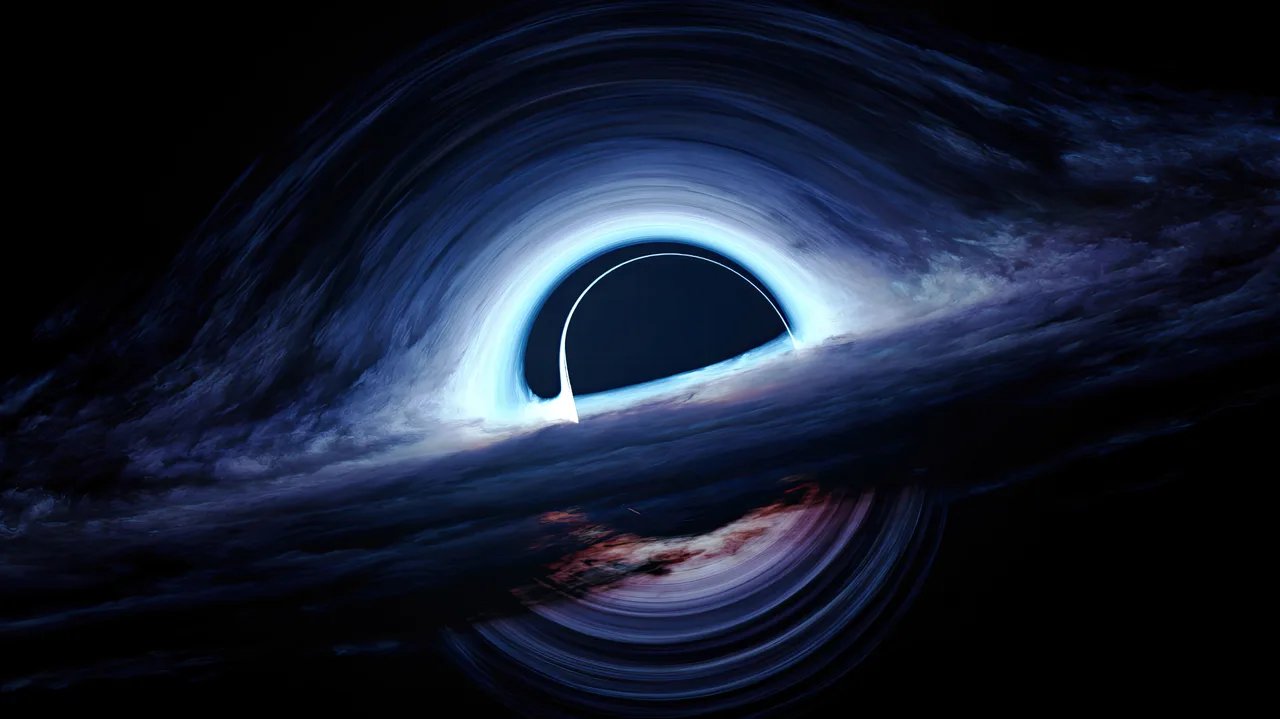
But let’s say you make it past the event horizon. And when you do, you will eventually reach the singularity, a point where all the black hole's mass is thought to be concentrated at infinite density.
Theoretically, you will be inside the black hole along with the trapped light. Hence, you will be able to see the light. But its direction would be completely scrambled. You would see a uniform glow when looking away from the singularity and complete darkness when looking directly toward it.
What's really on the other side?
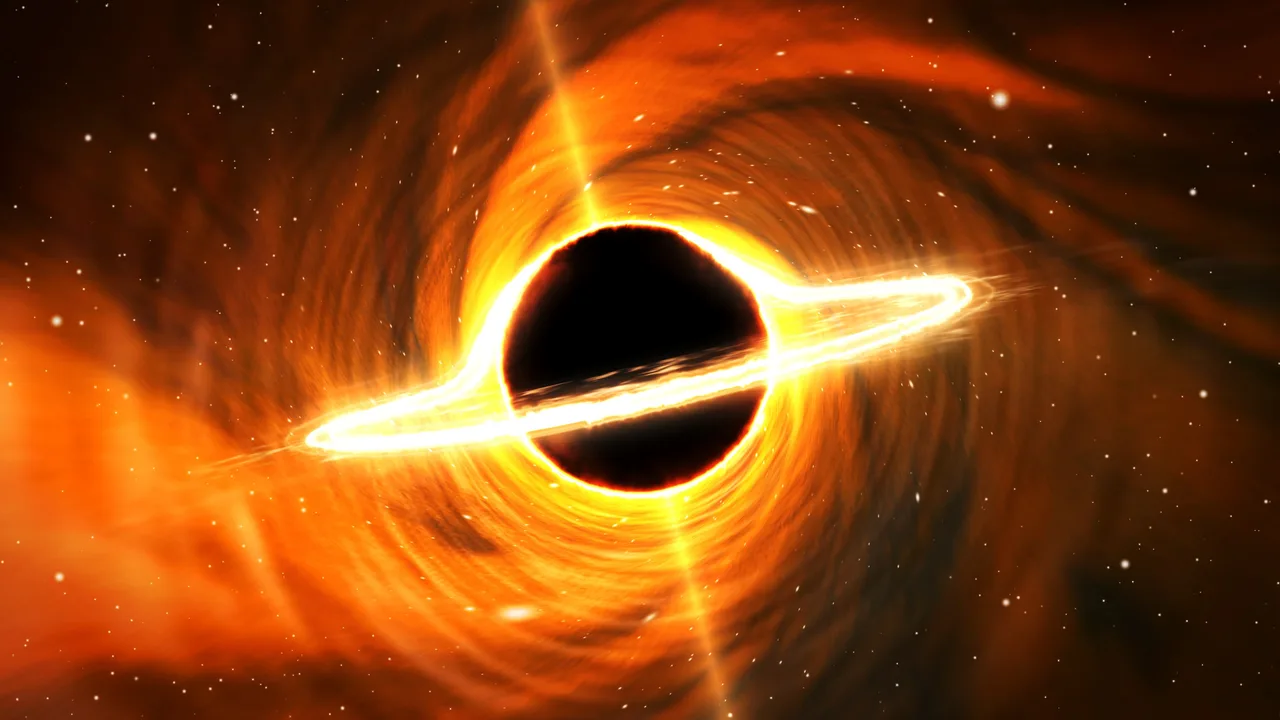
Johnson explained that a black hole is not really a flat circle you fall through. Instead, it’s a three-dimensional sphere. This means that you can approach it from any direction, which makes "the other side" a strange concept to picture.
He connected this to the Einstein-Rosen bridge, which is better known as a wormhole. It’s a theoretical shortcut between two distant points in space. Johnson noted that "the plumbing is higher dimensional than we normally think of." Though he clarified that, “real stable wormholes are not thought to be possible as far as we understand. But it's fun to think about them, and of course we use them in science fiction a lot."
What would it feel like to fall into a black hole?
But if you could survive falling into a black hole without being torn apart by spaghettification, time itself would feel very different. Brenna Mockler, an assistant professor at UC Davis, explained, "Your concept of time is going to be different from everyone else's," much like the time dilation shown in Interstellar.
Plus, even after crossing the event horizon, "You're still looking out at the galaxy even as you're falling in. Light can't get out, but light can get in," she says. Since no one has ever experienced this, what happens next remains purely theoretical.