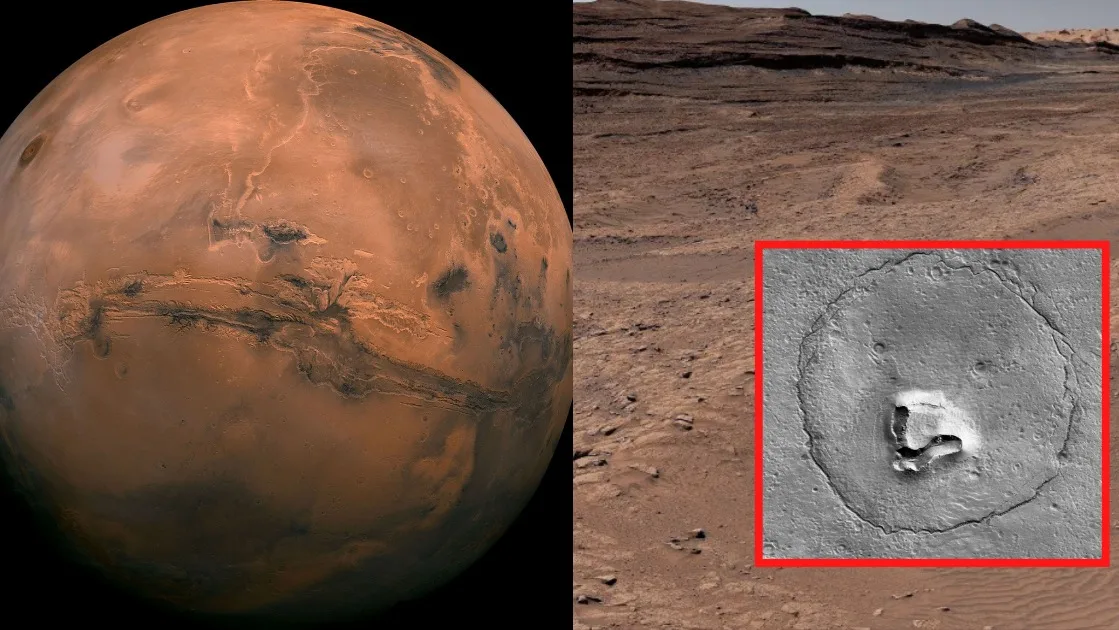
Is that a ‘bear’ on Mars? NASA spotted something that looks oddly familiar
The search led to something unexpected
NASA’s Mars Reconnaissance Orbiter was launched on August 12, 2005, with the aim of searching the surface for any signs of water. During its search, it also captured images of the planet that helped us understand Mars better.
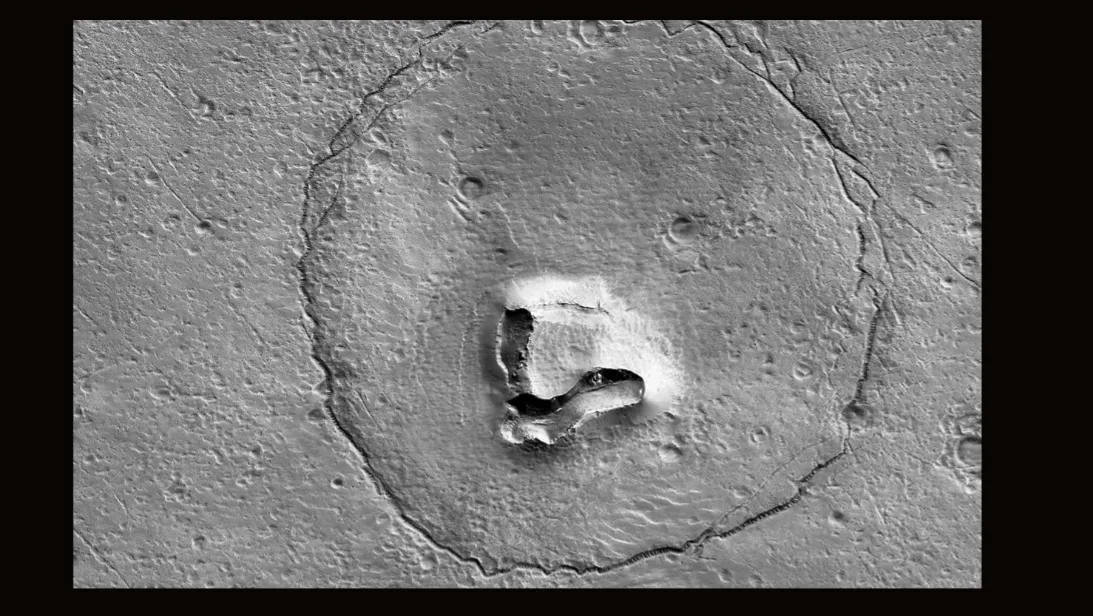
But along the way, it also gave us one of the most puzzling images yet. This one strangely looks like a bear is staring right back at us. So, what’s actually going on with this 'bear' on the Red Planet? Here’s a closer look at what NASA found.
A bear's face turns up on the Martian surface
On December 12, 2022, NASA's Mars Reconnaissance Orbiter photographed a feature on a mile-wide hill that looks very similar to a bear's face. It has a V-shaped section that looks like a nose, a pair of craters that make the appearance of the eyes, and even a ring-shaped crack pattern that outlines the head. But NASA clarifies it’s not what it looks like.
So what actually carved out the bear shape?
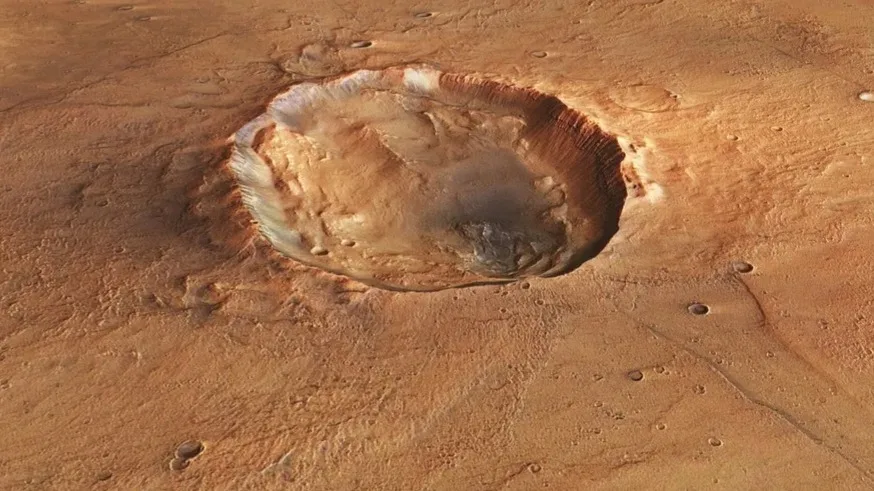
Researchers at the University of Arizona, who operate the HiRISE camera, have a couple of theories about what’s going on. A post from the university notes, “The circular fracture pattern might be due to the settling of a deposit over a buried impact crater. Maybe the nose is a volcanic or mud vent, and the deposit could be lava or mud flows?”
Here’s what NASA says about this image
According to NASA, this image was captured on December 12, 2022. NASA describes this as a "bit of ursine pareidolia" and adds that, "while it resembles a bear we might see on Earth, this is actually a hill on Mars with a peculiar shape."
Pareidolia is a mental habit of our brain where it sees familiar patterns (such as this image above) when they’re not really there. This also happens often in clouds or even burnt toast.
Mars has fooled us with a 'human face' before
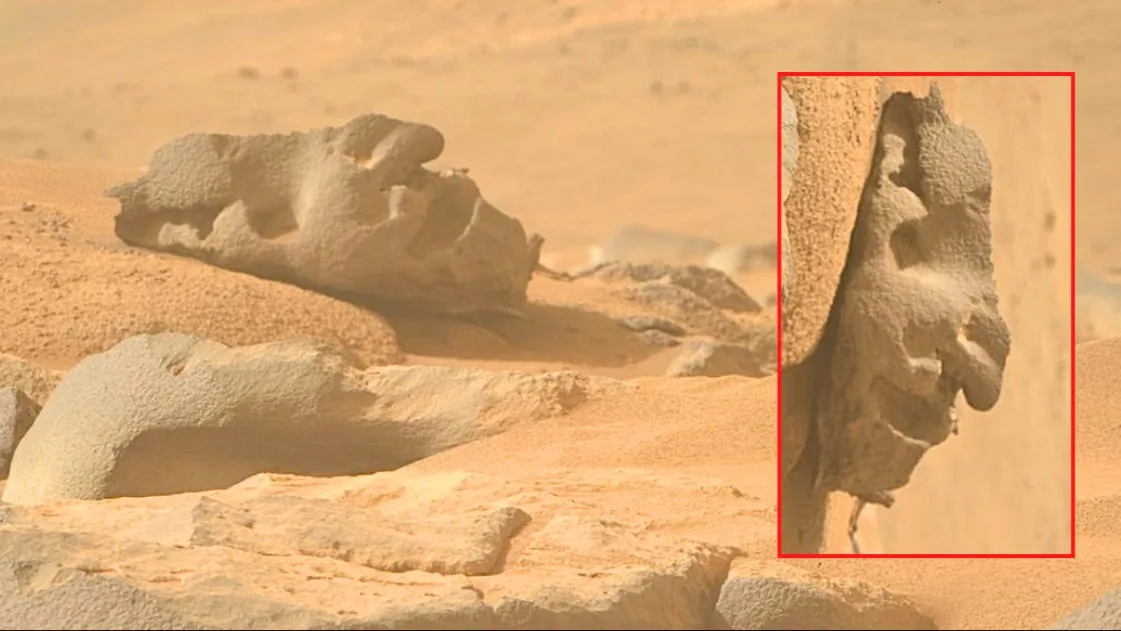
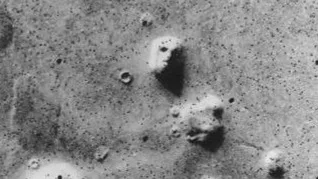
This is not the first image in which illusions like this have appeared on the surface of Mars. Viking 1 Orbiter spacecraft once photographed an image that looks like a ‘face on Mars,’ and it even has two 'eyes' and a 'nostril'.
But it’s simply just shadows in the rock formation that give it the appearance of a human face. NASA makes it clear by noting, “Planetary geologists attribute the origin of the formation to purely natural processes. The feature is 1.5 kilometers (one mile) across, with the sun angle at approximately 20 degrees.”