What if déjà vu is a sign we're living inside a simulation? Here's what scientists say
That "I've been here before" feeling
We all have felt this before: when a moment in our lives seems to have happened before, even though we know full well it is happening for the first time. This concept is called déjà vu, French for “already seen.” Scientists have been trying to study this closely to understand what exactly happens in our brain during these episodes.
While most of the studies are focused on our brain functions, some scientists say that the feeling of déjà vu could be tied to simulation theory, which says that we are actually living in a computer simulation. Here’s why scientists think they could be connected.
What exactly is déjà vu?
“Déjà vu is a false sense of familiarity,” says neurologist Jean Khoury, MD. “Your brain creates a sensation as if you’ve been in a certain situation before, but you haven’t. So, you’re unable to retrieve it from your memory and can’t identify the actual situation.” She explained that it's caused when there is a miscommunication between two parts of our brain.
A team at the University of Leeds even studied people who get déjà vu constantly. Team leader Dr. Chris Moulin explained that a patient was so overwhelmed by these sensations that he had given up watching TV or reading newspapers altogether. This is because he gets the feeling that he has already lived through everything. That same patient also struggled to remember what had happened just minutes earlier.
Scientists tried to fake déjà vu in a lab
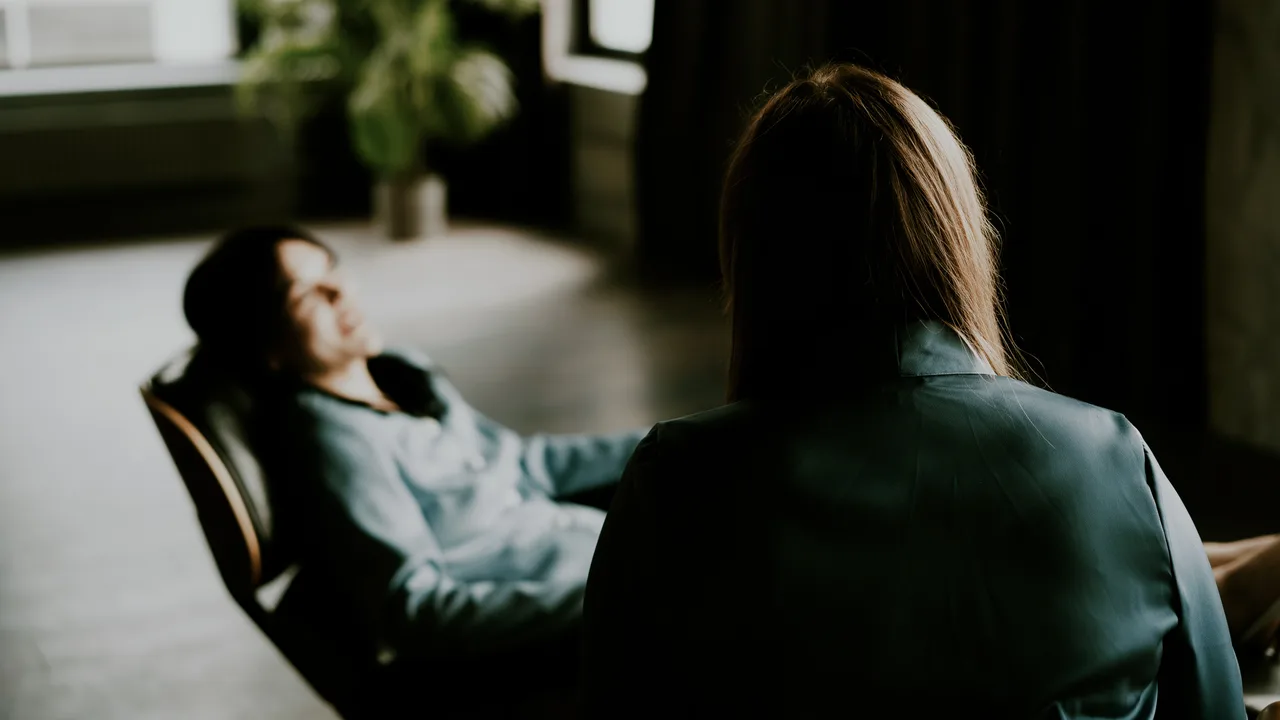
Researcher Akira O'Connor tried to trigger the feeling of déjà vu on purpose. For this, she used hypnosis. She had participants memorize a set of words, then suggested they forget everything about the exercise. When they were later shown cards with those same words, most people reported feeling something similar to déjà vu, even though the memory itself had technically been wiped.
Some even found it genuinely difficult to explain, and almost none of them could say where the feeling was coming from. This raises an interesting possibility that maybe déjà vu doesn’t actually need a real memory to happen at all.
Could it all be tied to a simulated universe?
Independent researcher Deep Bhattacharjee has taken things further. He argues in his paper that déjà vu (along with the Mandela effect, where large groups misremember the same event the exact same wrong way) could be a sign that reality itself is simulated.
His paper suggests an advanced civilization, or some higher intelligence beyond our understanding, could be behind it, with déjà vu showing up as a kind of "glitch in the matrix" caused by lag in the system. “If reality is being augmented as a simulation, then from the modern norm of physics, it is possible that everywhere around us, including us and what we perceive, is a simulation simulated by a super powerful computer from a far-fetched future time,” the paper reads.
But it doesn’t just stop there
Famous physicist Michio Kaku has a different theory. In the Big Think video, Kaku references a theory, saying, “déjà vu simply elicits fragments of memories that we have stored in our brain, memories that can be elicited by moving into an environment that resembles something that we’ve already experienced.”
He notes that our universe might be one of many running side by side. Kaku suggests déjà vu might happen when we briefly "decouple" from another universe vibrating nearby. Even so, he ultimately grants that “déjà vu is probably simply a fragment of our brain eliciting memories and fragments of previous situations.”