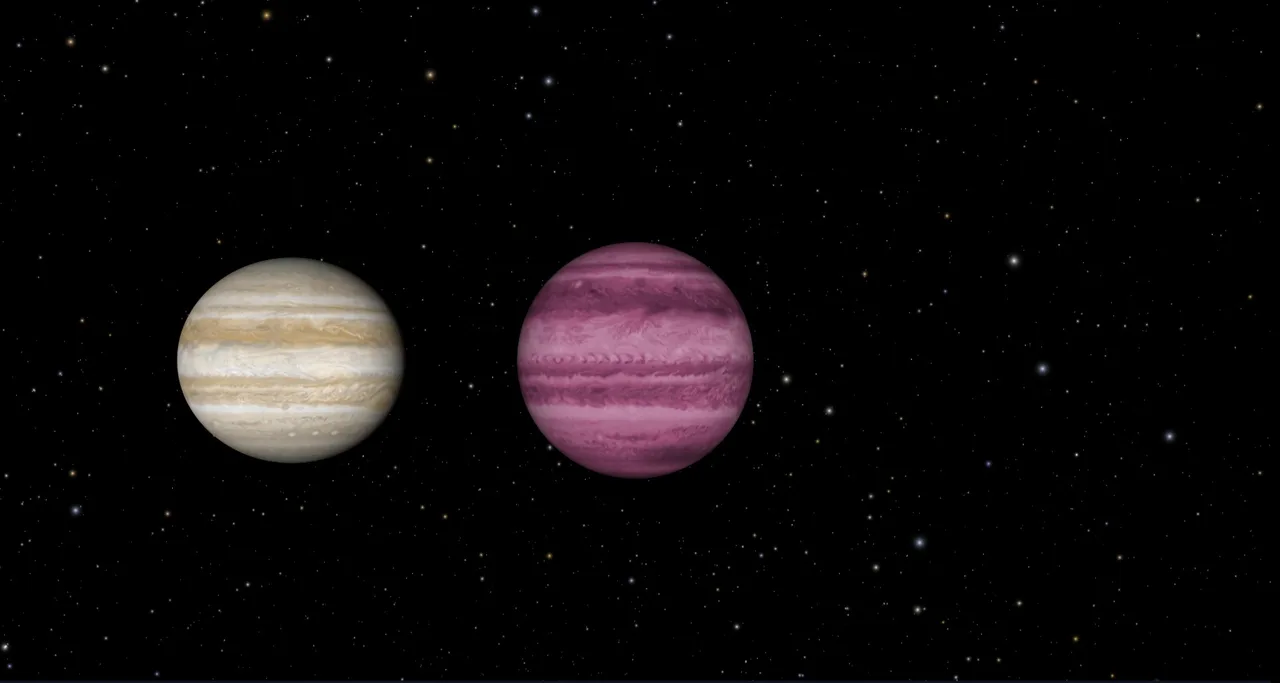
This 'Pink Planet' was already weird, and now astronomers have found salt in its skies
The ‘Pink Planet’ may not be a planet at all
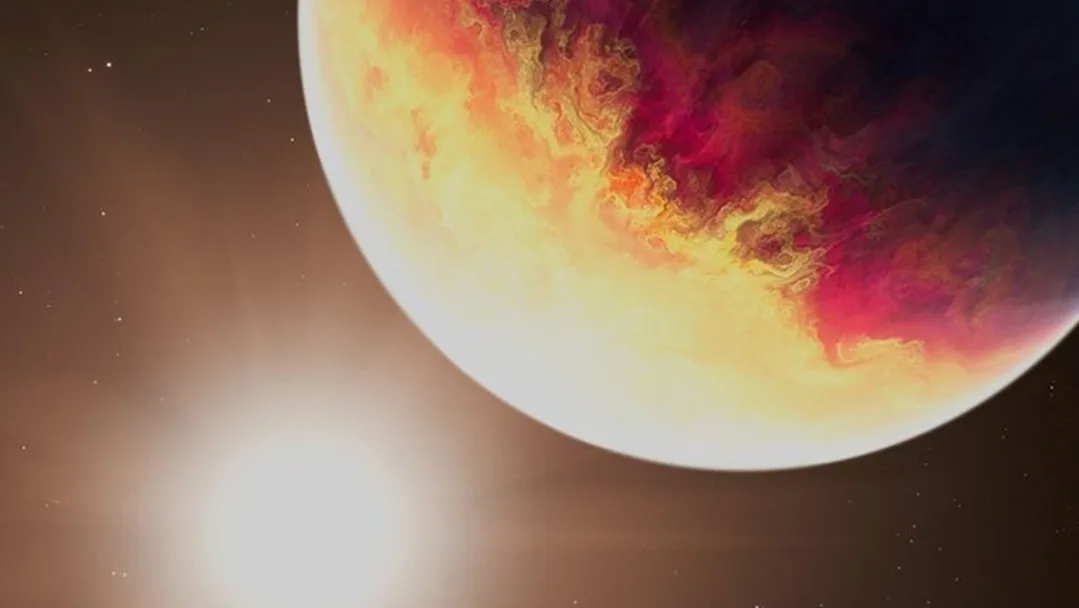
GJ504b, the rosy-hazed world nicknamed the ‘Pink Planet,’ has puzzled astronomers ever since its discovery in 2013. At about 25 times the mass of Jupiter, it treads the fine line between giant planets and brown dwarfs (or failed stars). As a result, astronomers categorize it as a “planetary-mass companion,” which means that it is a planet-sized object orbiting a star.
It’s only about as hot as a bread-baking oven

What’s added to the mystery surrounding the Pink Planet is that it is too faint to be studied in detail with ground-based telescopes, even though it orbits a Sun-like star just 57 light-years from Earth. That’s because it’s unusually cold. While the majority of directly imaged exoplanets fall within the 1,000 to 2,000 degrees Fahrenheit temperature range, the pink world is just about 550 degrees Fahrenheit. That is roughly as hot as a bread-baking oven, which makes it the coldest companion ever discovered using a ground-based telescope.
Scientists attribute its chilly temperature to its age. It was likely born between 2.5 billion and 4 billion years ago and has been cooling down ever since.
When the James Webb Space Telescope looked at the Pink Planet

With ground-based observations of GJ504b difficult, a recent study led by Aneesh Baburaj of Northwestern University used the James Webb Space Telescope to obtain the planet’s spectrum. While astronomers had spent entire nights trying to obtain the planet’s spectrum with some of the largest observatories in the world, the JWST only took about two hours for the entire observation.
“When we finally obtained its spectrum, it immediately looked interesting,” said Baburaj, who’s a postdoctoral associate at Northwestern and an expert on exoplanets, in a statement. “But once we started digging deeper into the data, we realized it was not like anything we have analyzed before.”
Salt clouds in the Pink Planet’s atmosphere?
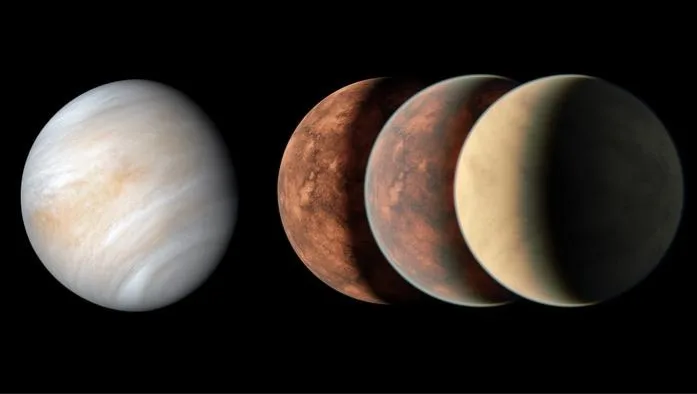
For the uninitiated, a spectrum breaks down the light emitted by a planet into its component colors, with specific wavelengths representing a particular element or molecule. The spectrum of the Pink Planet that JWST obtained revealed the presence of water vapor, methane, carbon dioxide, and ammonia, among other molecules. But when the researchers fed this data into an astrophysical model, they noticed something weird again. The simulated atmosphere of the companion only made sense when clouds were added to the model.
“We ran simulations with clouds, and the results aligned with what we know about cold planets,” Baburaj said. “We tried three different types of clouds, and salt clouds fit best. When we accounted for salt clouds, it subdued the signature of molecules hidden deeper in the companion’s atmosphere. Then, the results became physically possible.”
The representative image of Earth's clouds above was captured by NASA’s Terra satellite over the Southern Indian Ocean.
The larger implications of the discovery
While it is still a mystery as to whether GJ504b formed like a planet or a star, Baburaj thinks that the techniques the study employed could be useful in uncovering other mysteries surrounding cold planets. “This is the first time we’ve found that salt clouds are critical to explaining the spectrum of an object,” Baburaj said. “It’s a good reminder to account for clouds in our models.”