Neil deGrasse Tyson thinks first contact with intelligent aliens could look like this
Neil deGrasse Tyson's latest bestseller deals with intelligent aliens
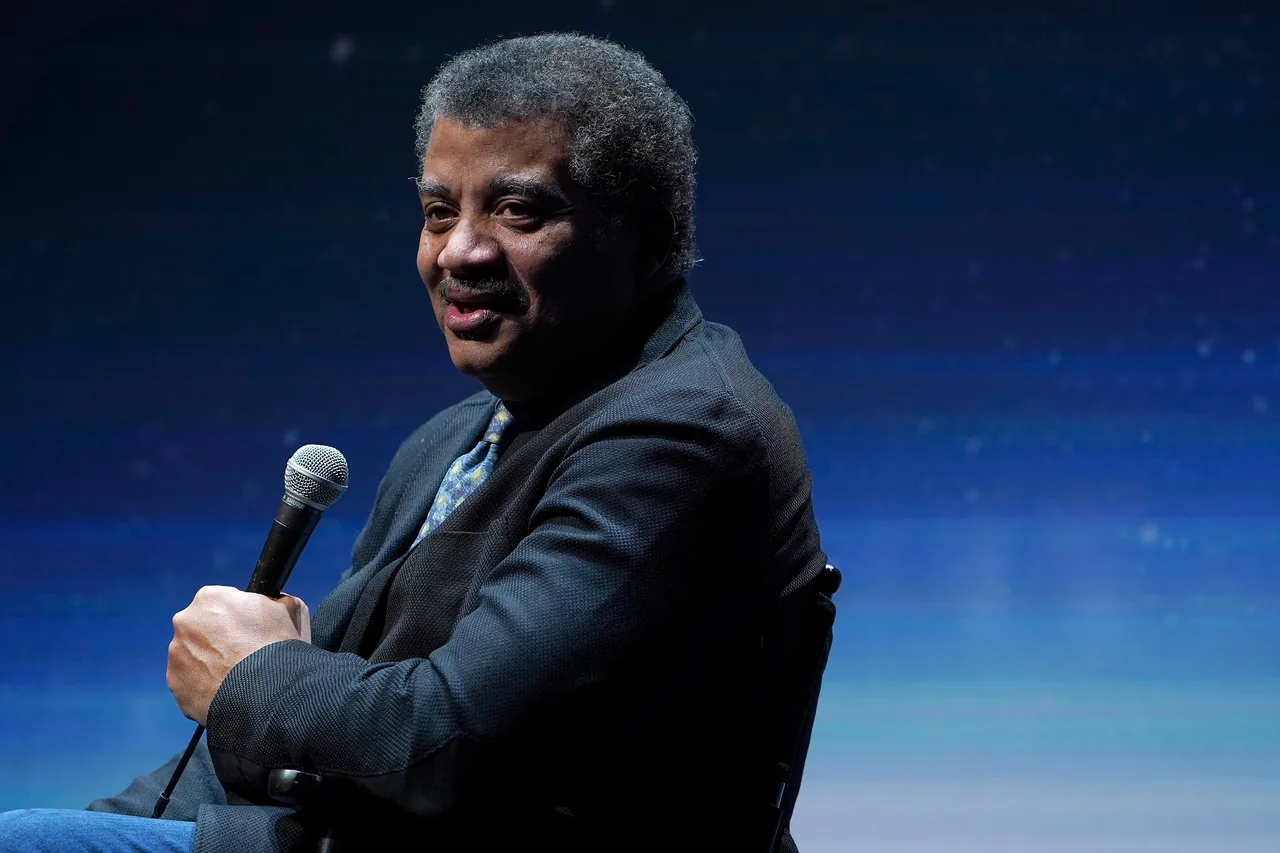
Neil deGrasse Tyson’s book Take Me to Your Leader was published on May 12, 2026, and soon became a New York Times bestseller. Tyson shared that he wrote the book to bring public discussions about intelligent alien life back to the realm of real science. He admitted in a recent interview that as a child, he actually wanted to be abducted by aliens—hoping a beam of light would take him away so he could satisfy his curiosity about other life forms. The astrophysicist pointed out that our fascination with extraterrestrials extends from the general public all the way to high-level government officials. “The book is not so much an act of debunking aliens as it is an act of celebrating the fact that people feel the way they do about them,” Tyson explained.
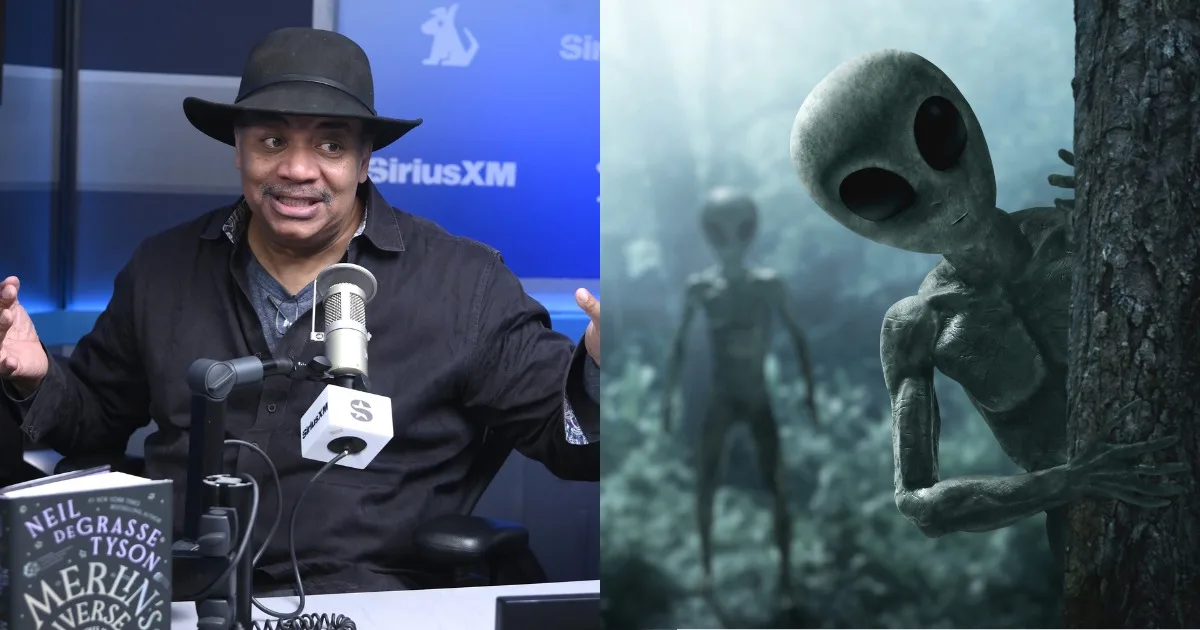
This image shows Neil deGrasse Tyson (L) and an stock illustration of alien creatures in a forest (R).
Is there a pattern behind global UFO sightings?
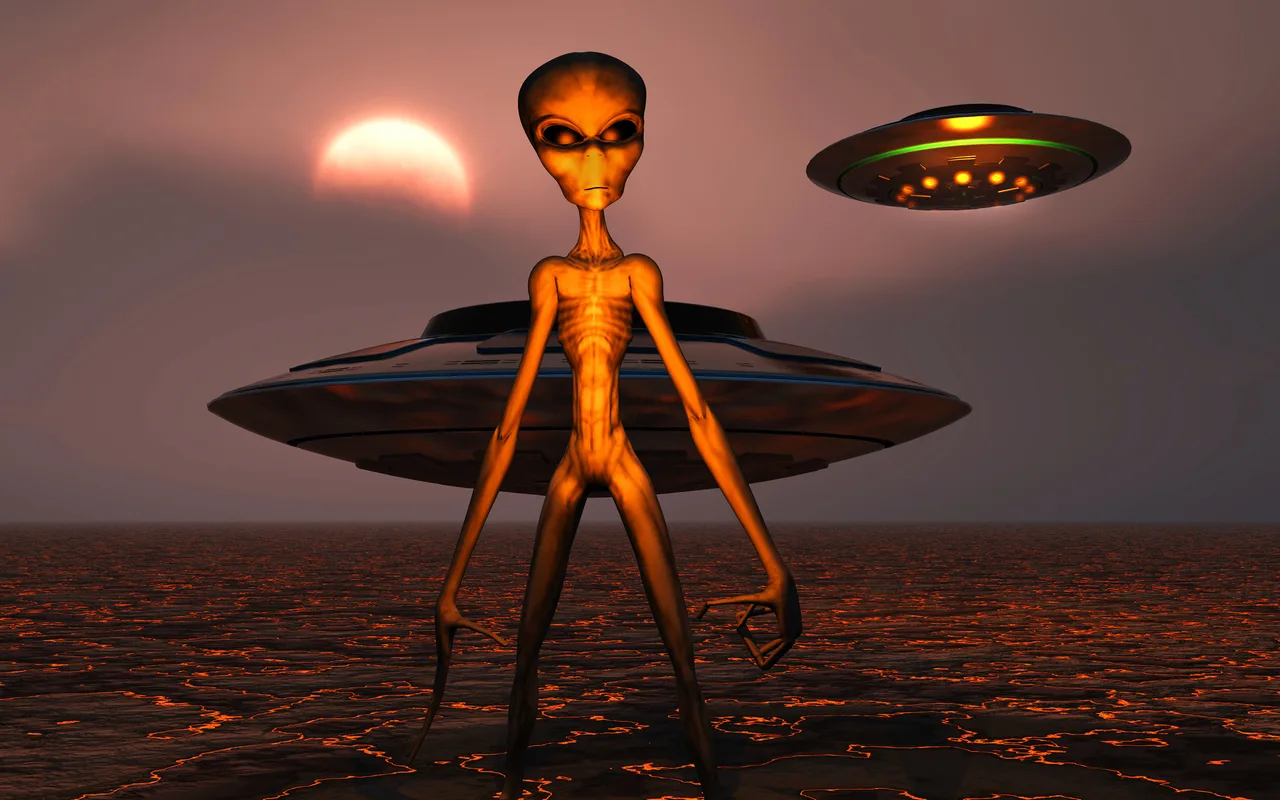
While discussing his book, Tyson pointed out an interesting demographic pattern in UFO reports. He noted that “the English-speaking world reports vastly more UFO sightings than any other language group in the world.” Surprisingly, Australia, Canada, the United States, New Zealand, and the United Kingdom together account for about 90% of all reported UFO sightings globally. For Tyson, this data raises a profound psychological question: “When we all look up, do we need something up there that we can imagine or feel or long for?” His book explores this human curiosity and the underlying reasons why the idea of alien life continues to capture our collective imagination.
Has Earth already been visited by aliens?
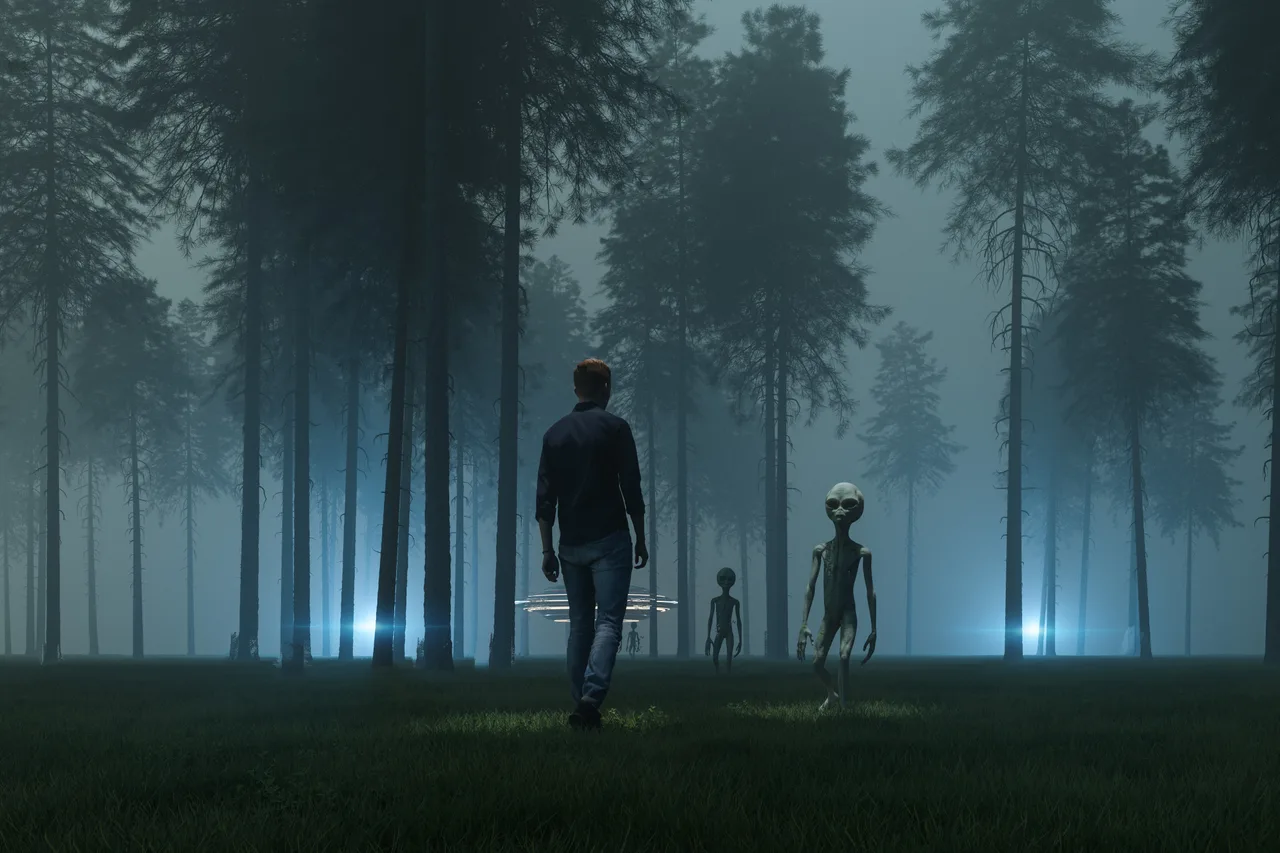
When it comes to debates and claims that world governments are secretly hiding evidence of extraterrestrial visits, Tyson remains highly skeptical. He pointed out the logical absurdity of conspiracy theories, rhetorically asking why aliens would exclusively choose to visit highly classified government facilities while avoiding the public. With over six billion smartphones in the world capable of capturing high-resolution photos and videos, Tyson argues there should be undeniable, crowdsourced evidence if aliens had actually visited. Furthermore, he noted the sheer impossibility of keeping such a massive secret. “Also, these cover-ups would require thousands of people to keep secrets. At least, given the size of the agencies involved and the magnitude of what you’re hiding.” Recalling Benjamin Franklin's famous quote, he added: "Three people can keep a secret if two of them are dead.”
What could first contact look like?
Tyson also reflected on what humanity's first actual meeting with intelligent alien life might look like. He believes that initial communication shouldn't rely on language, but rather on universal constants that both civilizations would inherently understand, like mathematics. Tyson suggested, “For example, the value of pi. A circle is a circle, a diameter is a diameter, no matter what you call it. Or the Pythagorean Theorem. It’s profoundly simple, but a brilliant way to communicate that we understand mathematics as a species." For instance, because the ratio of a circle to its diameter remains exactly the same everywhere in the Universe, Tyson views these shared scientific concepts as the perfect foundation for communication before moving on to more complex ideas.
Science as a universal language of communication?
Building on universal concepts like pi and the Pythagorean theorem, Tyson reflected on how the periodic table of elements might also serve as a cosmic translation tool. While he acknowledges that alien civilizations would obviously use different symbols or words for different elements, the fundamental chemistry of the cosmos remains identical. “Of course, aliens would use different symbols, but if they made materials and they’re moving around the Universe, they would have access to the same elements,” Tyson explained. By identifying these shared physical truths, two vastly different species could establish a baseline of mutual understanding. As the astrophysicist added: “These sorts of scientific concepts are starting points, and we could increment from there. Later on, we might figure out how to say ‘hi’.”