Manhattan on Mars? UFO researcher claims the Red Planet had an ancient city
Cydonia and the "Face on Mars"
Billions of years ago, when Mars had liquid water, an ancient city flourished along one of its shorelines. At least that is what Jason Martell, a UFO researcher and a regular guest on the History Channel’s ‘Ancient Aliens’ program, seems to think.
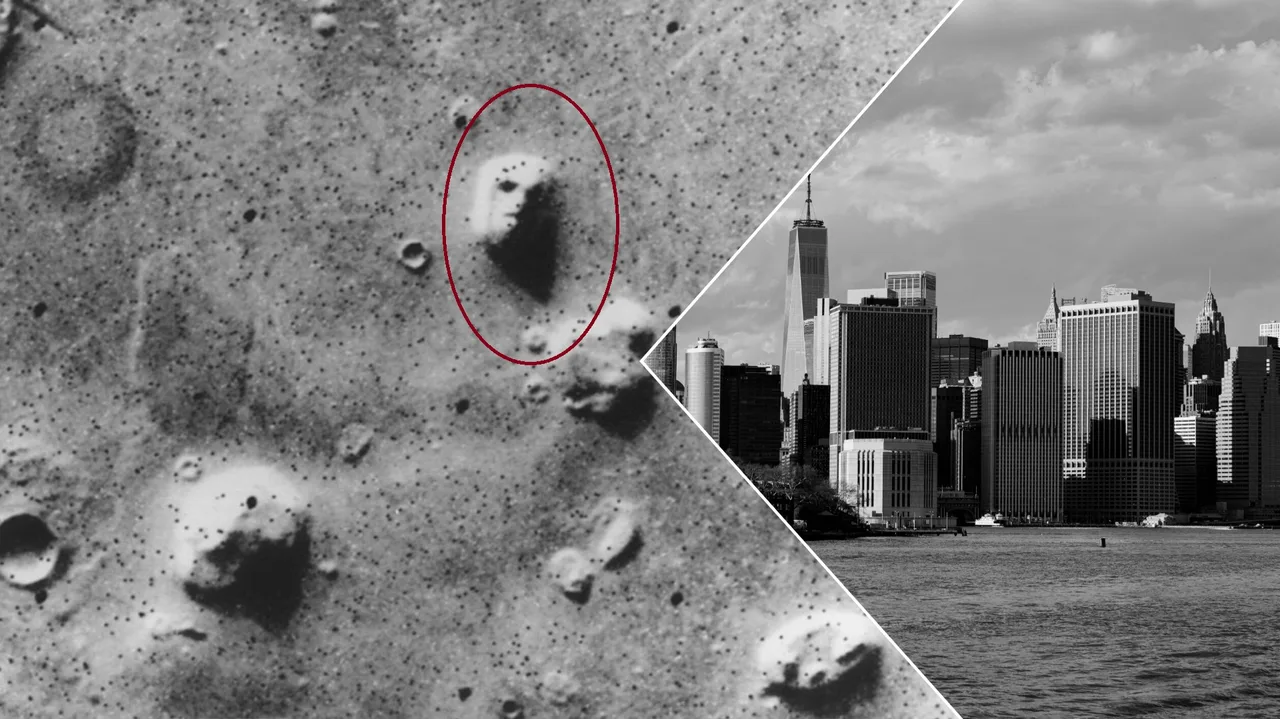
Martell’s claims are based on his interpretation of images of the Cydonia region on the Red Planet. Located in the Arabia Terra region, it is part of the transition zone between the southern highlands and the northern plains on Mars, according to the ESA. It is also the location of the “Face on Mars,” a feature resembling a giant human head that was first imaged in 1976 by NASA’s Viking 1 orbiter and became the subject of widespread speculation due to its odd shape. Space enthusiasts claimed that the Face, along with its surrounding structures, was a remnant of an old city.
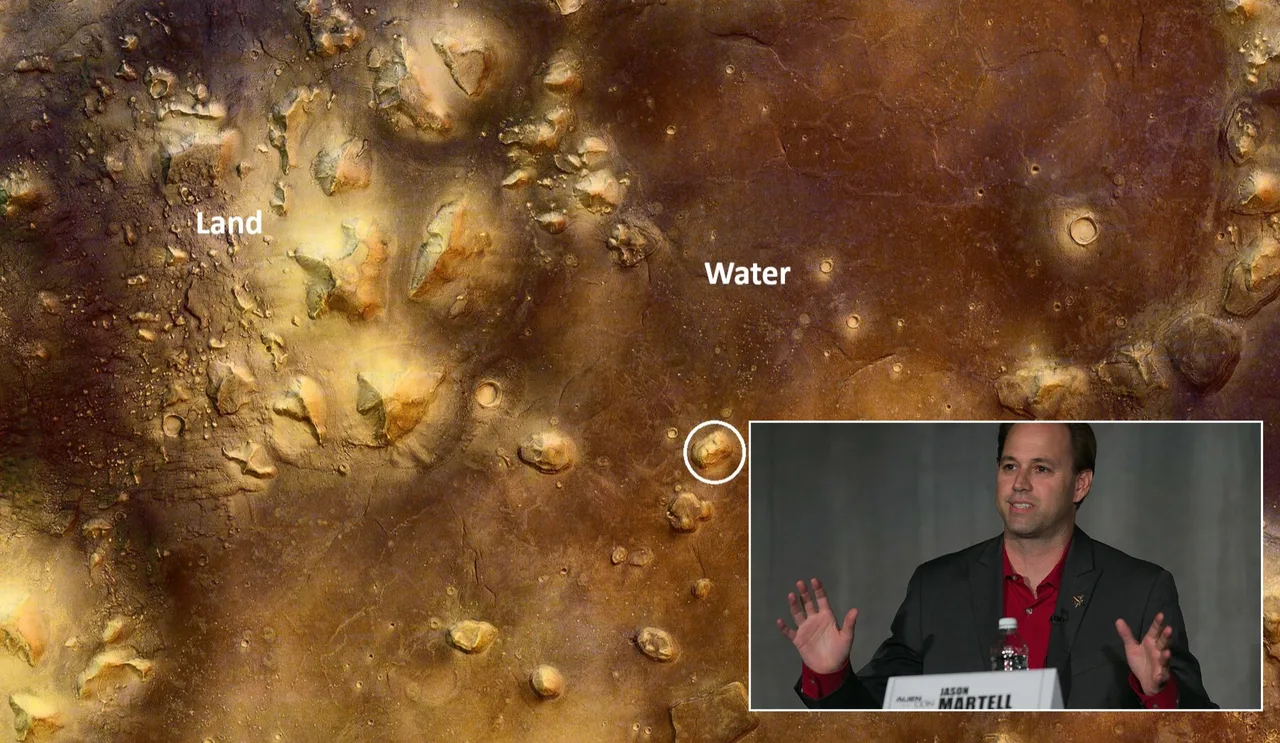
Martell has now jumped on the bandwagon with a blog post, where he claims to have identified a shoreline along which the city was allegedly built. The Face, he believes, was a monument once surrounded by water and could be seen from the land.
"This not a random geological accident"
“When you examine the terrain closely, a boundary emerges—a distinct transition between the high-relief, rugged formations on one side and the flat, smooth expanse on the other,” he writes. This smooth region, he alleges, was once covered by a water body. He even draws a rough boundary by hand to delineate the ancient shoreline.
“This is not a random geological accident," he adds. "The Face on Mars sits within this boundary zone. The D&M pyramid, the City, and the other anomalous structures cluster along this same edge."
The D&M pyramid, according to NASA, refers to a five-sided structure located between the far northwestern Arabia Terra highlands and the northeastern Acidalia Planitia lowlands. As for The Face (marked by the white circle), Martell claims that its positioning follows the same logic as those of the Pharos at Alexandria, the pyramids at Giza, and the statues of Easter Island.
Note: The labeling on the image above has been done by the author of this report and is based on Martell's interpretation of the landscape in question.
The comparison with Manhattan, Venice, and other cities on Earth
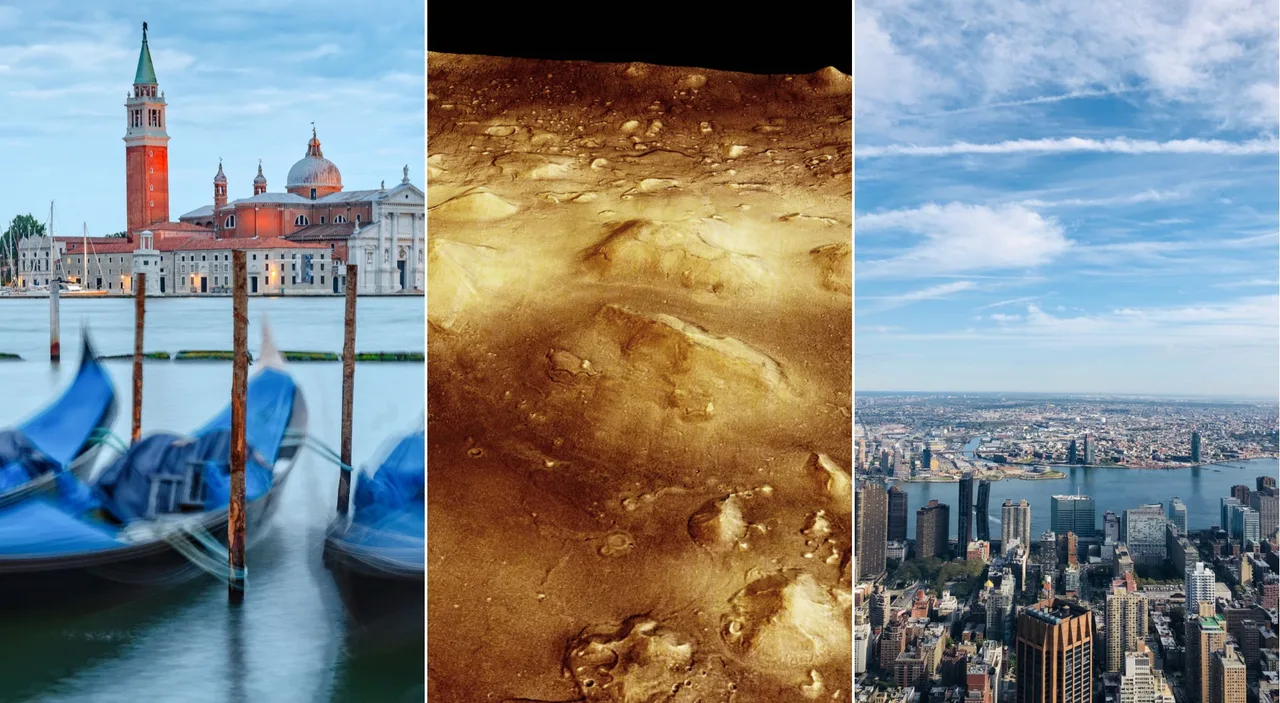
Martell even compared the alleged settlement in Cydonia to cities here on Earth, both ancient and modern. “Throughout human history, our greatest civilizations have almost universally chosen to build their most important cities at the water's edge,” he explains, citing Constantinople (modern-day Istanbul), Amsterdam, Venice, and even Manhattan as examples to drive home his point.
“From Cape Town to Rio de Janeiro to Mumbai, the pattern repeats across every continent and every era: we build where the land meets the water, and we orient our most important monuments to be visible from that water,” he adds, referring again to the Face.
Is there any merit in Martell's claims?
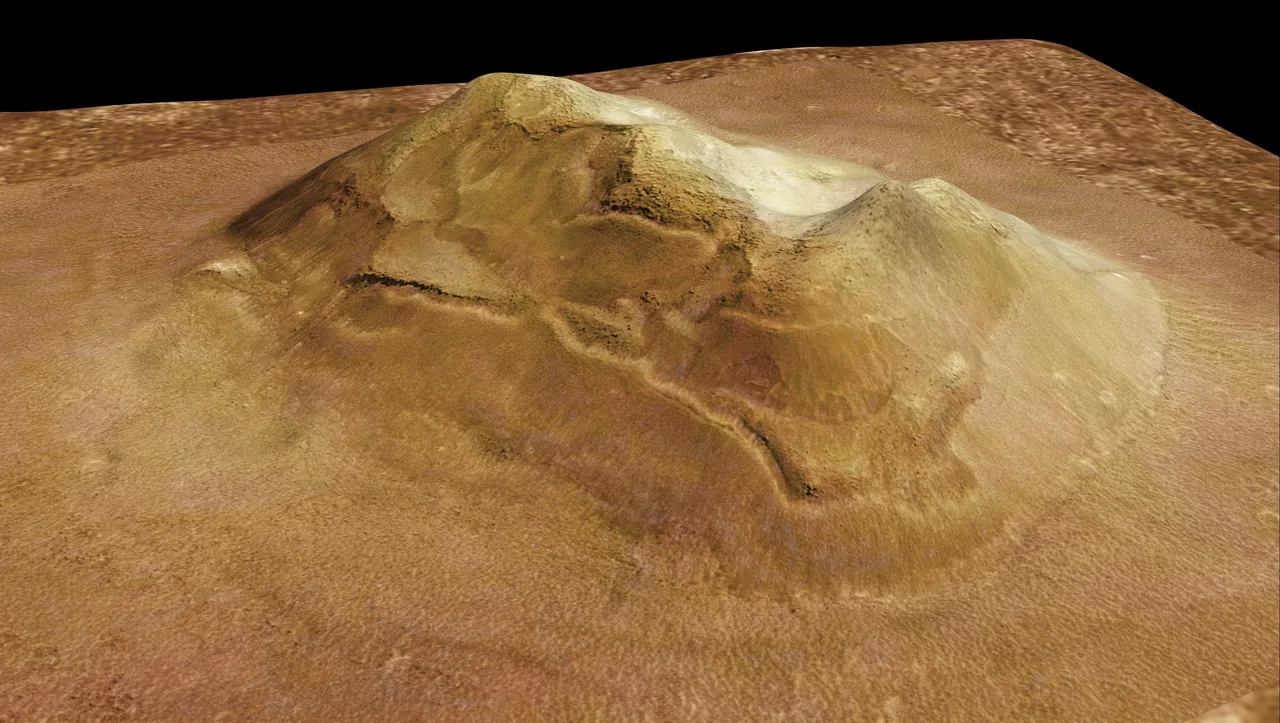
Shortly after the Viking 1 orbiter had imaged the Face, NASA attributed its odd shape to an optical illusion created by the illumination angle of the Sun. Later, the Mars Global Surveyor spacecraft also obtained detailed views of it that confirmed it is a naturally occurring geologic feature shaped by ages of erosion. The same explanation has been offered for other features in the region as well.
In fact, Martell himself concedes that he cannot say for sure whether the terrain difference marked by the shoreline is the result of the presence of water. He also clarifies that the shoreline itself is hand-drawn, meaning its position is based on his own interpretation rather than solid geological evidence.
Even then, he concludes, "It seems quite possible that Cydonia was built right at the edge of water. Just like we do on Earth, with waterfront property.”
The image shows the 'Face on Mars' from a more zoomed-in perspective.