Is the universe really infinite, or is there an end? Oxford astrophysicist explains
Is the universe really infinite?
Scientists from around the world have spent years studying the universe. While we know a lot more about the cosmos than we did a century ago, there are still many mysteries that we have yet to solve. One of the biggest questions scientists have asked is: Is our universe really infinite, or is there an end to it?
Here’s a look at what scientists believe is happening and how close we are to finding the answer to this question.
There's no center of the universe
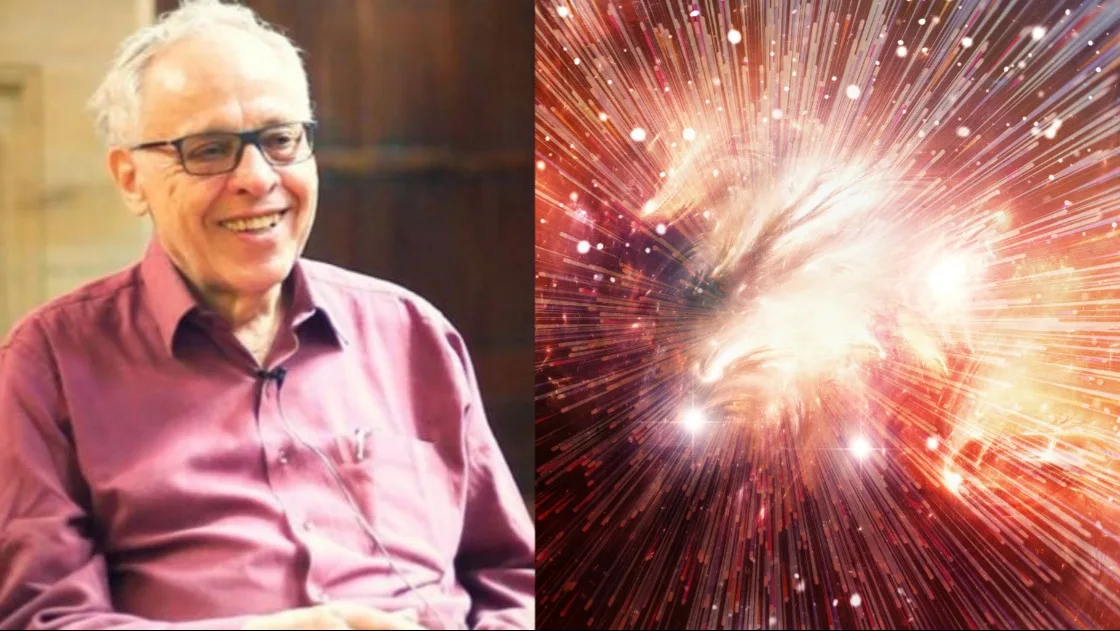
While it’s easy to imagine the Big Bang as a single point that started the universe. But that’s not how it worked, according to scientists. Space began expanding everywhere at the same time. This means that every location in the universe was there at the very beginning.
Explaining this, Oxford astrophysicist Joseph Silk shared that most cosmologists resist calling it an explosion, since that word implies sound. Still, he says, "the simplest description of how the Universe originated is an explosion, in the sense that it began from a very small volume and increased very rapidly."
So, what's outside the universe?
If our universe is expanding, then what’s outside of it? The answer to this is a bit tricky, as the word ‘outside’ means that there’s a space beyond the universe. But, as far as we know today, there isn’t one. There’s no outer boundary around the universe, because there’s nothing outside it in the first place.
Every point and location that exists, even the seemingly empty space, is part of the universe. So, if you somehow traveled far enough, you wouldn’t eventually hit a wall or find an “end.” The universe simply includes everything there is.
What’s the shape of the universe?
When it comes to the shape, scientists often describe the universe’s geometry as "flat”. But this is not as simple as it sounds. Explaining this, Joseph Silk told the European Space Agency (ESA) in an interview, “Flat is just a two-dimensional analogy. What we mean is that the Universe is 'Euclidean', meaning that parallel lines always run parallel, and that the angles of a triangle add up to 180 [degrees].”
He added, “Now, the two-dimensional equivalent to that is a plane, an infinite sheet of paper. On the surface of that plane you can draw parallel lines that will never meet.”
So, is there an end to the universe?
Even though scientists have spent years trying to answer this, they still can’t agree on whether it goes on forever. Oxford astrophysicist Joseph Silk noted, "We do not know whether the Universe is finite or not." The expanding-universe model allows for both possibilities.
He also explained that if telescopes find no sign of this pattern, the most scientists could say is that the universe is larger than a certain measurable size, but not that it's proven infinite.