When Brian Cox challenged Avi Loeb's alien probe theory about comet 3I/ATLAS
The interstellar visitor that sparked a scientific debate
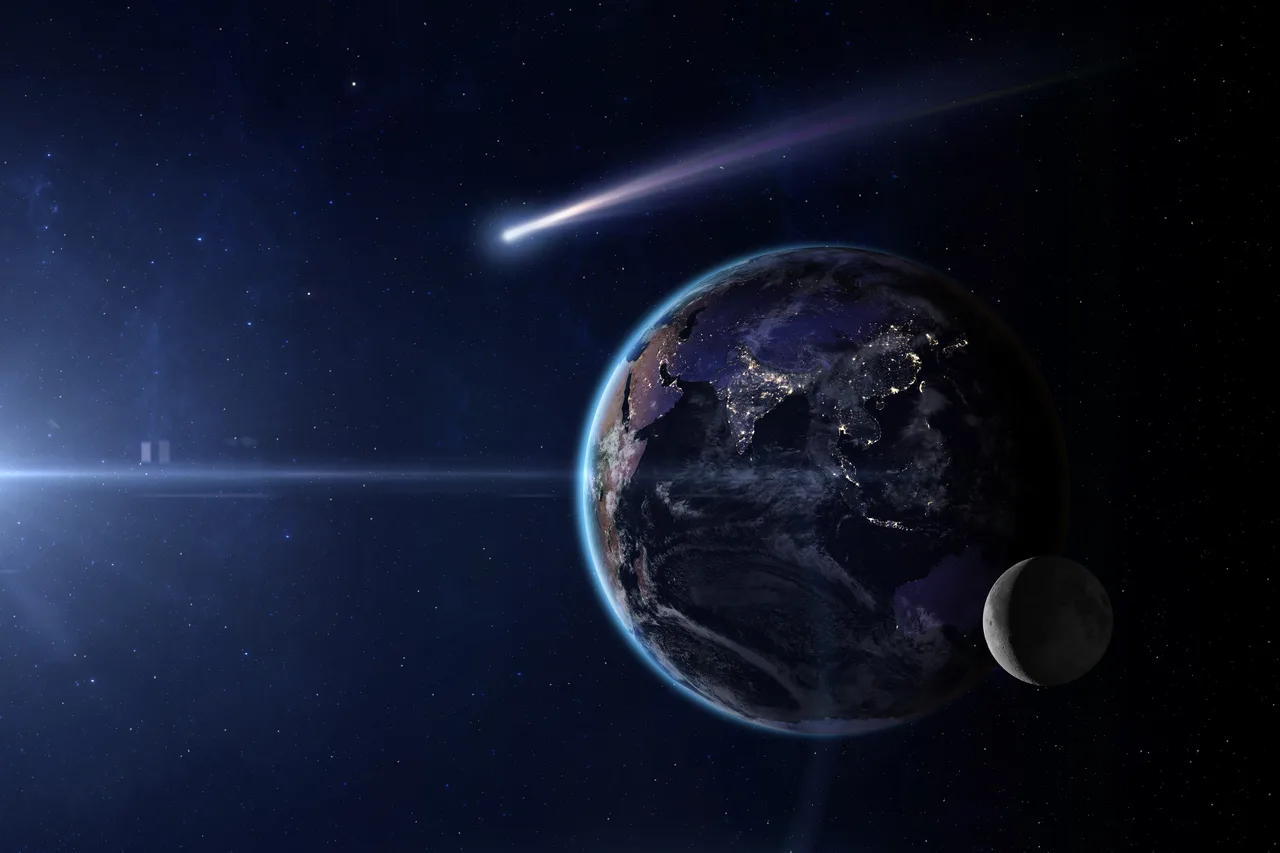
3I/ATLAS is a rare interstellar comet that passed through our solar system. It was first discovered by the Asteroid Terrestrial-impact Last Alert System (ATLAS) back on July 1, 2025. The first reported sighting immediately created quite a buzz, as initial studies could not confirm its origin and composition. Scientists debated where it came from and what it really was, and, adding to the mystery, speculation quickly arose about the object being a piece of alien technology. Over the last year, researchers and scientists have been studying the comet. During its closest approach to the Sun, they worked to collect valuable data about its composition and origin.
The image shows Professor Brain Cox of the University of Manchester, who weighed in on the debate sparked by the discovery of 3I/ATLAS.
A 'time capsule' from another star system
While fringe speculations surrounding 3I/ATLAS were making waves, renowned English physicist Brian Cox also studied the object and shared his insights. He described it as a remarkable ‘time capsule’ that has the potential to reveal secrets about the early universe. According to Cox, it likely formed from ancient clouds of dust before spending billions of years traveling through the Milky Way. Cox even shared an estimate that the object might have formed about 7.5 billion years ago. The comet originated in a different planetary system; thus, studying its composition can help scientists understand how planets and other objects formed in distant parts of our galaxy.
Brian Cox rejected Avi Loeb's alien probe theory
After the discovery of 3I/ATLAS, Harvard astrophysicist Avi Loeb suggested that this object might be alien technology or even a "Trojan Horse” carrying alien elements. But Brian Cox pushed back strongly against such speculation, asserting that the object is completely natural. He pointed out how its orbit behaved exactly as astronomers expected for an interstellar comet, swinging around the Sun before continuing its journey back into interstellar space.
Following its perihelion in late October 2025, Cox commented, "Just to be clear—given recent drivel on line—Comet 3I/Atlas is a comet, made of carbon dioxide and water ices and bits of other stuff. It is entirely natural in origin, its orbit is as expected and it will whizz around the sun and then disappear off into the galaxy again." He further added, "If, in some far future, it passes another inhabited solar system, I hope those beings will see it for what it truly is—a visitor from another star, a pristine remnant of a long-dead world, just passing through. Isn’t that wonderful enough?"
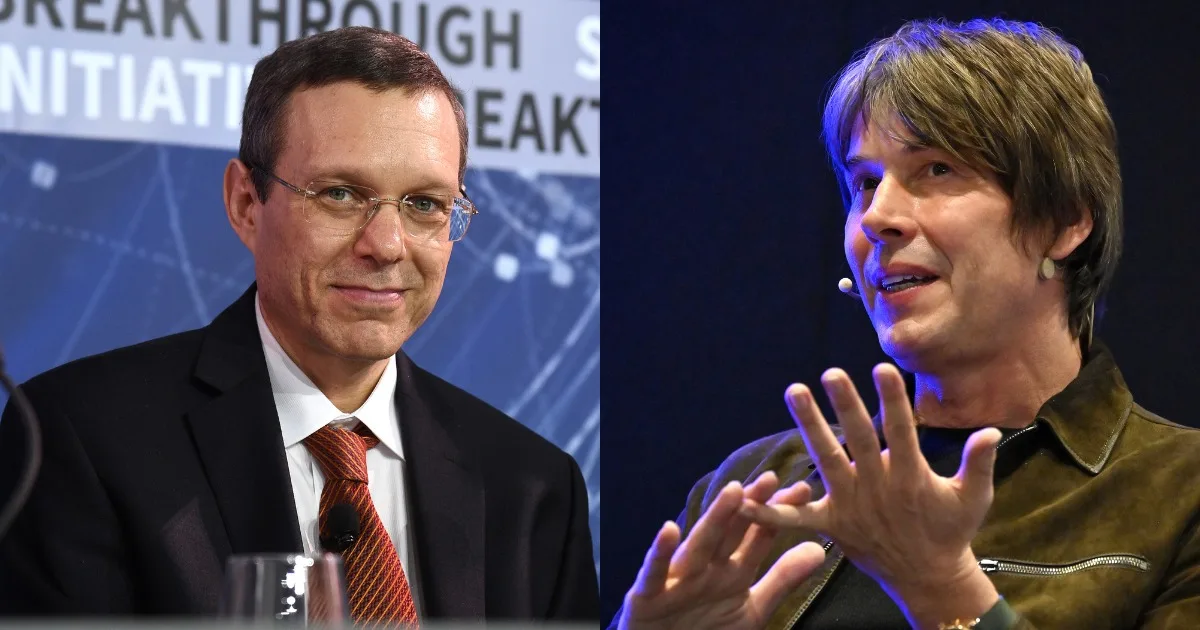
This image shows Avi Loeb (L) and Brian Cox (R).
Prolonged observation revealed more about its origins
Astronomers observed the object for nearly a year, slowly piecing together the origin story of 3I/ATLAS. During their research, scientists came to the conclusion that 3I/ATLAS, which is surrounded by gas and dust, originated around a distant star in a debris disk. Scientists also delved deeper into analyzing the exact materials the object released before and after its closest approach to the Sun. This was an important step in understanding what the building blocks look like in other planetary systems in comparison to our own Solar System.
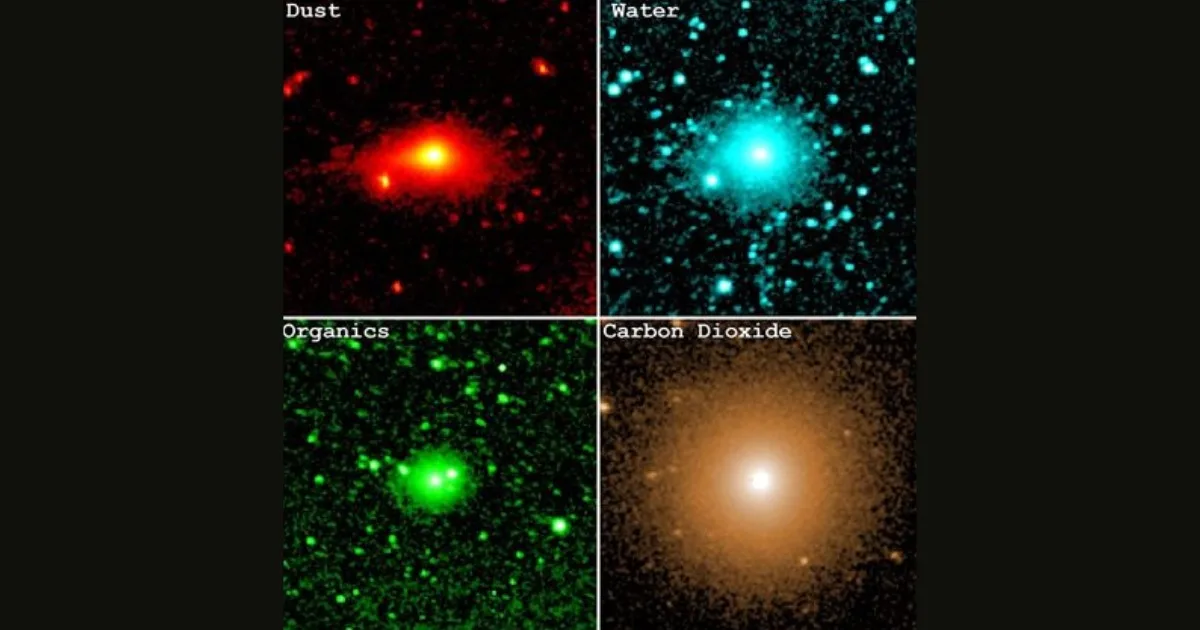
These images are observations by NASA’s SPHEREx that show the infrared light emitted by the dust, water, organic molecules, and carbon dioxide contained within comet 3I/ATLAS’s coma.
Latest research points to an ancient, distant birthplace
Scientists used the James Webb Space Telescope to examine the dust and silicate materials from the comet up close. When astronomers combined their findings with studies of the comet's carbon and hydrogen isotopes, they concluded that 3I/ATLAS was formed in the cooler outer regions of the protoplanetary disk of its host star.
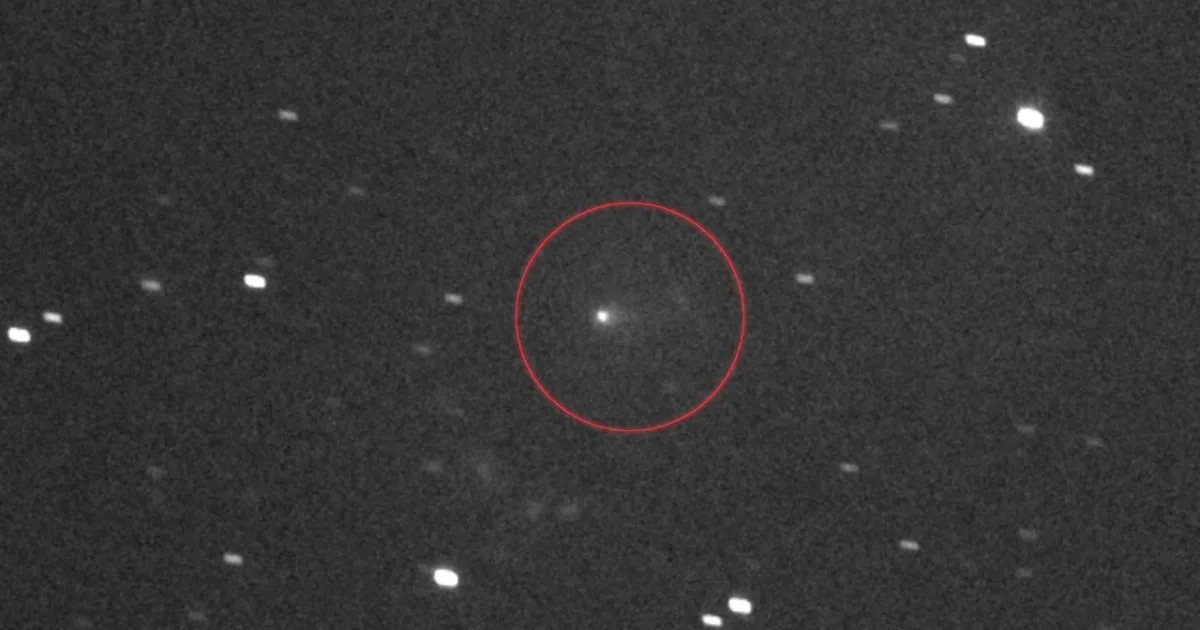
This is an image showing Comet 3I/ATLAS.