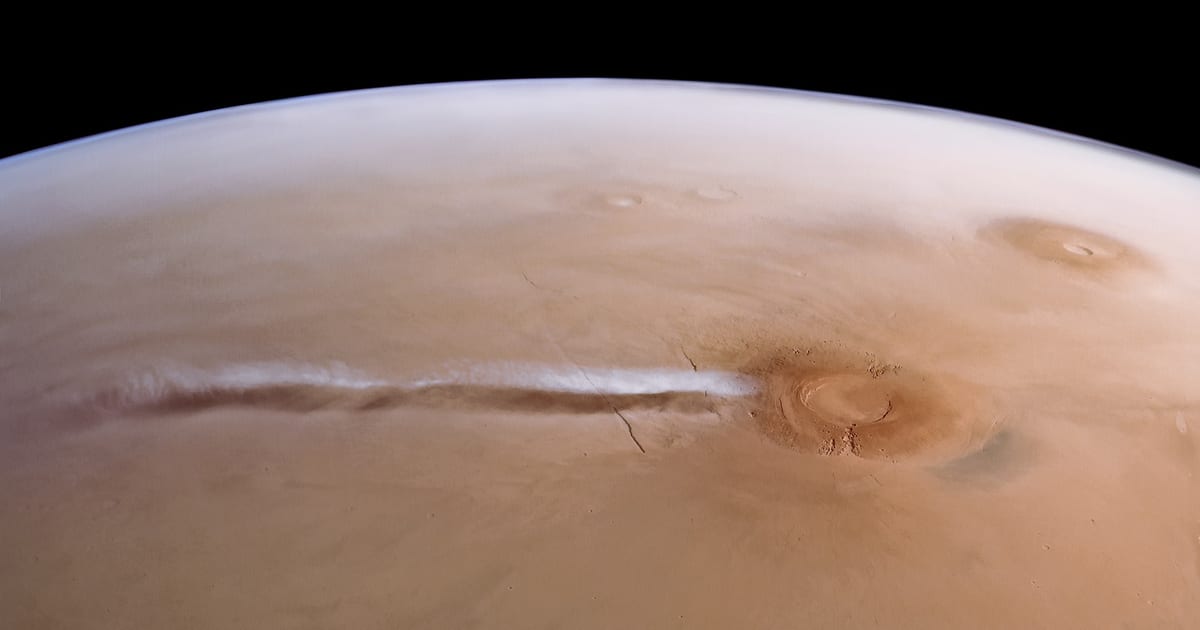
Ancient crystals in Chile's salt flat may offer hints about life on Mars
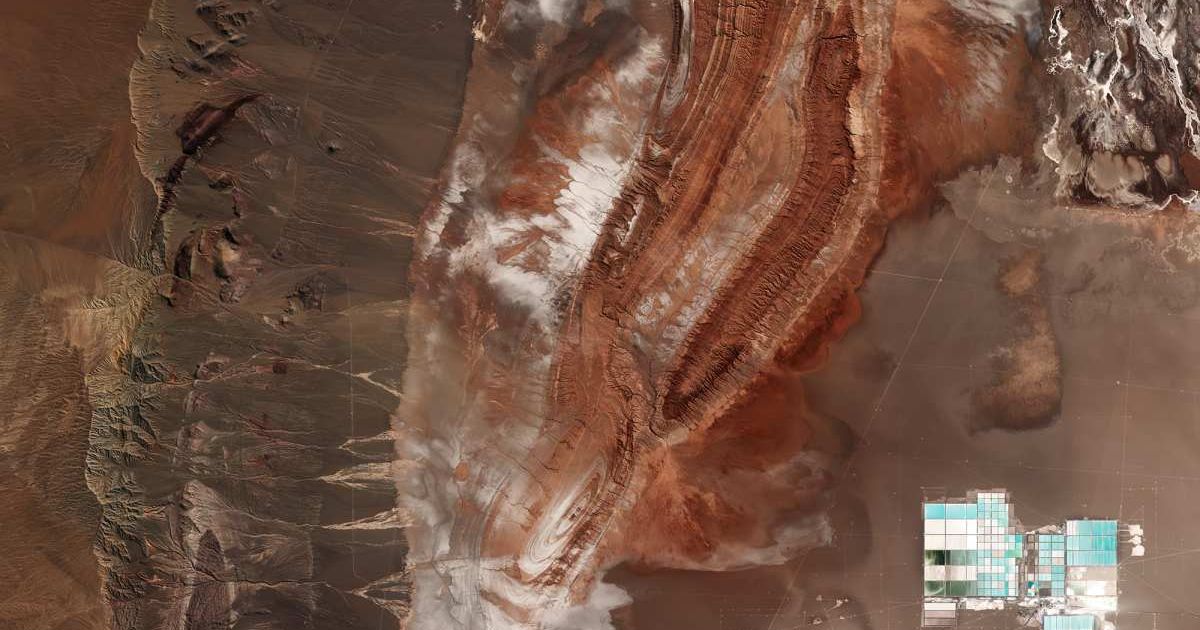
Gypsum—a mineral known for its use in both modern drywall and the plasters of ancient pyramids—can preserve microbial life. The conditions at Salar de Pajonales, the high-altitude salt flat in northern Chile, from where the gypsum crystals were collected, are harsh and mirror the conditions that Martian life would have likely experienced. Thus, the findings, published in Frontiers in Astronomy and Space Sciences, could help astrobiologists decide where to search for traces of ancient organisms on the Red Planet.

Gypsum is one of the most abundant sulfate minerals in the Earth's crust, commonly forming in evaporitic environments, where the rate of water evaporation exceeds the rate of its replenishment. One such environment is offered by the Salar de Pajonales. It is an area characterized by low annual precipitation of around 150 mm per year, low average temperatures of around 5 °C, evaporation rates as high as 1,350 mm per year, and some of the highest solar fluxes. This makes it an ideal natural laboratory where microbial resilience, as well as biosignature formation and preservation, can be studied.
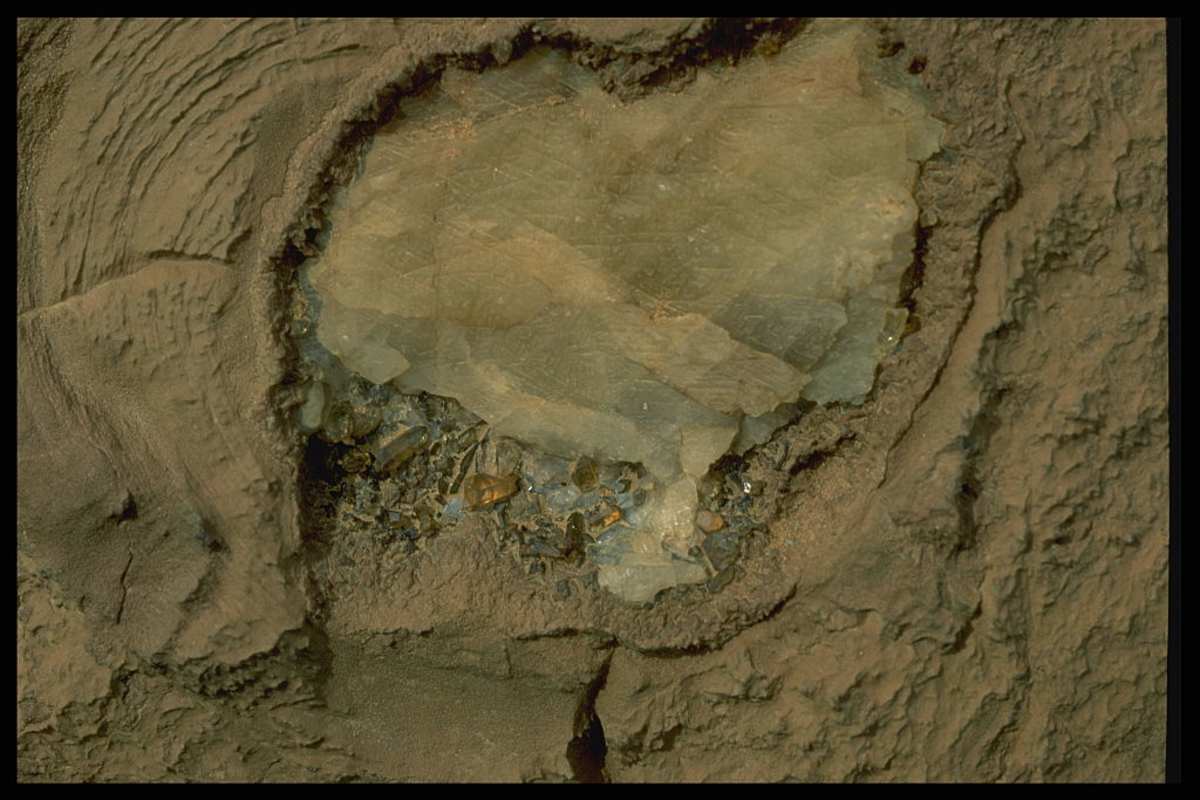
The researchers chose the region near the Flamencos Lagoon on the southwestern margin of the Salar de Pajonales as their study site because it is known for hosting gypsum platforms with stromatolite structures. For the uninitiated, stromatolites are sedimentary structures that are known to record some of the earliest known life forms on Earth, which date as far back as 3.5 billion years ago. The researchers also collected samples from other gypsum-rich features such as crusts and loose sediments.
![This image shows radially oriented spherulitic aggregates of gypsum crystals (pink arrows). [Image Source: Tebes-Cayo et al. (2026). DOI: https://doi.org/10.3389/fspas.2025.1693302] (Image edited on Canva)](https://de40cj7fpezr7.cloudfront.net/e9f692a6-f086-4d07-ab2e-6ac964940bc7.png)
Analysis showed that the gypsum samples contain both extant microbial communities and traces of extinct organisms. The researchers also noted that the diversity of microbial life depended on the properties of minerals and the availability of moisture. While the stromatolites were found to have specialized cyanobacteria, which gave Earth's atmosphere its oxygen billions of years ago, and archaea, which are found in the most extreme environments, the crusts and sediments had more diverse assemblages, ranging from those that can synthesize their own food (photoautotrophic) and those that can't (heterotrophic).
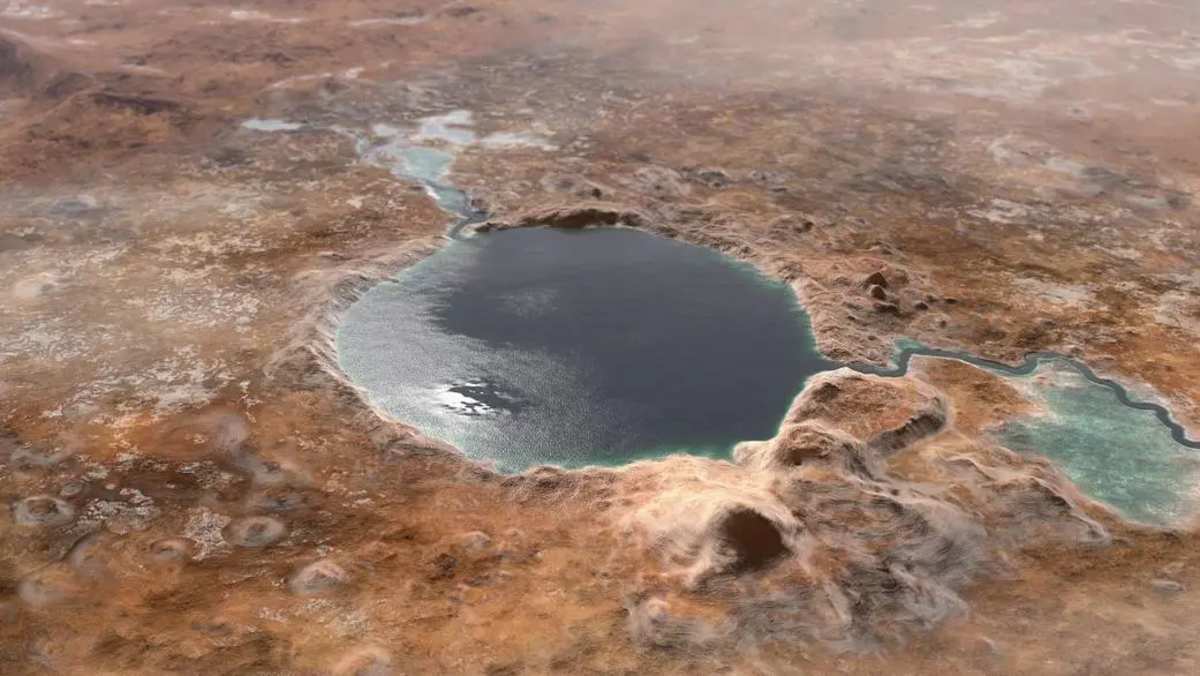
Gypsum evidently has the ability to remain stable under extreme conditions. It is also optically transparent, meaning that it lets enough sunlight through to allow microbes to carry out photosynthesis. So, understanding how Chilean gypsum preserves signs of life could prove to be important in the context of narrowing down our own search for signs of ancient life on Mars, especially since sulfate minerals have already been detected in places like the Gale and Jezero craters.
More on Starlust
Scientists identify a 'bathtub ring' on Mars, hinting at a long-lost ocean on the Red Planet
Ancient metal-rich Martian lake could power future human industries on Mars