Astronomers were perplexed by 'impossible’ merger of two giant black holes—now they know how it happened
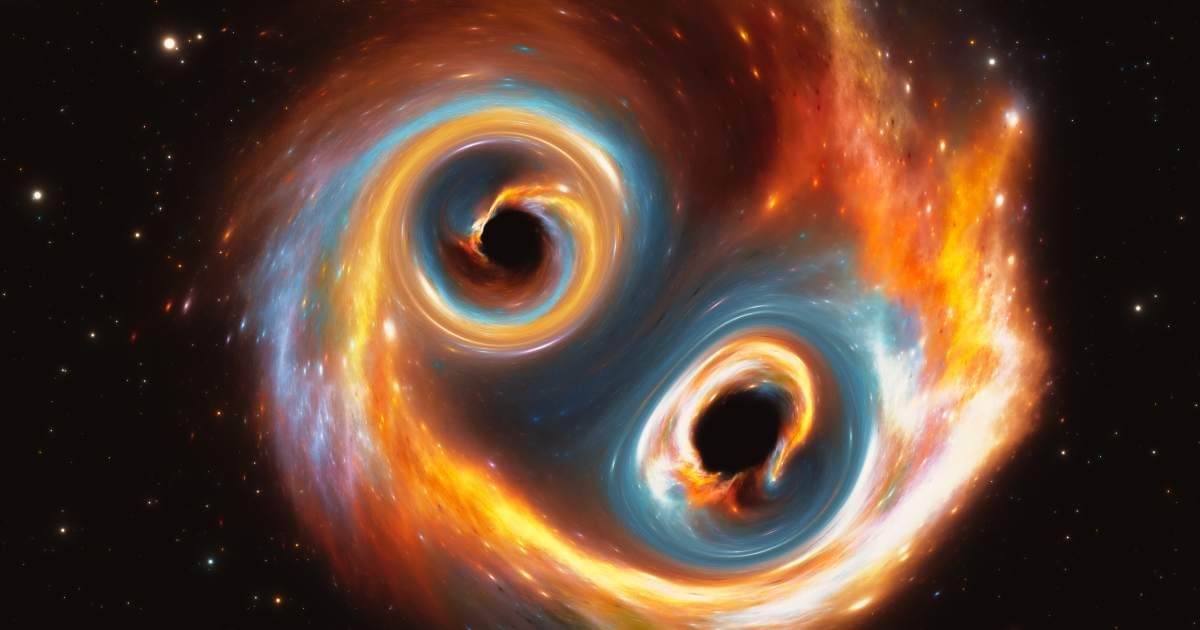
The huge collision was detected around 7 billion light-years away with huge masses and extreme black hole spins
UPDATED NOV 11, 2025
A 3D illustration of the merging of black holes in deep space. (Representative cover image source:  Getty Images | Pitris)
A 3D illustration of the merging of black holes in deep space. (Representative cover image source: Getty Images | Pitris)

Unprecedented gravitational waves were detected in 2023, when two giant black holes collided and merged into a supermassive black hole. The discovery surprised scientists, as in their opinion, it was something that should not have happened. Seeking answers, astronomers at the Flatiron Institute’s Center for Computational Astrophysics (CCA) conducted comprehensive simulations. To find how these black holes merged, they traced the lives of the parent stars from birth to collapse. The Astrophysical Journal Letters published the results of these simulations, which revealed the aspect that was missing from previous studies: the role of magnetic fields.
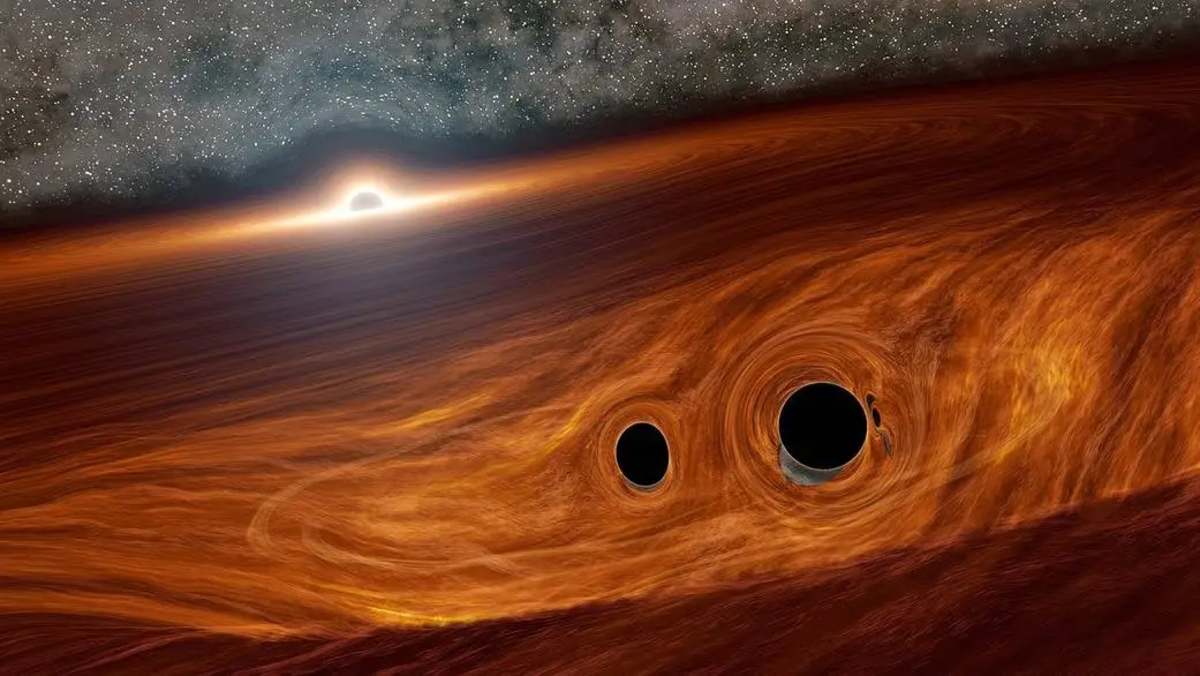
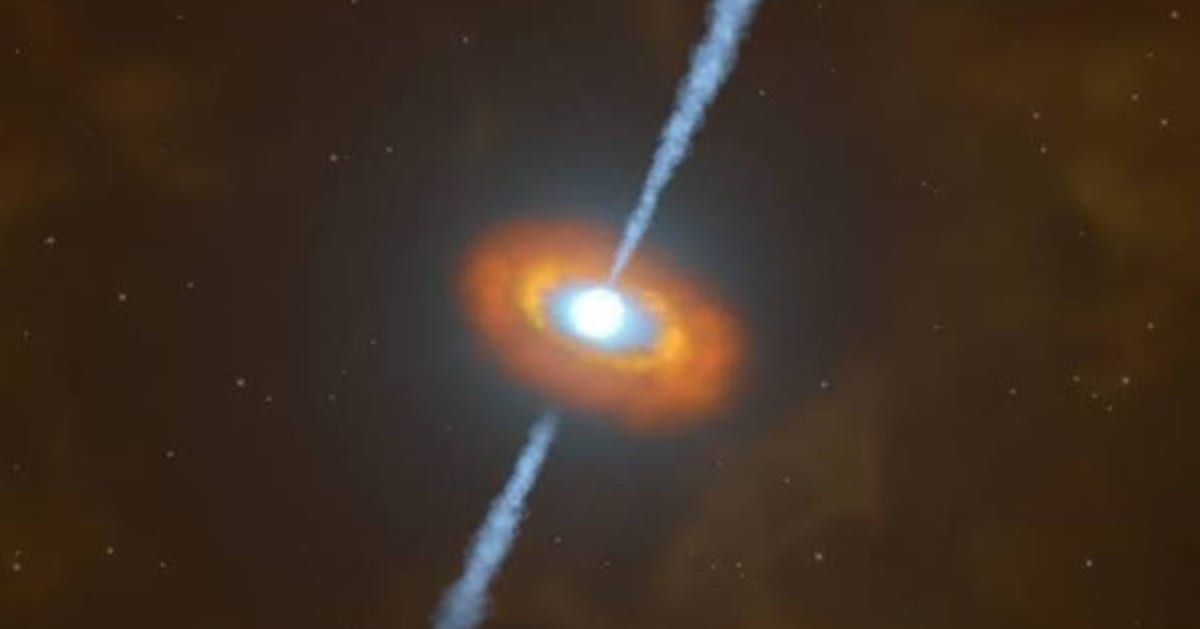
This artist's concept shows a supermassive black hole surrounded by a disk of gas (Representative Image Source: Caltech | R. Hurt)
This artist's concept shows a supermassive black hole surrounded by a disk of gas (Representative Image Source: Caltech | Photo by R. Hurt)

The huge collision was detected around 7 billion light-years away with huge masses and extreme black hole spins. Known as GW231123, the collision was observed by the LIGO-Virgo-KAGRA collaboration, as per the Simon Foundation. The black holes weighed 85 times and 66 times the mass of our Sun, with the former landing in the "mass gap." This was an area thought to be impossible for black holes to form. This merger is unlikely to be a single event, as per a new theoretical model, but a collision inside a dense stellar cluster that occurred hierarchically. 
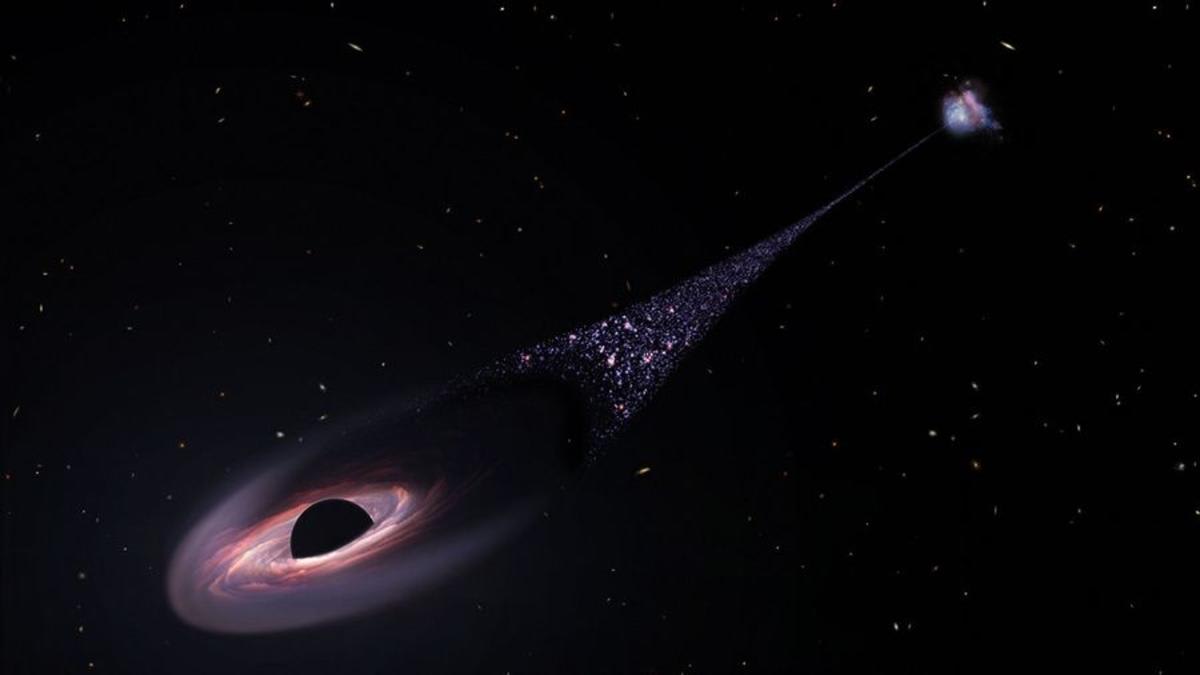
This is an artist's impression of a runaway supermassive black hole that was ejected from its host galaxy as a result of a tussle between it and two other black holes (Image Source: NASA, ESA | Leah Hustak)
This is an artist's impression of a runaway supermassive black hole that was ejected from its host galaxy as a result of a tussle between it and two other black holes (Representative Image Source: NASA, ESA | Leah Hustak)

“No one has considered these systems the way we did; previously, astronomers just took a shortcut and neglected the magnetic fields,” said Ore Gottlieb, an astrophysicist at the CCA and lead author of the new study. “But once you consider magnetic fields, you can actually explain the origins of this unique event,” they added. The team conducted two stages of computational simulations. The first simulation rendered the life of a giant star 250 times the mass of the sun, from when a star starts to burn hydrogen to when it runs out and collapses into a supernova. 
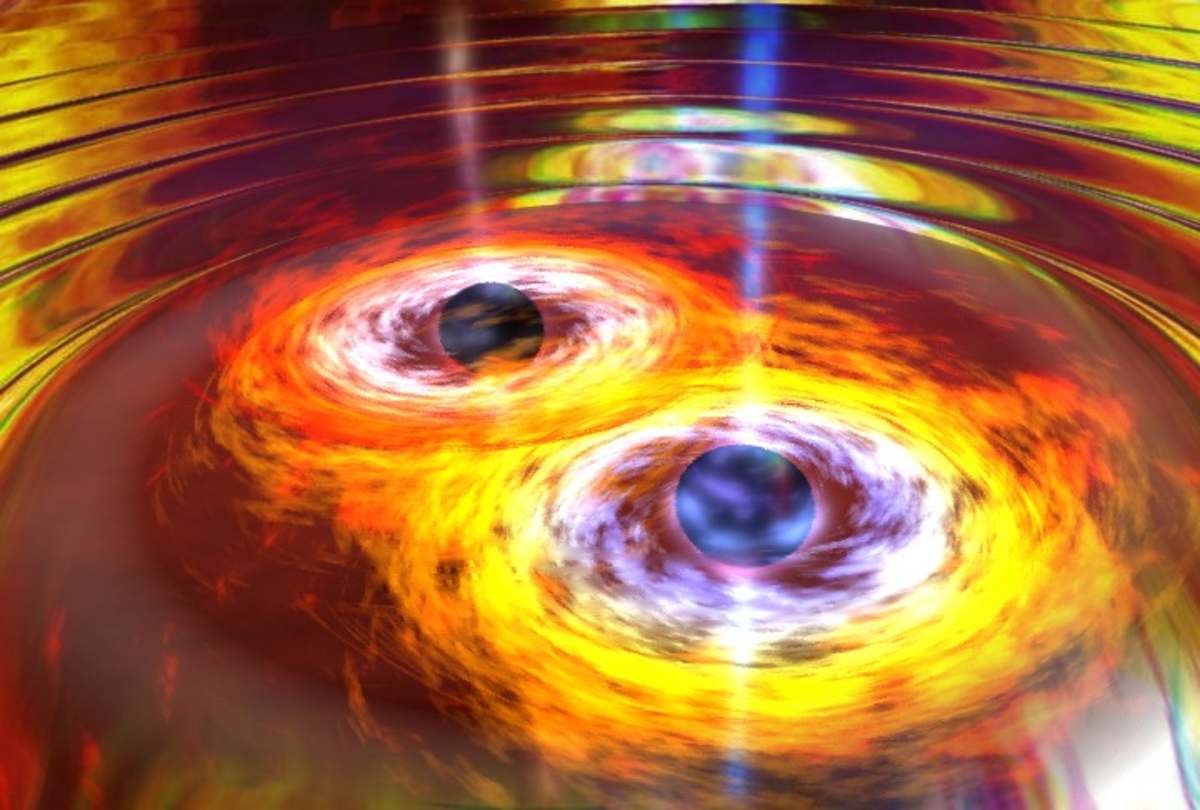
As two super-massive black holes spiral around each other and eventually merge, they create gravitational waves (Image Source: NASA)
As two super-massive black holes spiral around each other and eventually merge, they create gravitational waves (Representative Image Source: NASA)

The supernova stage brought it down to 150 times the sun’s mass from burning through enough fuel. This placed it just above the mass gap and was big enough to leave behind a black hole upon collapse, as per Phys Org. The second set of complicated simulations dealt with the supernova’s aftermath, which accounted for the magnetic fields. The supernova remnants had a cloud of stellar material with magnetic fields and a black hole at the center. The simulations challenged the assumption about how the final mass of the black hole matched the massive star.
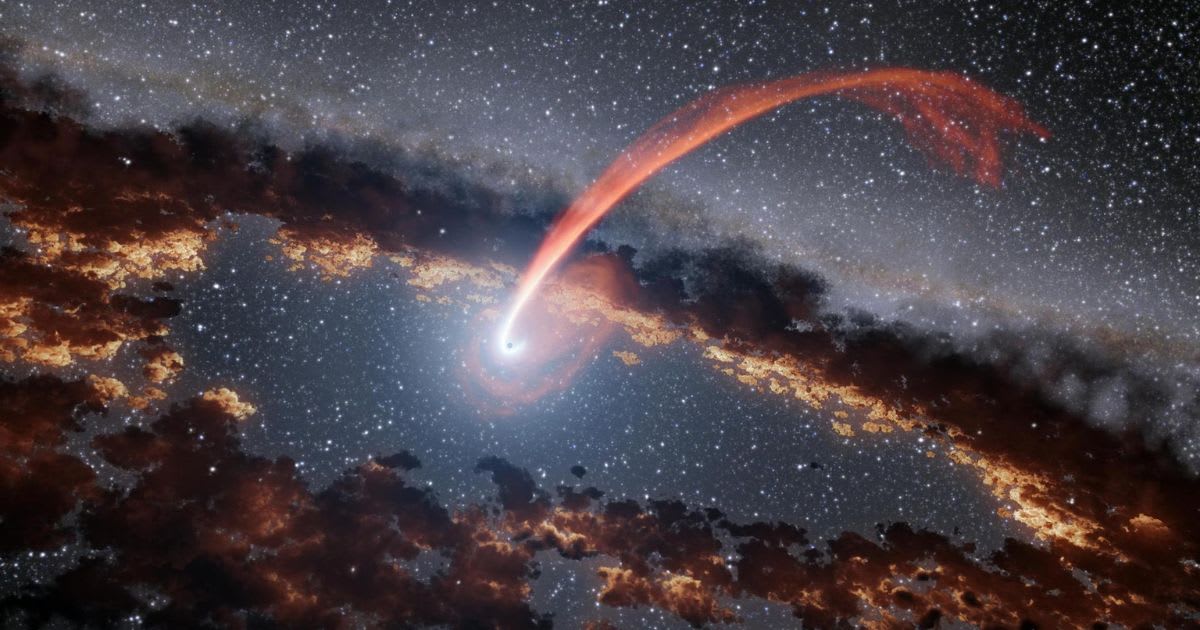
This illustration shows a glowing stream of material from a star as it is being devoured by a supermassive black hole (Representative Cover Image Source: NASA/JPL-Caltech)
This illustration shows a glowing stream of material from a star as it is being devoured by a supermassive black hole (Representative Image Source: NASA/JPL-Caltech)

It showed that after the star collapsed, the leftover cloud immediately fell into the black hole. However, this cloud became a spinning disk and caused the black hole to spin faster until the material fell into an abyss. This was only possible if the initial star was spinning rapidly. The presence of magnetic fields exerts pressure on the debris disk. This ejects some material away from the black hole at nearly the speed of light. This outflow eventually reduced the material’s bulk, which fed into the black hole, an effect that was greater with stronger magnetic fields.
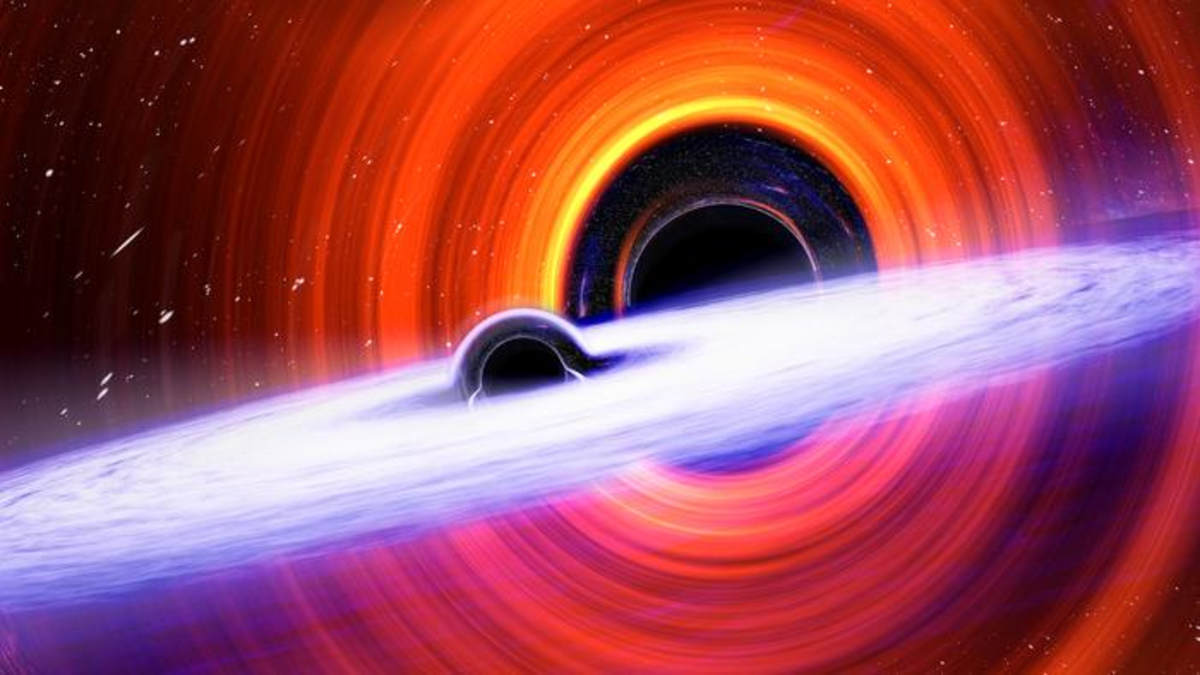
Binary Black Hole Merger Graphics for use alongside GW241011 and GW241110 (Image Source: Carl Knox, OzGrav, Swinburne University of Technology)

The simulations showed that the magnetic fields ended up creating a final black hole in the mass gap. It suggested a connection between the mass and spin of black holes, likely following a pattern. It was also found that these kinds of black holes create bursts of gamma rays when they form, which could be observed. “We found the presence of rotation and magnetic fields may fundamentally change the post-collapse evolution of the star, making black hole mass potentially significantly lower than the total mass of the collapsing star,” Gottlieb explained.
More on Starlust

Scientists detect a seven-hour gamma ray burst and trace it back to a black hole plunging into a bloated star

Astronomers witness a supermassive black hole violently tearing apart a star thousands of light-years from galactic core

MORE STORIES

The data suggest this small, super-hot world is shrouded in a thick layer of gas, likely hovering above a planet-wide ocean of magma.
3 hours ago
The region around black holes was not thought to be conducive to star formation, yet research proved otherwise.
21 hours ago
The discovery, validated by a separate European team led by the University of Exeter, may offer fresh insight into interactions between planets and binary star systems.
1 day ago
During its 1986 observation of the planet in the first and only flyby, the spacecraft measured a surprisingly strong electron radiation belt.
2 days ago
Previously, the most ancient supernova ever confirmed dated back to when the universe was 1.8 billion years old.
2 days ago
NASA's Fermi telescope was the first to identify the highly unusual cosmic explosion.
3 days ago
An international team of astronomers conducted a ten-day observation of the NGC 3783 black hole using mainly the XRISM space telescope.
3 days ago
A nova is a massive, temporary star explosion caused when a dense white dwarf star pulls material from a nearby star, setting off an uncontrolled nuclear reaction.
5 days ago
A team of computational astrophysicists has developed a simulation that explains the behavior of matter around black holes.
7 days ago
A study has also concluded that the interior of 3I/ATLAS is rich in metal, which could challenge our current understanding of comet formation.
Dec 5, 2025