First-ever full measurement of black hole's three-dimensional recoil confirms Einstein's theory
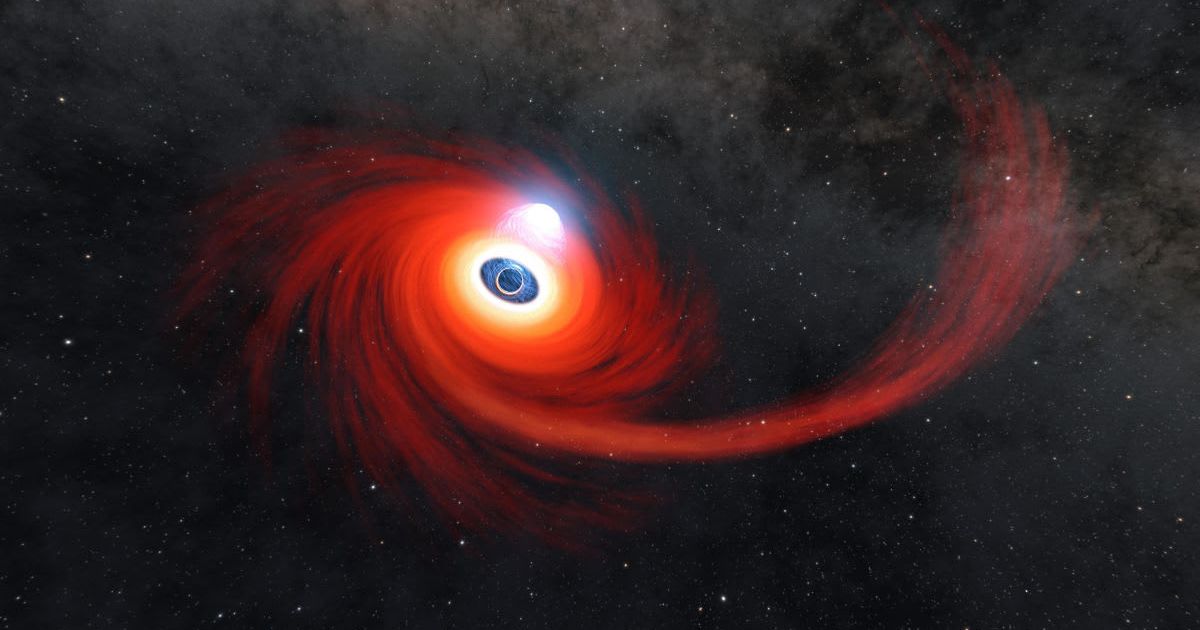
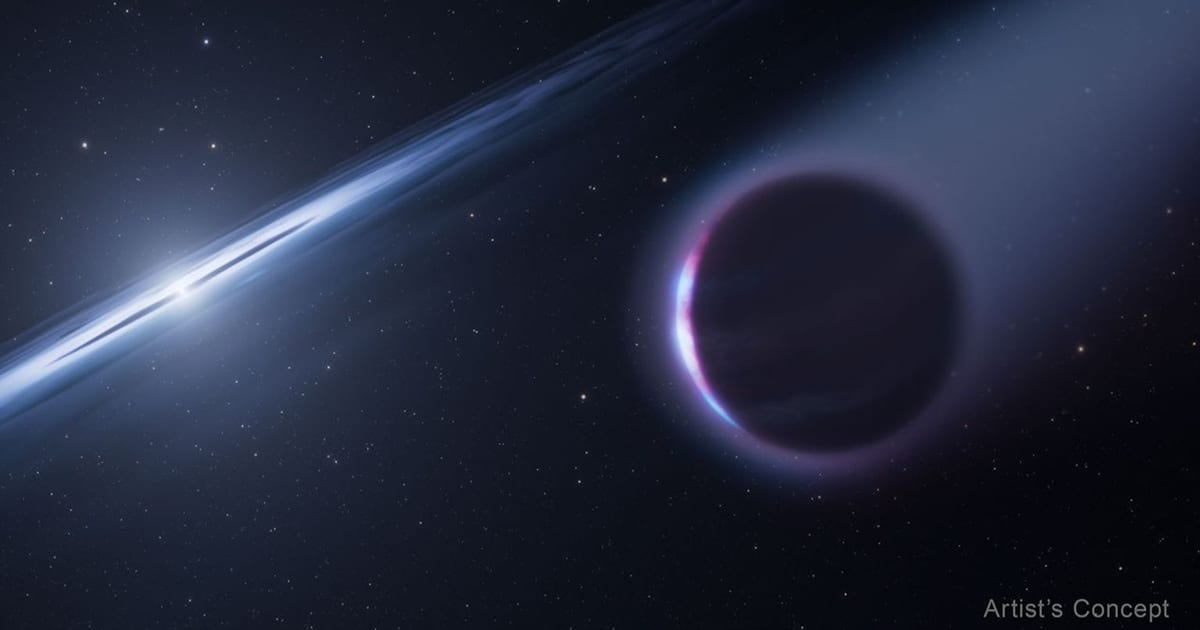
In a landmark achievement, a team of scientists has successfully measured, for the first time, the complete three-dimensional recoil of a black hole following a cosmic collision. The feat, likened to measuring the recoil of a firearm, was accomplished by analyzing gravitational waves detected by the LIGO and Virgo observatories, according to the Galician Institute of High Energy Physics.
The groundbreaking research, led by the Galician Institute of High Energy Physics (IGFAE), focused on the gravitational wave signal GW190412, which was recorded in 2019. While nearly 300 gravitational wave signals have been detected since 2015, this is the first time researchers have been able to calculate the direction and speed of the newly formed black hole as it was propelled through space.
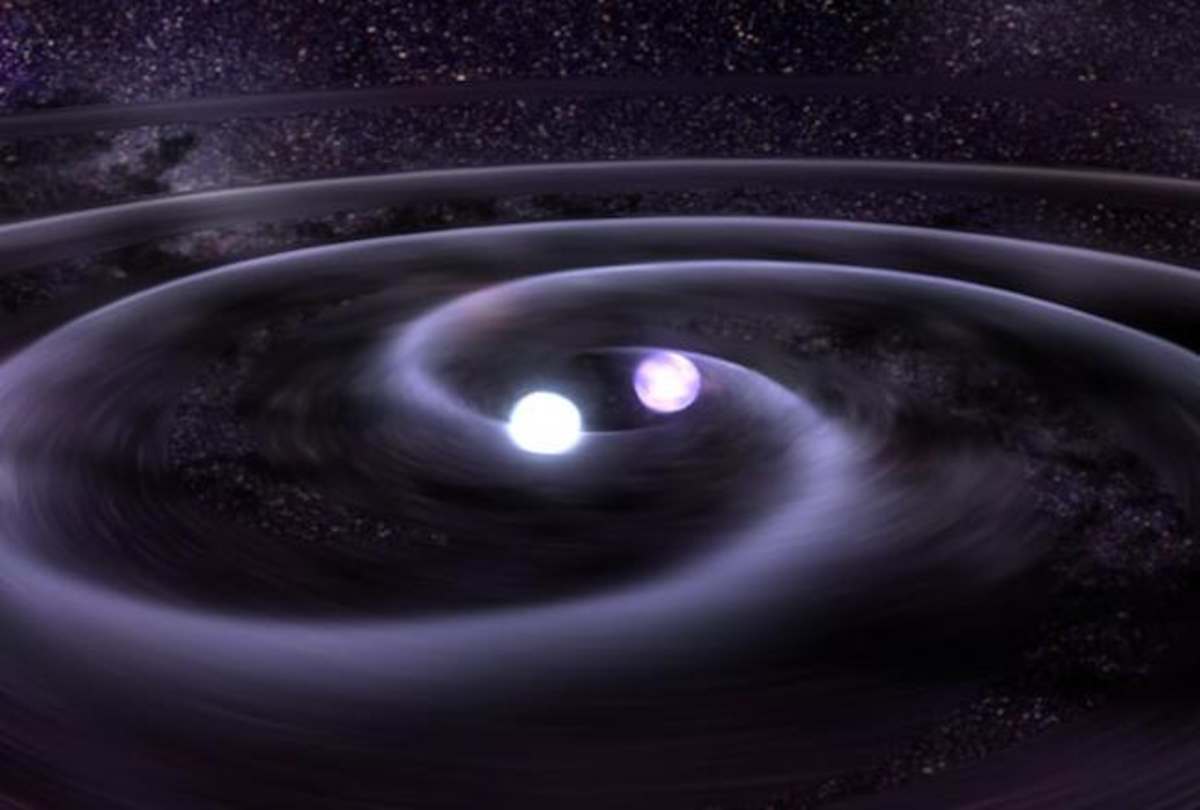
"Let’s think of merging black holes as an orchestra that plays several instruments, but with one particularity: depending on where we are around the orchestra," explained Professor Juan Calderón Bustillo, the study's lead author and a member of IGFAE. He added that by analyzing the subtle shifts in the gravitational wave signals, researchers could pinpoint the exact location of the black hole merger relative to the black hole and, in turn, determine its trajectory.
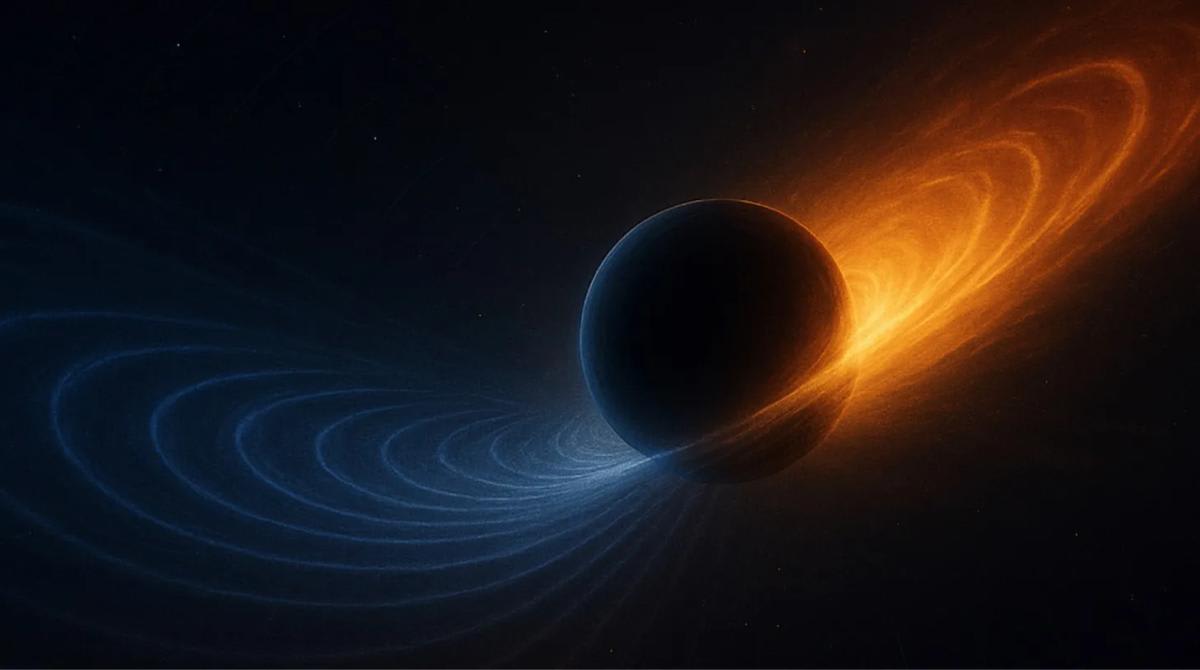
By combining the measured gravitational waves with an understanding of Albert Einstein's General Relativity, the research team determined that the merged black hole from GW190412 was "kicked" away at a speed of over 50 kilometers per second. This velocity is fast enough to eject it from a star cluster, and potentially its home galaxy. The team also determined the black hole's trajectory relative to Earth. “We came up with this method back in 2018, and we showed that it would allow us to measure kickbacks using current detectors," Bustillo said. "It was very exciting when Advanced LIGO and Virgo detected the GW190412 signal and we realized that we could probably measure the kick … and do it!”

The ability to track these celestial objects is a significant step forward in astrophysics. According to co-author and Penn State postdoctoral researcher Dr. Koustav Chandra, this achievement is a testament to the power of gravitational wave science. "This is one of the few astrophysical phenomena where we're not just detecting something, but we're reconstructing the entire three-dimensional motion of an object that's billions of light-years away," he stated, as mentioned by the Galician Institute of High Energy Physics.
The findings, published in the journal Nature Astronomy, open up new possibilities for studying black hole mergers in greater detail, particularly by combining gravitational and electromagnetic wave data. For example, a black hole passing through a dense stellar environment can produce a flash of light, or "spark," which scientists can now pinpoint and study. This research, supported by the IGFAE and other international institutions, advances our understanding of gravity and the extreme environments where black holes are born. It builds on the legacy of Albert Einstein's theoretical prediction of gravitational waves in 1916 and the first direct detection in 2015 by the LIGO detectors.
More on Starlust
Accidental double zooming pinpoints unexpected millimeter waves near supermassive black hole's core
Largest ever black hole merger, 225 times the mass of the Sun, detected by LIGO-Virgo-KAGRA
Astronomers stunned by discovery of the most massive black hole ever found, hiding in distant galaxy