Accidental double zooming pinpoints unexpected millimeter waves near supermassive black hole's core
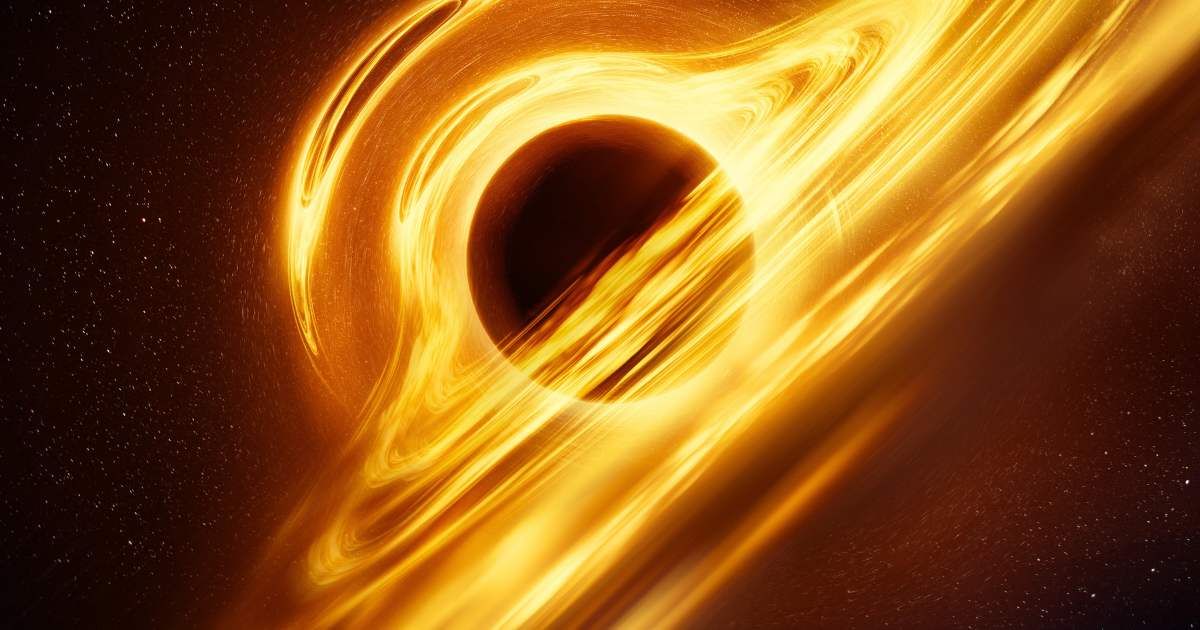
An international team of astronomers has utilized a rare cosmic alignment to prove that millimeter radiation is generated close to the core of a supermassive black hole. The findings, led by Matus Rybak of Leiden University, have been accepted for publication in the journal Astronomy & Astrophysics, as reported on Phys.org.
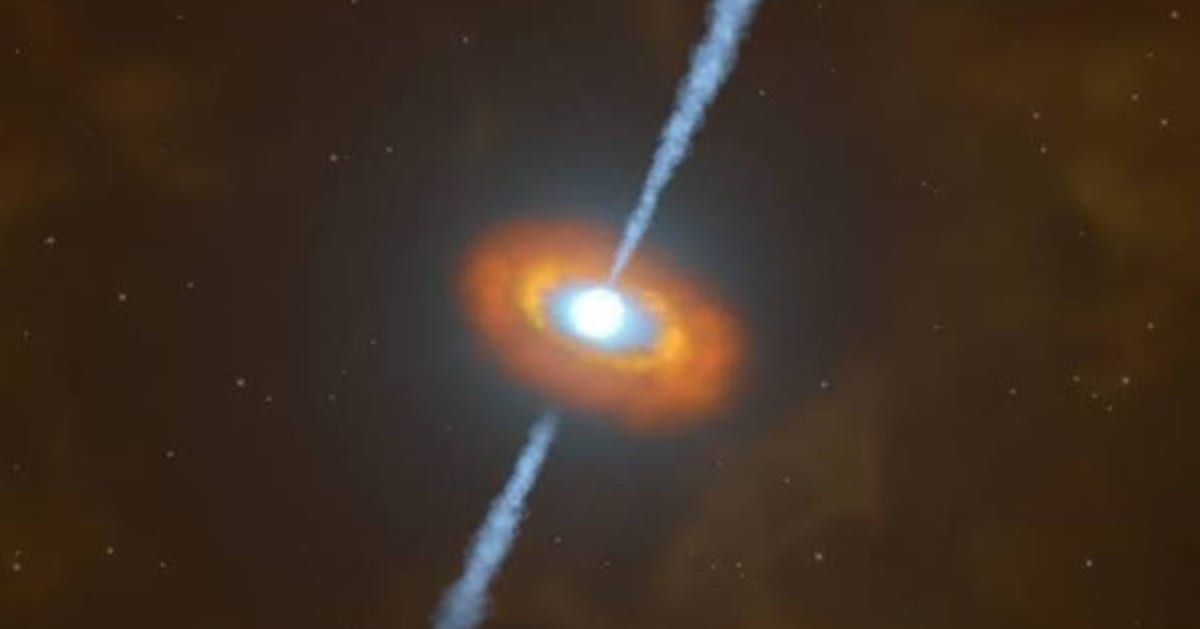
The discovery, which the team calls an "accidental double zoom," came as a breakthrough in observing a quasar known as RXJ1131-1231. This galaxy is uniquely positioned behind a foreground galaxy that acts as a gravitational lens, magnifying the background quasar by a factor of three. This effect is known as macrolensing.
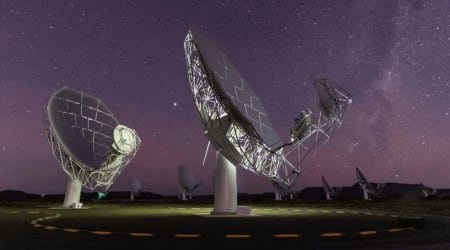
While studying the quasar with the ALMA telescope in 2015, the team observed that the multiple magnified images of the galaxy flickered independently. Rybak immediately recognized this as a sign of microlensing, a separate phenomenon where a single star within the foreground galaxy passes in front of the quasar, creating a second layer of magnification. Rybak describes the combined effect of macro- and microlensing as "placing two magnifying glasses on top of each other." The team re-observed the quasar in 2020, tracking its brightness fluctuations over time.

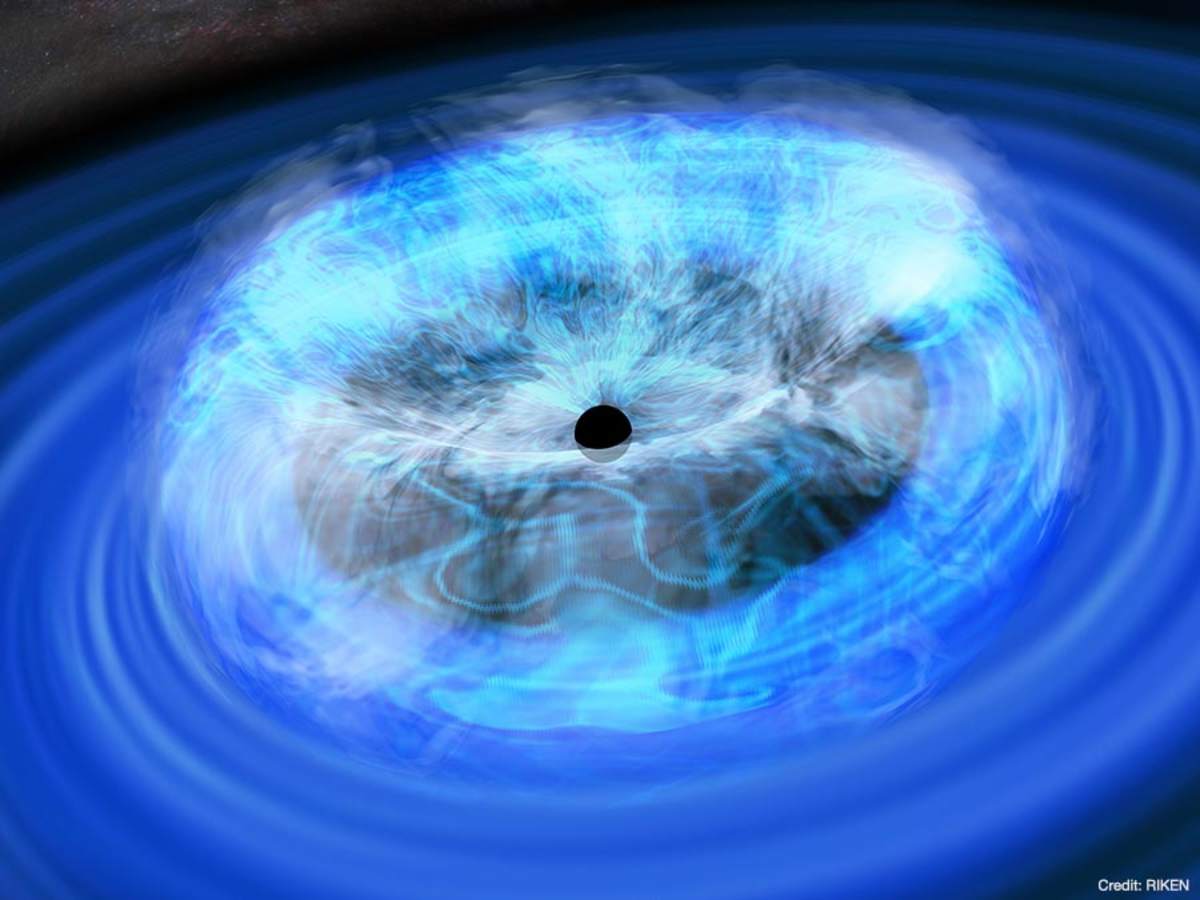
The most notable observation was the quasar's flickering in millimeter-wave radiation, which is typically associated with calm, cold gas and dust. This unexpected activity suggests the radiation is not from dust but rather from the black hole's corona, a hot, active, and highly magnetic region. While millimeter radiation has been seen near black holes before, its origin had remained a mystery. This groundbreaking research, which pioneered the use of microlensing for millimeter radiation, opens the door to studying the temperature and magnetic fields immediately surrounding black holes. The team has been granted observation time with the Chandra X-ray Telescope to continue their investigation. Understanding the conditions near the black hole is crucial, as they are known to impact the entire galaxy.
Expanding on these remarkable findings, new data from NASA's Chandra X-ray Observatory and the Hubble Space Telescope have allowed astronomers to directly measure the spin of the supermassive black hole at the heart of the distant quasar, RX J1131-1231, as per NASA. Located approximately 6 billion light-years from Earth, it is now the most distant black hole for which a spin measurement has ever been made.
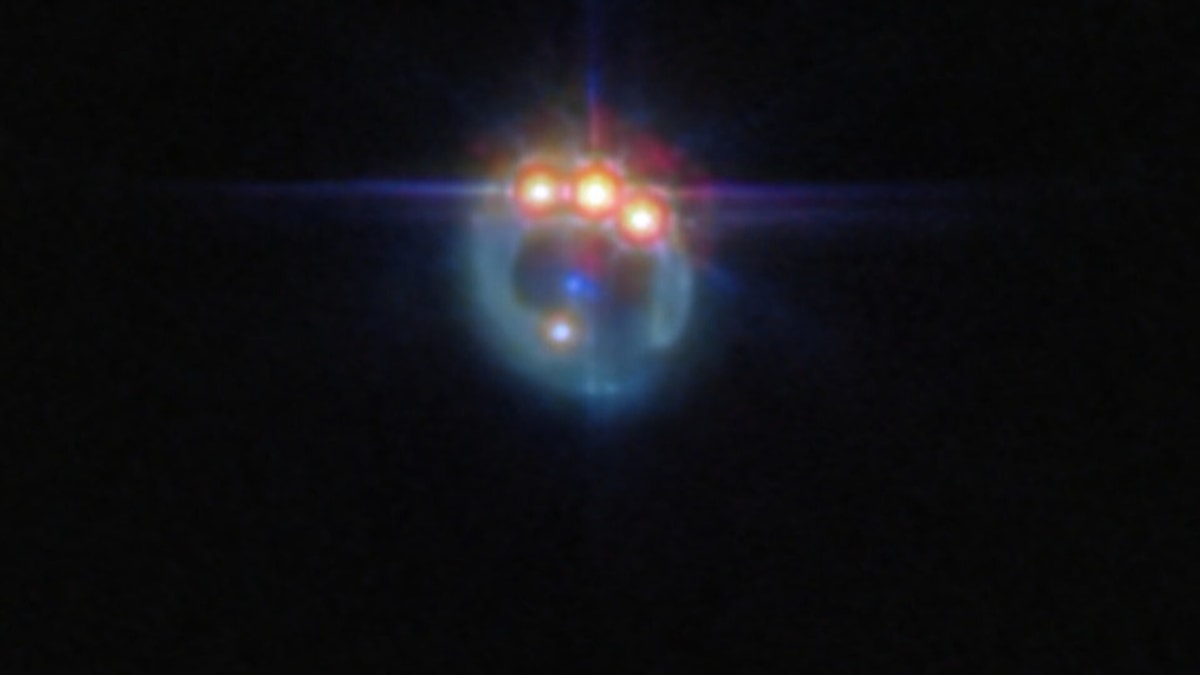
Astronomers were able to obtain a high-quality X-ray spectrum, a measurement of the amount of X-rays at different energies, of the quasar by leveraging the same phenomenon of gravitational lensing. This process, first predicted by Einstein, allowed the light from the quasar to be bent and magnified by an intervening elliptical galaxy, which created four distinct images of the object. This natural "telescope" provided an unprecedented look at regions very close to the black hole. The Chandra data, shown in pink, highlights these four distinct images, while the Hubble data in red, green, and blue reveal the lensing galaxy and others in the field.
Quasars are incredibly bright cores of distant galaxies powered by supermassive black holes, according to NASA. Their immense luminosity, generated from a region just a few light-days to a few light-years across, can be 10 to 100,000 times that of our own Milky Way galaxy.