China plans to surpass NASA’s DART mission by smacking an asteroid at 26 times the speed of sound

Following in NASA’s footsteps, Chinese scientists are planning a planetary defense mission that is targeted for launch before 2030. This mission, similar to NASA’s Double Asteroid Redirection Test (DART), will strike an asteroid in order to change its path and prove yet again that a ‘kinetic impactor’ could save Earth from an existential threat. According to The South China Morning Post, scientists have described the mission in a paper that is currently under peer review. It involves two spacecraft that will launch at the same time—one will strike the target and the other will document the aftermath of the impact.
How China’s mission will surpass DART
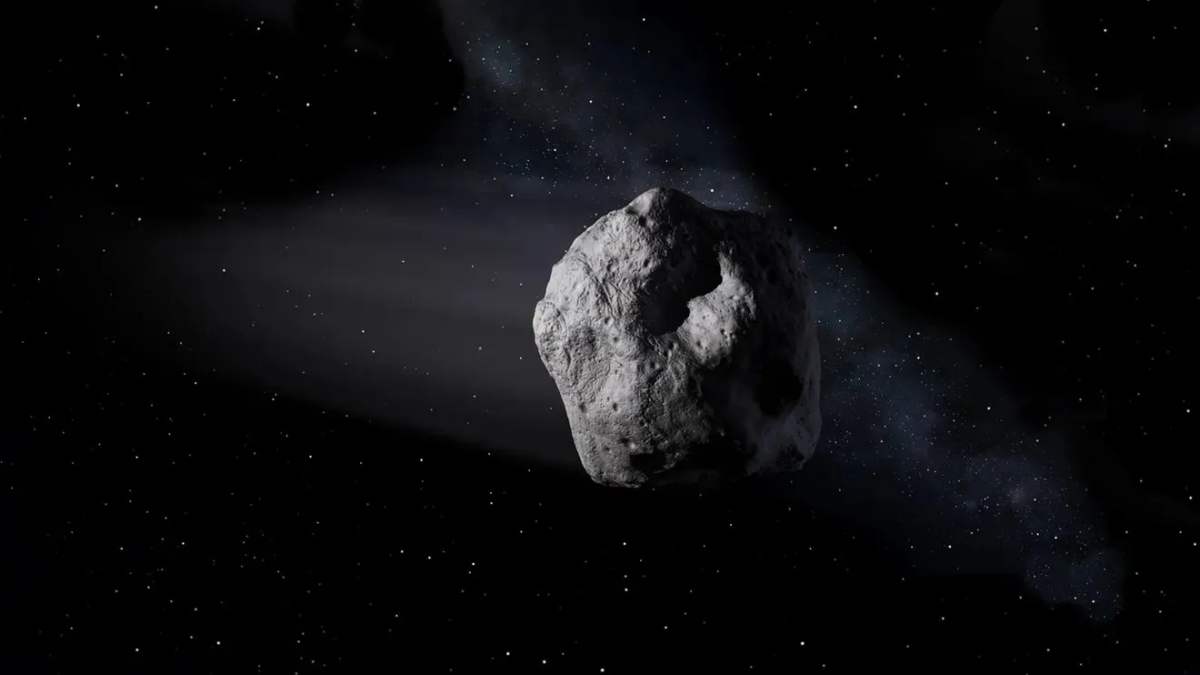
China’s mission reportedly has four major objectives: striking the target, deflecting its orbit, measuring the results precisely, and proving that the mission could help save Earth in a threatening scenario. The target is a 30-meter (98-foot-wide) near-Earth asteroid, dubbed 2015 XF261, which was discovered in 2015. The paper reportedly says that the spacecraft will impact the asteroid at 9 km (5.6 miles) per second when it is within seven million km (4.3 million miles) of Earth during their encounter in 2029 or 2030. This is equivalent to 26 times the speed of sound. The velocity is greater than DART’s, which collided with Dimorphos (orbiting Didymos) at 6.1 km (3.79 miles) per second.
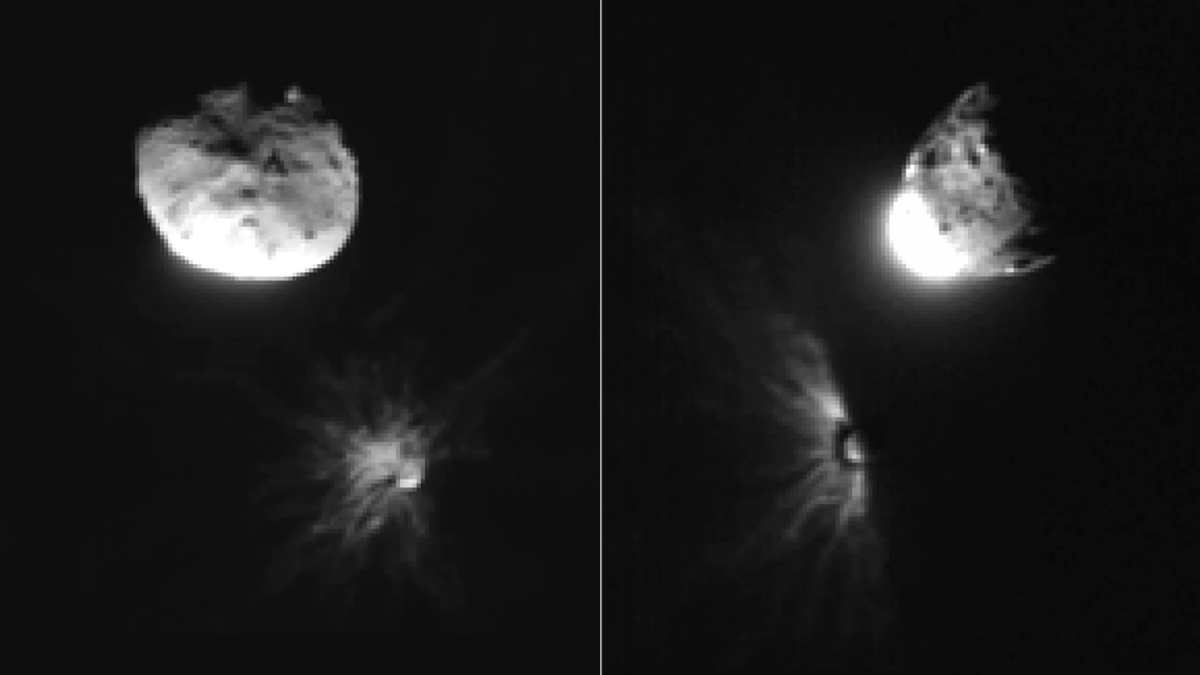
Another major distinction is that the Chinese mission will aim to change the asteroid’s orbit relative to our planet. The scientists reportedly say that DART did not directly change its target’s orbit around the Sun relative to Earth, and that it didn’t fully demonstrate that planetary defense could save us from a space rock on a collision course with Earth. They claim that their version will be a more realistic one.
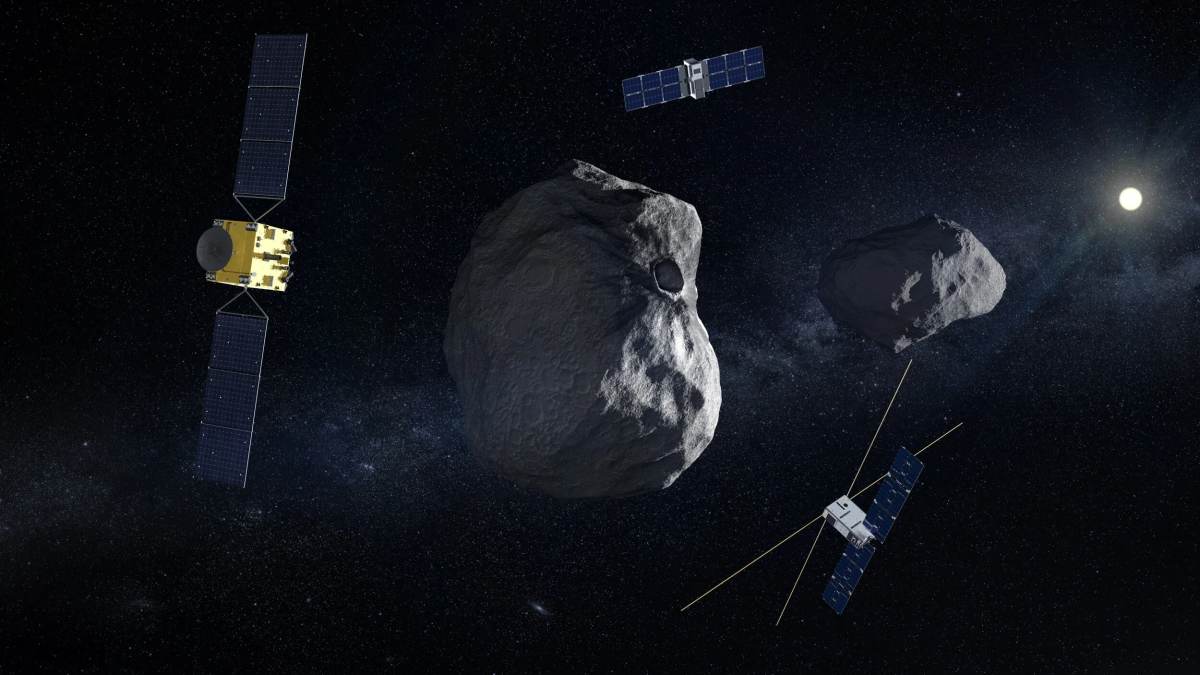
Apart from DART, this project will also emulate the European Space Agency’s (ESA) Hera mission, which launched in October 2024 to study the post-impact Dimorphos up close. China’s probes will be launched together on the same rocket; the impactor will head directly to the target after separation, whereas the Hera-like observer will take a longer path to its destination that involves a gravity assist from Venus. After the impact is complete, scientists will use the second spacecraft to study the asteroid’s orbit, shape, surface, and ejecta with assistance from ground-based telescopes.
The challenges, however, with this mission are immense. Since the asteroid hasn’t been studied extensively, experts don’t know its composition, and because it is extremely faint, finding it won’t be so easy. Besides, the impactor must be designed to autonomously hit the target because guiding it in real-time won't be feasible due to the distance. Studying the asteroid’s orbit after the impact kicks up a huge cloud of debris, and confirming whether the experiment worked, are other major challenges.
What did NASA’s DART achieve?
NASA’s DART mission was launched by SpaceX in November 2021, and it struck the 525-foot-wide (160-meter) Dimorphos in September 2022. This rock circles a bigger asteroid named Didymos (2,560 feet wide), and the impact changed Dimorphos’s orbit around it by 33 minutes. DART was the world’s first mission of its kind, and while it did not change the binary system’s orbit around the Sun, it proved that kinetic impactor technology works for planetary defense.
More on Starlust:
What is International Moon Day? The history behind it and why it still matters
ESA and JAXA's BepiColombo to arrive at Mercury later this year after 8-year journey—what to know