ESA’s Hera probe to catch up with Didymos, home to the only asteroid ever deflected by humans
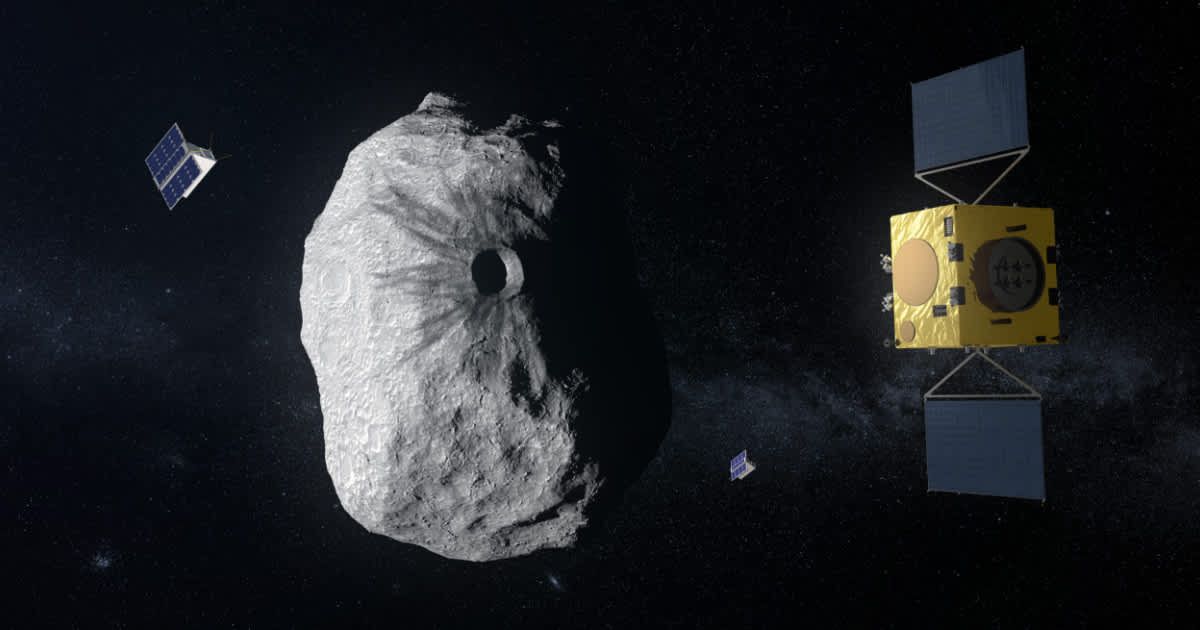
ESA’s Hera mission is on course to rendezvous with asteroid Didymos later this year. The agency confirmed on March 17, 2026, that it had completed two maneuvers, the second of which was to raise the velocity of Hera by 820 miles per hour. This was achieved by using up 271 pounds of hydrazine fuel for the burns. Francesco Castellini of the Flight Dynamics team at ESA’s European Space Operations Centre in Germany remarked, “This is the Hera mission’s largest manoeuvre in terms of fuel consumption, and we used it to test all of the systems that we will need during the braking and rendezvous maneuvers later this year as we arrive at Didymos."
A successful deep-space manoeuvre has put ESA’s Hera spacecraft on course for arrival at the Didymos binary asteroid system later this year!
— ESA's Hera mission (@ESA_Hera) March 17, 2026
At Didymos, Hera will help turn asteroid deflection into a reliable technique for protecting Earth 🛡️🌍https://t.co/Tud0WQVrFH pic.twitter.com/Kn1H6yCwqn
ESA’s Estrack network of deep space antennas confirmed the success of the maneuvers, while also confirming the health of all of the spacecraft's subsystems. Speaking of the maneuver, Castellini stated, “We divided the deep space maneuver into three engine burns, plus one much smaller correction maneuver, carried out over a period of around four weeks." October 2026 will see the spacecraft begin a transition, from coasting through interplanetary space to actively seeking and approaching the asteroid, done via a series of carefully executed burns. Upon arrival after about three weeks, it will release a couple of CubeSats, tiny satellites measuring ten centimeters across, to further the mission’s capabilities. This mission is the second part of the Asteroid Impact & Deflection Assessment (AIDA) collaboration.
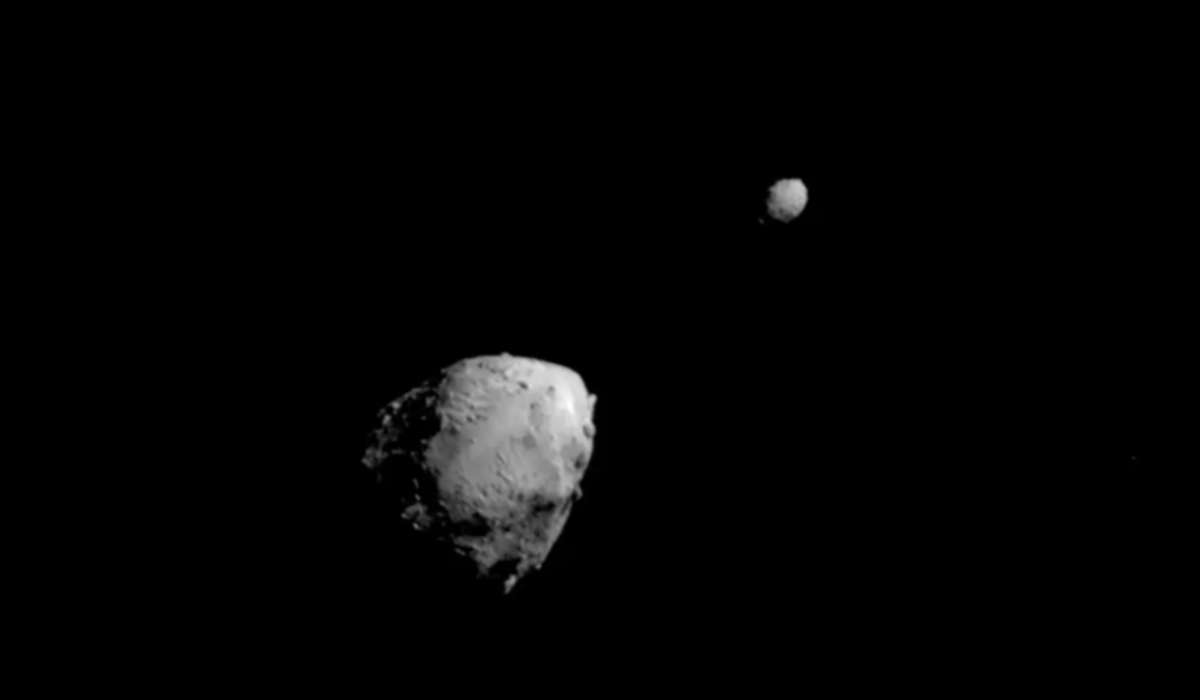
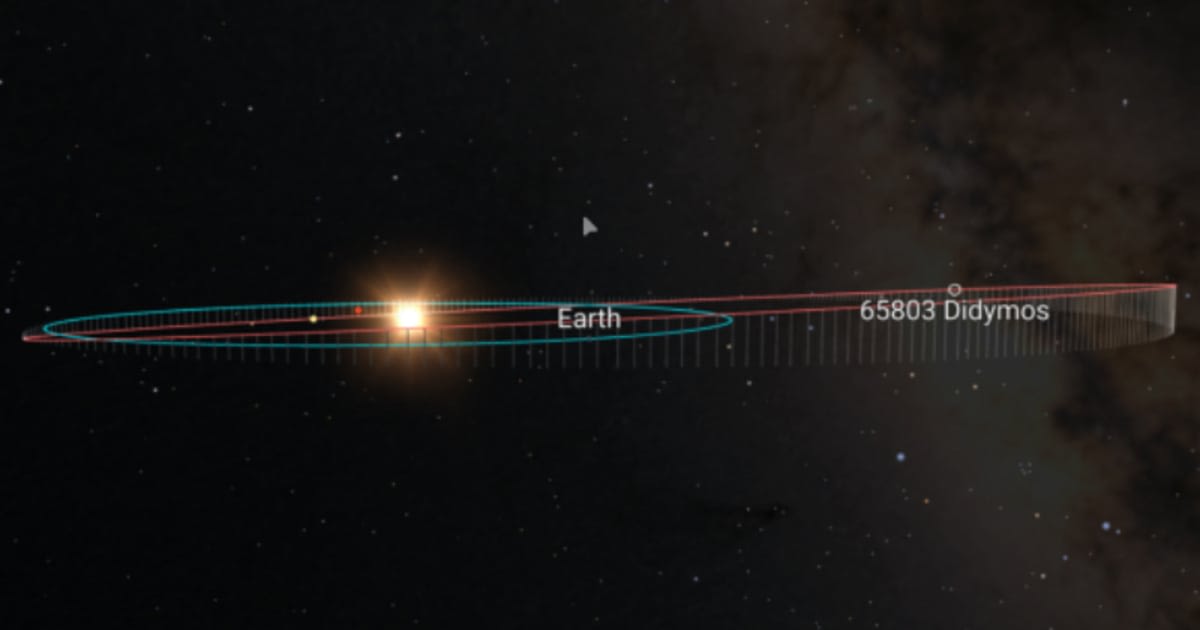
The first part of the AIDA collaboration involved an asteroid impactor crashing into Dimorphos, the smaller moon of Didymos. The strike altered Dimorphos' orbit around the larger asteroid. NASA achieved this on September 26, 2022, with its DART mission, leaving behind a plume of debris. For Hera, Didymos is not the only subject of interest, as its smaller companion will also be studied. Both asteroids are part of a binary system orbiting a common center of mass. They have been of particular interest to ESA’s Planetary Defence Office, which develops methods of asteroid deflection. This is due to the proximity of the binary system’s orbit to that of Earth.
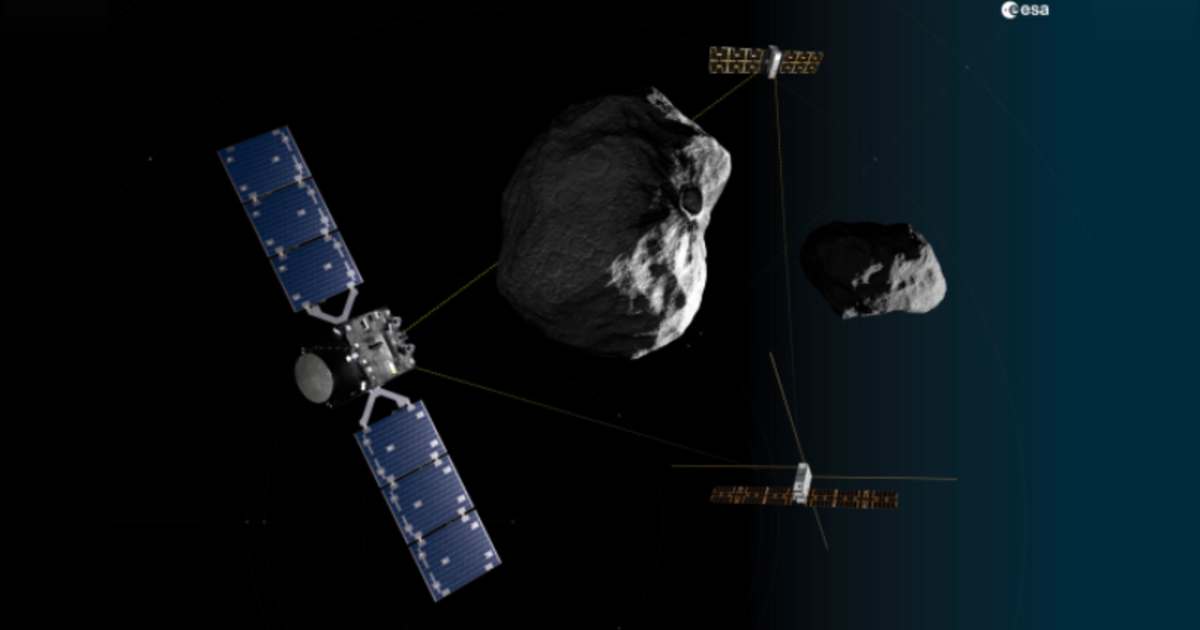
ESA described Hera’s goal as shedding more light on the process of deflecting threatening asteroids by means of kinetic impact, turning what DART did into something that can be replicated in the future. The two CubeSats, namely Milani from Italy, and Juventas from Luxembourg, will help achieve Hera’s goals by conducting experiments and prospecting the asteroids’ surfaces.
Next up, the flight controllers have the rendezvous in their sights, which will follow an approach period of three weeks. Before it happens, software updates designed to prepare Hera for its operations close to the pair of asteroids will be installed. An example of the new software is one for the spacecraft’s laser altimeter and one for its camera. Anna Schiavo of the Hera Flight Control Team spoke on this, “Uploading new software to Hera across deep space is like having a video call with a friend on Mars at just 0.004% the speed of a typical home internet connection and with a twenty-minute time delay between speaking and hearing your friend’s response. Sending the software to the spacecraft, which is just the first step in the overall software update, will take around three hours.”
More on Starlust
After Bennu, scientists find all DNA and RNA building blocks in asteroid Ryugu samples
Asteroid Bennu samples contain 'key to happiness' among other fascinating things