Data from NASA's MAVEN orbiter shows Mars gets Earth-like auroras—here's how

Within just over a month of the MAVEN orbiter being declared dead, NASA has announced a major discovery made using data from the spacecraft. In a new paper published in Nature Communications, scientists revealed that they have found clues to the formation of certain types of auroras on Mars, which are similar to Earth-based auroras. Scientists have long observed localized auroras on the red planet, but it wasn’t until now that they fully understood how they’re formed.
Although NASA's MAVEN mission recently ended, scientists are still making discoveries from 11+ years of spacecraft data. Just today, researchers reported signs that some kinds of auroras on Mars form in a similar way to Earth-based auroras. https://t.co/862dtzEUA9 pic.twitter.com/z8G6MaSwuF
— NASA Solar System (@NASASolarSystem) July 23, 2026
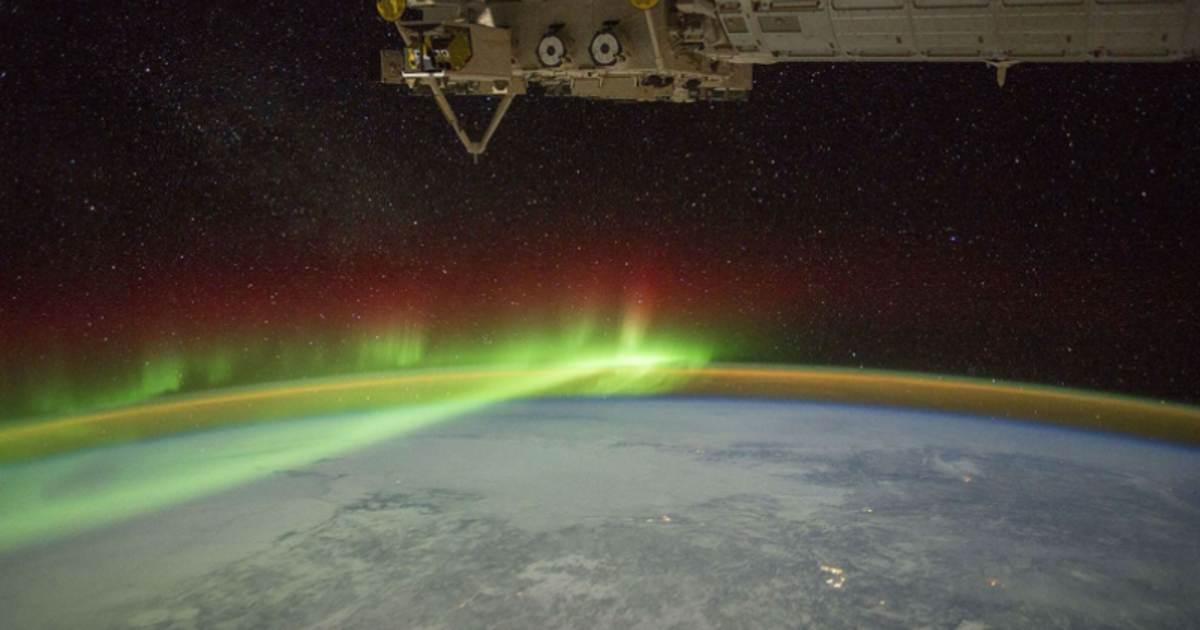
On Earth, there’s a process called the Dungey cycle. When the Sun’s magnetic field lines get close to our planet’s magnetosphere—the protective bubble of magnetic field—their connection sends energy throughout Earth’s magnetosphere and magnetotail (a tail-like feature made of magnetic field lines facing away from the Sun). This connection fires electrons back into Earth’s atmosphere, creating multicolored auroras after they interact with different gases at varying altitudes.
The Dungey cycle, according to NASA, drives electrical currents, accelerates charged particles, and controls the circulation of plasma in Earth’s magnetosphere and ionosphere. MAVEN has now revealed that this process is happening on Mars as well but at much smaller scales in certain regions with trace amounts of magnetic field. There is no such thing as a global magnetic field on Mars like on Earth. Instead, there are several tiny magnetospheres scattered throughout the planet, resulting from intensely magnetized crust. And these scattered magnetospheres are creating localized auroras through a mini-version of the Dungey cycle.
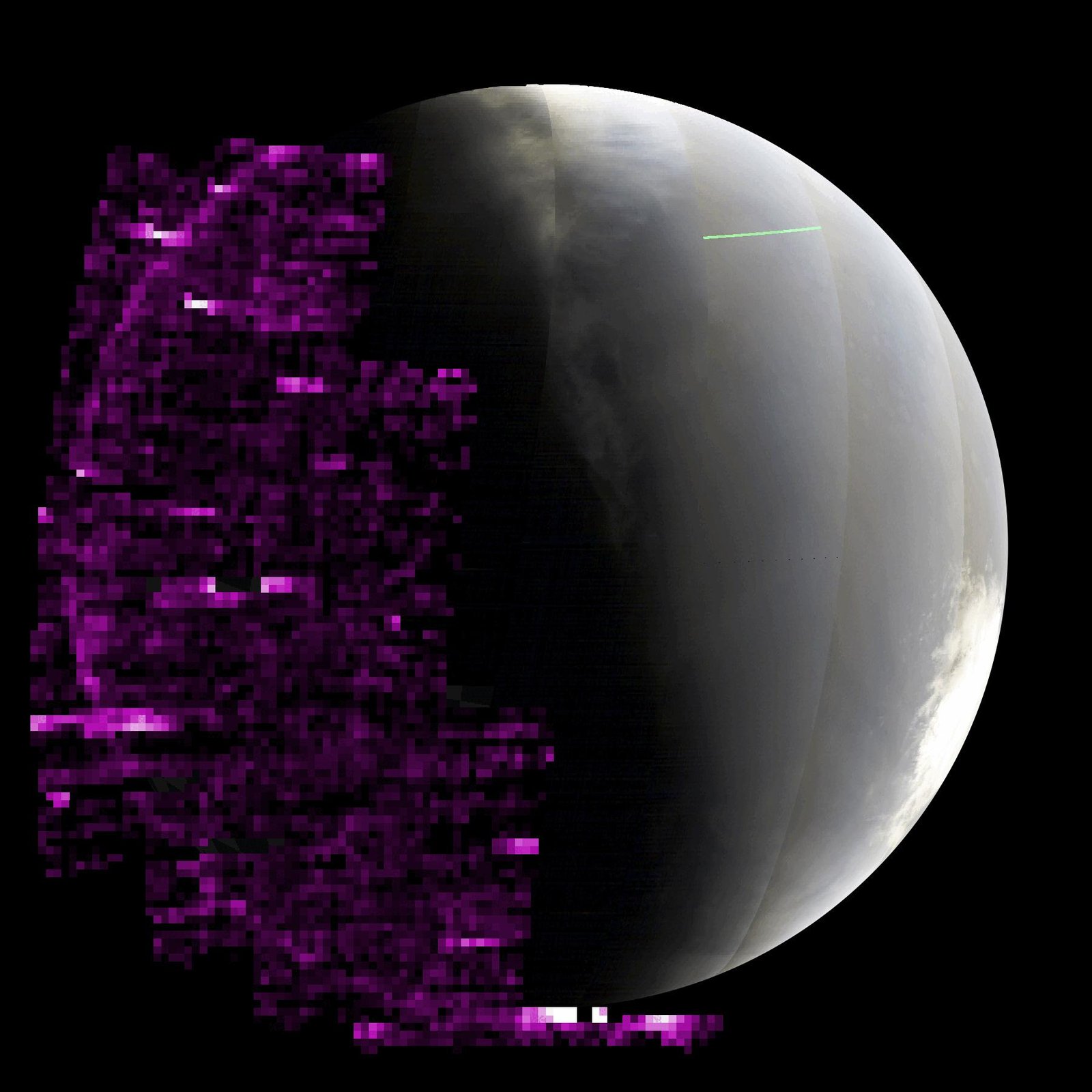
“We knew that magnetic reconnection was happening at Mars but did not expect it to be like the Dungey cycle,” Shaosui Xu, lead author of the study and associate research physicist at the Space Sciences Laboratory at the University of California, Berkeley, said in a statement. The authors say that this discovery has solved the puzzle of how electrons were being energized to create the Martian auroras and proved that a Dungey-like mechanism can happen on both large and small scales.
Shannon Curry, MAVEN’s principal investigator and a research scientist at the University of Colorado Boulder, says the study “changes how we think of Martian auroras and is another important step toward understanding why Mars and Earth have evolved so differently despite being governed by the same underlying physics.” The findings also provide a better understanding of the interaction between Mars and the solar environment, which has implications for future missions, both robotic and crewed.

The MAVEN (Mars Atmosphere and Volatile Evolution) mission was declared over in early June after loss of communication, but several more such discoveries will follow for years to come. Last heard from in December 2025, MAVEN spent 11 years in the Martian orbit—ten years longer than its planned one-year lifespan. Throughout its mission, the orbiter studied the upper Martian atmosphere, ionosphere, and interactions with the Sun to explore the loss of the planet’s atmosphere to space.
More on Starlust
Do solar storms influence Martian weather? New study finds evidence that dust storms get affected
Size matters: A planet needs to be at least as big as Mars for alien life to survive on it