Comet 3I/ATLAS will re-emerge from solar glare in November, faint but visible to limited space telescopes
The highly anticipated interstellar comet is currently invisible from Earth and completely hidden by the Sun's glare.
UPDATED OCT 30, 2025
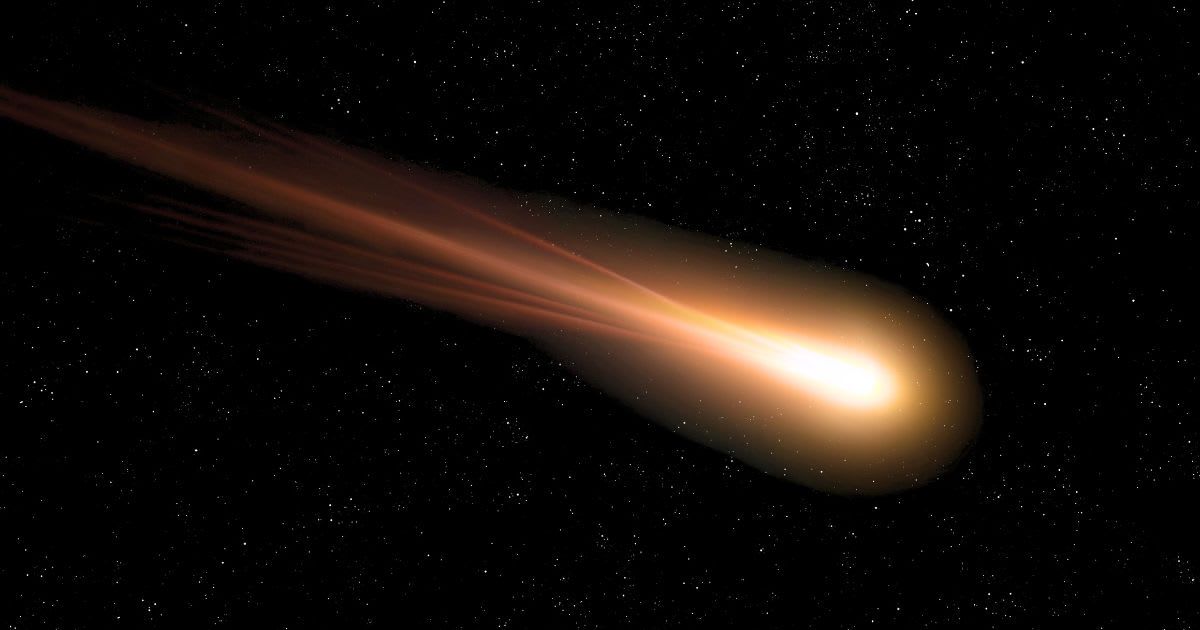
A large comet in space with a glowing gas tail (Representative Cover Image Source: Getty | Nazarii Neshcherenskyi)

The enigmatic interstellar comet 3I/ATLAS successfully navigated its closest orbit to the Sun this week, reaching perihelion on Wednesday, October 29, at approximately 7:47 a.m. ET. 
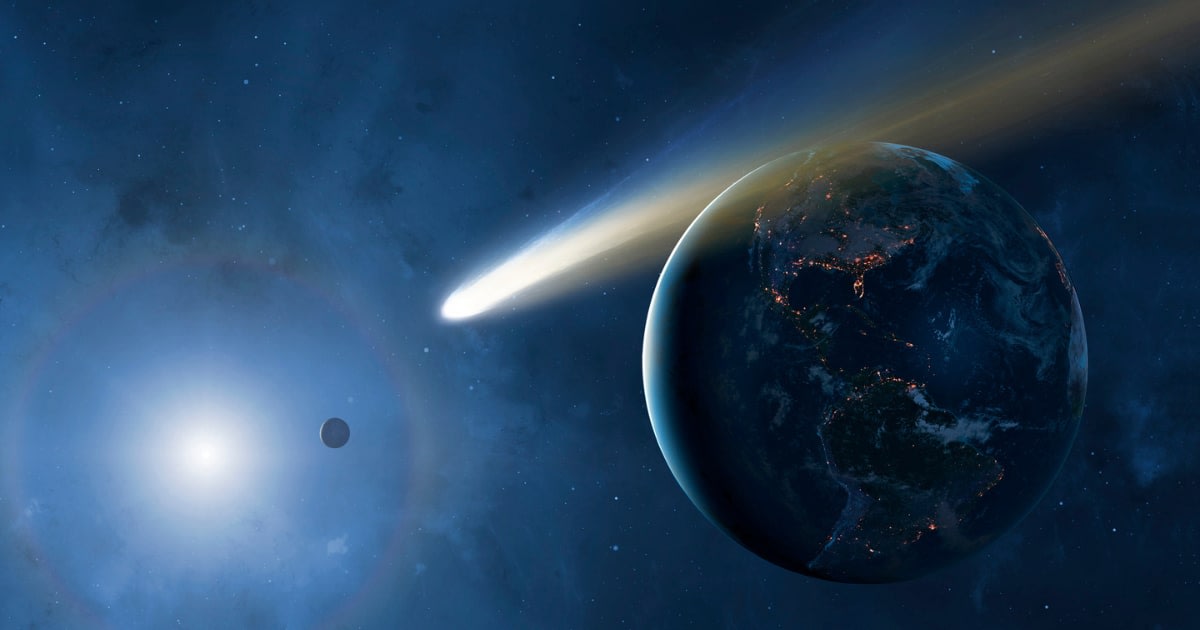
Illustration of the Earth, Moon, and Sun showing a passing comet (Representative Cover Image Source: Getty | MARK GARLICK/SCIENCE PHOTO LIBRARY)
Illustration of the Earth, Moon, and Sun showing a passing comet (Representative Image Source: Getty | MARK GARLICK/SCIENCE PHOTO LIBRARY)

However, Earth-based observers were denied a direct view of the event, with the celestial visitor currently positioned on the far side of the star. Despite the highly anticipated close encounter, the comet, which originated outside our solar system, is presently in conjunction with the Sun, completely obscured by the star's blinding glare, as per Space.com. This unfavorable alignment means telescopes on and near Earth, including those at the L2 Lagrange point, missed the crucial perihelion event, when the comet's activity, such as outgassing and tail formation, is theoretically at its peak.  
Image of comet flying by (Cover Image Source: Getty | Stock photo)
Image of comet flying by (Representative Image Source: Getty | Stock photo)

The loss of Earth-based observation has been mitigated by a network of deep-space missions perfectly positioned to track the object. Spacecraft currently orbiting Mars, for example, held a prime viewing angle of the hemisphere the comet rounded. This same Mars armada previously secured a ringside seat for 3I/ATLAS's close pass by the Red Planet on October 3. Other distant observers include NASA's Psyche and Lucy missions, as well as the European Space Agency's JUICE probe. The JUICE spacecraft, which is currently en route to Jupiter, will be closest to the comet's trajectory. However, its observational data transmission is delayed until next February, as the probe is using its primary antenna as a sun-shield.
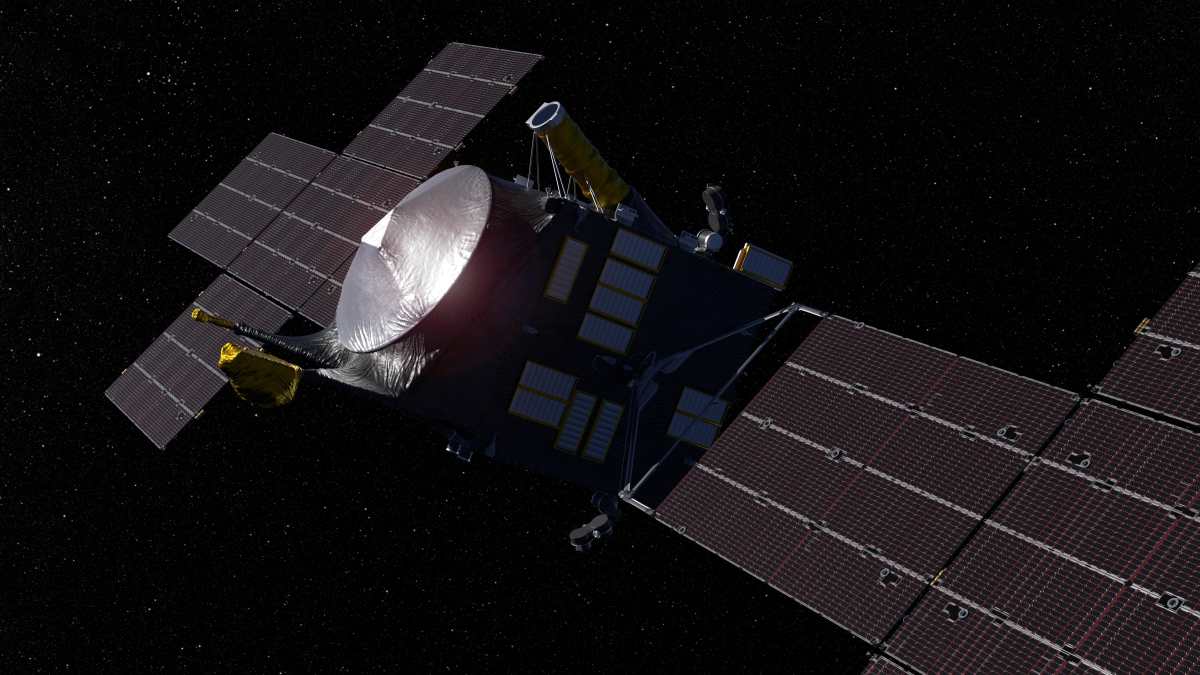
This artist's concept, updated as of June 2020, depicts NASA's Psyche spacecraft launched in August 2022 (Representative Cover Image Source: NASA Image and Video Library | NASA )
This artist's concept, updated as of June 2020, depicts NASA's Psyche spacecraft launched in August 2022 (Representative Image Source: NASA Image and Video Library | NASA )

Scientists are keenly interested in the perihelion activity, as the expelled gases and dust offer a direct chemical signature of the comet's composition. Initial findings already indicated unusual concentrations of carbon dioxide and nickel compared to typical solar system comets. These differences offer a unique opportunity to directly compare the chemistry of our own molecular cloud with that of the system that birthed 3I/ATLAS over seven billion years ago. Researchers are specifically watching for a possible increase in iron emission during this active phase.

Comet 3I/ATLAS streaks across a dense star field in this image captured by the Gemini Multi-Object Spectrograph (GMOS) on Gemini South at Cerro Pachón in Chile (Cover Image Source: International Gemini Observatory/NOIRLab)
Comet 3I/ATLAS streaks across a dense star field in this image captured by the Gemini Multi-Object Spectrograph (GMOS) on Gemini South at Cerro Pachón in Chile (Image Source: International Gemini Observatory/NOIRLab)

The comet is expected to re-emerge from the Sun’s glare and become visible in the pre-dawn sky later in November or early December. While it may still be active, its considerable distance means it is predicted to be a faint magnitude 12 object, accessible only to sophisticated instruments like the Hubble and James Webb space telescopes, as well as dedicated astro-imagers.  

The James Webb Space Telescope (JWST or Webb) observes outer space to detect anomalies. Elements of this image are furnished by NASA (Representative Image by alex-mit / Getty Images)

Beyond its scientific value, the perihelion event, which serves as the most efficient point for a spacecraft to apply thrust and gain a gravitational assist from the Sun, has sparked a compelling, albeit speculative, debate, according to Avi Loeb's Medium blog. Since Earth is unable to observe 3I/ATLAS at this optimal moment, the question arises: Was this high-speed object's trajectory intentionally fine-tuned by extraterrestrial intelligence (ETI)?

The comet's future trajectory includes a pass near Venus on November 3, 2025, and a close approach to Earth on December 19, 2025. This proximity to Earth has prompted the Galileo Project to search for any anomalous activity or signs of deployed mini-probes. Finally, when the comet nears Jupiter on March 16, 2026, NASA's Juno spacecraft will attempt to image it and search for any technological radio transmissions. 

More on Starlust

Alien artifact or freak of nature? 'Anomalously massive' interstellar object 3I/Atlas has scientists puzzled

Giant 'jet' of material detected on interstellar object 3I/ATLAS aiming at the Sun
MORE STORIES

The celestial event this month is a rare one, with the Moon retreating to an apogee from Earth's center.
1 hour ago
The three interstellar objects are unique, billion-year-old fragments and kinetic artifacts collected from countless extrasolar systems across the galaxy.
4 hours ago
English physicist and science communicator Professor Brian Cox draws parallels between the journey of 3I/ATLAS and that undertaken by humanity.
9 hours ago
Conspiracy theories can be put to rest as new evidence from the MeerKAT radio telescope has emerged.
1 day ago
Consecutive X-class solar flares have set the stage for severe space weather to strike on November 11 and 12.
1 day ago
The observation, made on November 9, unveiled a shockingly complex jet system that overshadows prior data, immediately casting doubt on the comet's origin.
2 days ago
The object, discovered by Gennady Borisov on November 2, 2025, quickly became the focus of speculation amid the curiosity surrounding 3I/ATLAS.
2 days ago
To assess Martian viability, scientists subjected yeast cells to Mach 5.6 shock waves and the corrosive perchlorate salts common on the Red Planet.
6 days ago
These impacts pack surprising power; a mere 11-pound meteoroid can blast a 30-foot (9-meter) crater, ejecting 75 metric tons of lunar soil.
6 days ago
Sunspot AR3474 detonated with an X1.8 solar flare on November 4, sending an ultraviolet wave silencing South America's shortwave radio communications.
7 days ago