A 'potentially hazardous asteroid,' about a mile wide, is set to pass close to Earth on June 27
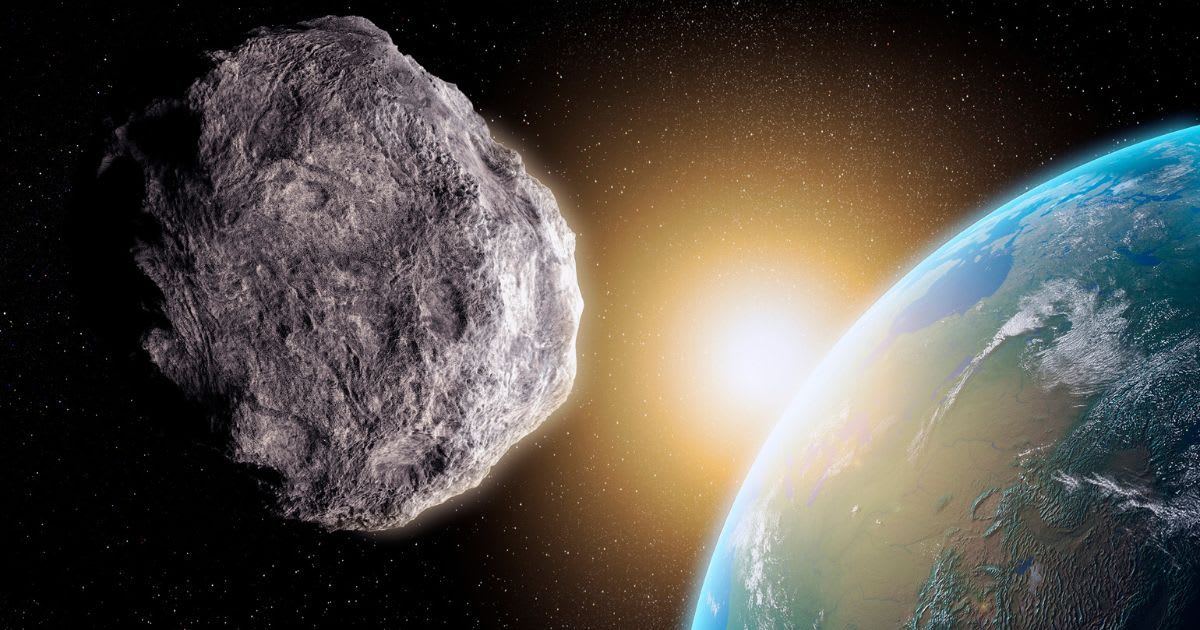
An asteroid designated "potentially hazardous" by the Minor Planet Center will fly past Earth on Saturday, June 27, at 7:14 am EDT. Alarming as it may sound, the European Space Agency (ESA) has revealed that the object, designated (152637) 1997 NC1, will be about 1.5 million miles away at its closest approach. That is about 6.6 times the lunar distance. It is, however, still unusually close for an object of its size.
🪨Asteroid (152637) 1997 NC1, as monitored by ESA's Planetary Defence team, makes a close approach to Earth this Saturday that could be visible with small telescopes 🔭 https://t.co/npEZkGqHjM pic.twitter.com/duwL9E8Uwn
— ESA Operations (@esaoperations) June 24, 2026
1997 NC1 is projected to be between about half a mile and just over a mile across. The last time an object about as big as this one came this close to Earth was 1994 PC1 in January 2022. The size of such objects is determined by their albedo—a celestial body's ability to reflect sunlight off its surface. The estimated size of 1997 NC1 mentioned above is based on a 5% to 25% albedo range. However, some sources also say that the albedo could be as high as 60%. If that is true, then the object would likely be smaller.
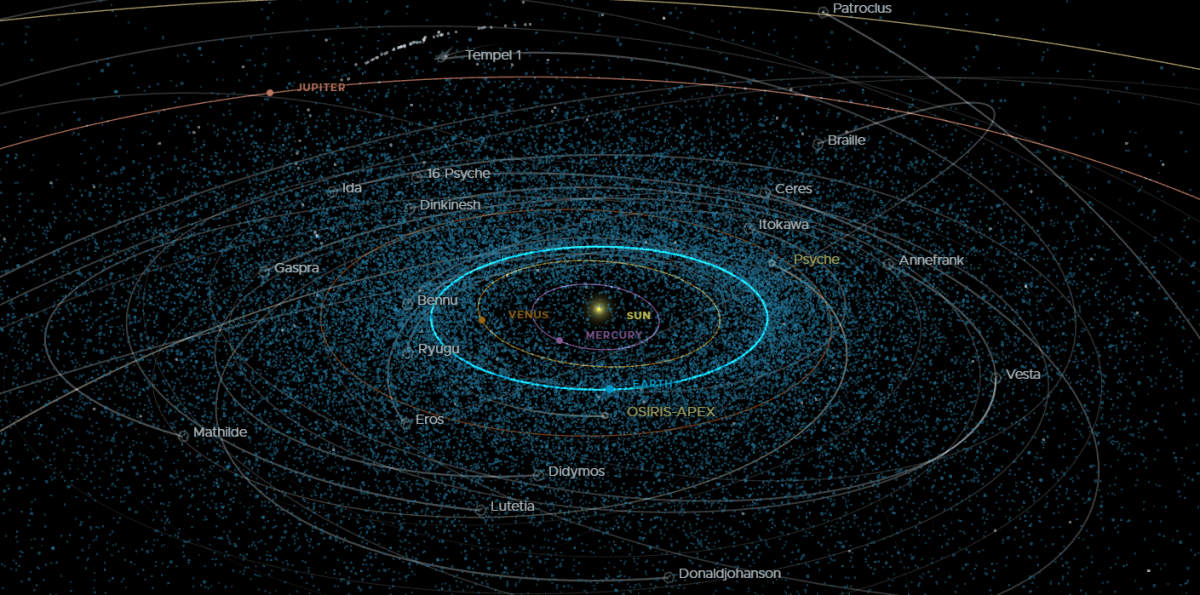
To determine 1997 NC1's true size, astronomers had planned the use of radar observations in the days leading up to its close approach. According to Dr. Lance Benner, principal scientist at NASA's Jet Propulsion Laboratory, these radar observations had been scheduled for yesterday and today (June 24 and 25, 2026), as well as on the day of the close approach. Dr. Benner also noted that 1997 NC1 is projected to make this close of an approach to us for the first time since at least the year 1600, which is as far back as calculations of its distances could go. It is also not projected to make another close approach like Saturday's until 2133.
Will asteroid 1997 NC1 be visible?
1997 NC1, discovered by the Near-Earth Asteroid Tracking system on Haleakala in Hawaii, will move from constellation Lyra to constellation Norma between today and July 1. It will reach a peak brightness of about 10 and should be visible from northern locations during the incoming part of the approach and even nearly globally during its closest approach. However, when it starts receding from Earth, it will only be visible from the Southern Hemisphere, according to ESA. Observers may be able to catch it with a small telescope or even a large pair of binoculars, but the bright Moon nearby may cause some interference. The Virtual Telescope Project will also show live images of the asteroid tomorrow, June 26, and Saturday, with both broadcasts kicking off at 7 pm EDT.
More on Starlust
A meteorite crashed through the roof of a German home on March 8, reached as far as the bedroom
A "quirky" peanut-shaped asteroid is wobbling through space: What NASA's Lucy just discovered