Astronomers witness a supermassive black hole violently tearing apart a star thousands of light-years from galactic core
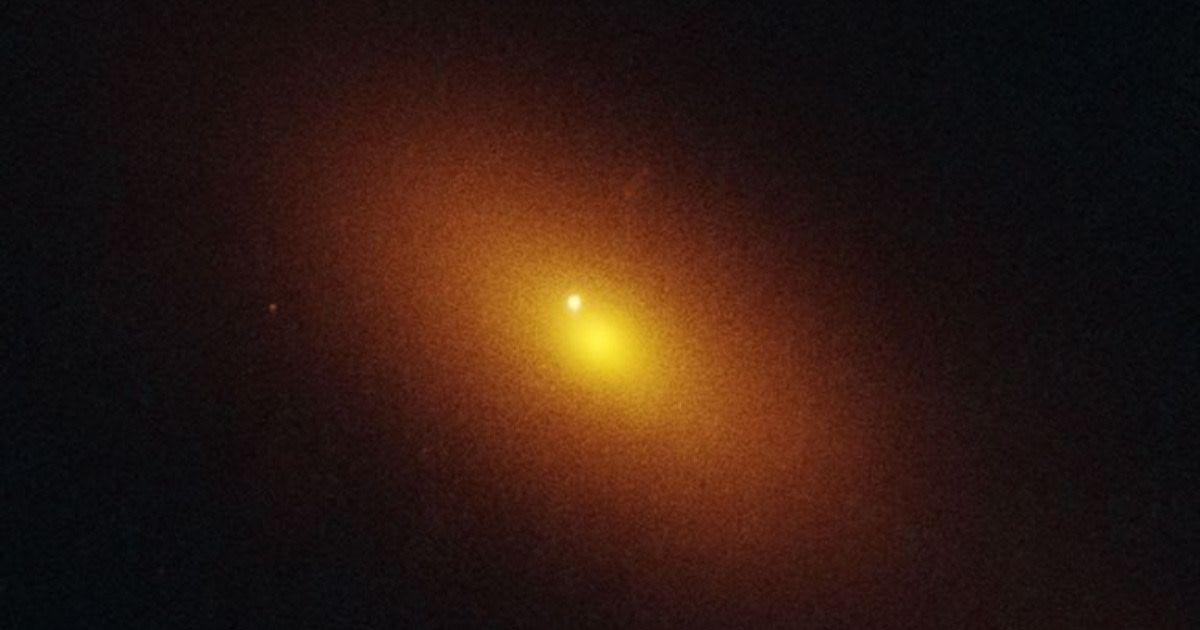
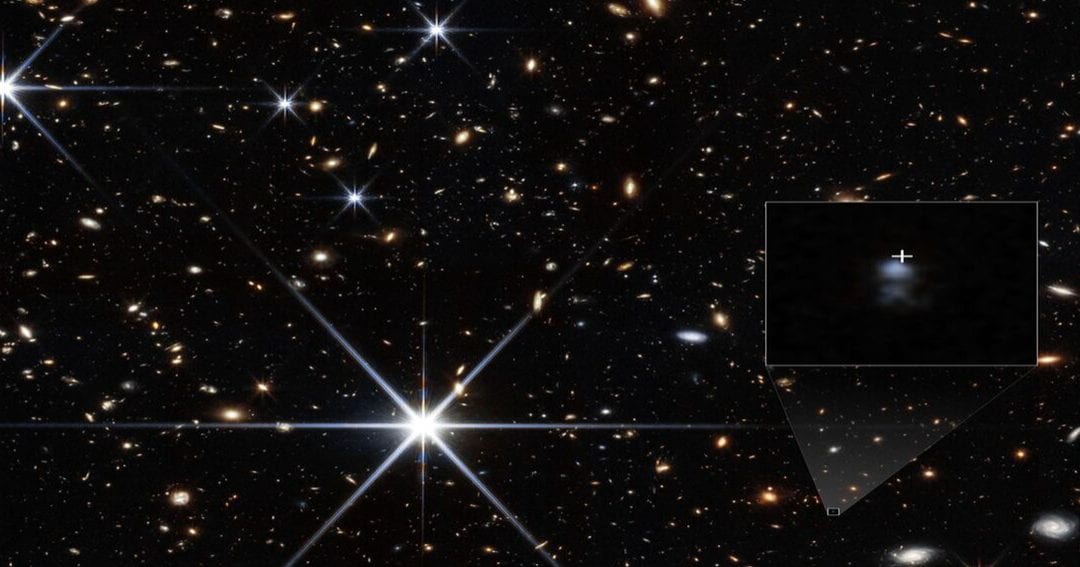
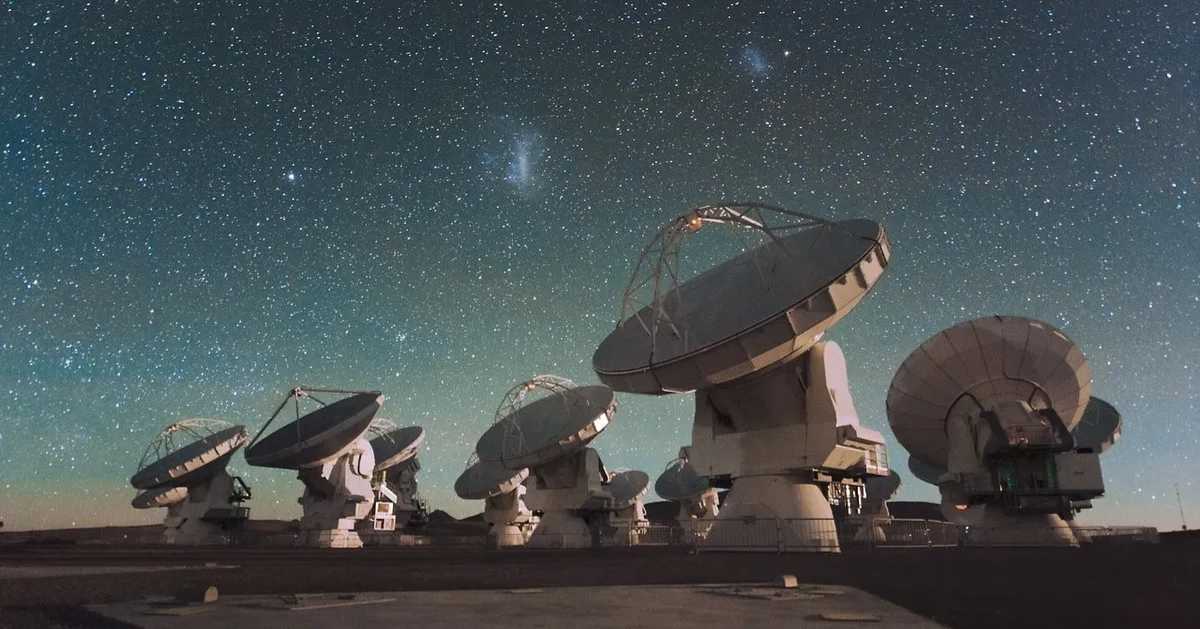
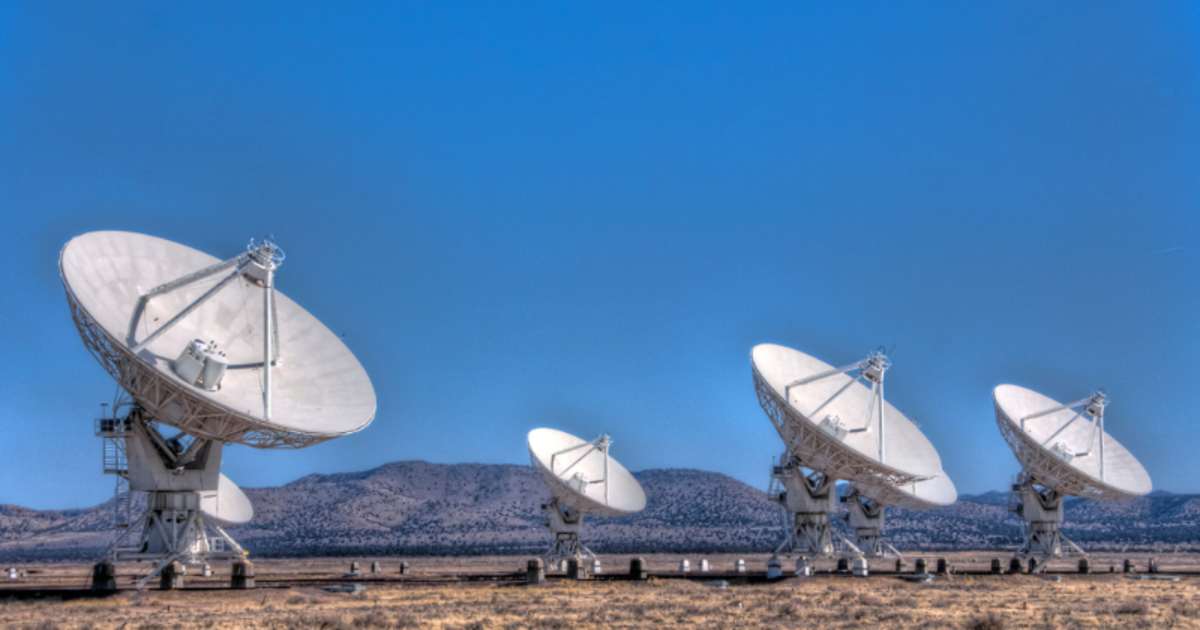
International astronomers, leveraging observations from the Allen Telescope Array (ATA), have detected a rapid and powerful surge of radio waves emanating from a rare stellar casualty: a star being ripped apart by a supermassive black hole (SMBH) far from its galaxy's center, as per the SETI Institute.
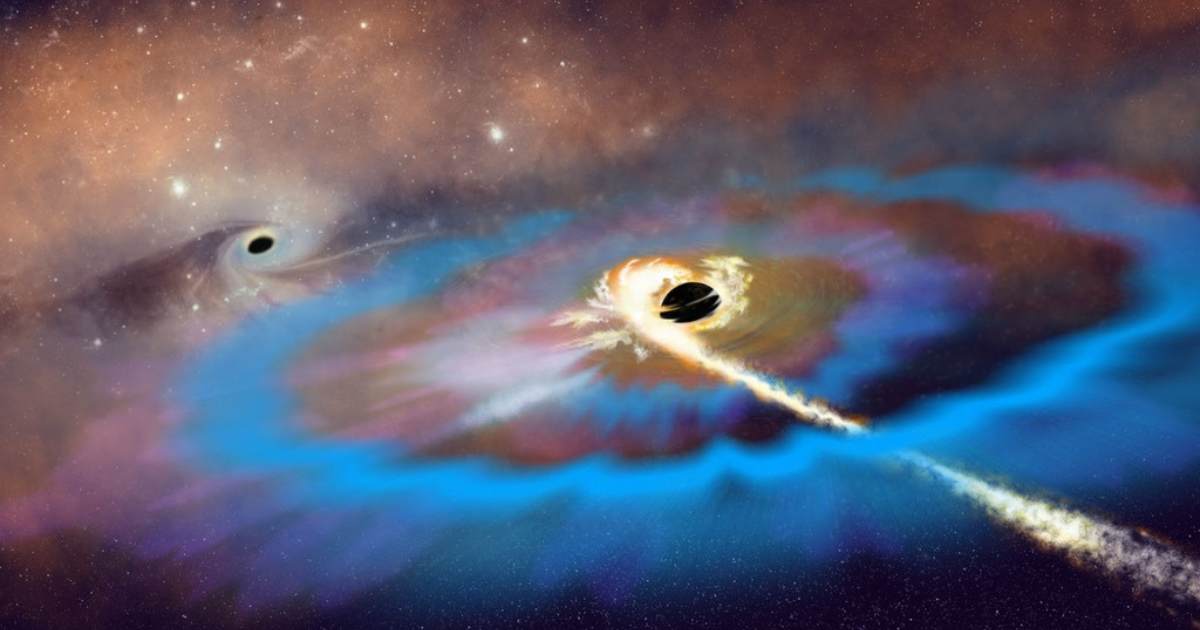
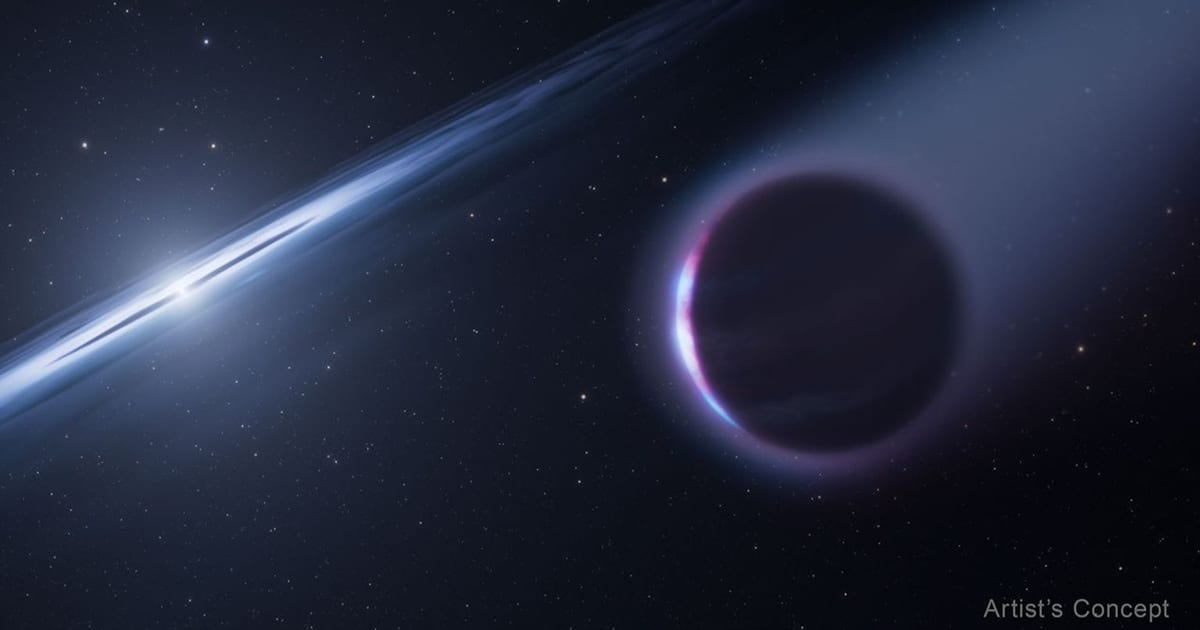
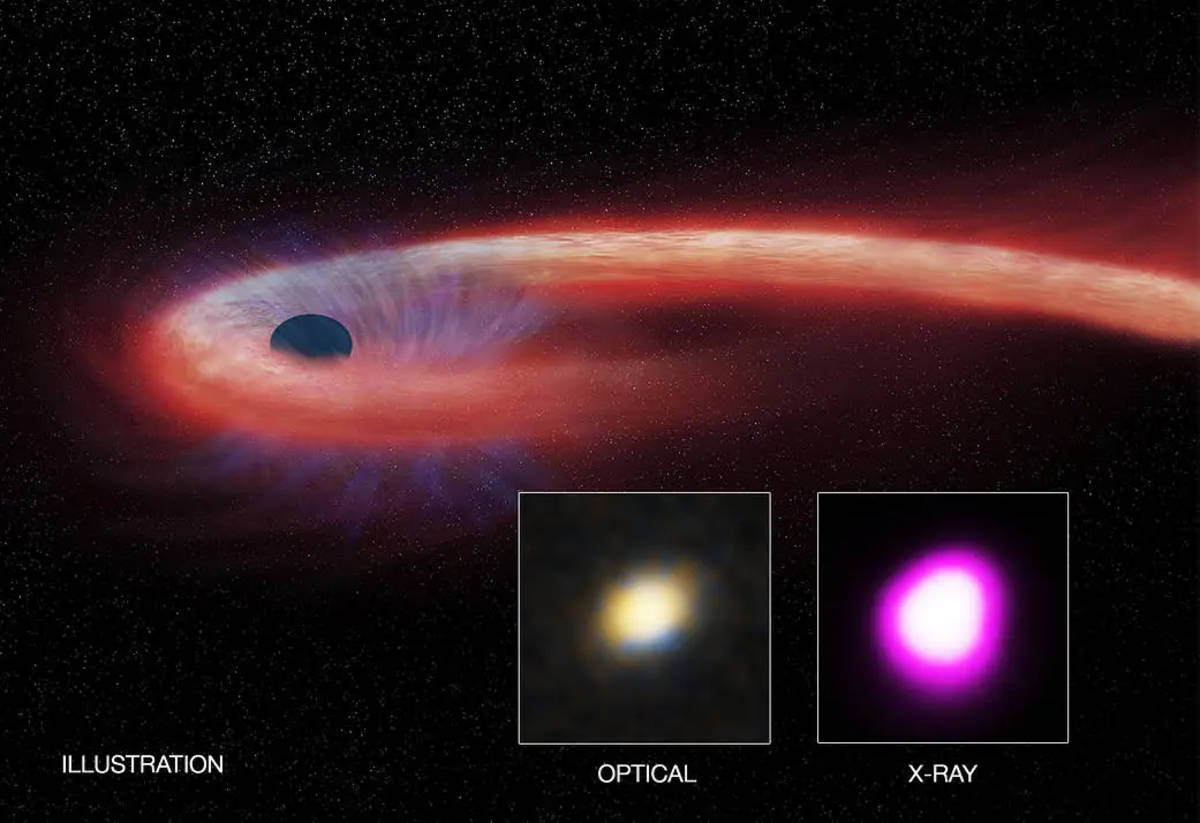
The event, designated AT 2024tvd, is classified as a Tidal Disruption Event (TDE). In this cosmic spectacle, a star's trajectory leads it fatally close to a black hole, resulting in its destruction by immense gravitational forces. TDEs typically light up the universe in all wavelengths near the nuclear core of a galaxy, where the central SMBH resides.
However, AT 2024tvd marks a significant departure. Not only did the radio signal evolve with record-breaking speed, but the destructive force was located thousands of light-years away from the expected galactic nucleus. “Tidal disruption events are usually found at the hearts of galaxies, whereas AT 2024tvd was caused by an off-center black hole, the first time this has been unambiguously seen,” stated Dr. Joe Bright, a Radio Astronomy Researcher at the University of Oxford.
This detection serves as a stark reminder that the universe holds vast populations of "invisible" objects, detectable only when they engage in sudden, catastrophic events that fundamentally reshape our celestial maps. It highlights the critical need for powerful, flexible radio telescopes capable of catching these fleeting, high-energy cosmic accidents.
The discovery, spearheaded by principal investigators Dr. Itai Sfaradi and Dr. Raffaella Margutti of the University of California, Berkeley, and involving the SETI Institute, suggests the host galaxy harbors two SMBHs: one at its conventional center, and a second, hidden SMBH offset by 2,600 light-years. This arrangement is likely the relic of an ancient galactic merger. "What makes this discovery even more remarkable is that it reveals a massive black hole that would otherwise be invisible to us," commented Dr. Raffaella Margutti. "The only reason we can detect this wandering black hole is because it happened to tear apart a star and produce these incredibly bright radio signals."
The ATA's high-precision, time-sensitive monitoring was crucial in tracking the event's swift rise and decay in radio brightness, making it uniquely suited to capturing the phenomenon's rapidly changing nature, according to Dr. Sofia Sheik, Technosignature Research Scientist at the SETI Institute. This off-center stellar shredding produced two distinct, rapid bursts of radio emission, providing scientists with an unprecedented view of how these cosmic giants operate outside of galactic centers. Detailed analysis of the radio data indicates the cataclysmic event launched two massive outflows, with the first likely carrying remnants of the star itself.
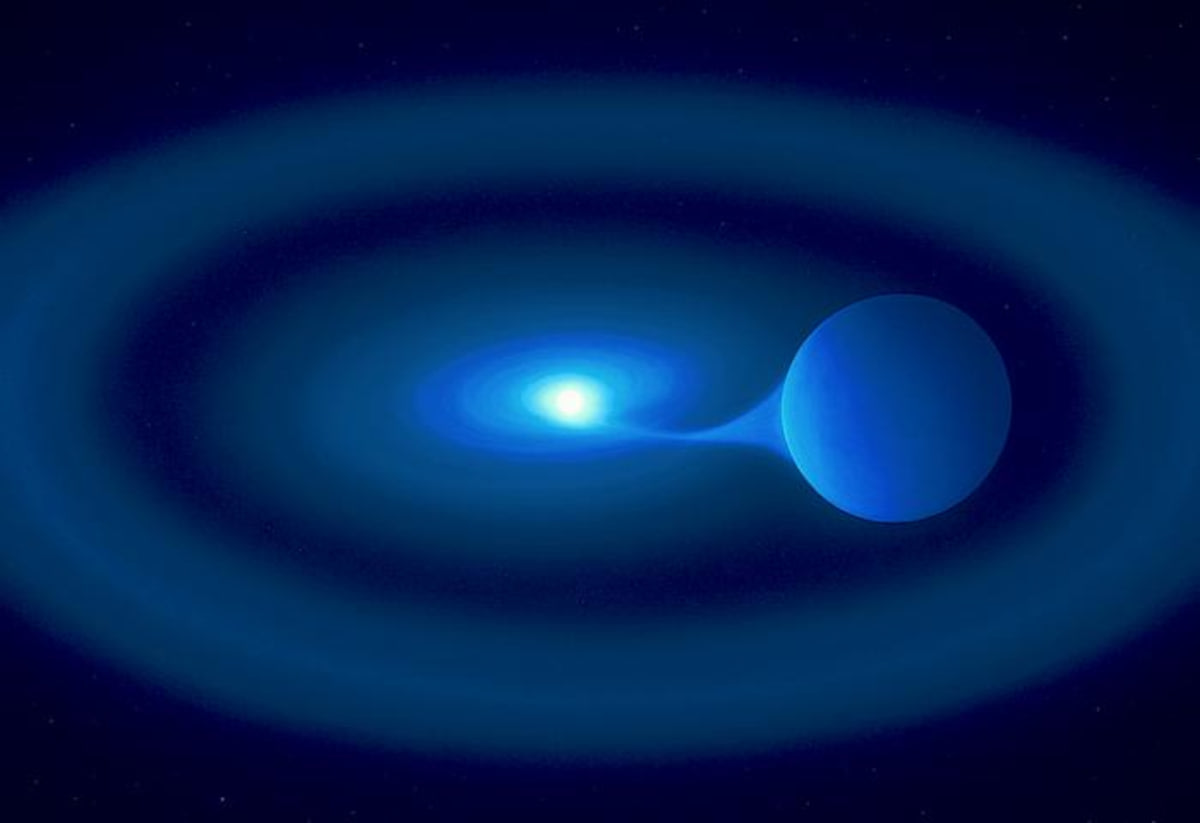
The findings offer a breakthrough in understanding the distribution and behavior of massive black holes across the cosmos, demonstrating that TDEs serve as an invaluable tool for locating black holes in unexpected, quiescent regions. The ATA's contribution underscores its growing importance in time-domain astronomy, the study of rapidly evolving cosmic phenomena.
More on Starlust
Astronomers discover the most distant and most powerful 'odd radio circle' known to date