Astronomers discover the most distant and most powerful 'odd radio circle' known to date
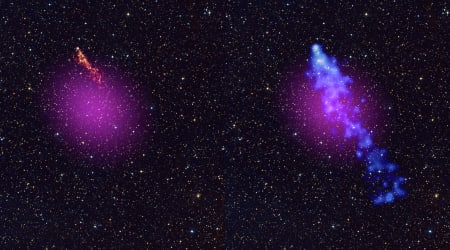
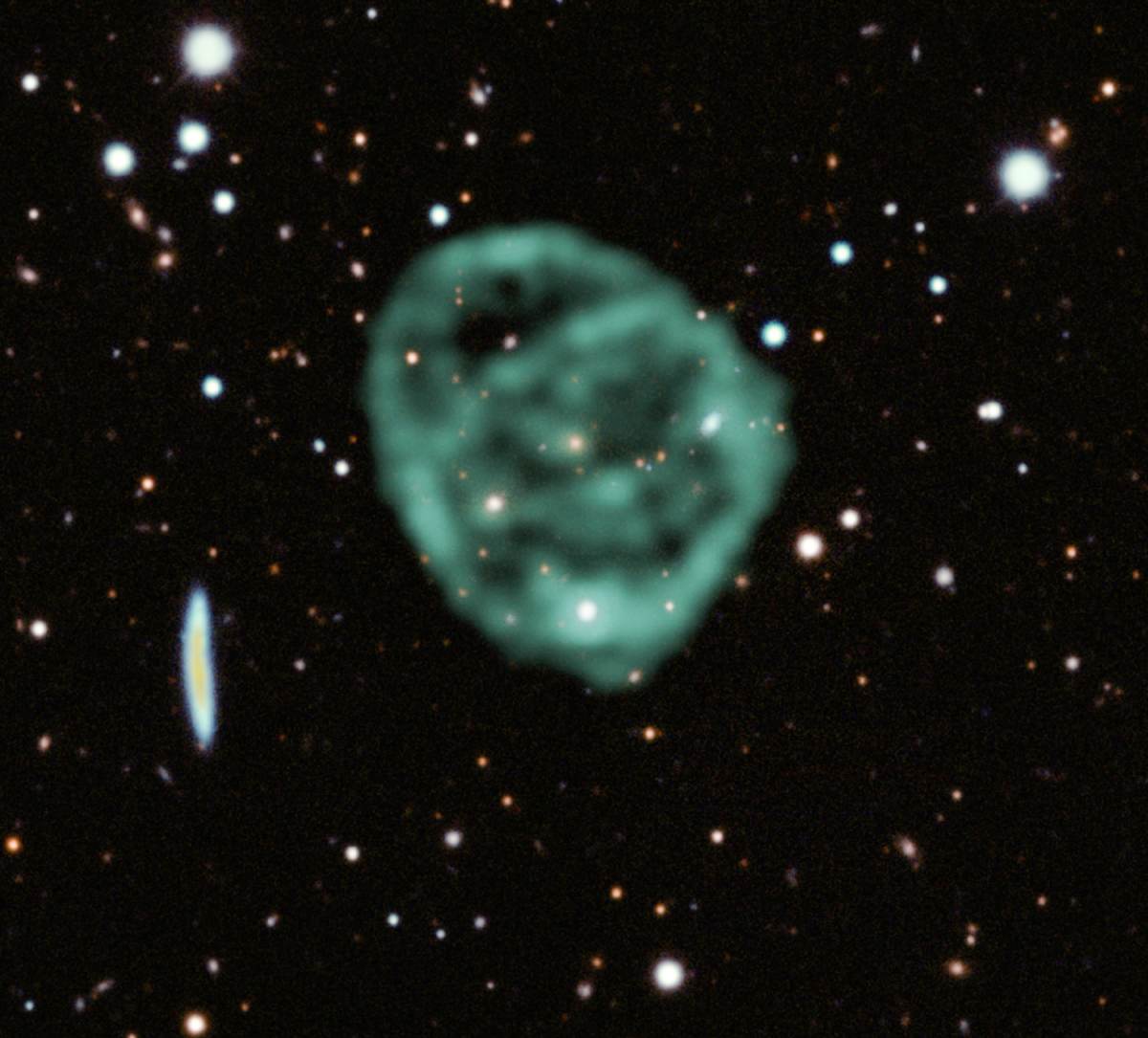
Astronomers have unveiled the most distant and powerful 'odd radio circle' (ORC) detected to date, a discovery that is igniting new questions about the origin of these colossal, ring-shaped structures. The curious rings, a newly recognized astronomical phenomenon first observed just six years ago, are gigantic, faint radio emissions surrounding galaxies, as per The Royal Astronomical Society.
glad to share our latest #citizenscience discovery, published today in MNRAS & associated Press Releases by the @RoyalAstroSoc and #RADatHomeIndia @radathomeindia "Most powerful ‘odd radio circle’ to date is discovered" https://t.co/GdRJPw3JFzhttps://t.co/DhUCptVwiH pic.twitter.com/7kb4gifLCY
— Ananda Hota (@hotaananda) October 2, 2025
Most confirmed examples are vast, ten to twenty times the diameter of our own Milky Way. Composed of relativistic, magnetized plasma and visible only in the radio spectrum, ORCs were initially theorized to be shockwaves stemming from merging supermassive black holes or galaxies. A recent study, published today in Monthly Notices of the Royal Astronomical Society, proposes a new hypothesis: that these glowing radio rings may instead be linked to superwind outflows erupting from spiral host radio galaxies.
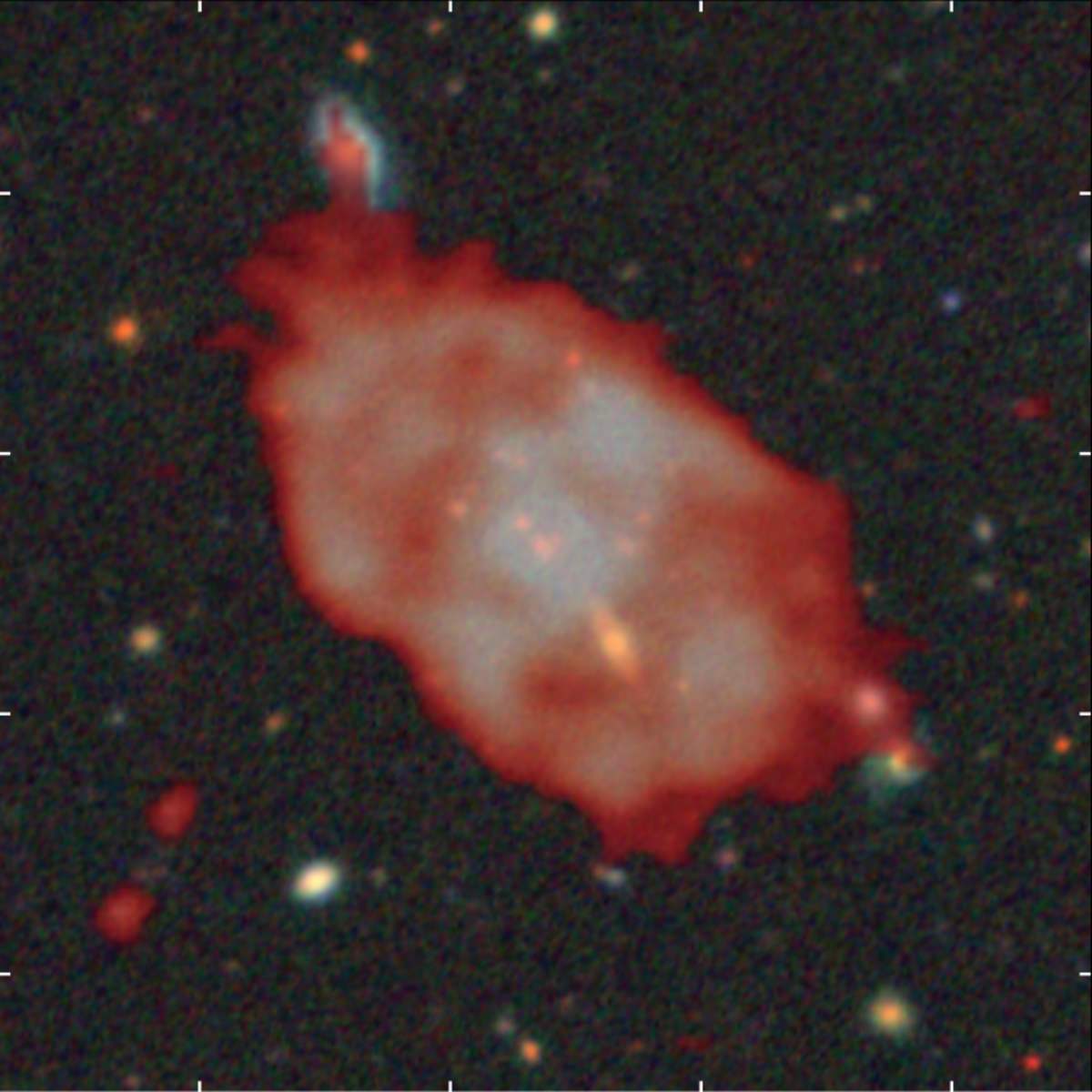
Researchers led by the University of Mumbai made the breakthrough using the Low-Frequency Array (LOFAR), the world's largest and most sensitive low-frequency radio telescope, in partnership with the RAD@home Astronomy Collaboratory citizen science platform. The newly identified source, RAD J131346.9+500320, is situated at a redshift of ∼0.94, meaning it existed when the universe was only half its current age. This makes it both the most distant and most powerful ORC currently known. Adding to the mystery, the object features a rare characteristic: two intersecting rings, marking only the second such example ever confirmed.
This discovery is notable as the first ORC identified through citizen science and the first to be pinpointed with the help of the pan-European LOFAR telescope. Dr. Ananda Hota, founder of the RAD@home Astronomy Collaboratory, emphasized the collaborative nature of the find. "ORCs are among the most bizarre and beautiful cosmic structures we've ever seen – and they may hold vital clues about how galaxies and black holes co-evolve, hand-in-hand," he stated.
In addition to the most distant ORC, the citizen scientists also uncovered two other unusual "cosmic giants." One, RAD J122622.6+640622, is a galaxy nearly three million light-years across, more than 25 times the size of the Milky Way, that shows a powerful jet suddenly veering off course to blow a spectacular radio ring. The second, RAD J142004.0+621715, stretches over 1.4 million light-years and displays a similar ring at the end of one of its jets, as mentioned by the outlet. All three newly found objects reside in massive galaxy clusters, suggesting that the rings are shaped by the interaction of relativistic magnetized plasma jets with the surrounding hot thermal plasma.
Co-author Dr. Pratik Dabhade noted that these findings suggest ORCs are not isolated oddities. "They are part of a broader family of exotic plasma structures shaped by black hole jets, winds, and their environments," he said. He added that the fact that citizen scientists uncovered them "highlights the continued importance of human pattern recognition, even in the age of machine learning." Astronomers anticipate that upcoming cutting-edge facilities, such as the Square Kilometre Array (SKA), will uncover many more ORCs, while new optical surveys will provide crucial data on their host galaxies, helping to finally unlock the secrets of these vast, puzzling structures.
More on Starlust
Distant dwarf planet Quaoar may have a new moon or ring system, scientists claim