MIT scientists now suggest 'ghost particle' detected in Italy may be remnant of an ancient dying black hole
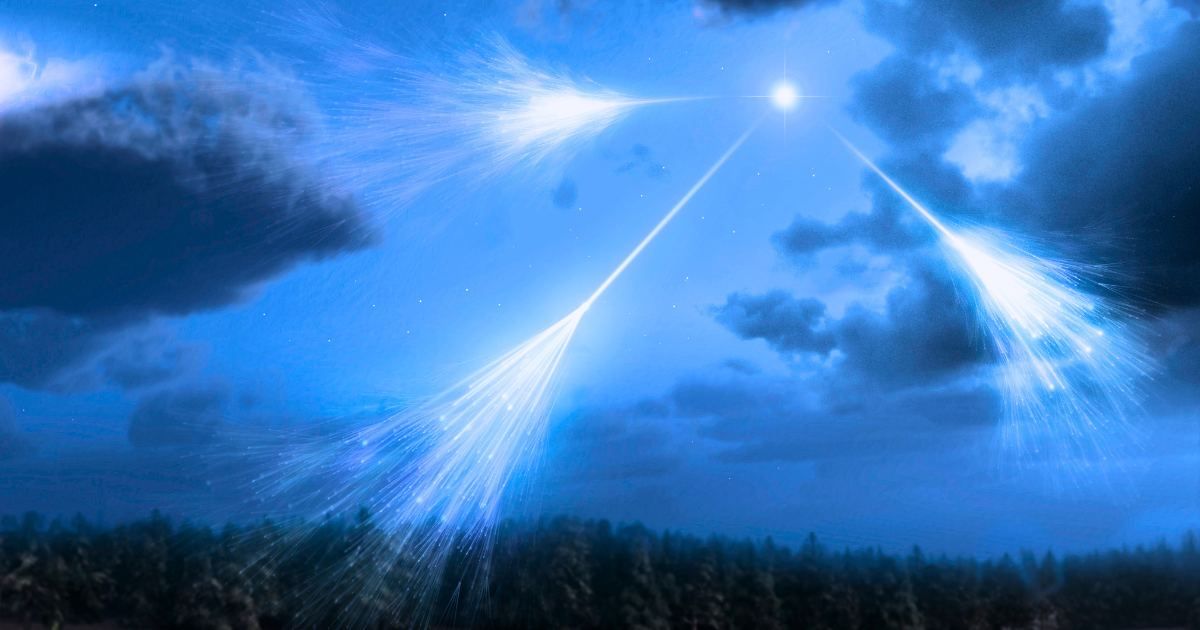
A single subatomic particle detected off the coast of Sicily has left scientists scrambling for an explanation, with some physicists from the Massachusetts Institute of Technology, Cambridge, suggesting the source may be a dying primordial black hole. The high-energy neutrino, dubbed a "ghost particle" for its elusive nature, was registered on the KM3NeT underwater telescope on February 13, 2023, marking the most energetic neutrino ever recorded, according to a study published in Physical Review Journals earlier this year.
The detection is a major milestone in astrophysics. Neutrinos are nearly massless and rarely interact with matter, making them notoriously difficult to capture. However, the energy of this particle, an estimated 220 peta electron volts (PeV), is so immense that it has effectively shattered existing models for cosmic particle acceleration, per the new theoretical analysis published on Physical Review Letters. For reference, this single particle's energy dwarfs the output of any human-made particle collider and far surpasses the previous neutrino record of 6.05 PeV, which was captured by the IceCube experiment.
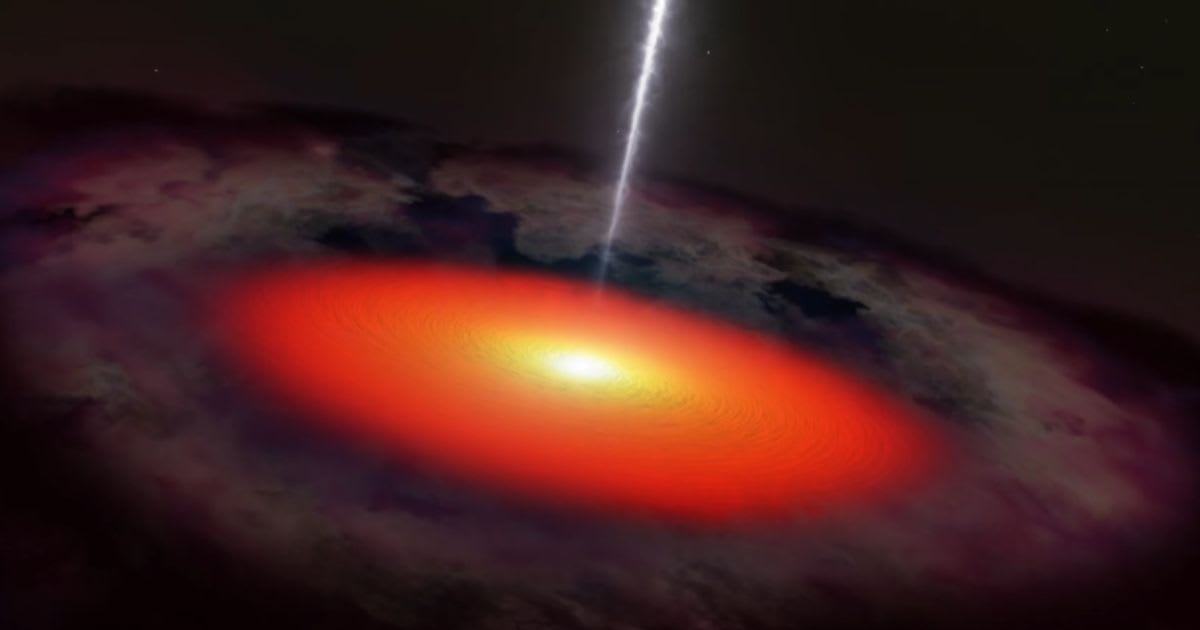
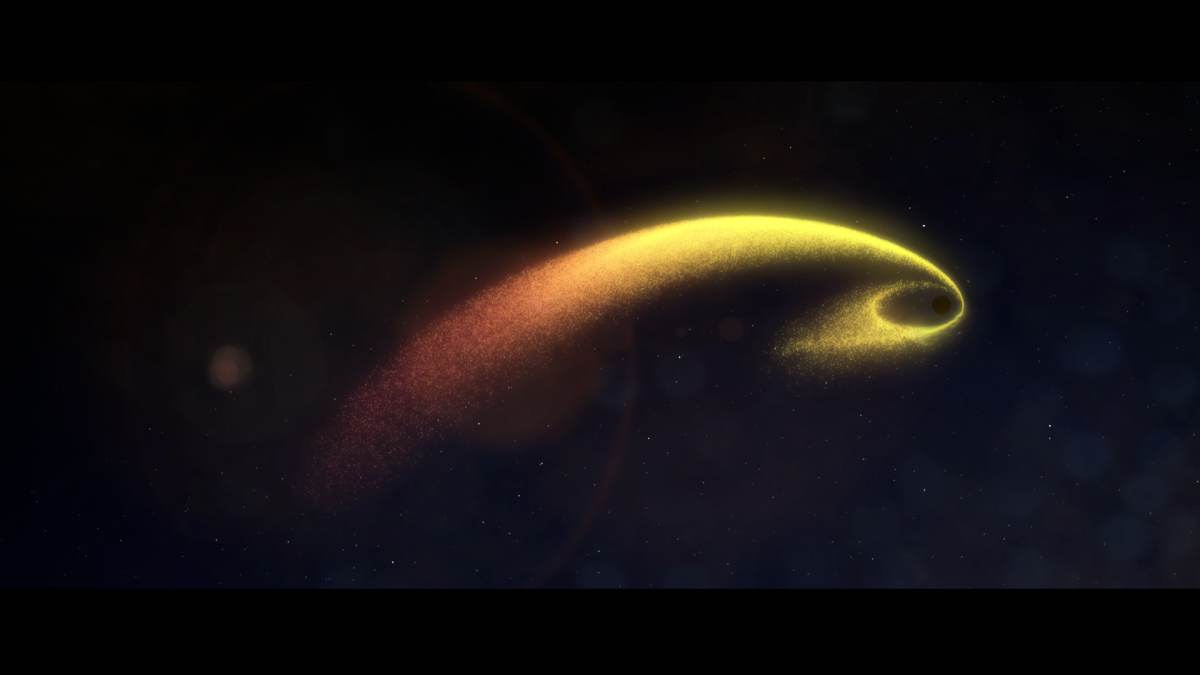
The extreme power of the neutrino has led researchers at MIT to propose a radical new theory for its origin. They suggest the particle is a remnant from the final, cataclysmic explosion of a primordial black hole. These theoretical black holes are thought to have formed moments after the Big Bang, in contrast to the larger ones created by collapsing stars. According to physicist Stephen Hawking's theories, these miniature black holes slowly lose mass through a process called Hawking radiation. In its final moments, the black hole would become highly energetic and explode in a burst of particles, including high-energy neutrinos. The MIT team calculates that this explosive event must have occurred relatively close to Earth, within 2,000 astronomical units, a distance well beyond Pluto but still within the outer limits of the Oort Cloud.
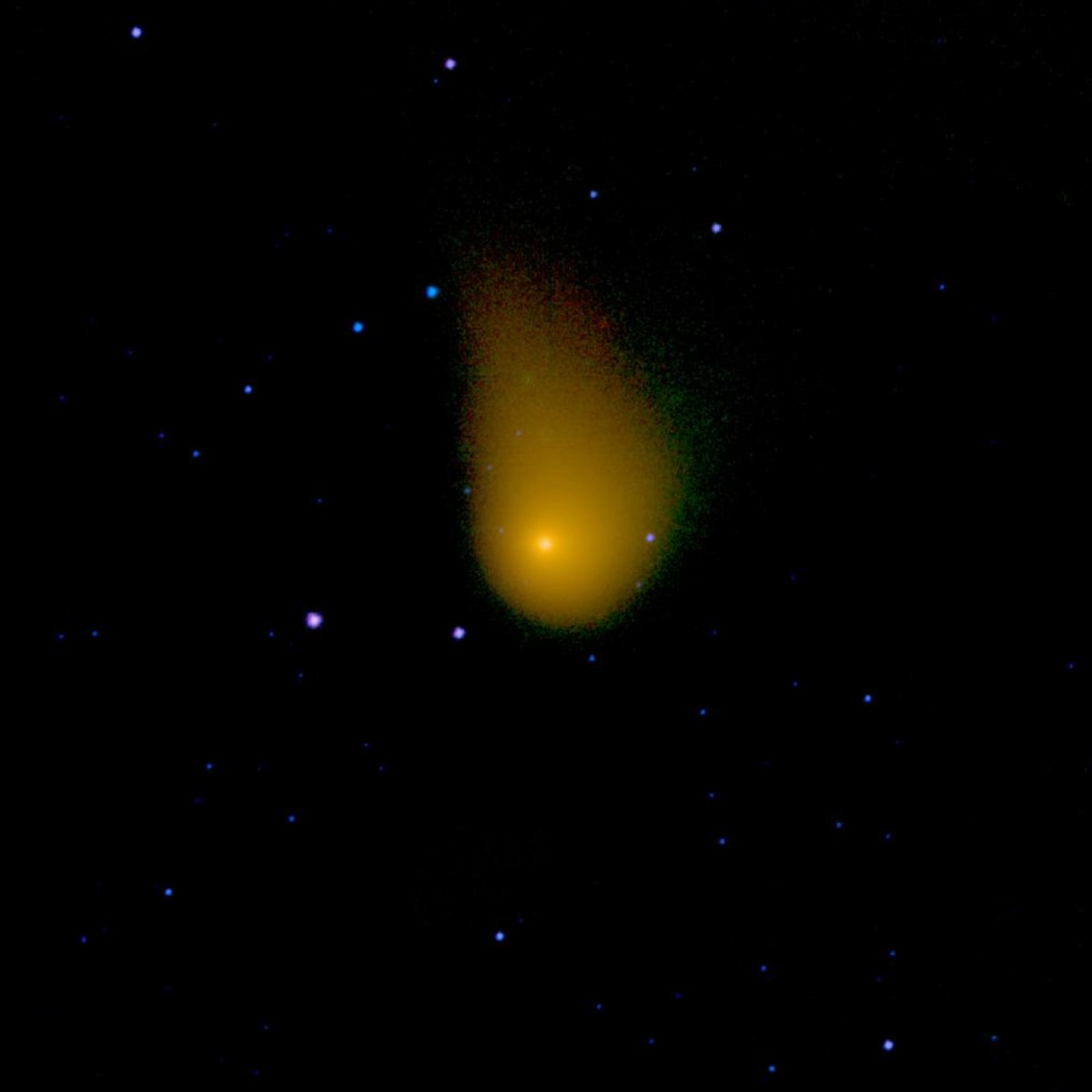
If confirmed, the detection and the black hole theory could provide unprecedented insights into fundamental questions about the universe. The discovery offers a potential method to test Stephen Hawking’s predictions about black hole radiation. Furthermore, it holds profound implications for the study of dark matter. Primordial black holes have been theorized as a possible component of dark matter, the invisible substance that makes up an estimated 85% of the universe's mass. The explosive deaths of these objects could, therefore, act as a natural cosmic laboratory for understanding the structure of the early universe and the elusive nature of dark matter.
The extreme energy of the Sicilian "ghost particle" is not the only recent finding driving new interest in neutrinos. Separate theoretical research, published on June 18, 2025, in Physical Review Letters, suggests that these elusive particles, typically considered negligible, may play a surprisingly critical role in the final fate of collapsing stars. This new finding challenges long-held assumptions by proposing that neutrinos determine whether a massive collapsing star ultimately becomes a neutron star or the even more enigmatic black hole. Neutrinos exist in three "flavors," electron, muon, and tau. These "flavors" are known for their incredibly weak interactions, a characteristic that allows them to slip through matter and makes them notoriously difficult to study. Their self-interactions, or lack thereof, have been nearly impossible to observe in laboratory settings.
More on Starlust
NASA's James Webb captures sharpest-ever view of M87 supermassive black hole jet