Cosmic signal from just 3 billion years after the Big Bang is most distant fast radio burst ever found

A team of astronomers has announced the detection of the most distant fast radio burst (FRB) ever recorded, a fleeting cosmic signal that originated just three billion years after the Big Bang. The discovery, published in a new paper on the arXiv preprint server, pushes the boundaries of our understanding of the early universe and could reshape theories about the origins of these mysterious, millisecond-long radio flashes, according to Universe Today.
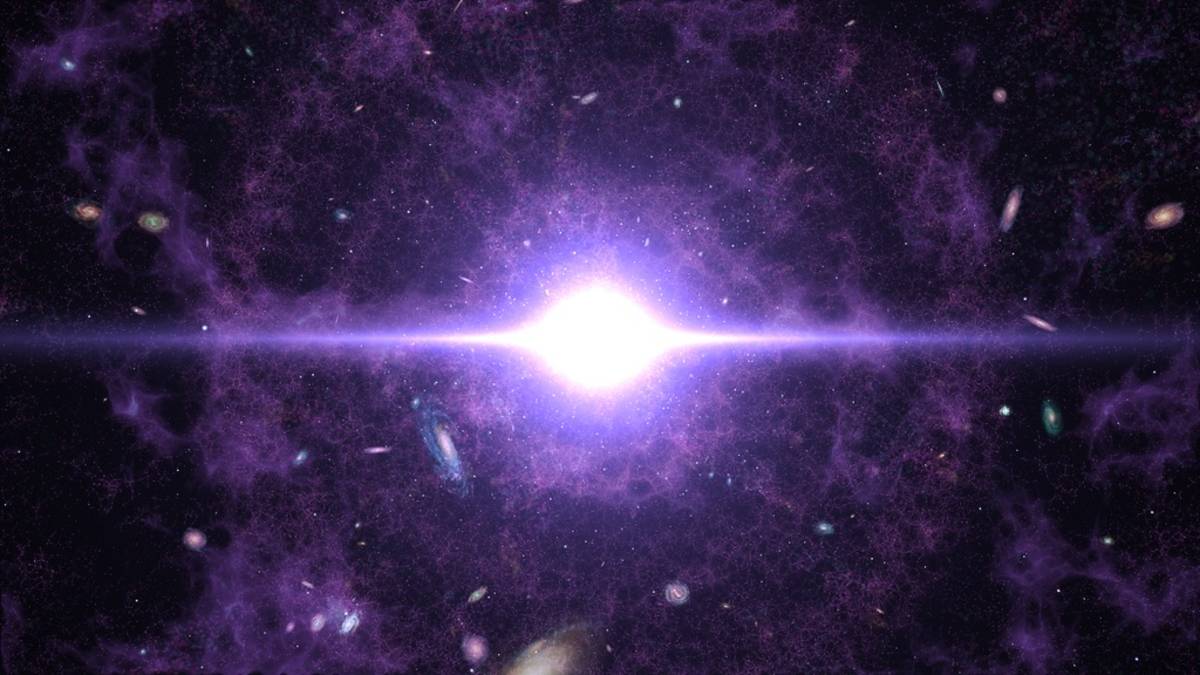
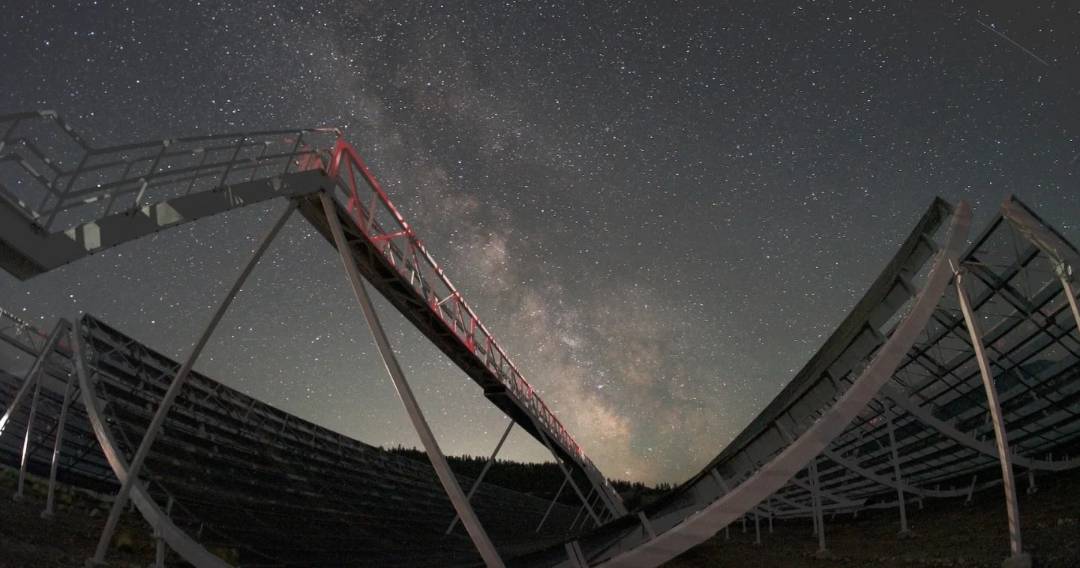
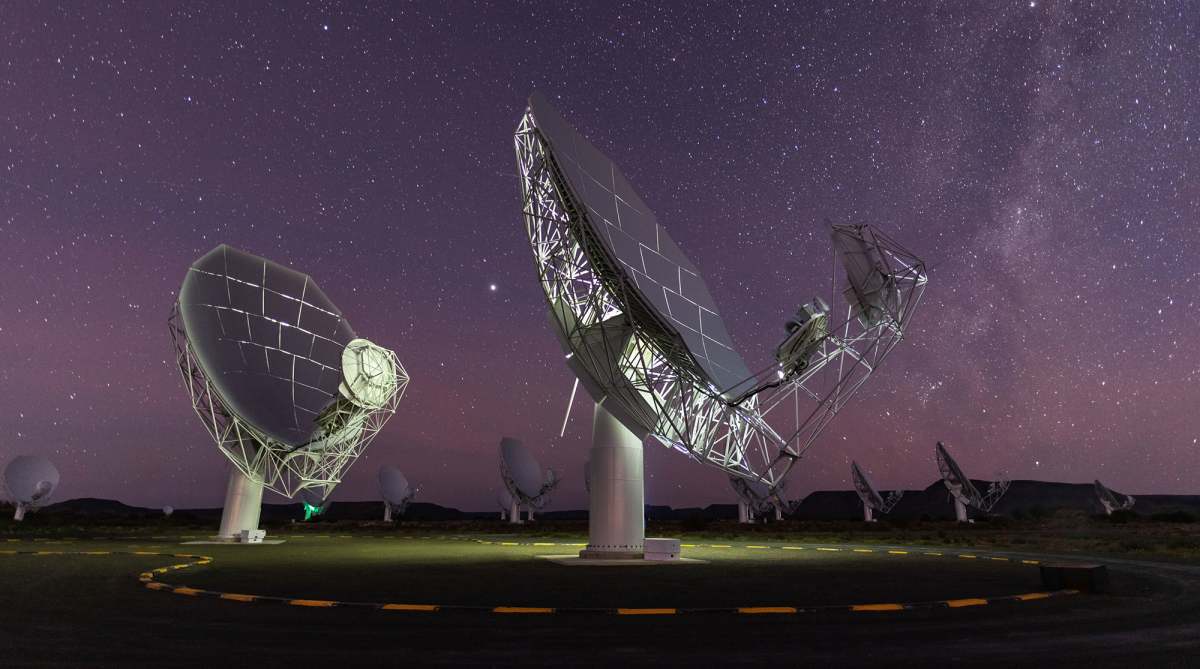
The burst, officially designated FRB 20240304B, was initially captured on March 4, 2024, by the MeerKAT radio telescope array in South Africa. Its extreme distance was immediately apparent from the signal's dispersion, a measurement of how much the radio waves were stretched and delayed by intervening matter. This measurement indicated the signal had traveled for over 11 billion years to reach Earth.
Pinpointing the exact source of such a distant signal was a challenge. While initial searches using ground-based telescopes and archival data were unsuccessful, follow-up observations with the James Webb Space Telescope (JWST) proved crucial. Using the telescope's NIRCam and NIRSpec instruments, astronomers were able to identify the host galaxy and determine its precise redshift. The host galaxy, a low-mass, clumpy, and actively star-forming galaxy, existed at a redshift of 2.148, placing it in the epoch known as "cosmic noon," a period of intense star formation in the universe's history.
This discovery by a group of astronomers, led by Manisha Caleb of the University of Sydney, is a major leap forward, doubling the distance of previously located FRBs. Earlier detections had only reached back about halfway through cosmic history. Now, with FRB 20240304B, astronomers are probing ionized baryons, the normal matter that makes up stars and galaxies, across approximately 80% of the universe's timeline. The characteristics of the host galaxy itself provide important clues about the nature of fast radio bursts. Since the galaxy is young, low-mass, and still rapidly forming stars, the presence of an FRB suggests these events can arise relatively quickly. This supports the leading theory that FRBs are caused by highly magnetized, rapidly rotating neutron stars known as magnetars, which are a potential end stage for massive stars. The finding challenged theories that require longer periods of cosmic evolution to produce these bursts.
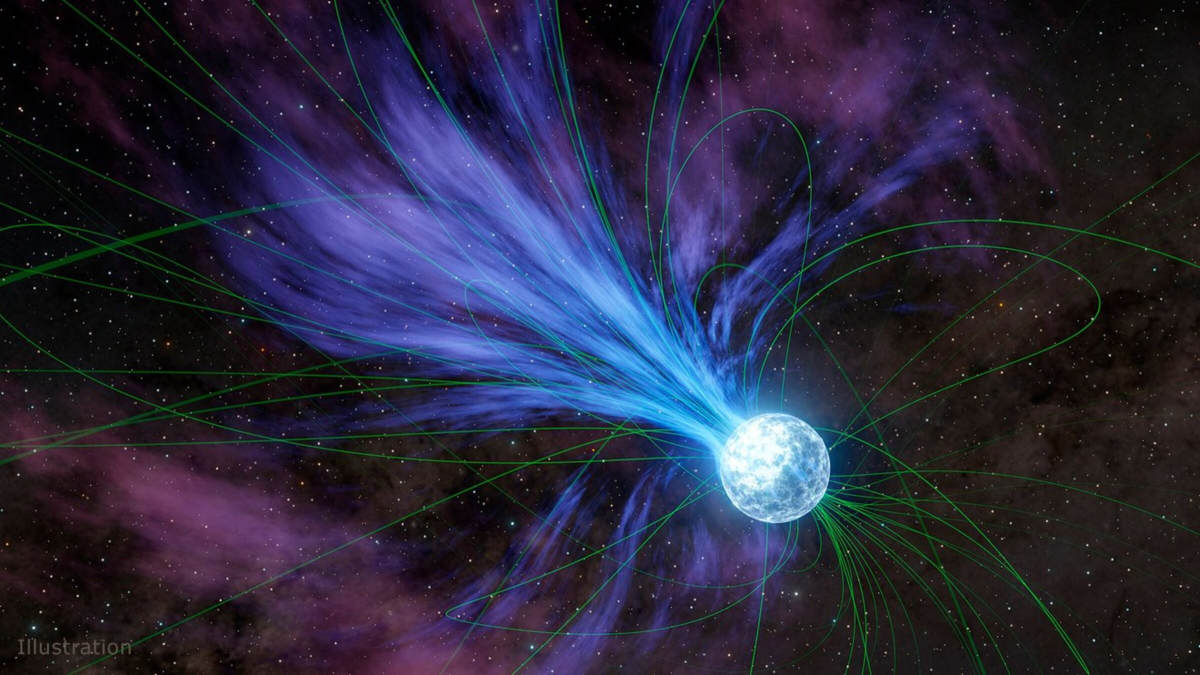
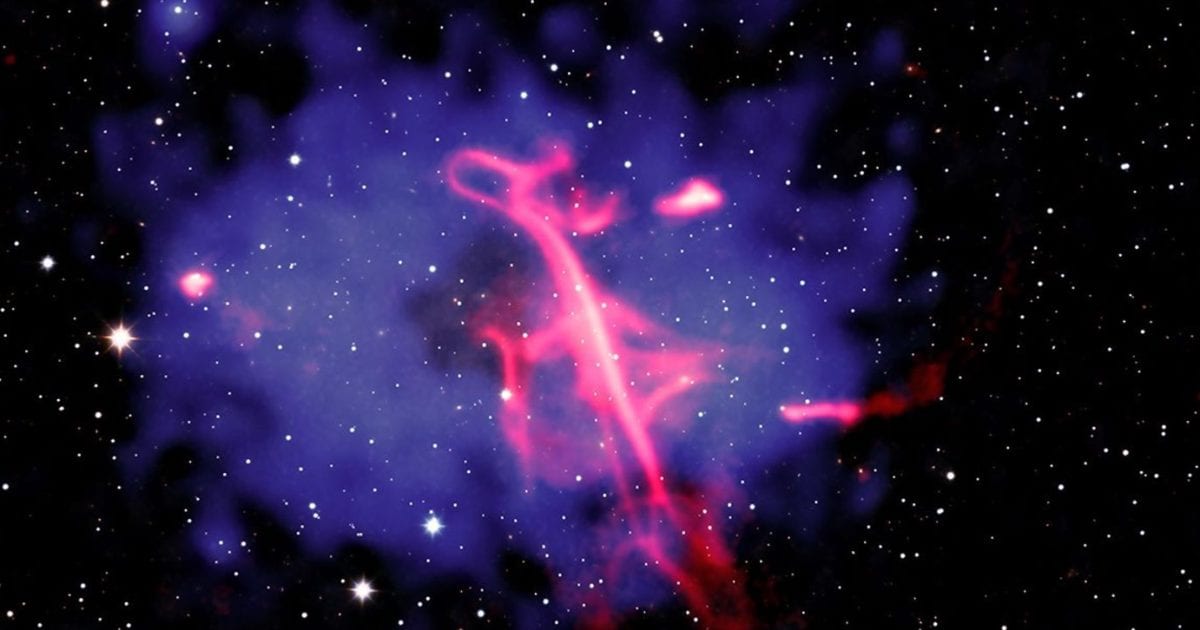
Furthermore, the signal’s journey to Earth revealed complex magnetic field structures spanning vast distances. By analyzing how the signal was distorted as it passed through cosmic structures like the Virgo Cluster, researchers are gaining new insights into the magnetic fields that permeate the universe. The detection of FRB 20240304B during a time of peak star formation in the universe's history is particularly significant. It demonstrates that FRBs can be used as powerful tools to study galaxy formation and the properties of the cosmos during its most active and dynamic era. As new generations of telescopes come online, fast radio bursts like this one are poised to become invaluable messengers from the distant past, helping scientists piece together the evolutionary history of the universe.
Simultaneously, a separate group of astronomers from the Netherlands Institute for Radio Astronomy (ASTRON) has announced the detection of a rare, radio-pulsing white dwarf. This enigmatic cosmic object, one of only ten ever found, challenges current theories about how stellar remnants can produce such powerful radio emissions. The discovery, detailed in the Journal Astronomy & Astrophysics and led by astronomer Sanne Bloot, was made using the LOFAR radio telescope. The new source, named ILT J163430+445010, is classified as a long-period transient (LPT), a type of celestial body that emits radio pulses at an unusually slow rate.