NASA’s Juno spills surprising subsurface secrets of our solar system's most volcanic world, Io
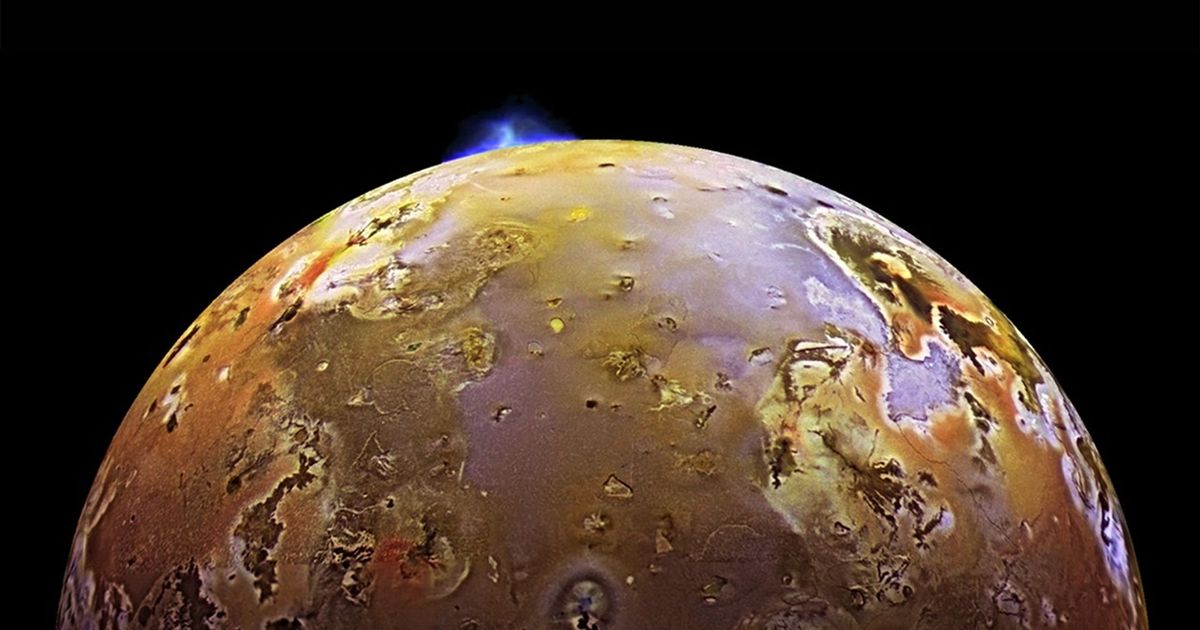
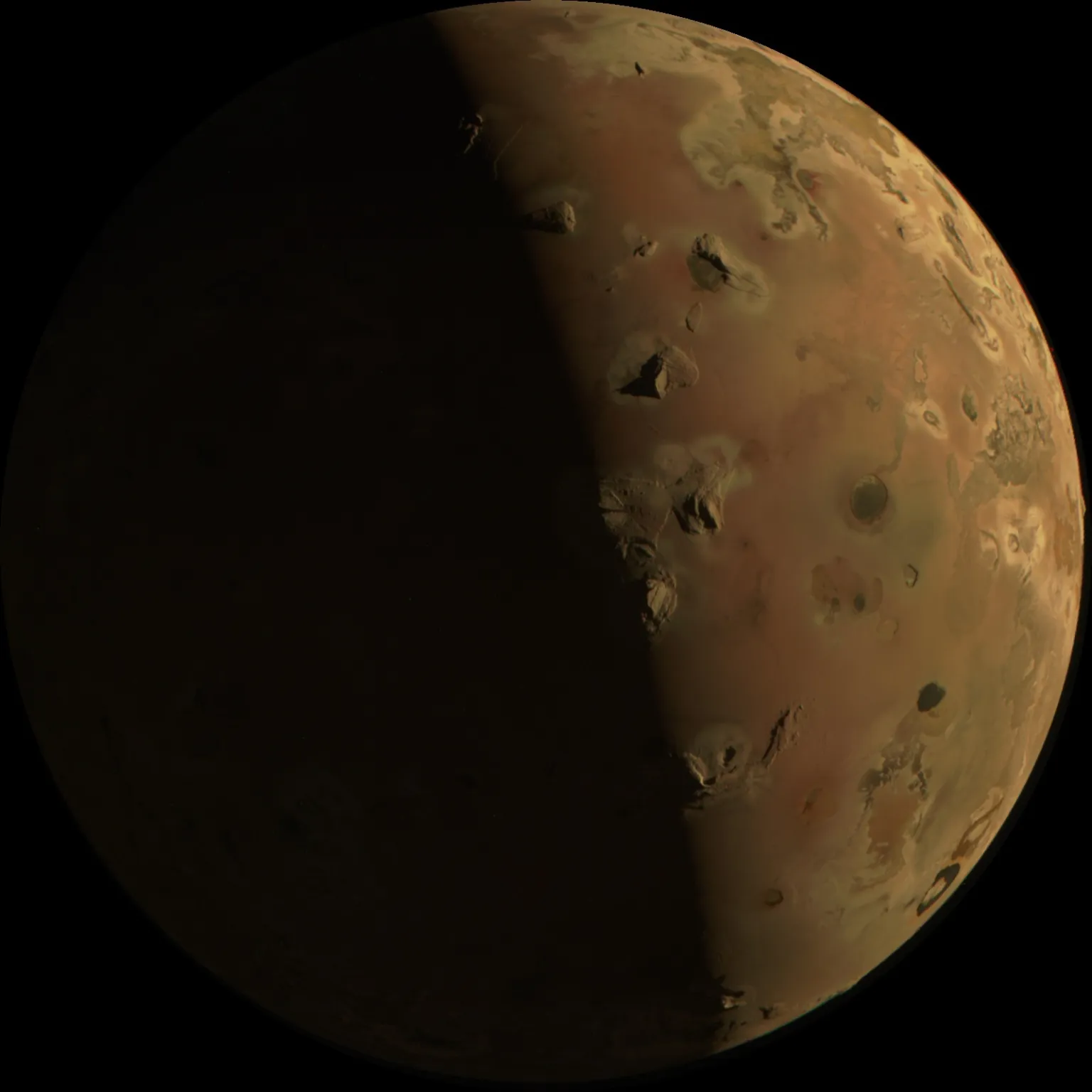
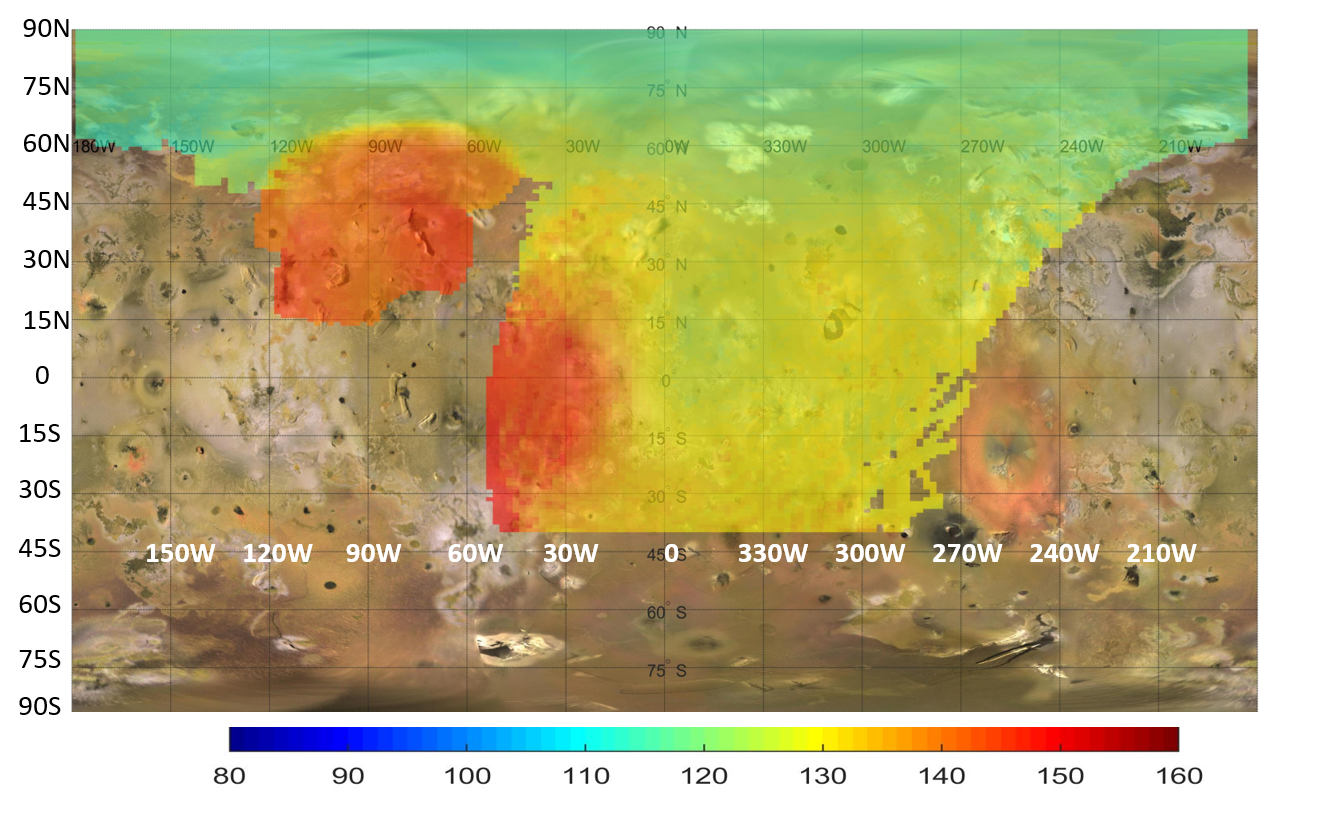
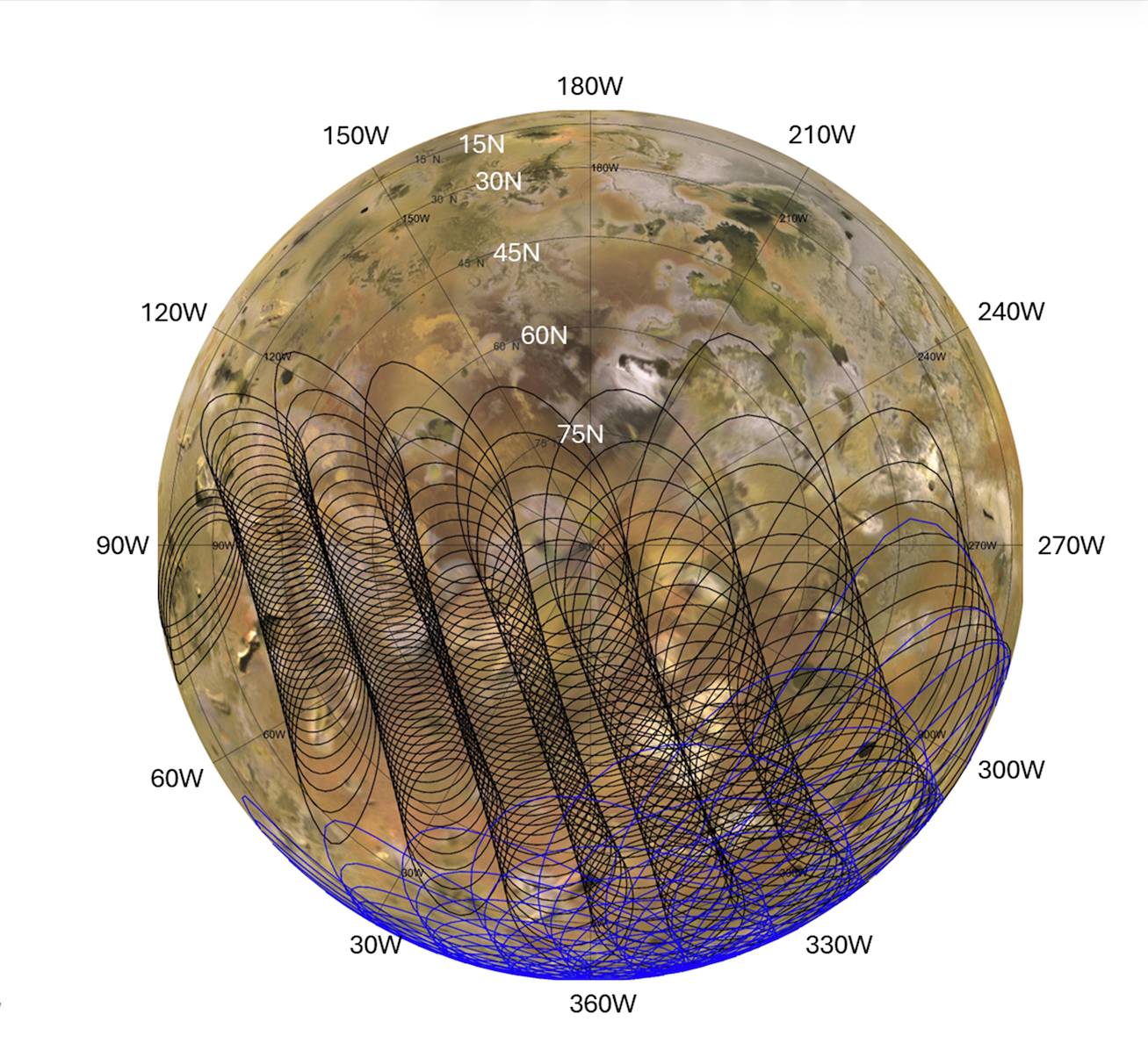
NASA’s Juno probe, which has been orbiting Jupiter for a decade now, has provided the first subsurface temperature measurements of its moon Io, the most volcanic world in our solar system. Using its Microwave Radiometer (MWR) instrument, the spacecraft observed Io from a distance of 930 miles (1,500 kilometers) during two of its flybys, which took place on December 30, 2023, and February 3, 2024. The findings, now published in the Journal of Geophysical Research, have revealed that there is significant heating underway beneath Io’s surface, which is smoother than previously thought and composed of very low-density material.
Io is infamous for its volcanic activity due to a process called tidal heating. This moon experiences extreme tidal heating because Jupiter’s immense gravity constantly stretches and squeezes Io in its slightly elliptical orbit. Turns out, the process causes a significant rise in temperatures as one digs deeper into the moon’s surface. According to the study, the researchers found the temperature rising by more than 40 degrees Fahrenheit just several feet into the surface—something that can’t be explained by solar heating alone.
Notably, Juno’s MWR instrument, consisting of six antennas, has helped peer beneath other icy Jupiter moons like Ganymede and Europa as well, but the discoveries on Io are surprising for scientists. “At Ganymede and Europa, we explored tens of miles below the surface, assuming their ice shells were mostly pure water, but the ability to probe into the volcanic rock at Io was an unexpected discovery,” Scott Bolton, study coauthor and Juno’s principal investigator at Southwest Research Institute in San Antonio, said in a statement.
In their paper, the authors tried to find out why Io’s temperature increases as we move further below the surface, and they’ve come up with two explanations. The first could be that the heat is slowly moving upwards through a solid conductive crust—about 1 to 3 watts per square meter. They say it’s roughly equivalent to a small nightlight glowing under every square yard on a local level, but combined, it’s 30 times the average energy released by Earth. Another explanation is that heat detected by Juno might be coming from cooling lava flows, which are capped by roughly 30 to 35 feet (9 to 11 meters) of solidified crust. This crust covers about 10 per cent of the moon’s surface at any given time.
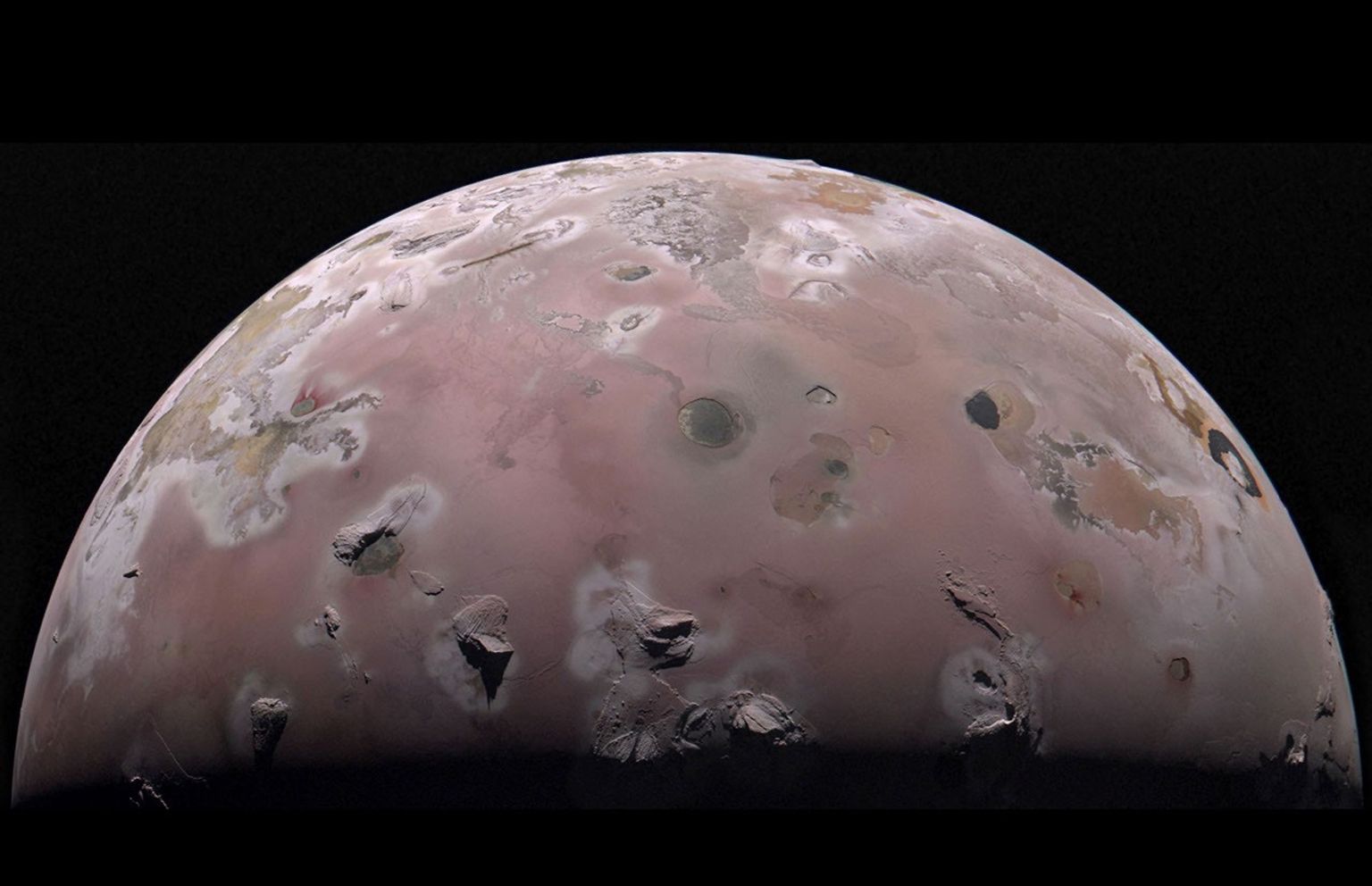
Bolton states that Io provides a unique window into learning how tidal heating works throughout the cosmos, providing energy and heat to worlds that are far from their parent star. “This process can not only create the most volcanic body in the solar system, in the case of Io, but also fuels the subsurface oceans on the moons of giant planets, such as Europa and Ganymede. Up until this point we could only observe the heat escaping at the surface or through eruptions. Now we can characterize how the heat is moving from the interior toward the surface.”
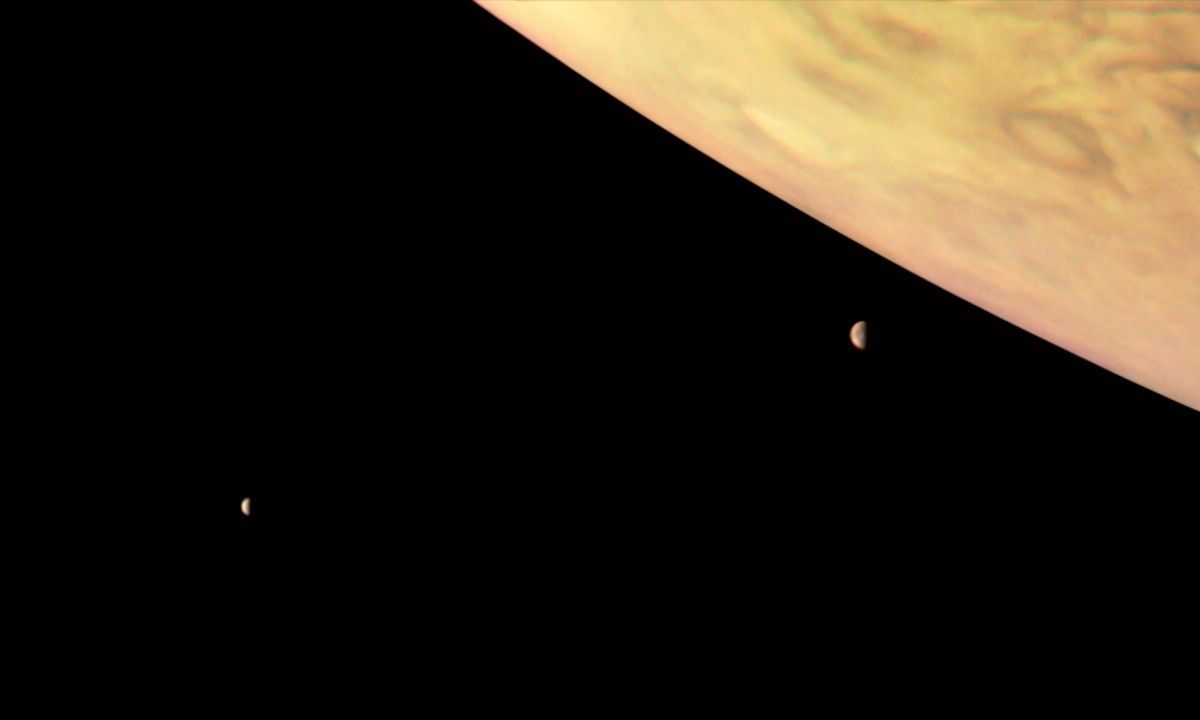
Apart from the temperature readings, Juno also revealed that Io doesn’t have just tall mountains but also expansive smooth plains stretching for 60 miles (100 kilometers) or more. “Away from its mountains, the surface is more like the Great Plains of North America, and even though Io is a rocky body, the surface material has a very low density — more like pumice or a fluffy volcanic ash than solid rock,” said Shannon Brown, the paper’s lead author at NASA’s Jet Propulsion Laboratory in Southern California. According to Bolton, this study has important implications for studying Earth’s volcanoes as well. "Juno has taught us that if we look with an MWR-type instrument near a volcano on Earth, we might see a similar signature in the subsurface temperature gradient, providing new information on how terrestrial volcanoes work," he said.
More on Starlust
Do solar storms influence Martian weather? New study finds evidence that dust storms get affected
Milky Way may have tilted sideways after collision with a dwarf galaxy 10 billion years ago