Astronomers discover universe's oldest confirmed black hole—formed just 500 million years after the Big Bang
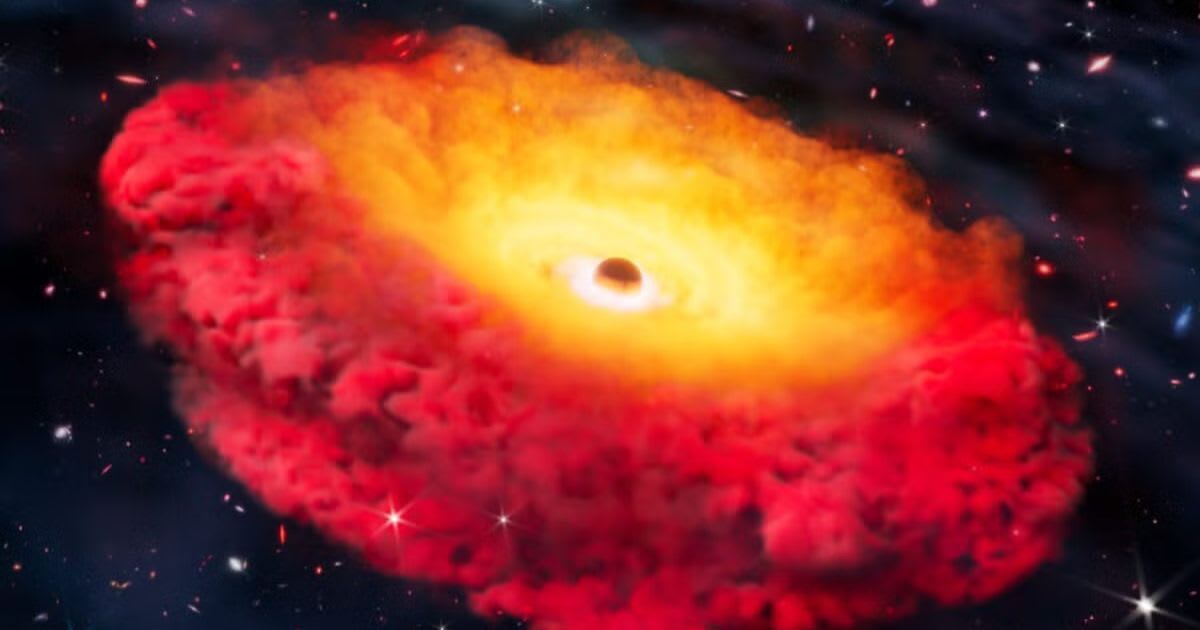
An international team of astronomers has identified the oldest black hole ever confirmed, a colossal object located just 500 million years after the Big Bang. This discovery, made by researchers at the University of Texas at Austin's Cosmic Frontier Center, pushes the boundaries of astronomical detection and offers a unique window into the universe's infancy, as per the University of Texas at Austin.
📣 An impressive team of astronomers, led by @UTAustin’s Cosmic Frontier Center, has identified the most distant black hole EVER!! ✨
— McDonald Observatory (@mcdonaldobs) August 6, 2025
Find out more:https://t.co/i5QXTt3mvw#WhatStartsHere #blackhole #BigBang #McDonaldObservatory
The black hole, residing in a distant galaxy named CAPERS-LRD-z9, existed 13.3 billion years ago when the universe was only 3% of its current age. The team's findings, published in the Astrophysical Journal, provide the first definitive spectroscopic evidence of a black hole at such an early stage. "We’re really pushing the boundaries of what current technology can detect,” said Anthony Taylor, a postdoctoral researcher and lead of the study. He noted that while other black hole candidates have been proposed, they lacked the distinct spectroscopic signature that this discovery possesses.

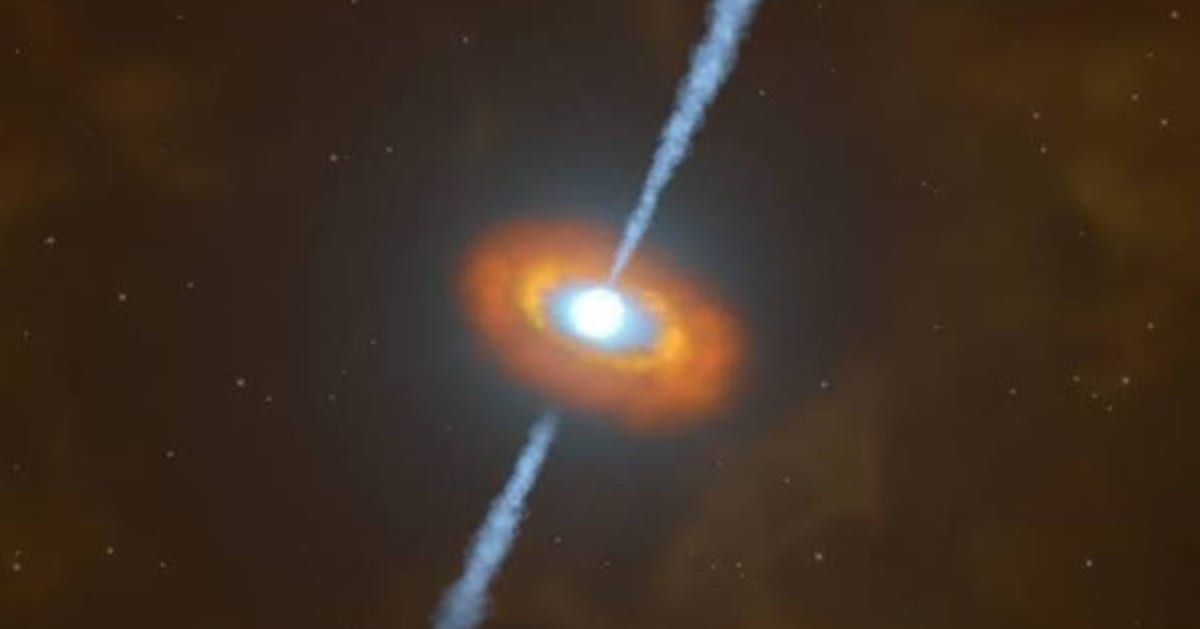
The black hole's host galaxy, CAPERS-LRD-z9, belongs to a newly identified class of galaxies called "Little Red Dots," which are compact, bright, and only existed in the first 1.5 billion years of the universe. The discovery of a supermassive black hole within one of these galaxies supports the theory that black holes are the source of their unexpected brightness. According to Steven Finkelstein, a co-author of the paper and director of the Cosmic Frontier Center, this finding challenges previous assumptions about the brightness of these galaxies. He explained that instead of being fueled by a large number of stars, the intense light is generated by the tremendous heat and energy created as the black hole consumes surrounding material.
What truly sets this black hole apart is its immense size. With a mass estimated at up to 300 million times that of our Sun, it accounts for up to half of its galaxy's total mass. This is an unusually large proportion, even for supermassive black holes. The existence of such a massive black hole so early in the universe's history suggests that they either grew much faster than previously thought ot began as far more massive objects than current models predict.
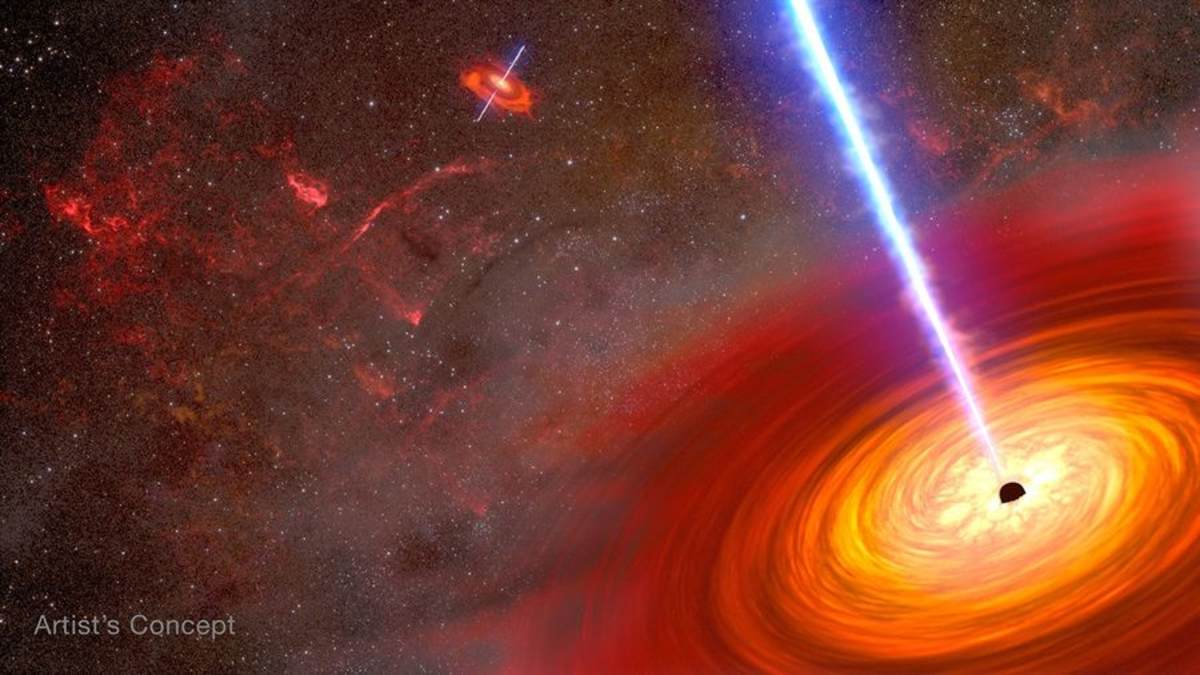
The team used data from the James Webb Space Telescope's CAPERS program to make their discovery. By analyzing the light from CAPERS-LRD-z9, they identified a distant spectroscopic signature, light from fast-moving gas being stretched and compressed into redder and bluer wavelengths, which is a telltale sign of a black hole. Further high-resolution observations with JWST are planned to continue studying this "test object" and to gain a deeper understanding of the role black holes played in the early universe.
In a related development, a separate group of astronomers using JWST has found a peculiar cosmic event that could rewrite our understanding of how the universe's most massive black holes formed. The researchers have uncovered a galactic collision that they believe is a real-time example of a "direct collapse" black hole, a phenomenon long theorized but never before observed. The unusual structure of the colliding galaxies, which has been dubbed the "Infinity Galaxy" for its shape, was first spotted by Yale University's Pieter van Dokkum and the University of Copenhagen's Gabriel Brammer.
Hold onto your Gauntlet, Webb may have observed the birth of a supermassive black hole in the Infinity Galaxy - between the nuclei of two merging galaxies. https://t.co/u0fdUuAaCl pic.twitter.com/MmTHHIr8pf
— NASA Webb Telescope (@NASAWebb) July 15, 2025