NASA’s James Webb Telescope discovers evidence of a black hole formed without a supernova explosion
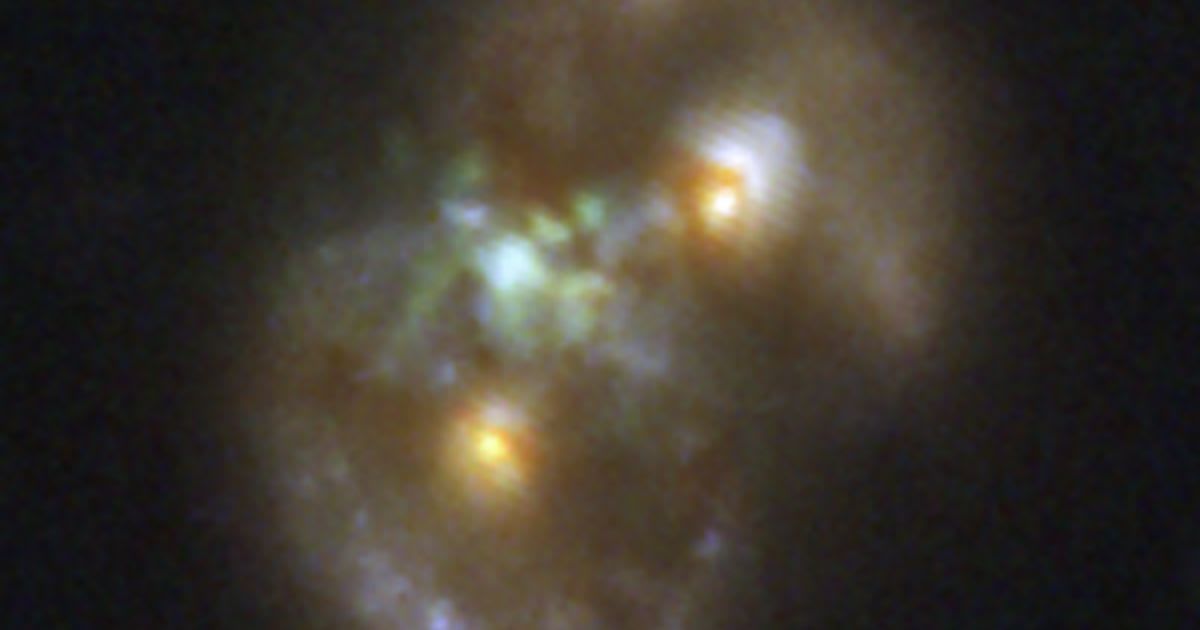
In a stunning find that could rewrite the story of how the universe's most massive black holes came to be, astronomers have used the James Webb Space Telescope to uncover a rare and peculiar galactic event. Dubbed the "Infinity Galaxy" for its distinctive shape, this cosmic smash-up appears to be a real-time laboratory for a "direct collapse" black hole, a long theorized but never-before-seen phenomenon, as per NASA.
Hold onto your Gauntlet, Webb may have observed the birth of a supermassive black hole in the Infinity Galaxy - between the nuclei of two merging galaxies. https://t.co/u0fdUuAaCl pic.twitter.com/MmTHHIr8pf
— NASA Webb Telescope (@NASAWebb) July 15, 2025
The Infinity Galaxy's bizarre structure initially caught the eye of researchers Pieter van Dokkum of Yale University and Gabriel Brammer of the University of Copenhagen. Its distinct shape, two compact galactic nuclei, each encircled by a star-studded ring, resembles an infinity symbol. The team believes this unique formation resulted from a head-on collision between two galaxies. Further analysis, however, revealed a truly astonishing detail: an active, supermassive black hole located not within either of the two galactic nuclei, but suspended in a vast expanse of gas between them. This unusual placement has led scientists to theorize that the black hole was formed via a "direct collapse" of a massive gas cloud, bypassing the traditional process where a black hole forms from a collapsing star and subsequent supernova.
Scientists have discovered an infinity-shaped galaxy that shows a supermassive black hole in between two rings of stars and gas.
— NASA Marshall (@NASA_Marshall) July 15, 2025
Not only is finding a black hole that’s not in the nucleus of a galaxy unusual, but so is the story of how it may have gotten there.
🔗👇… pic.twitter.com/KgqyywTjab
This finding could solve a long-standing cosmic mystery. The "light seed" theory of black hole formation, which starts with smaller black holes born from supernovae, struggles to explain the existence of colossal black holes found by Webb in the early universe, as this process takes a considerable amount of time. The "heavy seed" theory, in contrast, proposes that black holes can form rapidly from the direct collapse of a large gas cloud. "Finding a black hole that’s not in the nucleus of a massive galaxy is in itself unusual, but what’s even more unusual is the story of how it may have gotten there," said Pieter van Dokkum, the lead author of the study. He further added, "We think we’re witnessing the birth of a supermassive black hole – something that has never been seen before."
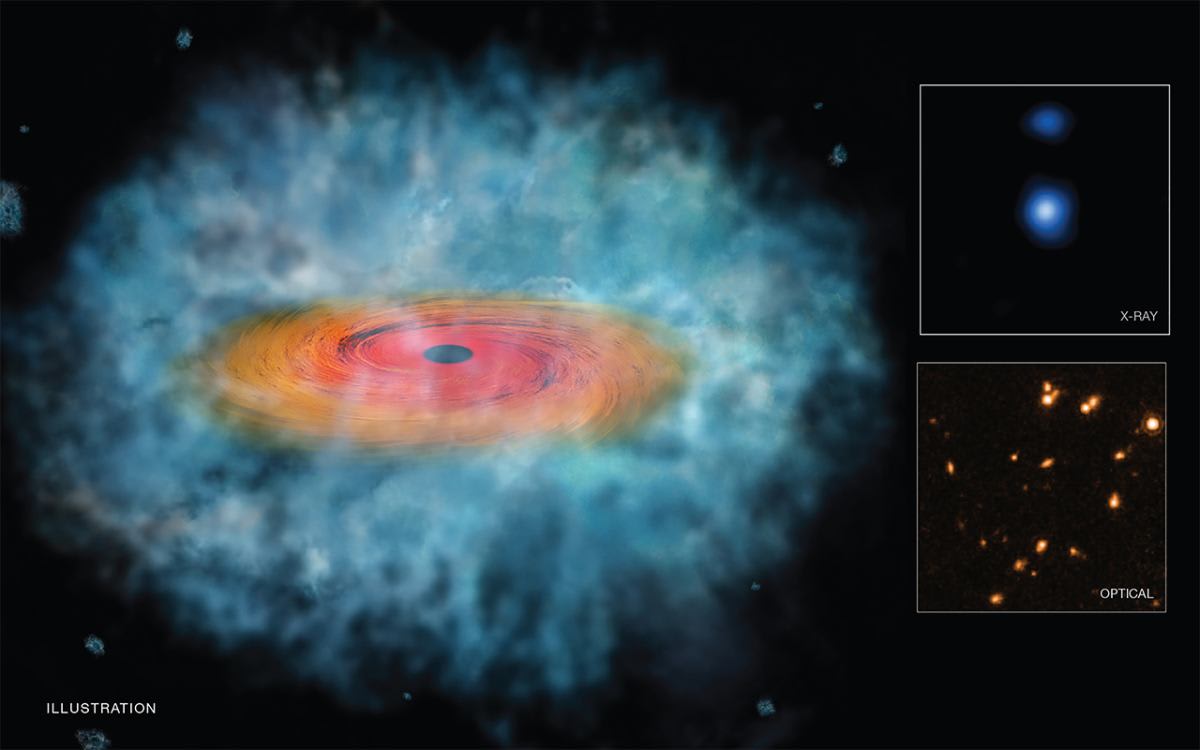
The researchers gathered crucial evidence to support this hypothesis. Their observations confirmed the presence of a large swath of ionized hydrogen gas directly surrounding the black hole and, most importantly, showed that the black hole's velocity perfectly matched that of the gas. This kinematic link strongly suggests the black hole formed directly from the gas cloud, rather than being a runaway object or part of a separate, unseen galaxy.
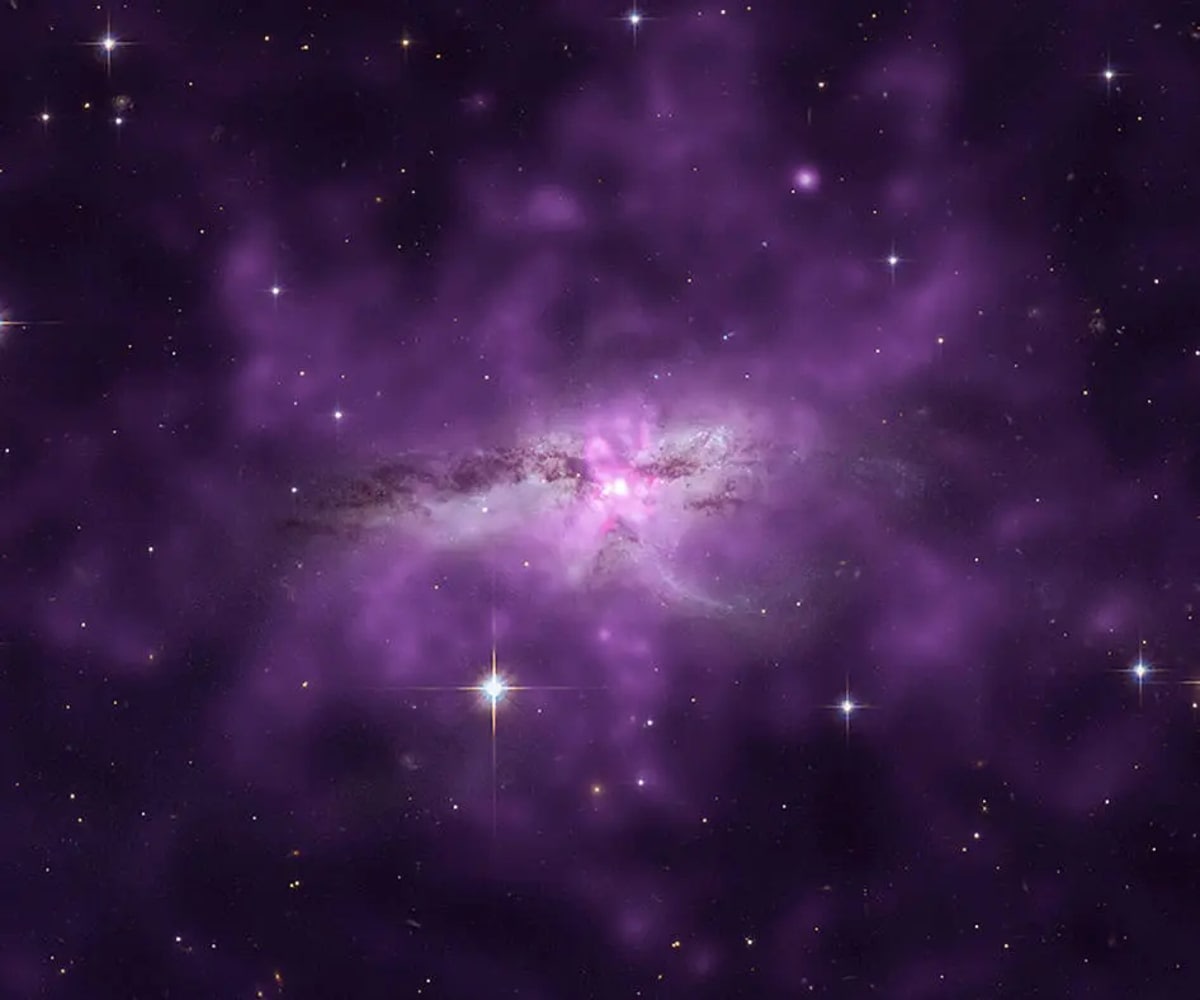
As an unexpected bonus, the team discovered that each of the two galactic nuclei also hosts its own active supermassive black hole, making the Infinity Galaxy a rare system with three confirmed active black holes. “We can’t say definitively that we have found a direct collapse black hole," van Dokkum concluded, "but we can say that these new data strengthen the case that we’re seeing a newborn black hole, while eliminating some of the competing explanations."
A striking new image, combining data from NASA's Hubble and James Webb Space Telescopes, offers an unprecedented look at two star clusters nestled within the Small Magellanic Cloud, a dwarf galaxy orbiting our Milky Way. The celestial duo, designated NGC 460 and NGC 456, showcases the intricate interplay of gas, dust, and nascent stars. This detailed observation of star birth provides a new window into the processes that shape galaxies, a discovery that complements the ongoing research into the mysteries of black hole formation revealed in the Infinity Galaxy.