Astronomers' cosmic discovery reveals extreme starburst galaxy concealed behind distant quasar
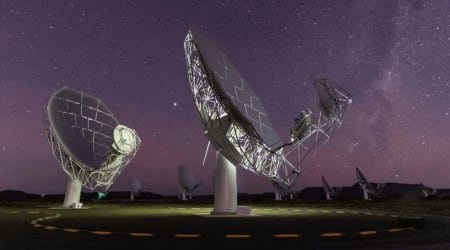
An international research collective has announced the unexpected discovery of an ultra-luminous infrared galaxy (ULIRG), an intensely star-forming system, lurking behind the well-known quasar H1413+117, also dubbed the Cloverleaf. The finding, which was published on September 30 in the Monthly Notices of the Royal Astronomical Society, stems from observations conducted using the Atacama Large Millimeter/submillimeter Array (ALMA).
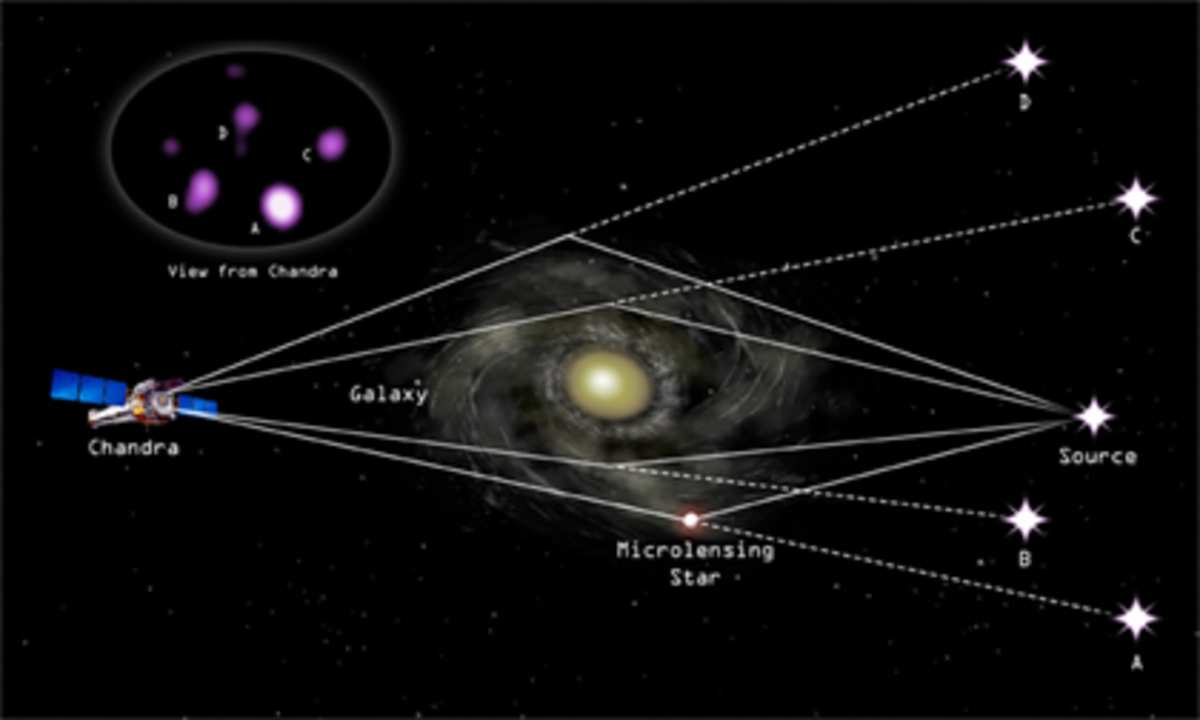
The research team, led by Natsuki H. Hayatsu, was studying the Cloverleaf, a quadruple-lensed quasar at a redshift of approximately 2.56, when the hidden galaxy was revealed, as per Phys.org. The newly identified ULIRG is significant because it is optically dark and highly obscured, making it challenging to detect through traditional optical/ultraviolet sky surveys. Researchers noted that such hidden galaxies represent a "non-negligible fraction" of star formation in the early universe.
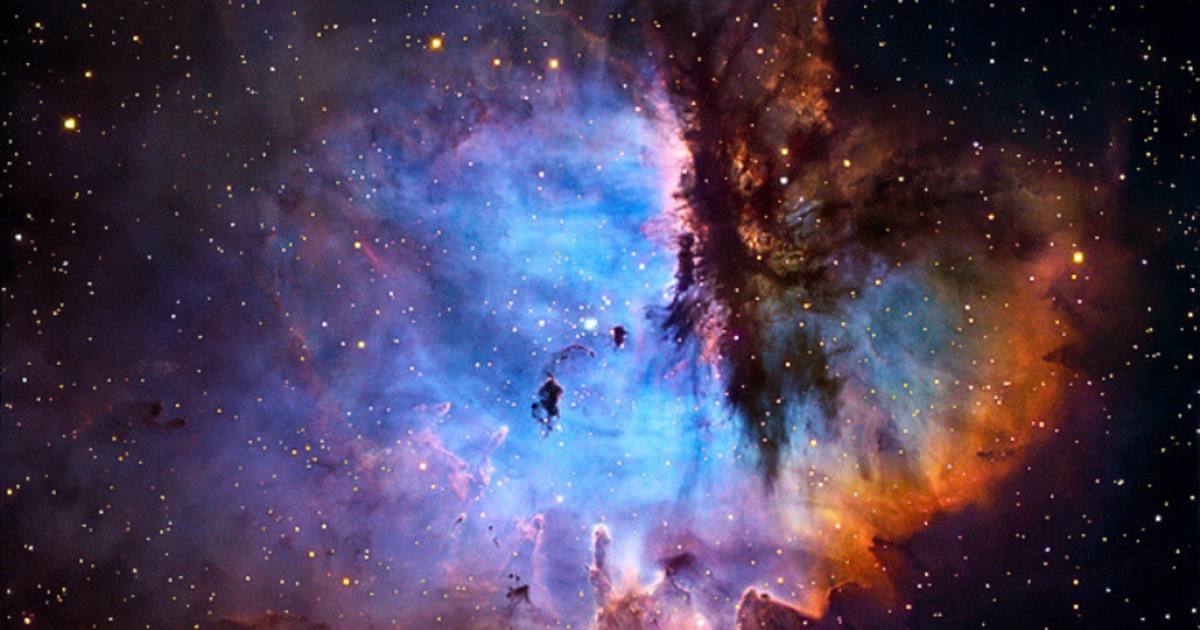
Identified at a redshift of 3.39, the galaxy is located about six arcseconds away from the quasar. Initial estimates paint a picture of an extreme system. The galaxy's infrared luminosity is colossal, measured at approximately 2.8 trillion times that of the Sun. It possesses a vast molecular gas reservoir, estimated to be between 40 and 230 billion solar masses. Its central black hole is estimated to weigh roughly 100 million solar masses.
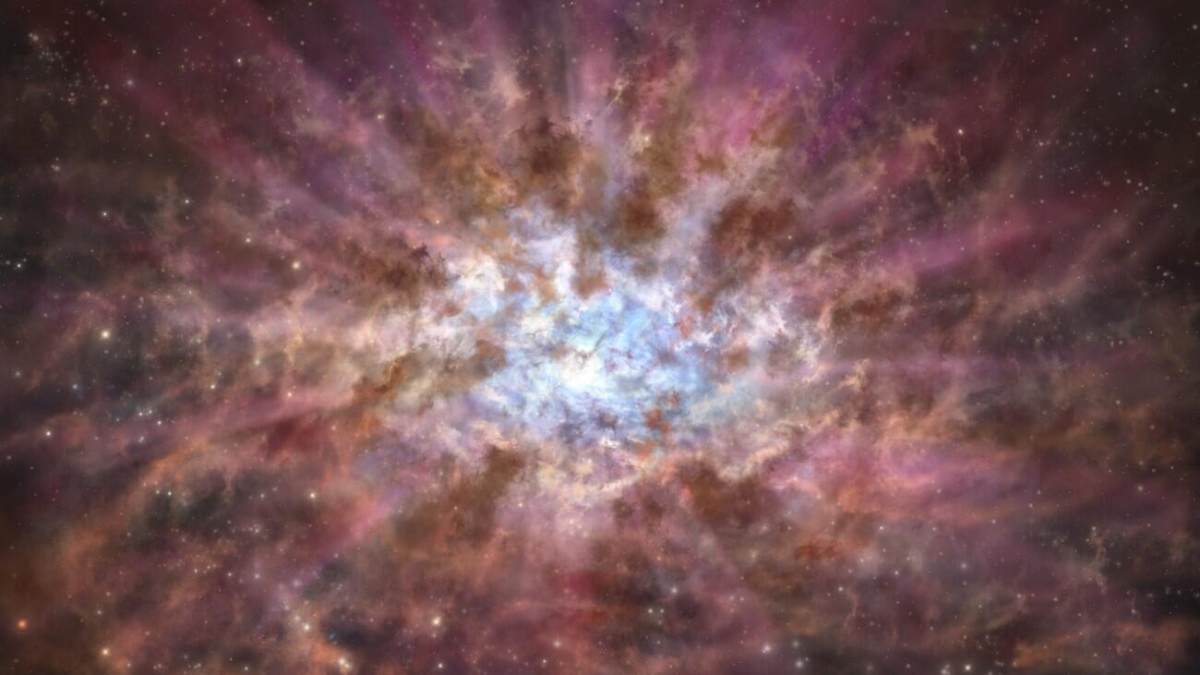
Scientists suggest the galaxy is currently undergoing a gas-rich major galaxy merger, a process that has not yet allowed its vast molecular gas content to settle dynamically. This highly unstable environment is likely fueling its tremendous star-forming activity, classifying it as a starburst galaxy. The team posits that this ULIRG may be a progenitor to the hot dust obscured galaxy (DOG) phase, an evolutionary path that could eventually see it transition into a naked active galactic nucleus (AGN) and ultimately form an elliptical galaxy in the modern universe. However, researchers stressed that extensive follow-up observations focusing on the physical state of the dense molecular gas are necessary to confirm its precise evolutionary stage.
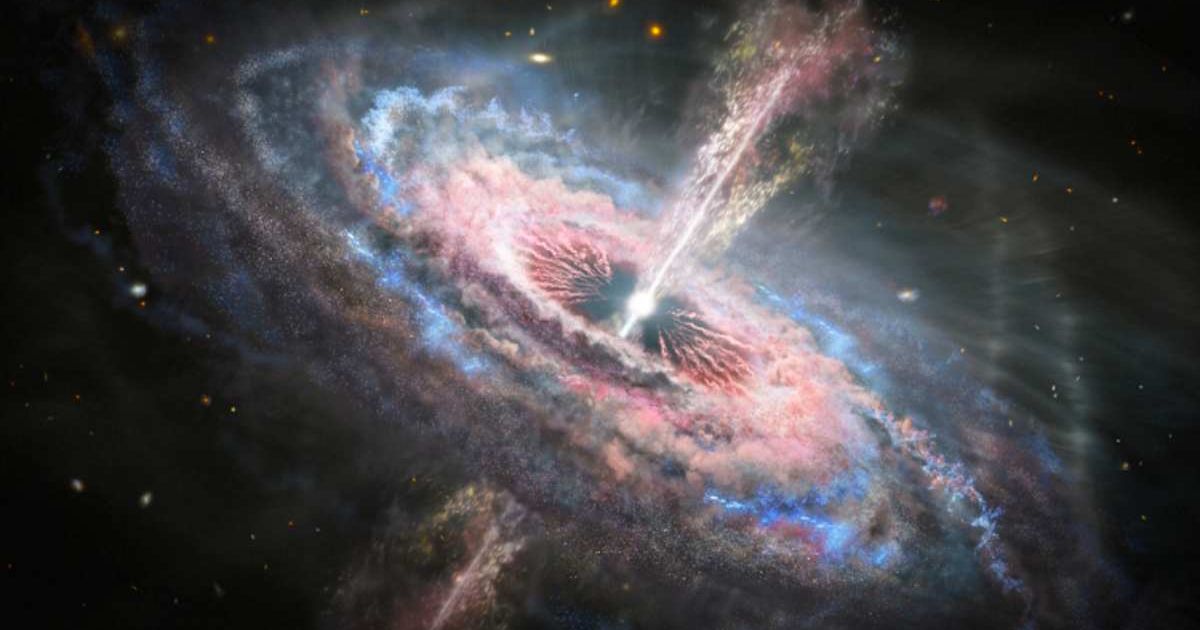
The quasar in question, H1413+117, belongs to a class of the universe's most brilliant and energetic objects. To put their luminosity in perspective, a quasar can generate a glow that outshines its entire host galaxy and everything in it, pouring out 100 to 1,000 times as much light as a typical galaxy of a hundred billion stars, all from a region roughly the size of our solar system, according to NASA.
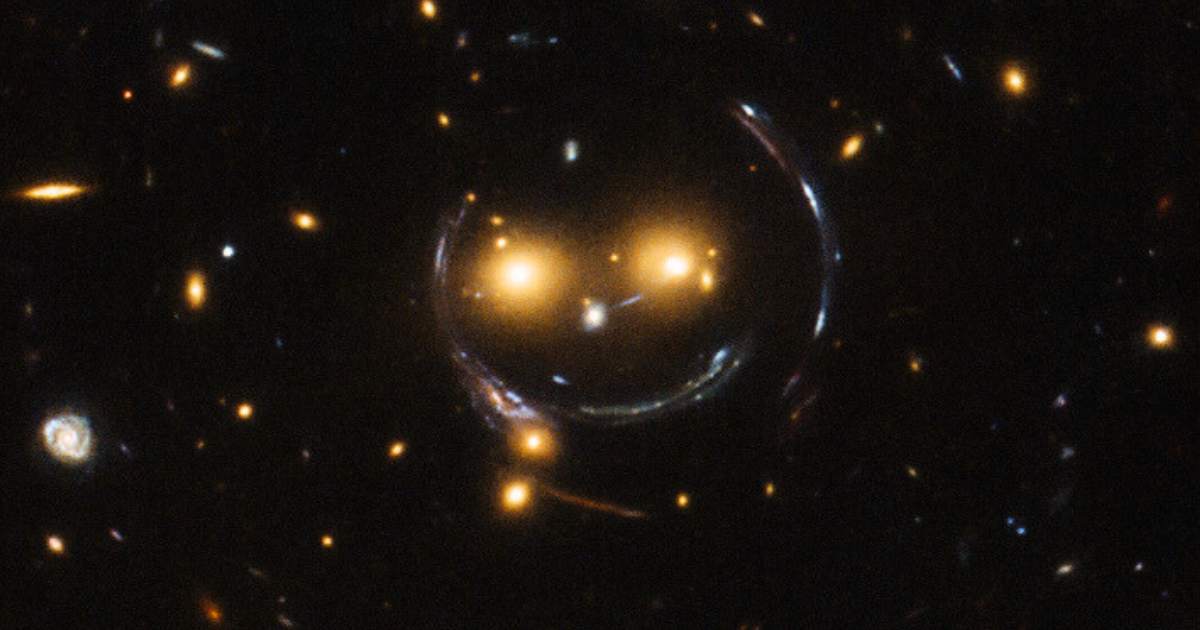
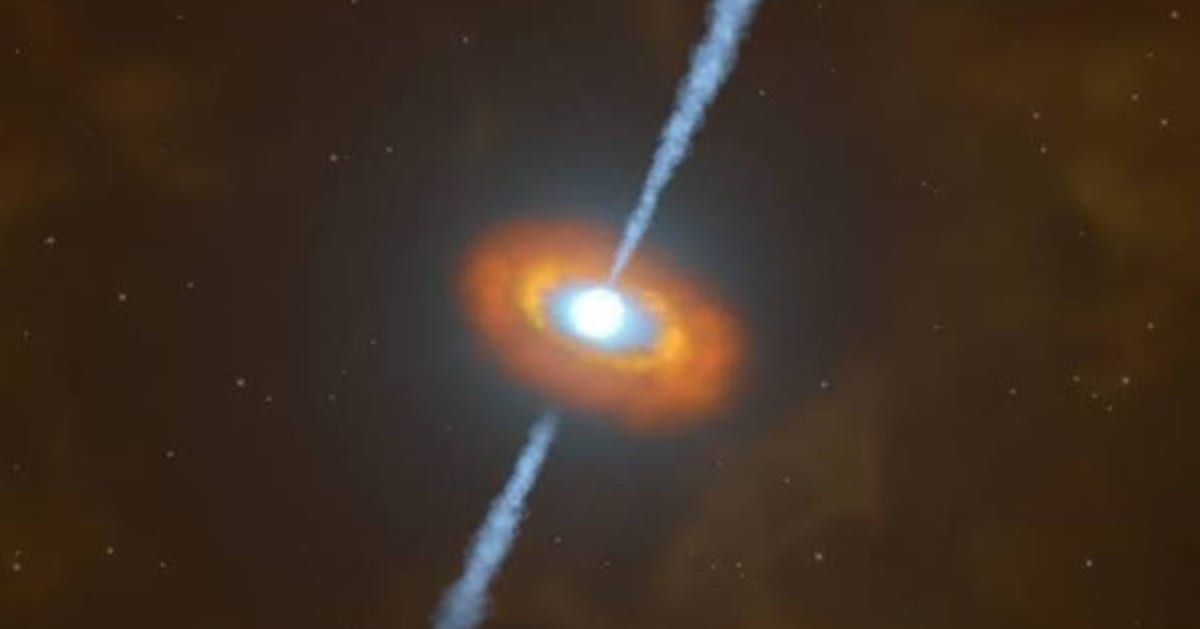
These cosmic beacons are essentially the incredibly bright cores of distant galaxies, with their power supplied by a supermassive black hole at the center. The extreme brightness is not the black hole itself, but a phenomenon caused by matter falling into it. As vast amounts of gas and dust are drawn toward the black hole, they form a rapidly spiraling structure known as an accretion disk. The immense gravitational and frictional forces within this disk cause the material to heat up to millions of degrees. This superheated matter becomes intensely luminous, often blasting dazzling jets of material out into space. Together, this glowing disk and powerful jets can shine with a light 10 to 100,000 times greater than our own Milky Way galaxy, making them visible across vast cosmic distances.
More on Starlust
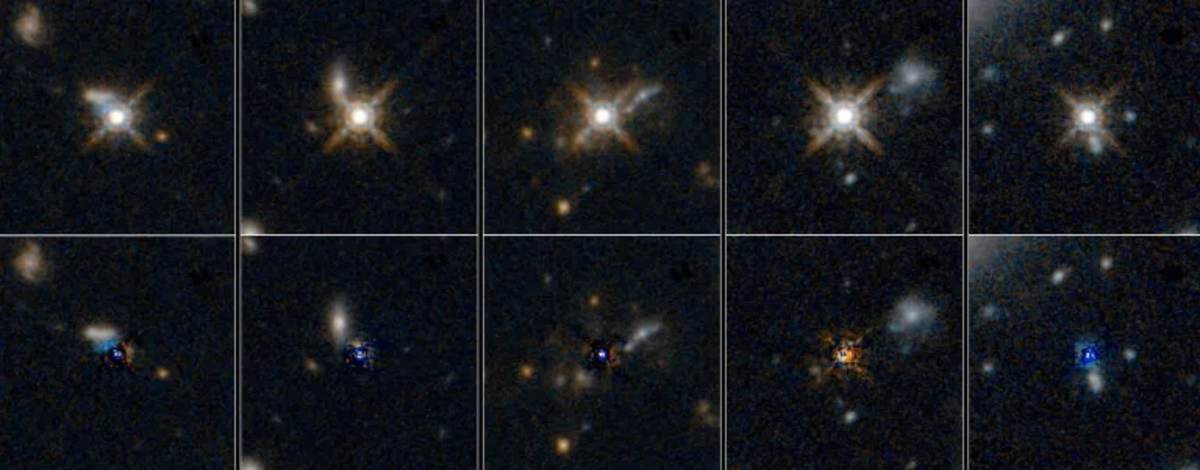
Astronomers find 62 new quasars, including the most luminous 'FeLoBAL' ever found