Astronomers find 62 new quasars including the most luminous 'FeLoBAL' ever found
An international team of astronomers has announced the discovery of 62 new, exceptionally bright quasars, including the most luminous "iron low-ionization broad absorption line quasar" (FeLoBAL) ever found. The findings, led by Yunyi Choi of Seoul National University, were published in a paper on the arXiv preprint server on August 8, as reported on Phys.org.
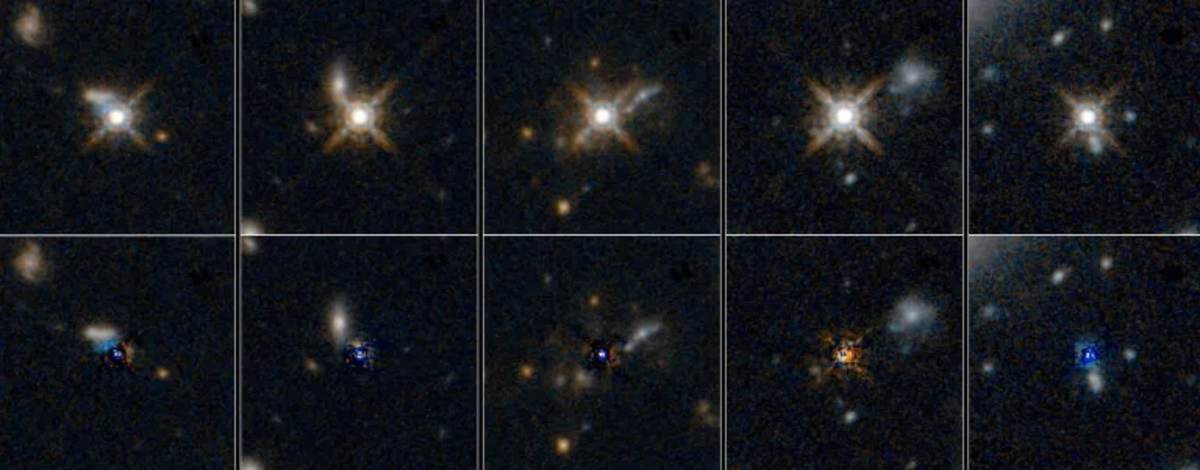
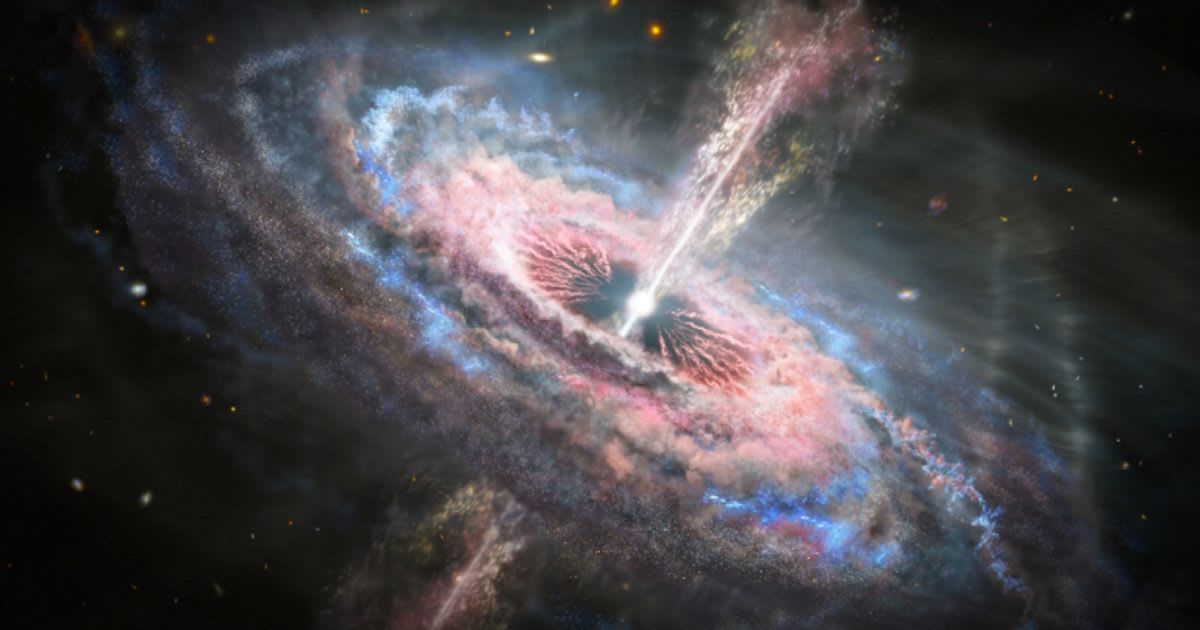
The discoveries are part of the All-sky BRIght, Complete Quasar Survey (AllBRICQS), a project designed to identify bright quasars that had previously gone undetected. Quasars or quasi-stellar objects (QSOs) are essentially bright and compact regions emitting electromagnetic radiation in the center of active galaxies, powered by supermassive black holes (SMBHs). This process releases vast amounts of energy, making them some of the brightest objects in the universe.
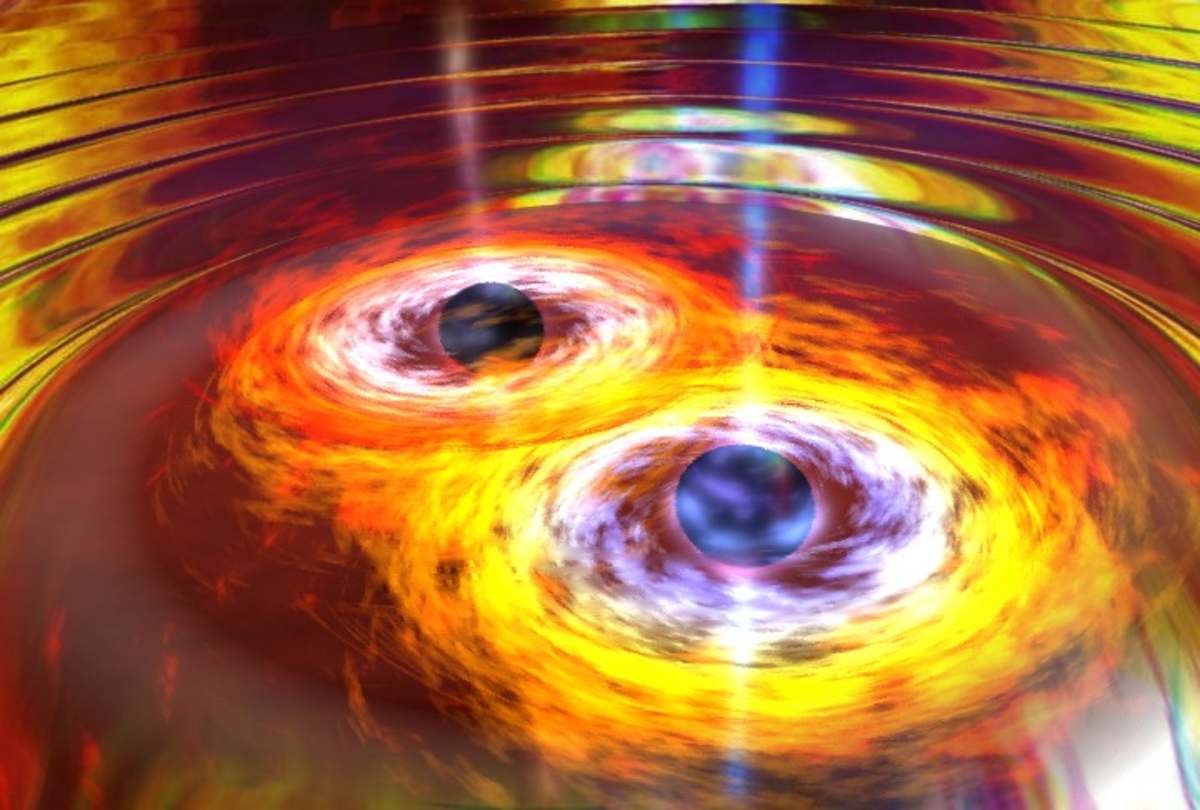
The AllBRICQS survey identifies potential quasars by combining data from the Wide-field Infrared Survey Explorer (WISE) and the Gaia Data Release 3 (DR3). This approach has already confirmed 156 quasars, and the latest report adds another 62 to the count. The research team began by identifying 75 potential quasars in the northern hemisphere. They then confirmed 62 of these candidates using spectroscopic observations from three ground-based telescopes in South Korea and China. The newly discovered quasars have redshifts between 0.09 and 2.48 and are considered extremely bright compared to the general quasar population.
Among the discoveries are several rare and notable objects. The team refined the classification of one object, J0919+3557, from a galaxy to a weak-line quasar, a rare type characterized by unusually weak emissions. Another, designated J1356+3840, is a FeLoBAL quasar, a type so rare that only a handful have ever been confirmed. The newly discovered J1356+3840 is the most luminous FeLoBAL quasar to date. "Here, we report 62 new AllBRICQS quasars spanning various types, which include typical broad emission line quasars and the most luminous iron low-ionization broad absorption line quasars discovered to date," the researchers wrote in the paper.
The researchers note that this new catalog of quasars will be a valuable resource for future studies on the evolution of quasars, the growth of black holes, and the properties of their host galaxies. "These confirmed AllBRICQS quasars provide a valuable resource for future research into quasar evolution, black holes, their environments, and their host galaxies across multiple wavelengths," the scientists concluded.
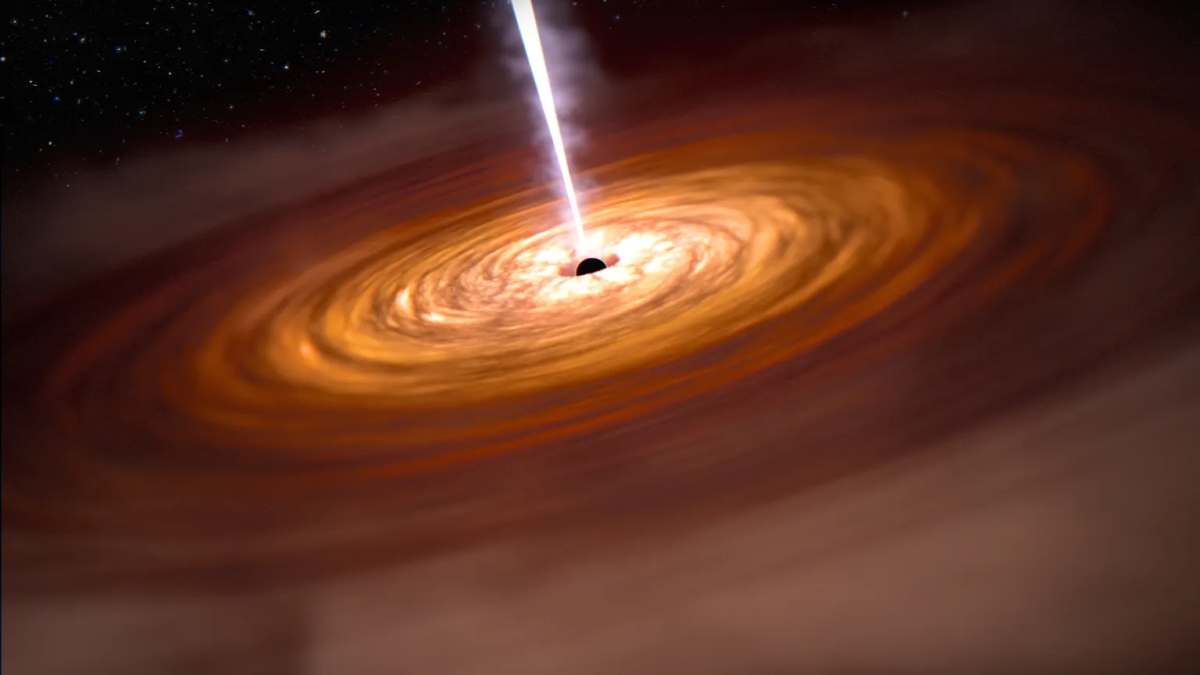
While a typical galaxy may contain a hundred billion stars, the light from a quasar's core can be 100 to 1,000 times brighter. This incredible energy output, which can be 10 to 100,000 times the luminosity of the Milky Way, is generated from a region no bigger than our solar system.
This cosmic powerhouse operates on a simple principle: immense amounts of matter, like gas and dust, fall toward a supermassive black hole. As this material spirals inward, it forms a rapidly spinning disk known as an accretion disk. The extreme gravitational and frictional forces within this disk heat the matter to millions of degrees. This superheated material blasts out luminous jets and powerful radiation, causing the quasar to dramatically outshine its host galaxy.