Astronomers uncover 'most pristine' star, a cosmic relic from the early universe
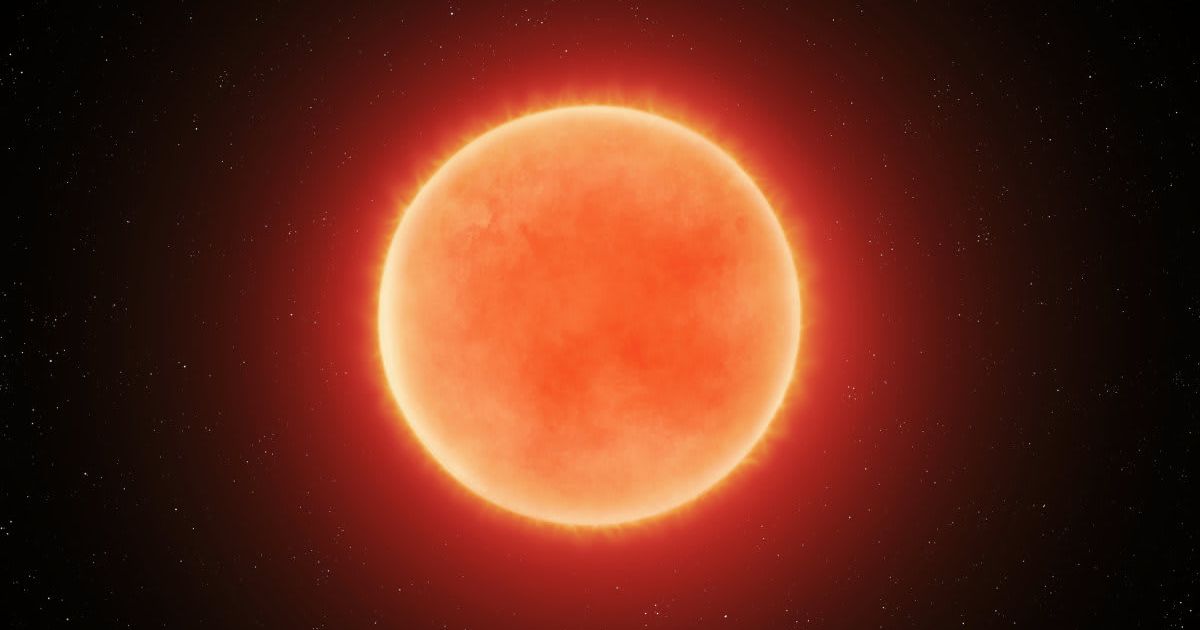
Designated SDSS J0715-7334, the newly identified red giant star exhibits the lowest level of metallicity ever recorded.
PUBLISHED OCT 9, 2025
An old and cold red star in space, which is one of the common anomalies observed. The red dwarf is isolated against a dark background in space. (Representative Cover Image Source: Getty | Nazarii Neshcherenskyi)

A team of astronomers, led by Alexander Ji of the University of Chicago, has documented the discovery of what they believe to be the most chemically 'pristine' star ever observed. The findings, which offer an unparalleled glimpse into the universe's earliest epochs, were recently posted on the arXiv preprint server.
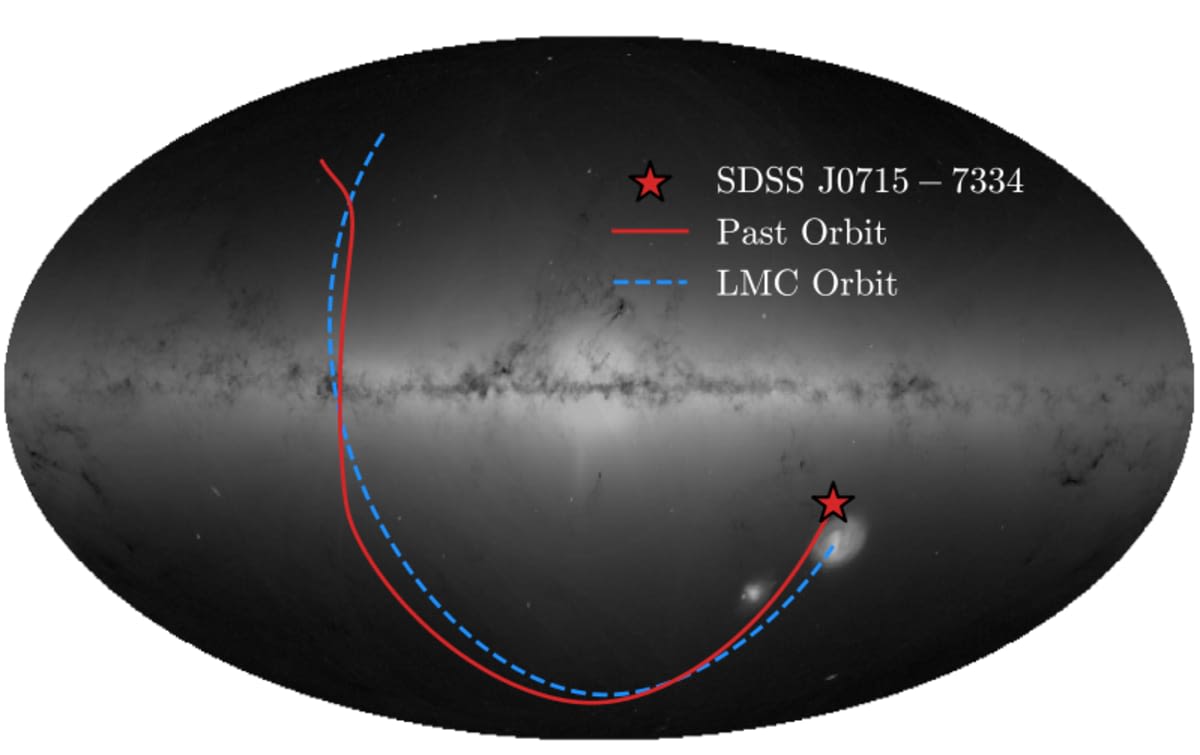
Past orbit of
J0715−7334 over 4 Gyr in Galactocentric coordinates, integrated in a potential that includes the gravitational influence
of the LMC (solid lines) (Image Source: University of Chicago)
Past orbit of J0715−7334 over 4 Gyr in Galactocentric coordinates, integrated in a potential that includes the gravitational influence of the LMC (solid lines) (Image Source: University of Chicago)

The newly identified celestial body, designated SDSS J0715-7334, is a red giant star that exhibits the lowest level of metallicity, the measure of heavy element content, recorded to date, as per Phys.org. In the aftermath of the Big Bang, the universe's first stars were overwhelmingly composed of only hydrogen and helium; heavier elements were forged much later through nuclear fusion within these stars and subsequently dispersed across space when they exploded as supernovae. Each subsequent generation of stars contained an increasingly higher concentration of these heavier elements.
Conceptual image of the Big Bang, a computer illustration representing the origin of the universe (Representative Cover Image Source: Getty | ALFRED PASIEKA/SCIENCE PHOTO LIBRARY)
Conceptual image of the Big Bang, a computer illustration representing the origin of the universe (Representative Image Source: Getty | ALFRED PASIEKA/SCIENCE PHOTO LIBRARY)

Detailed spectral and chemical analysis conducted by the team reveals that SDSS J0715-7334 possesses a total metallicity (Z) of less than 7.8×10⁻⁷. This figure is staggeringly low, making the star approximately twice as metal-poor as the previous record-holder, J1029+1729, and over ten times more metal-poor than the most iron-deficient star known, SMSS J0313-6708.
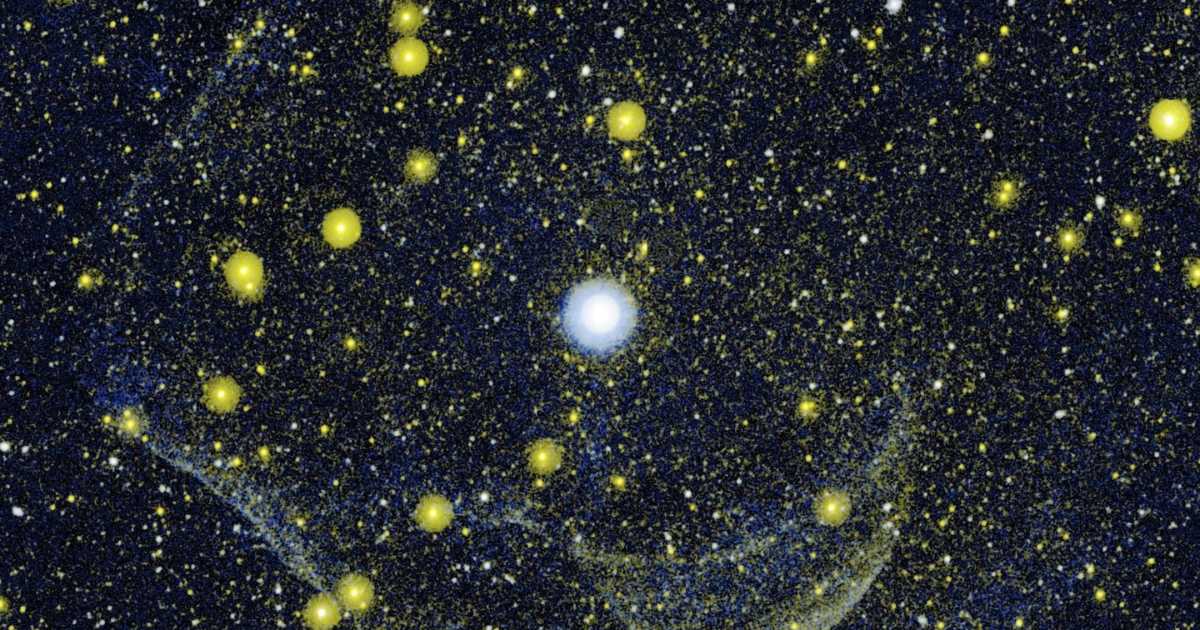
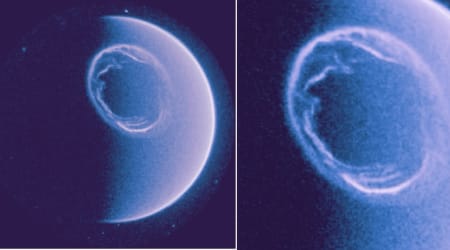
This composite image NASA Galaxy Evolution Explorer shows Z Camelopardalis, or Z Cam, a double-star system featuring a collapsed, dead star, called a white dwarf, and a companion star, as well as a ghostly shell around the system (Representative Cover Image Source: NASA/JPL)
This composite image NASA Galaxy Evolution Explorer shows Z Camelopardalis, or Z Cam, a double-star system featuring a collapsed, dead star, called a white dwarf, and a companion star, as well as a ghostly shell around the system (Representative Image Source: NASA/JPL)

What makes this find particularly rare is not just its minimal iron content, but also its surprisingly low quantity of carbon. Previous highly metal-poor stars had still retained a noticeable amount of carbon. SDSS J0715-7334's unique chemical signature strongly suggests it was formed from the gas remnants of a supernova explosion of a massive (30-solar-mass) Population III star, the hypothetical, metal-free first generation of stars to form in the cosmos. The star’s distant halo orbit and large convective envelope further ensure that its surface composition remains an uncontaminated probe of that primordial gas.
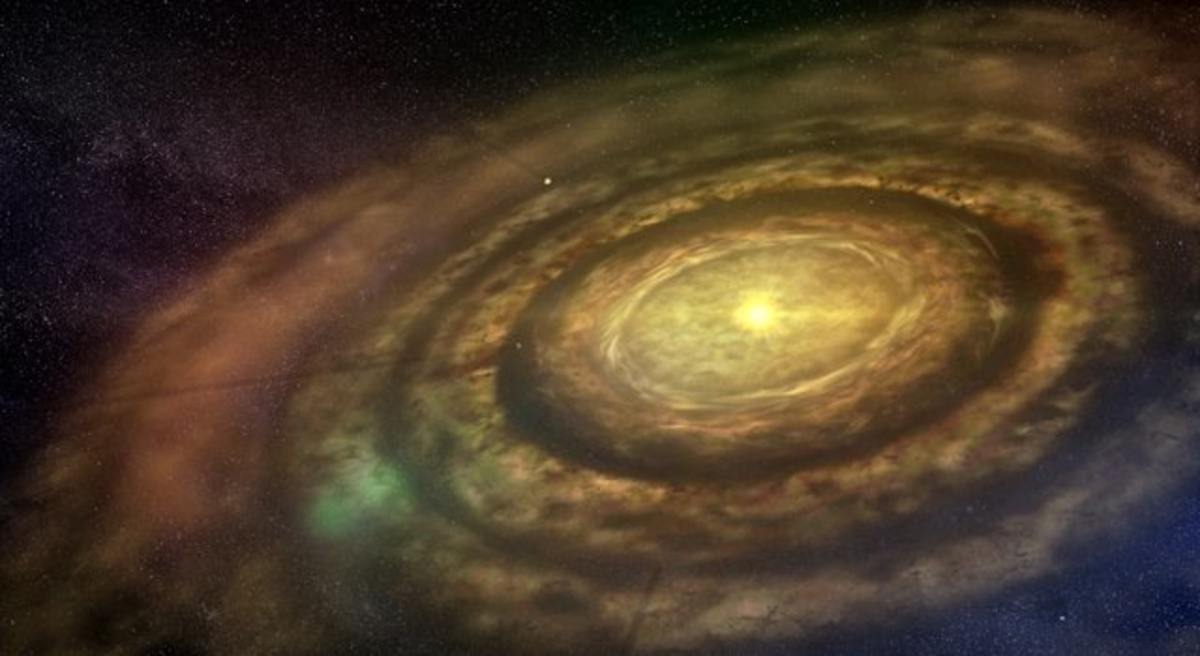
This artist's conception shows a newly formed star surrounded by a swirling protoplanetary disk of dust and gas (Image Source: NASA/JPL-Caltech)

Using kinematic analysis of Gaia data and orbital modeling, researchers traced the star’s origins to the Large Magellanic Cloud (LMC). The evidence suggests SDSS J0715-7334 was born in the LMC and has since migrated into the halo of the Milky Way galaxy.
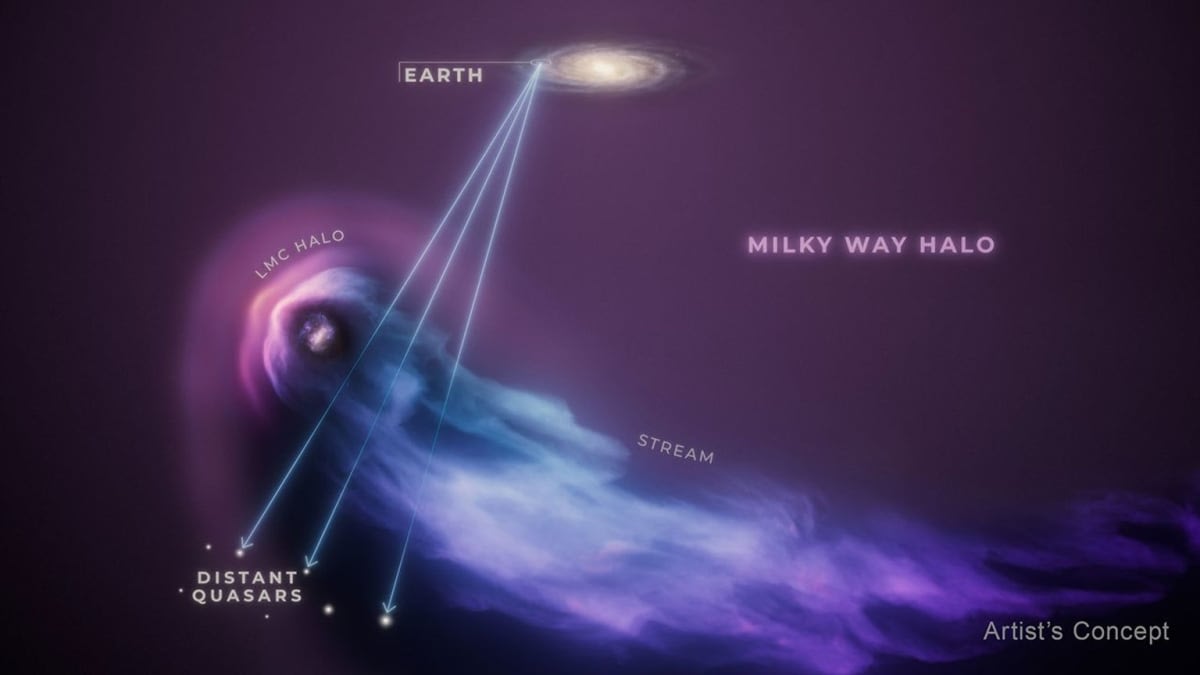
This artist's concept shows the Large Magellanic Cloud, or LMC, in the foreground as it passes through the gaseous halo of the much more massive Milky Way galaxy (Representative Image Source: NASA)

Beyond its ancient composition, the star is only the second ever detected below the "fine structure cooling threshold." This boundary describes how gas clouds need heavy elements to cool rapidly enough to collapse and form stars. The existence of SDSS J0715-7334 at this extreme indicates that dust cooling, where cosmic dust aids in the cooling process, is a necessary mechanism for forming such extremely low-metallicity stars, confirming this cooling process operates in galaxies beyond just the Milky Way. This offers vital new constraints on models of early star formation.

The discovery of SDSS J0715-7334 underscores the ongoing, critical search for these primordial stellar relics. The rarity of such objects highlights their scientific value, and astronomers recently announced the finding of another extraordinary specimen. Scientists have identified an incredibly rare, ancient star, designated GDR3_526285, situated within the vast, diffuse halo of the Milky Way galaxy. Reported in a new study published in The Astrophysical Journal Letters, GDR3_526285 is similarly counted among the most metal-poor stars ever detected, representing the elusive class of Ultra-Metal-Poor (UMP) stars.

More on Starlust

Researchers accidentally discover a giant stellar 'blowtorch' at the Milky Way's border

Supergiant star baffles astronomers by surviving mysterious blast, expelling gas cloud bigger than our solar system

MORE STORIES

The celestial event this month is a rare one, with the Moon retreating to an apogee from Earth's center.
32 minutes ago
The three interstellar objects are unique, billion-year-old fragments and kinetic artifacts collected from countless extrasolar systems across the galaxy.
4 hours ago
English physicist and science communicator Professor Brian Cox draws parallels between the journey of 3I/ATLAS and that undertaken by humanity.
8 hours ago
Conspiracy theories can be put to rest as new evidence from the MeerKAT radio telescope has emerged.
1 day ago
Consecutive X-class solar flares have set the stage for severe space weather to strike on November 11 and 12.
1 day ago
The observation, made on November 9, unveiled a shockingly complex jet system that overshadows prior data, immediately casting doubt on the comet's origin.
2 days ago
The object, discovered by Gennady Borisov on November 2, 2025, quickly became the focus of speculation amid the curiosity surrounding 3I/ATLAS.
2 days ago
To assess Martian viability, scientists subjected yeast cells to Mach 5.6 shock waves and the corrosive perchlorate salts common on the Red Planet.
6 days ago
These impacts pack surprising power; a mere 11-pound meteoroid can blast a 30-foot (9-meter) crater, ejecting 75 metric tons of lunar soil.
6 days ago
Sunspot AR3474 detonated with an X1.8 solar flare on November 4, sending an ultraviolet wave silencing South America's shortwave radio communications.
7 days ago