Astronomers capture the 'best-yet color image' of interstellar comet 3I/ATLAS
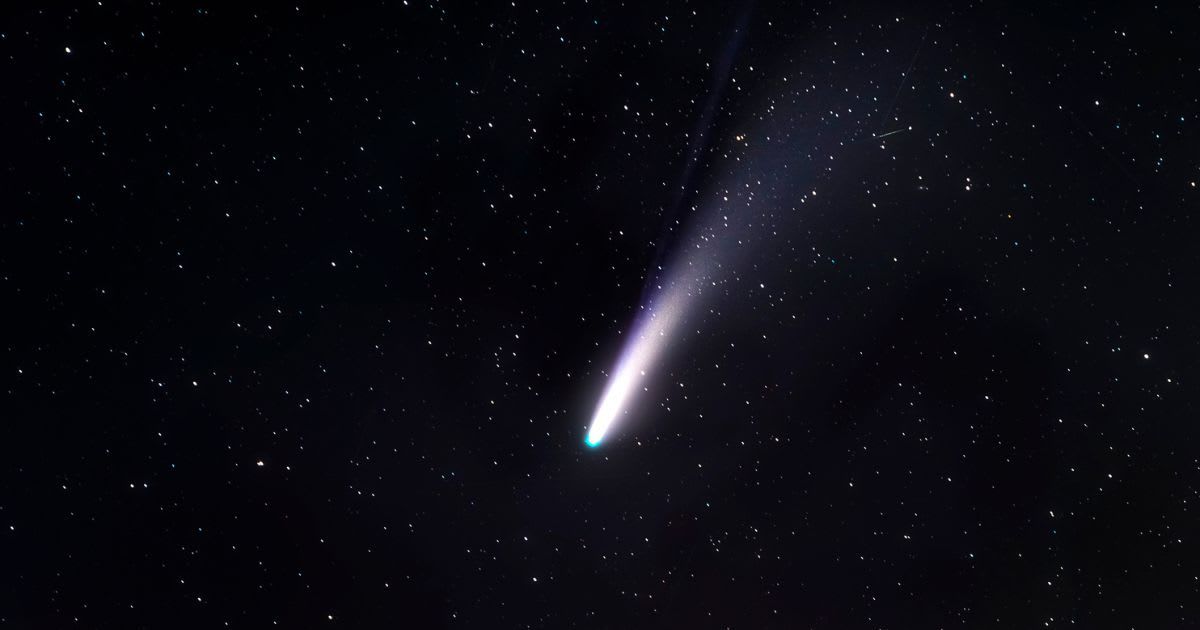
Forget about expensive space missions; the 'best-yet color image' of the cosmic traveler, comet 3I/ATLAS, has been successfully captured by two amateur astronomers right here on Earth, according to Space Weather. Using their backyard gear, astronomers Michael Jäger and Gerald Rhemann used a standard 12-inch telescope and a specialized camera to capture the stunning image.
The photo confirms the object is indeed a comet. The new picture shows a "textbook" comet appearance with a few major twists. Its bright, characteristic tail, appears blue due to carbon monoxide ions (CO), streams directly away from the Sun, sculpted by solar wind. The coma, or head, glows green from the presence of diatomic carbon (C2), a common gas given off as the comet's icy core is warmed up.
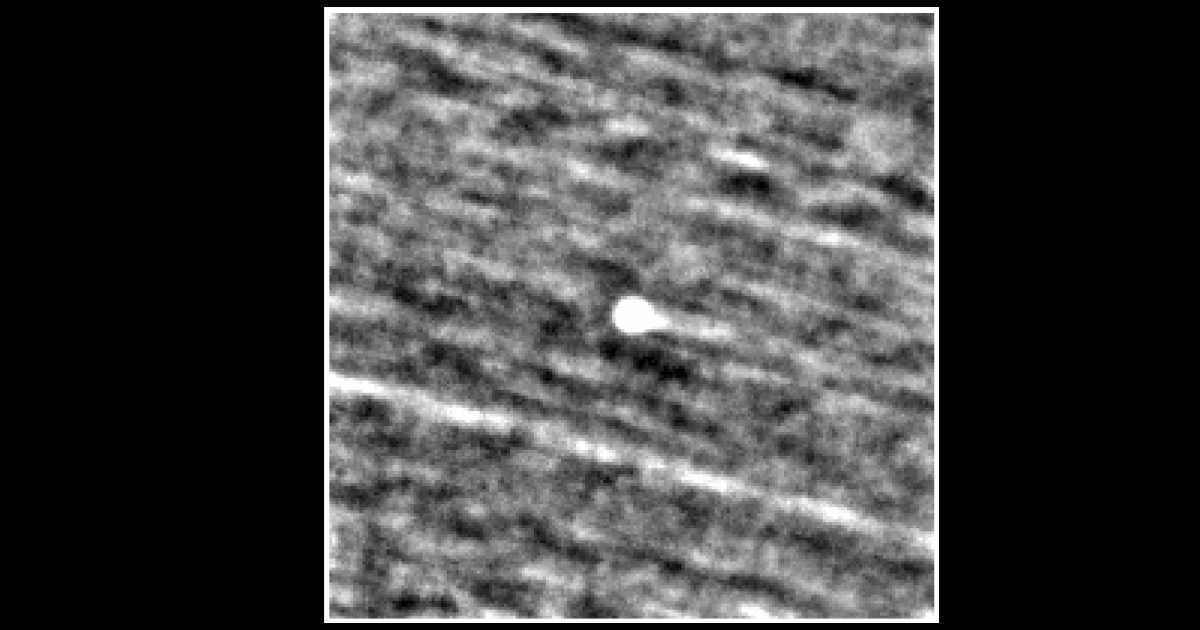
The most bizarre feature, however, is a clearly visible jet of material streaming toward the Sun from the comet's nucleus. Although sunward-pointing features are extremely rare for objects from our solar system, scientists suggest a natural explanation. They propose that the comet's eons-long journey through deep interstellar space could have modified its outer crust. This old, tough surface is now shedding unusually large and heavy dust grains as it warms up near the Sun. These huge grains are too heavy to be easily swept back by the Sun's light pressure or solar wind and so are stuck, forming the anti-tail that appears to point forward. This remarkable Earth-based image proves that 3I/ATLAS is an interesting, if eccentric, interstellar comet.
The interstellar visitor was first detected on July 1, marking it as only the third object ever identified to have traveled into our planetary neighborhood from deep space. Astronomers believe the comet has been wandering for approximately billions of years, making it older than our entire solar system. While space agencies worldwide have been tracking and imaging 3I/ATLAS since its discovery, NASA was temporarily sidelined. Unfortunately, a recent government shutdown from October 1 to November 12 coincided with critical moments in the comet's journey, including its closest approach to the Sun, better known as perihelion, and a close pass by Mars. NASA experts finally addressed the public on November 19, sharing images captured during that period and offering their official assessment.
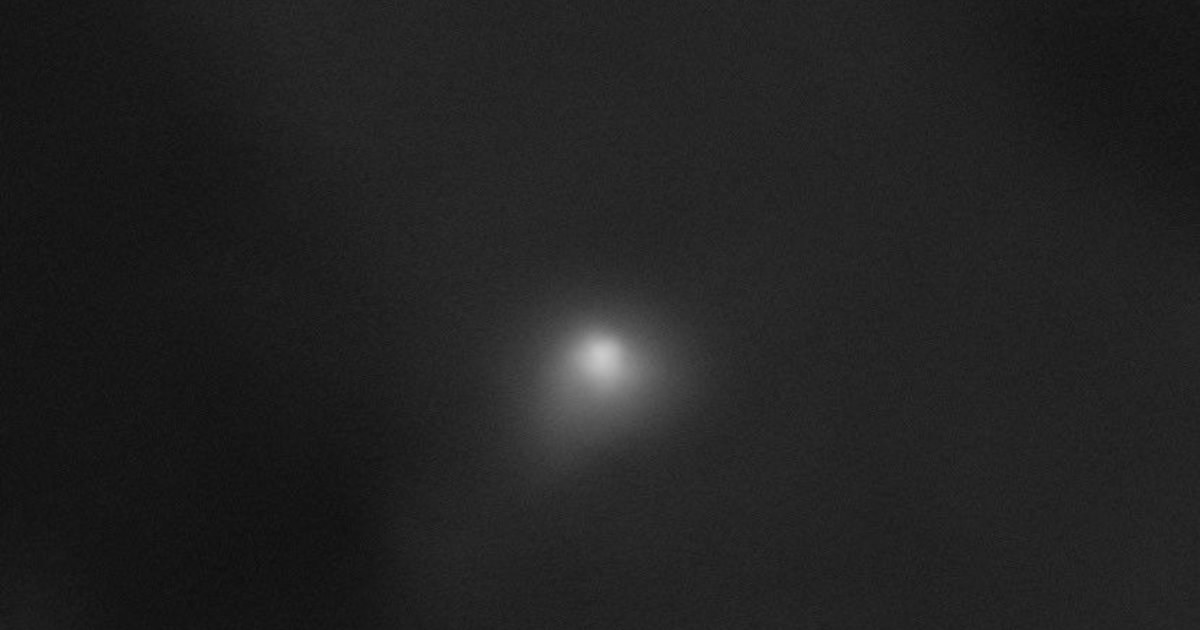
Quelling several sensational speculations, NASA officials were quick to verify that 3I/ATLAS is indeed a natural comet and not an alien spaceship. "It looks and behaves like a comet, and all evidence points to it being a comet,” confirmed Amit Kshatriya, the associate Administrator of NASA. He concluded by stressing the object's immense scientific value: "But this one came from outside the solar system, which makes it fascinating, exciting, and scientifically very important." Comet 3I/ATLAS is currently visible in the constellation Virgo, at an approximate distance from Earth of about 185 million miles (298 million kilometers). For observers, its exact apparent coordinates are recorded at Right Ascension 12h 26m 21s and Declination -01° 43’ 58”, according to Sky Live.
More on Starlust
Counting the comets: 2025’s discovery tally so far
Harvard astronomer Avi Loeb criticizes NASA’s big 3I/ATLAS reveal: 'Boring messages'