Earth may have been sending life to Jupiter's moon Europa all this time
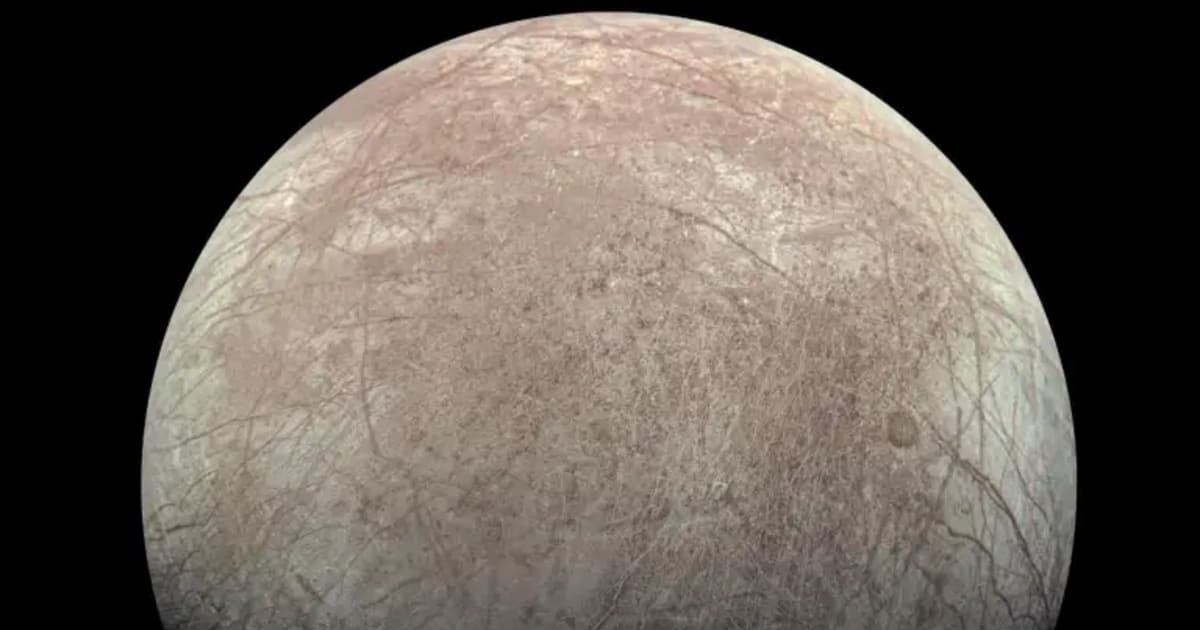
When we think about life somewhere else in the universe, we think of signs of alien life and the worlds we haven't reached yet. The assumption is usually that life out there, if it exists, developed on its own, without any help from Earth. But what if that's not the case? A new study argues that Earth itself could have made life somewhere in the universe possible. The research paper, published in the International Journal of Astrobiology, states that Earth may have been sending bacteria-carrying dust particles out into space for billions of years and that some of it could have landed on Europa (the ice-covered moon of Jupiter). As a result, life may have taken hold in the vast ocean sitting beneath its frozen surface.

In the paper, researcher Zaza Osmanov of the Free University of Tbilisi in Georgia focuses on whether microscopic, bacteria-carrying dust particles could have left Earth's atmosphere, crossed the solar system, and landed on Europa without being destroyed during the journey. The idea that life can travel through space on dust, rocks, or comets is called panspermia. This new study takes a different angle, which Osmanov calls the "reverse panspermia problem." Instead of asking how life got to Earth, he asks how much of Earth's life may have already escaped into space and where it might have gone.
The physics behind the journey
Osmanov examined three main aspects to see if this concept could actually work. First, he looked at whether small dust particles carrying bacteria (about one micron across, roughly a millionth of a meter) could actually escape Earth's gravity. He found that yes, some of those particles do make it out. After accounting for the energy lost fighting gravity, these particles end up traveling at about 8.4 km/s once they're far from Earth, which is about 10% faster than the International Space Station in orbit. Osmanov notes that this process has been happening for the 3.5 billion years that simple life has existed on our planet.
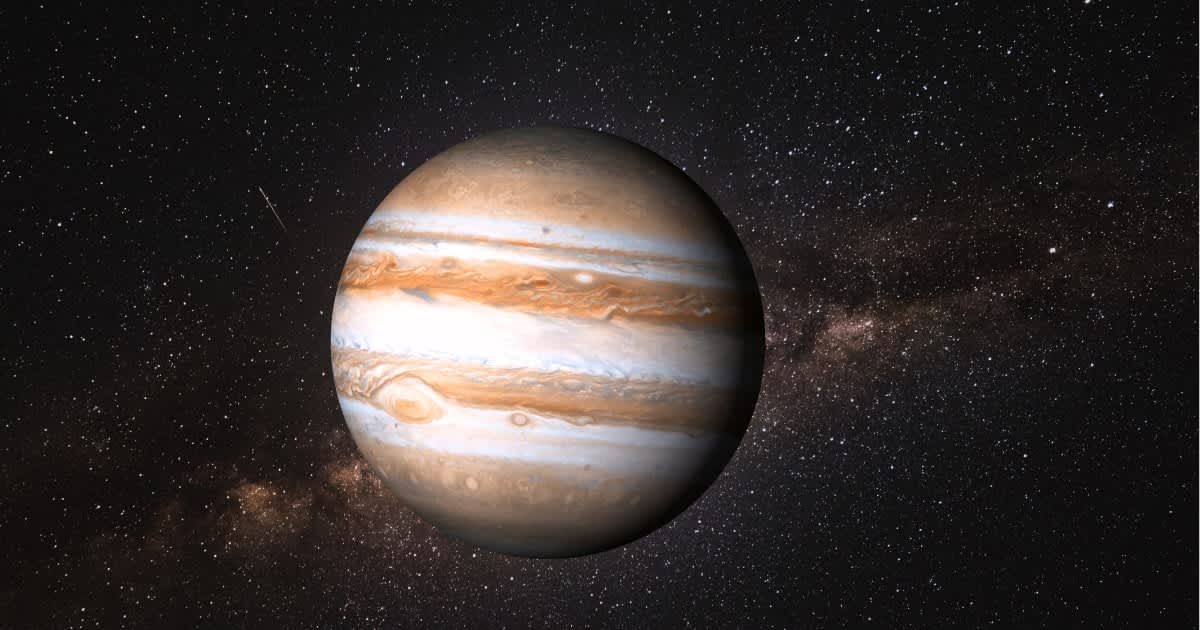
Once the particles are out in space, they get pushed by sunlight and pulled by Jupiter's gravity. Working through those forces, Osmanov calculated that the particles' reach Jupiter at 20.1 km/s. But only particles coming in at an extremely low angle, which is within about one degree of the surface, survive. That's only about three in every thousand bacteria packs.
But the numbers are bigger than you'd expect
But that’s not it. Based on his calculations, dust particles are carried high into Earth's atmosphere by turbulence, where collisions with incoming cosmic dust can give them enough speed to escape into space. Every second, one particle per square centimeter escapes Earth this way, which adds up to around five quintillion particles leaving the planet every second in all directions. Due to Jupiter’s strong gravity, some of them get pulled toward the planet and eventually reach Europa. This means that about 300 million particles should be reaching its surface every second. If we stretch that over the 3.5 billion years that life has existed on Earth, the total becomes unbelievably large. Osmanov describes this amount as being close to a “mole” of particles, which is a scientific term used to represent extremely large numbers of tiny objects (approximately 6 x 10^23 of any given substance).
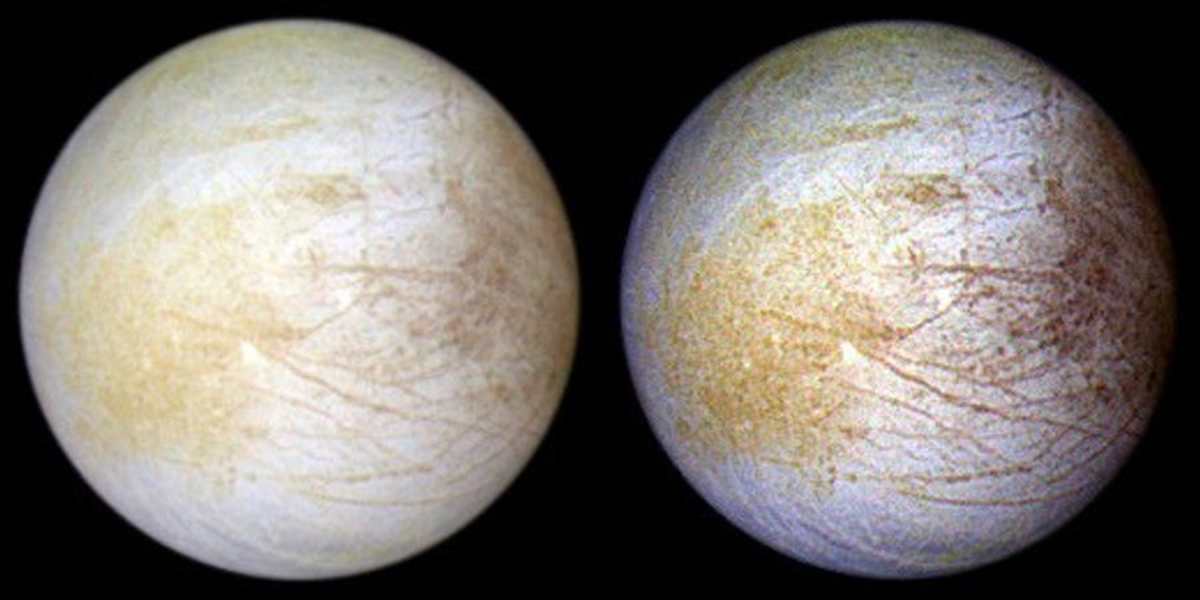
Landing on the surface is one thing. Actually reaching Europa's ocean is much harder. For this, Osmanov used existing research showing that bacteria on the surface would undergo deactivation within about 10,000 years. But Europa's ice can melt through in as little as 1,000 years. When this happens, it could create pathways that allow surface materials (including the bacteria) to move deeper into the ice before they become inactive.
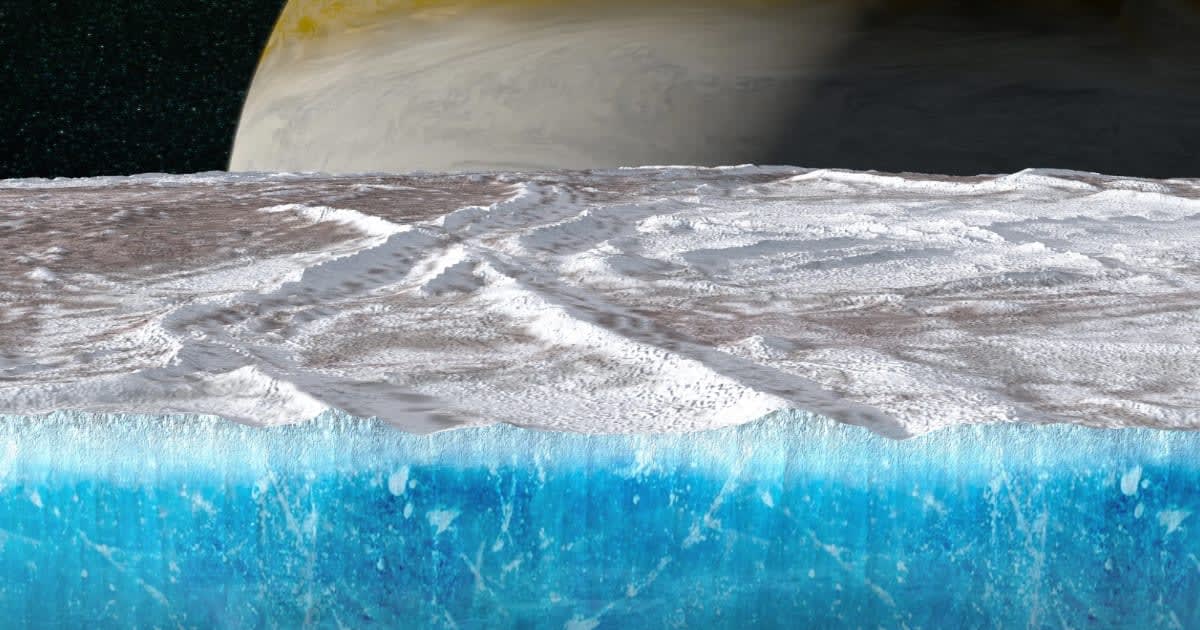
Osmanov concludes that this "strongly suggests the likelihood of life being present in the subsurface ocean of Europa if the biological and biochemical conditions are compatible with Earth-originating life, which would require a new series of investigations to determine." We don't yet know whether Earth bacteria could survive in Europa's ocean. The European Space Agency has its Europa lander currently planned for a 2027 launch. Its prototype drills were able to drill through 30 kilometers (19 miles) of ice in Antractica in 300 days. When tested on Europa, it would give scientists their first direct look at the ocean below and possibly any signs of life.
More on Starlust
Some of the galaxy's unusually cold 'stars' could actually be alien megastructures
The first alien civilization we find might already be nearing its end