Garnet found in Martian meteorite for the first time could help piece together Red Planet's history
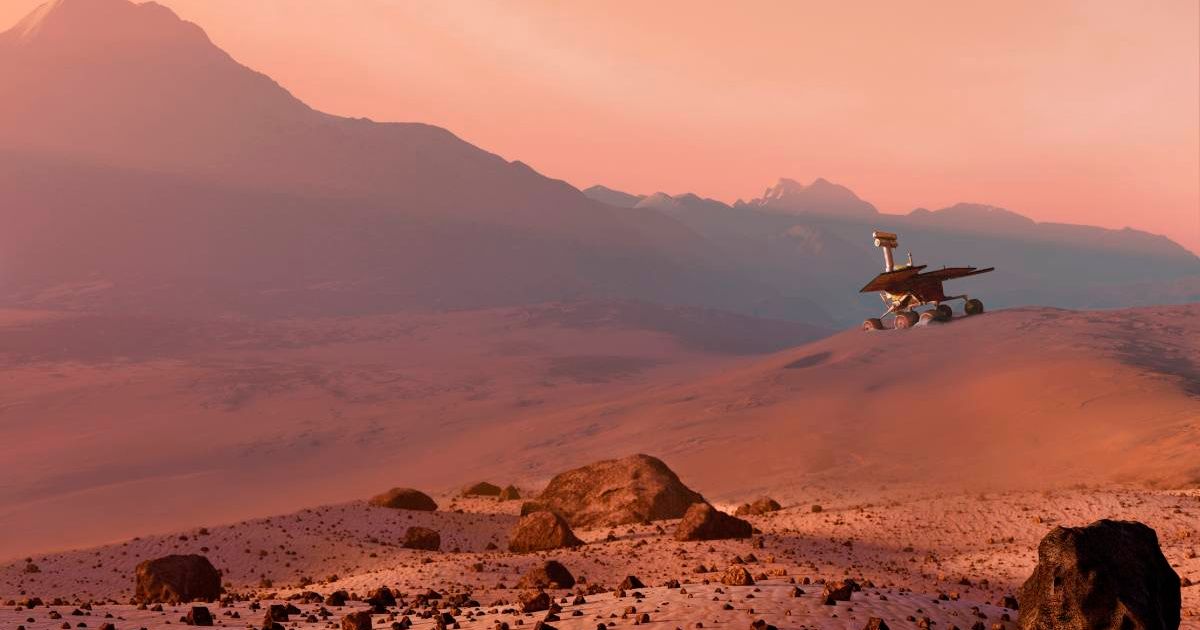
Most of what we know about Mars comes from orbiters, rovers, and a small handful of rocks that made the long journey from the Martian surface to Earth as meteorites. Those meteorites carry chemical and mineral records of conditions that existed on Mars billions of years ago. Now, for the first time, an international research team has identified a completely new type of Martian rock and discovered the mineral garnet inside it. This discovery could provide valuable new insights into Mars’ 4.5-billion-year evolution. The findings have now been published in Geochemical Perspectives Letters.
The discovery was made by Tanya Kizovski, assistant professor of Earth sciences at Brock University, and her team while they were examining a fragment of a Martian meteorite held at the Royal Ontario Museum (ROM) in Canada. The meteorite is catalogued as NWA 8171. Kizovski was mapping out the fragment's minerals and chemical makeup when something unexpected caught her attention. "This little section of the meteorite looked really interesting, and the chemistry was a bit odd," she said. "At first, we assumed it was a mineral called pyroxene, which is very common, but then we decided to take a second look." By utilizing electron microscopy equipment at the University of Portsmouth and specialized laser tools at the ROM, they confirmed that the mineral present was actually garnet.
But how does this change what we know about Mars?
Until now, we have not found garnet in any Martian rock samples. While commonly known as a dark-red gem associated with January birthstones, to geologists, garnet is a vital group of silicate minerals used to study a planet's past. Since these minerals form under very specific conditions of heat and pressure, they can tell us exactly what the environment was like when they formed. Its presence in a Martian rock suggests that Mars experienced the extreme heat, high pressure, or hot fluid activity needed to transform rock through a process called metamorphism. Commenting on what this means, Kizovski said, "This discovery is going to expand our knowledge of the geologic processes that are possible on this planet. This new garnet-bearing rock type could give us clues to how Mars has changed throughout its history and new insights into the ancient environments that could have formed the garnet and related minerals."
On Mars, there are two primary scenarios that could explain how garnet formed. One possibility is that a meteorite struck the Martian surface with enough force to generate the intense heat and pressure needed for the transformation. Another is that magma (molten rock rising up from beneath the surface) pushed into the Martian crust and drove that same process—or a combination of both. James Darling, professor at the University of Portsmouth's School of the Environment and Life Sciences, said, "The findings add a striking new dimension to our understanding of the geology of Mars and open an exciting new window into the evolution of our planetary neighbor."
The one question scientists still can't answer
As of now, the team has not been able to confirm with absolute certainty that the garnet actually formed on Mars. They are also considering the possibility that it arrived on the Martian surface inside another meteorite from somewhere else in the solar system entirely. To settle the question, scientists would need to measure the garnet's isotopic signature. "Measuring oxygen isotopes from the garnet-bearing rock type itself would help to confirm if it is Martian in origin or from an exotic meteorite impactor," Kizovski explained.
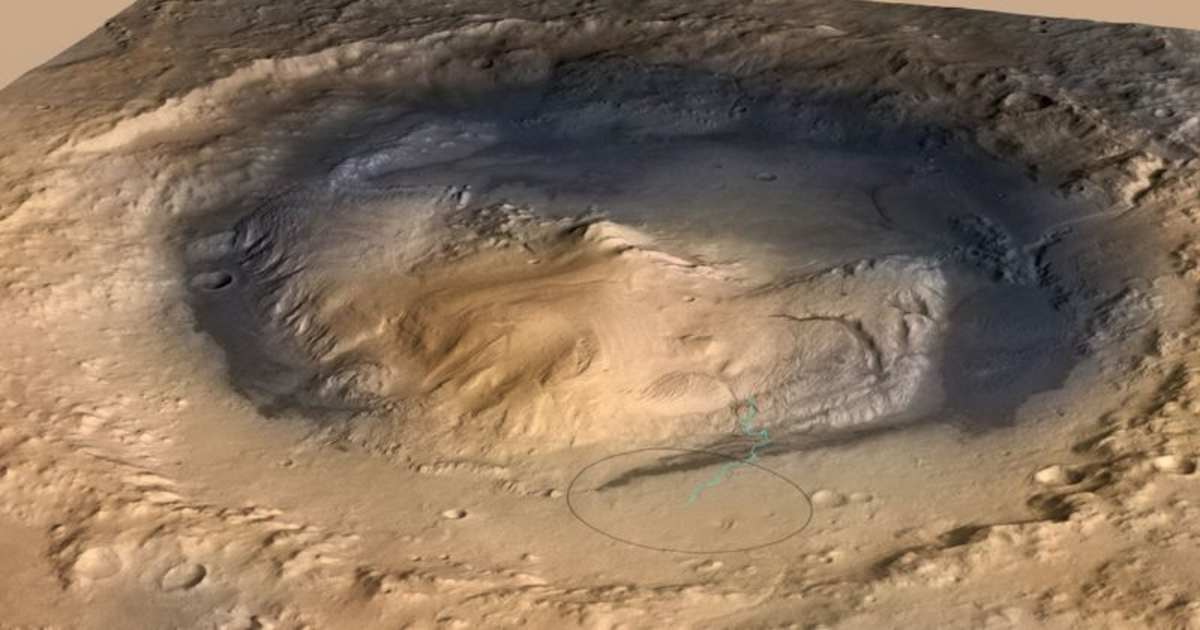
However, the testing process requires destroying part of the sample. This has been avoided so far "due to its rarity, as it may be the only garnet-bearing Martian rock we have for study,” Kizovski noted. So for now, the question stays open. The team, which also includes ROM curator Kim Tait and research assistant Jessica Tomacic, is continuing to study the sample. Kizovski is optimistic that comparing it against data from Mars rovers and orbital instruments will eventually help fill in the gaps. "With their work and more comparisons to rover and orbital data, I'm hopeful that we will be able to learn more about the origin and history of garnet on Mars," she said.
More on Starlust:
NASA’s Curiosity rover pictures Martian 'giant spiderwebs' that hint at ancient groundwater activity