Astrochemists identify specific molecules that explain where all the missing space sulfur went
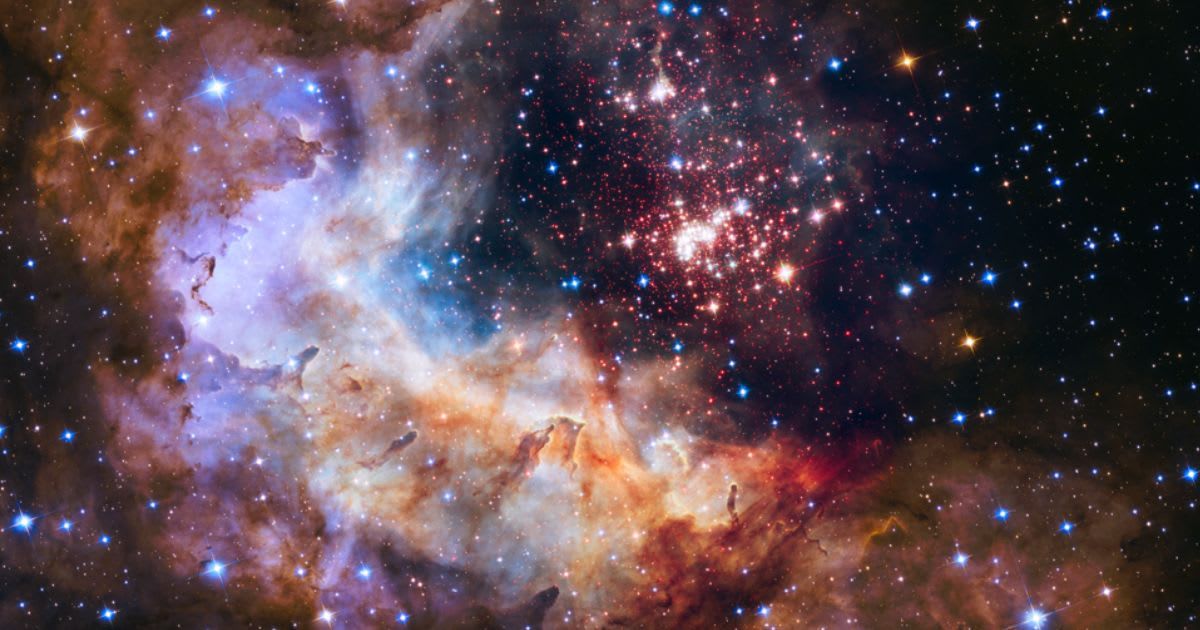
For decades, astrochemists have been baffled by a cosmic mystery: the surprisingly low amount of sulfur detected in space. Despite being the tenth most abundant element in the universe and vital for life, stars, and planets, sulfur has remained elusive to detection. Now, a new study suggests the element hasn't disappeared; it's just been hiding, as per the University of Mississippi.
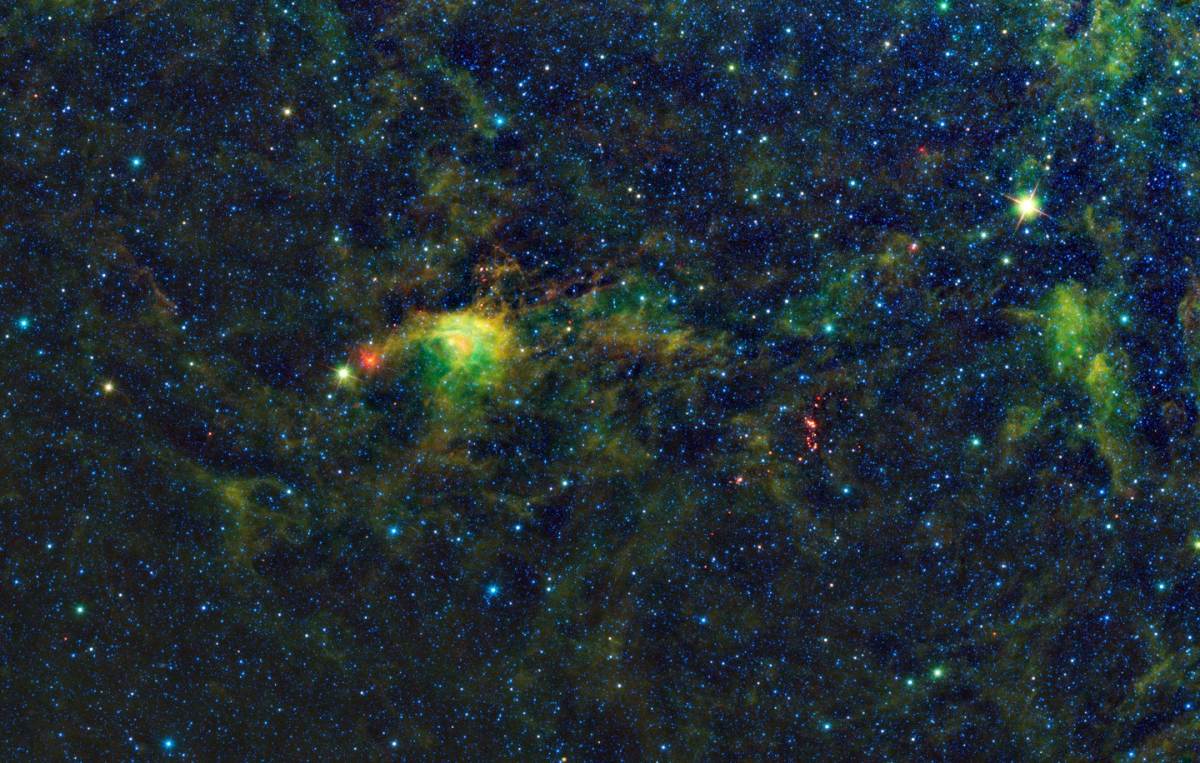
A team of international researchers, including Ryan Fortenberry, an astrochemist at the University of Mississippi; Ralf Kaiser, a professor of chemistry at the University of Hawaii at Mānoa; and computational chemist Samer Gozem of Georgia State University, has published its findings in the journal Nature. Their work points to a potential hiding spot for the missing sulfur: interstellar ice. "The observed amount of sulfur in dense molecular clouds is less, compared to predicted gas-phase abundances, by three orders of magnitude," Kaiser said.
The researchers propose that in the frigid depths of space, sulfur atoms bind together on icy dust grains to form complex molecules. These molecules, which are locked in a solid state, include both eight-atom rings called 'octasulfur crowns' and long chains of sulfur atoms known as 'polysulfanes.' This theory suggests that the majority of sulfur isn't missing at all; it is just 'locked' in a solid form that's difficult to detect with traditional methods.
Fortenberry explained that this could be why telescopes like the James Webb Space Telescope have trouble finding it. "When [you try to get a specific signature at a specific wavelength] for sulfur, it's out of whack, and we don't know why there isn't enough molecular sulfur," he said. "What this work is showing is that the most common forms of sulfur that we already know about are probably where the sulfur is hiding." The study provides a new roadmap for astronomers. By identifying these specific, stable sulfur molecules, researchers can now search for them as they sublimate (turn from solid to gas) in warmer, star-forming regions, using radio telescopes.
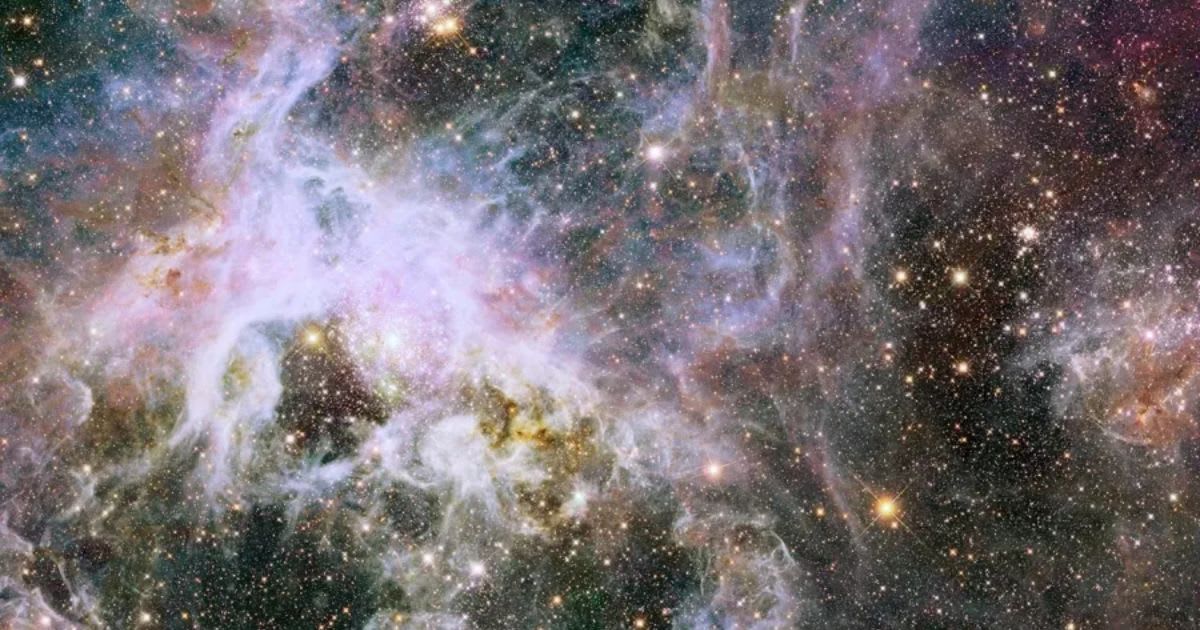
"Laboratory simulations of interstellar conditions, such as this study, discover possible inventories of sulfur–containing molecules that can be formed on interstellar ices," Kaiser explained. "Astronomers can then utilize the results and look for these polysulfane molecules in the interstellar medium." This breakthrough could have far-reaching implications, not just for astronomy but for chemistry here on Earth. As Fortenberry notes, "If we gain a better understanding of what the chemistry of sulfur can do, the technological commercialization that can come from that can only be realized with a foundation of fundamental knowledge."
Adding to these findings, a team of astronomers from Radboud University's HFML-FELIX facility, in 2024, identified the specific "fingerprints" of sulfur rings, which could provide astronomers with a new tool for their search, according to Radboud University. Their results, published in Nature Communications, offer a crucial piece of the puzzle by providing a way to detect these sulfur molecules in space.
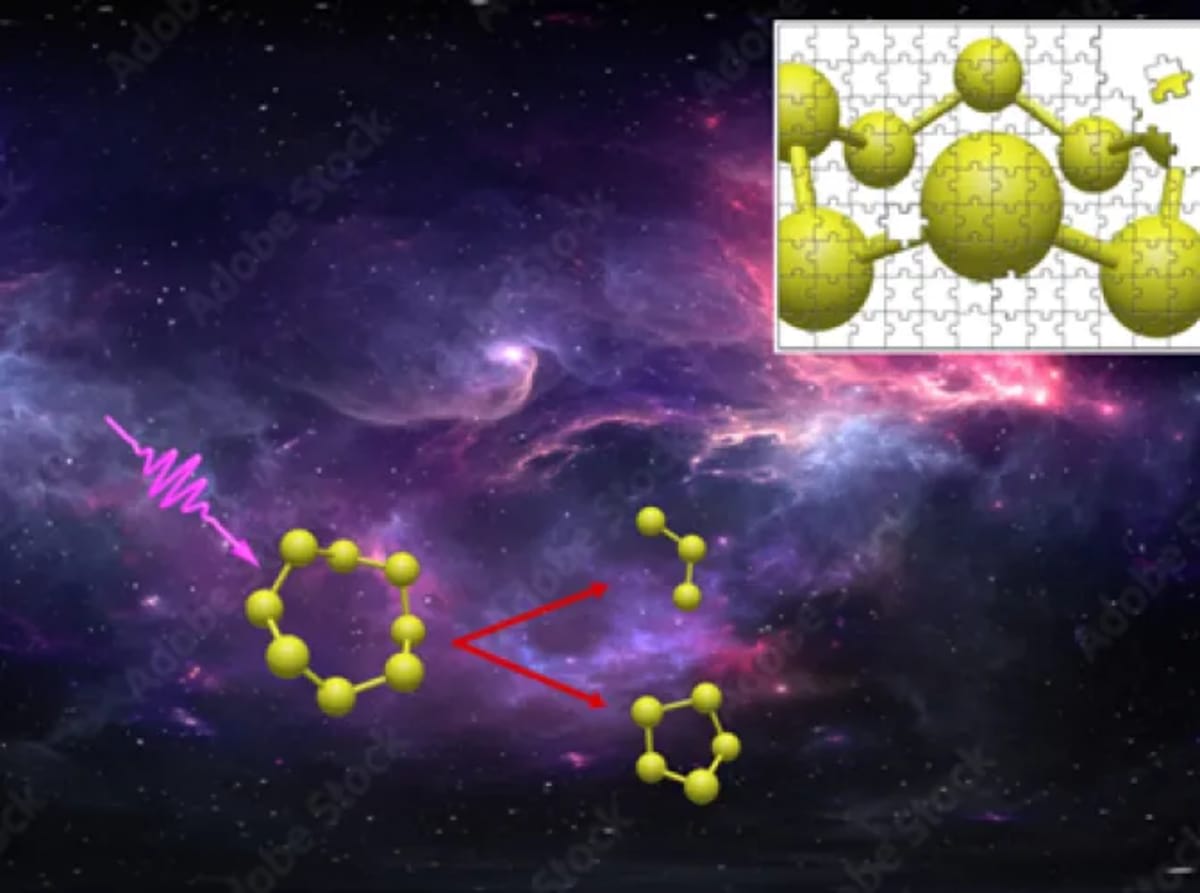
By unveiling these unique spectral signatures, the research may help explain how sulfur traveled from the dense, dark interstellar clouds where stars are born to nascent planetary systems like our own. This discovery provides astronomers with new targets and a specific methodology to use instruments like the James Webb Space Telescope to finally solve the long-standing mystery of cosmic sulfur.