Artemis II astronauts Christina Koch and Jeremy Hansen complete manual piloting demo
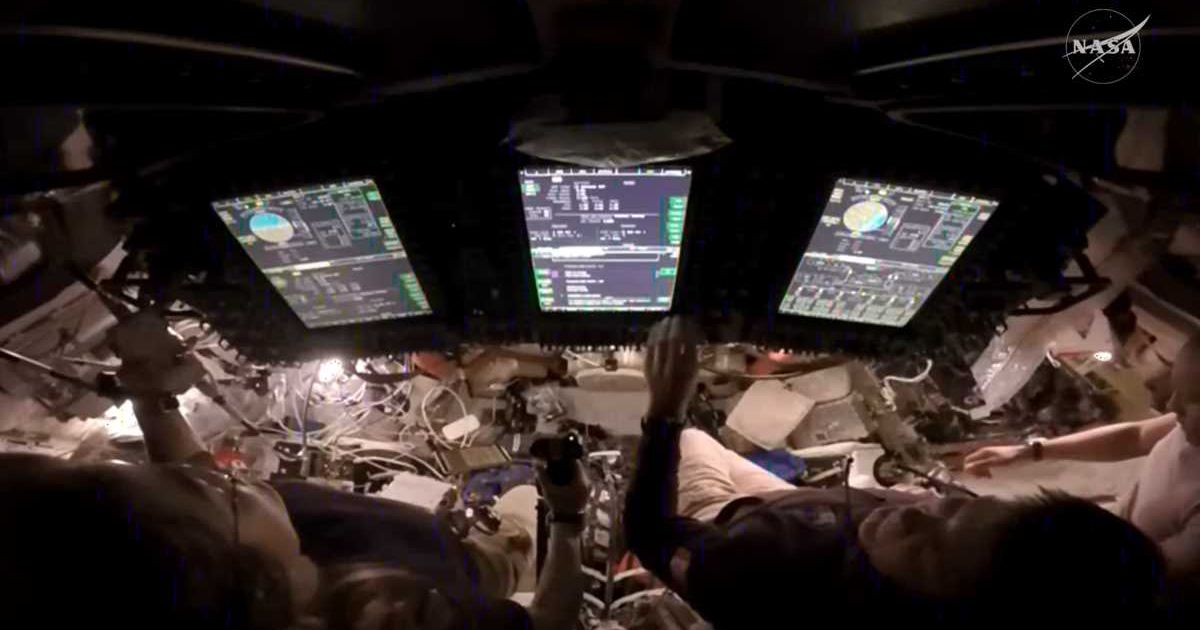
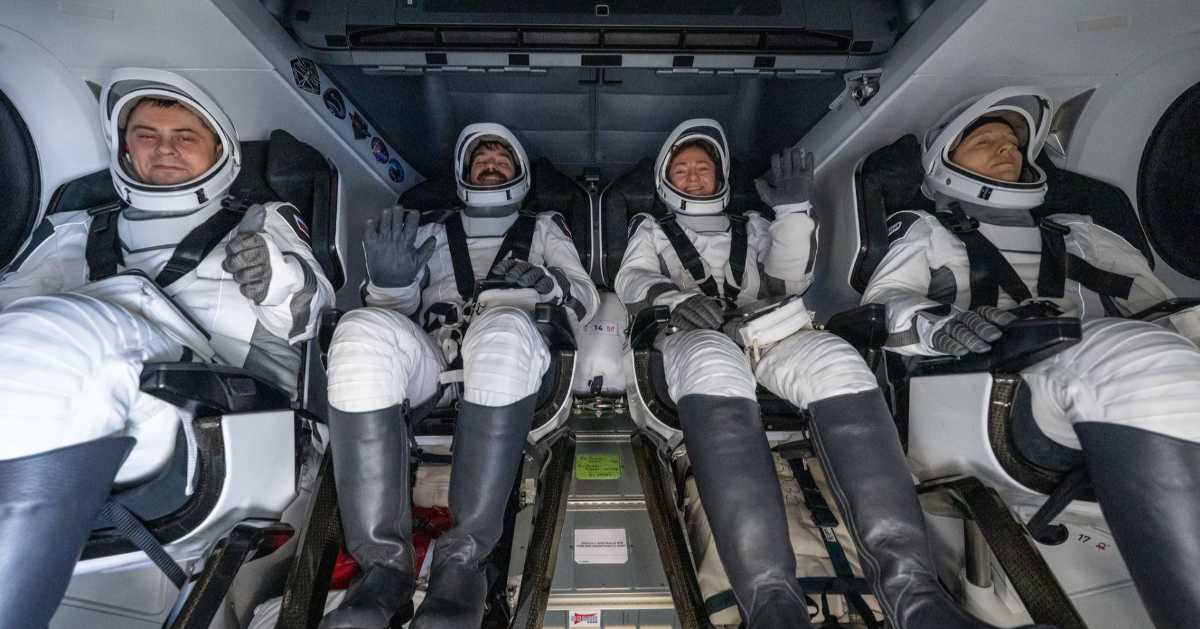
Astronaut Christina Koch of NASA and the Canadian Space Agency’s Jeremy Hansen have successfully piloted the Orion spacecraft manually during the Moon-bound Artemis II mission. The 41-minute-long demonstration commenced at 9:09 pm EDT on April 4, 2026. According to NASA, the demonstration of being able to manually pilot Orion spacecraft was conducted to test the six degrees of freedom and three degrees of freedom thruster modes of Orion, and manifested additional data for engineers at NASA to study. Alongside pilot Victor Glover, who had previously taken manual controls during the proximity operations demonstration test, the pair took turns to control the spacecraft’s thrusters.
Speaking during the NASA news conference held on Saturday, Judd Frieling, the ascent flight director for Artemis II, mentioned this demonstration. “Later today, we will do the manual piloting demo part 2 which will test the three degrees of freedom modes of the capsule, so we can get detailed information on how those will behave." The two modes, as the name suggests, make use of the Reaction Control System (RCS) thrusters on board Orion to manage its movement and orientation along different axes. Both thruster modes have advantages and disadvantages over one another. While six degrees of freedom offers more control, with attitude control and translation movement happening simultaneously, three degrees of freedom can be more fuel efficient.
The first test in this series of three first featured the aforementioned proximity operations demonstration on April 1, 2026, that referenced the Interim Cryogenic Propulsion Stage in Earth orbit to approach and retreat the upper stage of Space Launch System. It made use of a rotational hand controller and one which controls translational motion. After this recent second test of Orion’s handling, another one is on the schedule for day 8 of the mission. This time commander Reid Wiseman will be joined by Glover to demonstrate the flying capabilities of Orion, enriching the data available to engineers here on Earth. These tests are central to this mission’s place in NASA’s long-term phased approach to establish a lunar settlement, the Moon Base. To do so, the agency is looking to refine Orion’s handling for future docking with human landing systems, which are being supplied by NASA’s industry partners in Blue Origin and SpaceX.
Artemis II just hit the "two thirds" mark of the journey to the Moon.
— NASA Artemis (@NASAArtemis) April 5, 2026
During Flight Day 4, the astronauts aboard Orion went over plans to study the Moon during their upcoming lunar flyby and are currently practicing manually controlling the spacecraft. pic.twitter.com/TU0ftZAekT
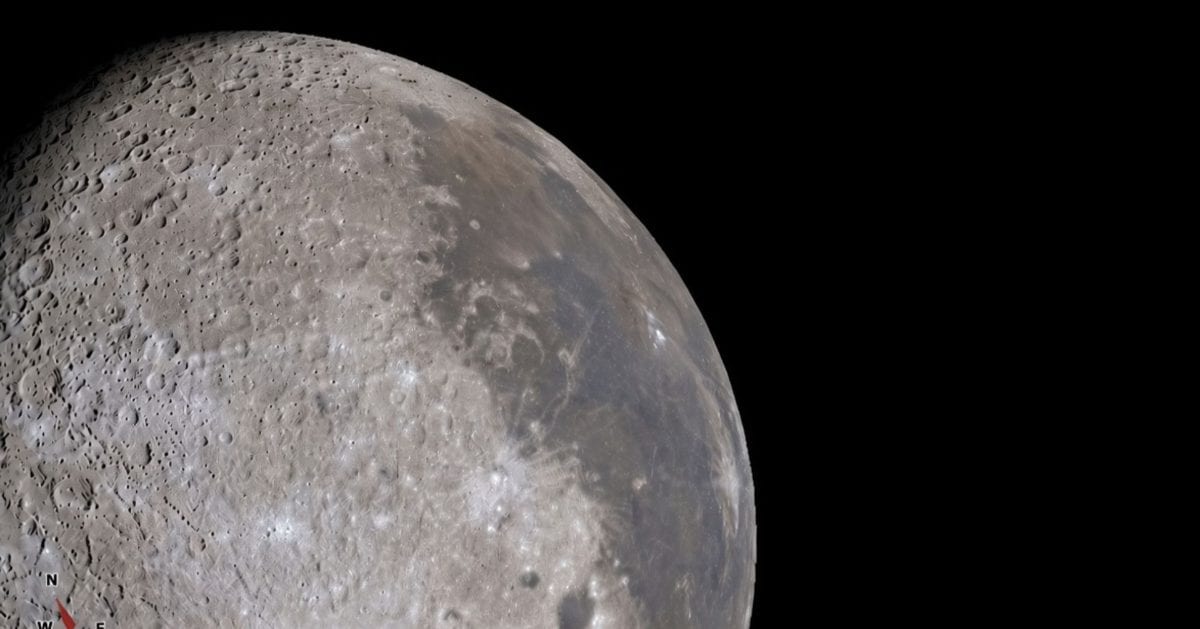
Looking forward, the flight crew of Artemis II has the much anticipated lunar flyby on the horizon. On day 6 of the mission, i.e. on Monday, April 6, 2026, the crew will be fly by the Moon over a period of six hours, starting from 2:45 pm EDT. Their main objective during this time would be to observe the lunar surface, from a distance as little as 4,600 miles at its closest. To be able to do the prospecting efficiently, the Artemis II lunar science team sent a list of surface features for the crew to capture and perform analyses of. Once this happens, the spacecraft will bring the astronauts home, maintaining its free return trajectory ever since the Translunar Injection (TLI) burn.
More on Starlust
Artemis II: Mission control cancels first outbound trajectory correction burn. Here's why
'There is nothing normal about this': Artemis II astronauts get candid as they head for the Moon