A unique system of four stars reveals a series of eclipses astronomers have never seen before
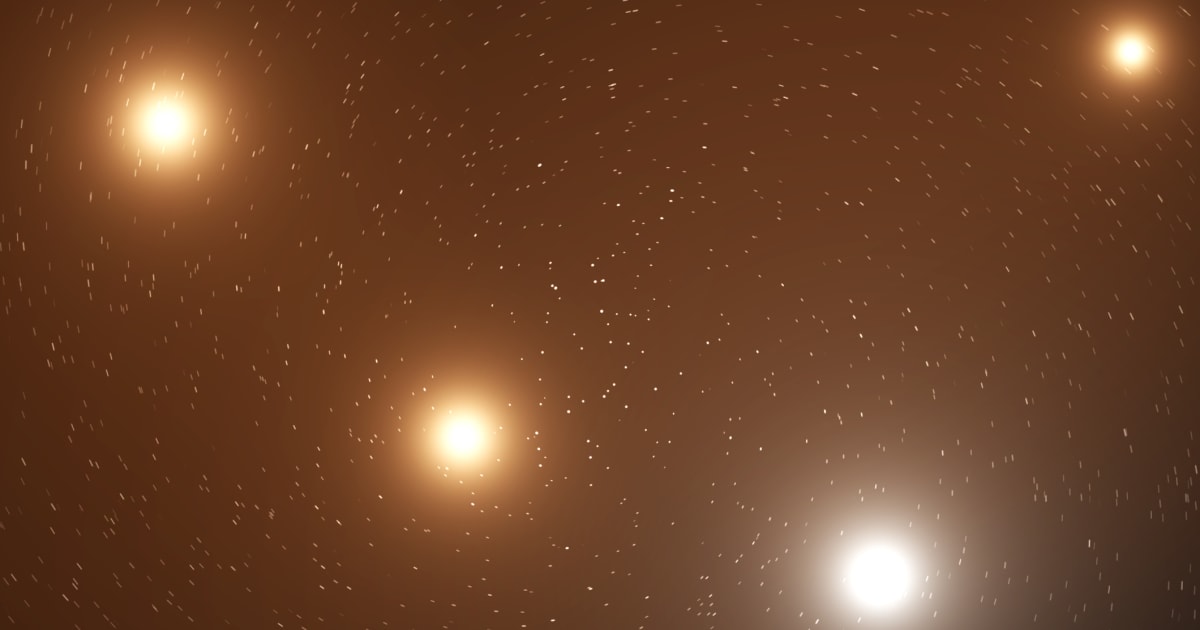
When astronomers observing a distant star system saw its light dip not once, but thrice, they realised they were not looking at an ordinary eclipsing binary system, but something hitherto unseen. Described as a doubly eclipsing system in a new study available on the preprint arXiv server, TIC 433545934 comprises four stars arranged in two pairs, and is unlike any star system observed before.
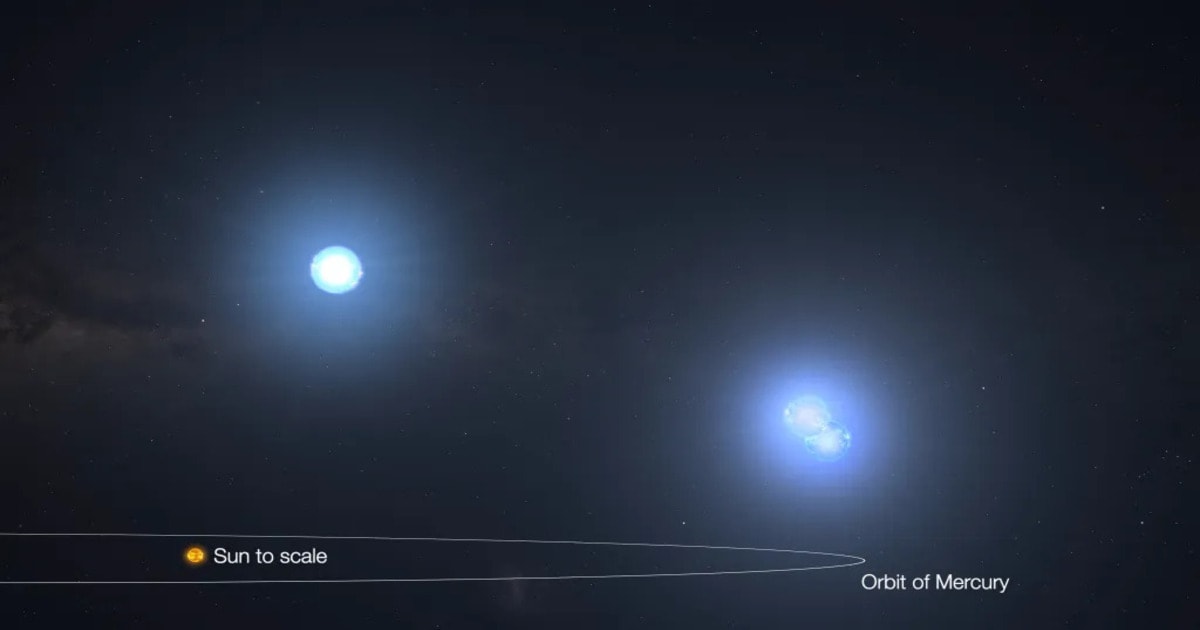
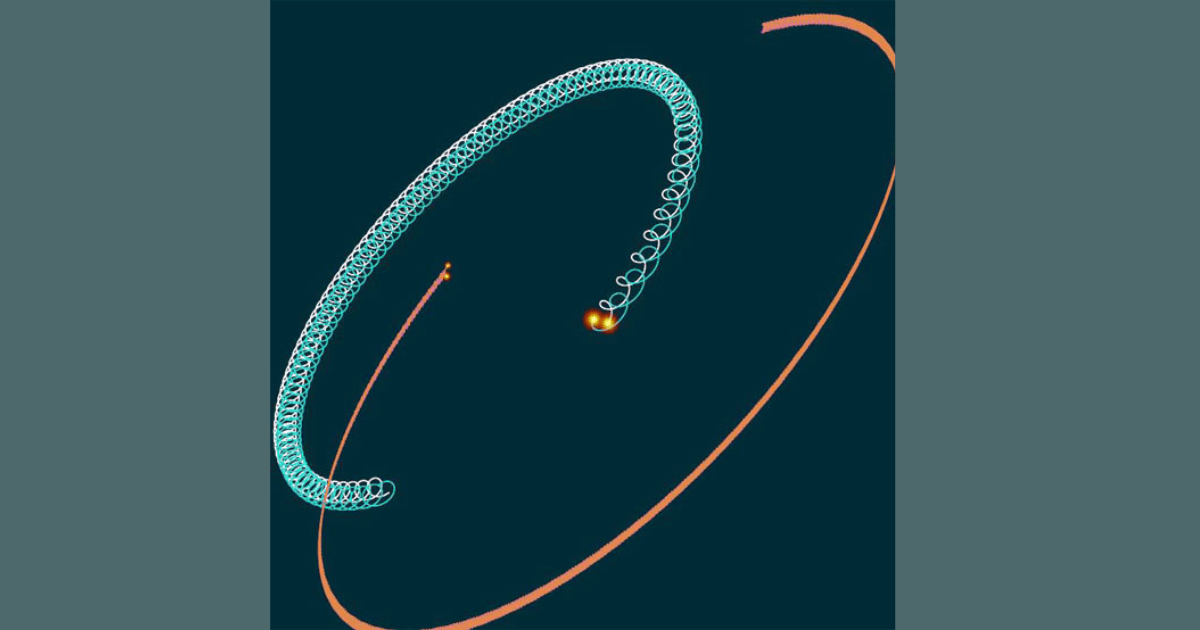
A simple way to understand this complex four-star system is to first look at an eclipsing binary system where two stars orbit each other and periodically pass in front of each other from our point of view. However, unlike ordinary eclipsing binaries, TIC 433545934 is instead a "2+2" hierarchical quadruple system containing not one, but two such eclipsing binary systems that orbit a common center of mass. Under this rare arrangement, one pair of stars or a binary, sometimes passes in front of the other pair, creating an additional "outer" eclipse wherein one binary system physically eclipses the other.
Understanding the four-star system TIC 433545934
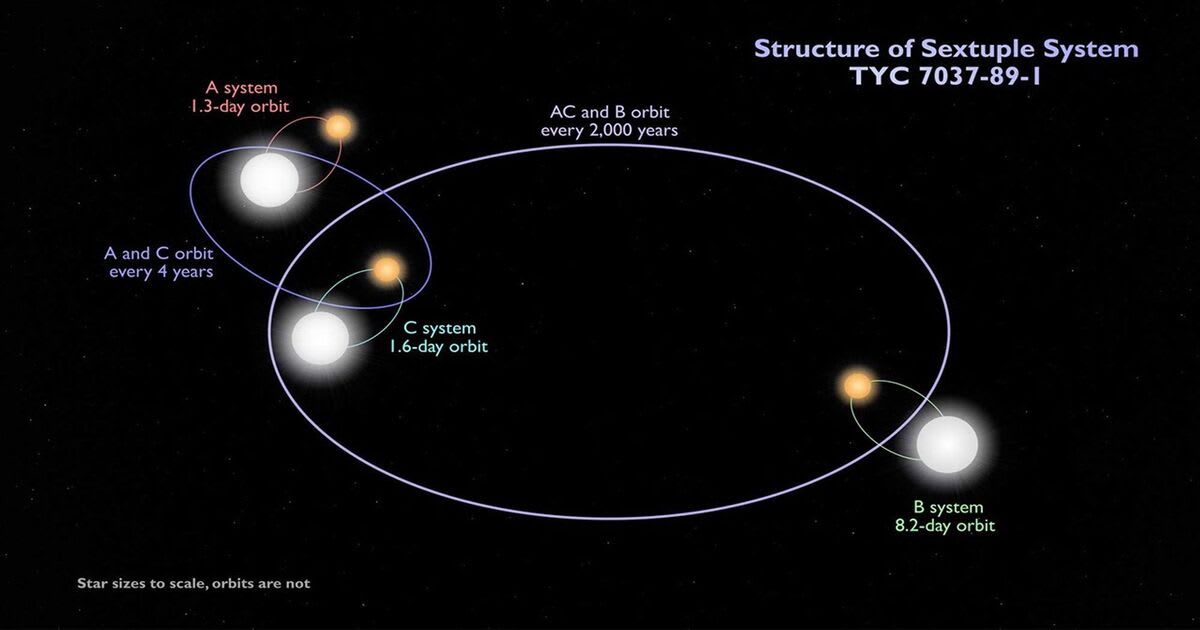
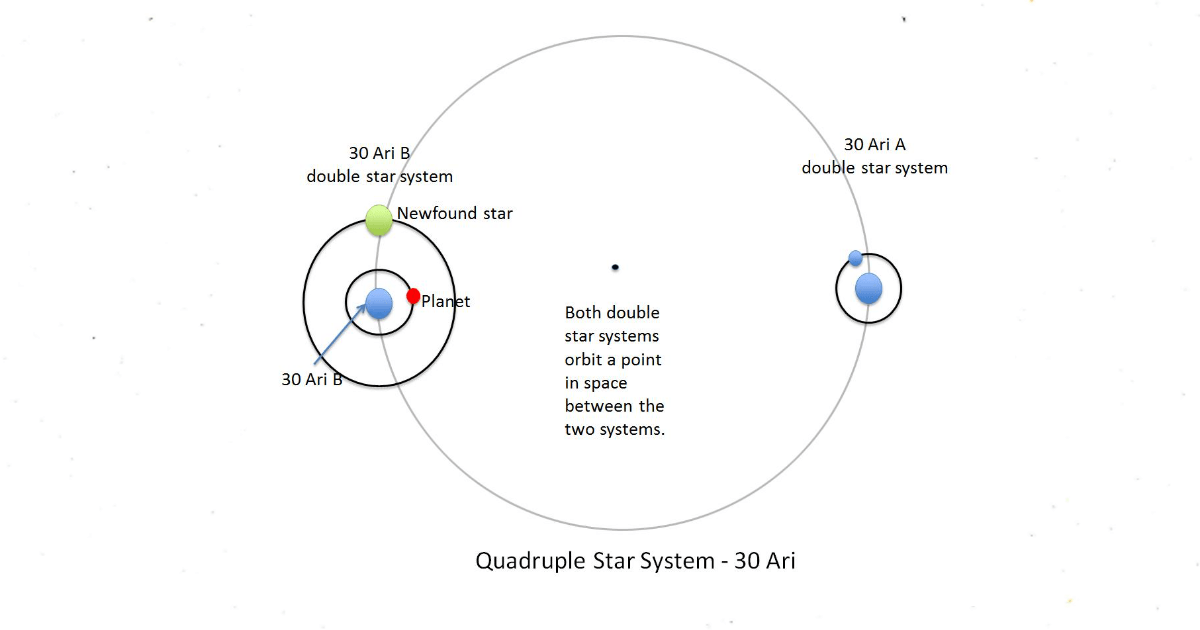
The arrangement of stars seen in TIC 433545934 is complex. The four stars in the system are arranged in two pairs, and in each of these pairs, two stars orbit each other. In the first pair, the two stars orbit each other in 2.07 days, while the orbital period of the second pair is 1.41 days. In addition, these two pairs or binaries, orbit a common center of mass (or barycenter), creating a larger outer orbit that lasts 224.5 days. As the two pairs move along this outer orbit, they can pass in front of the other, obscuring it from our point of view and creating the outer eclipse.
What makes the system special?
While 2+2 quadruple systems have been found before, TIC 433545934 is the first one where an outer eclipse caused by two orbiting, eclipsing binaries has been observed. This means the stars can produce eclipses within their own pairs, while one pair can also pass in front of the other pair.
Researchers found evidence of this extra eclipse in observations from NASA's TESS (Transiting Exoplanet Survey Satellite) space telescope. The TESS data showed an unusual event where the light from the system dipped three times in rapid succession, showing that the stars of one binary pair were transiting across the stars of the other.
What did TESS see?
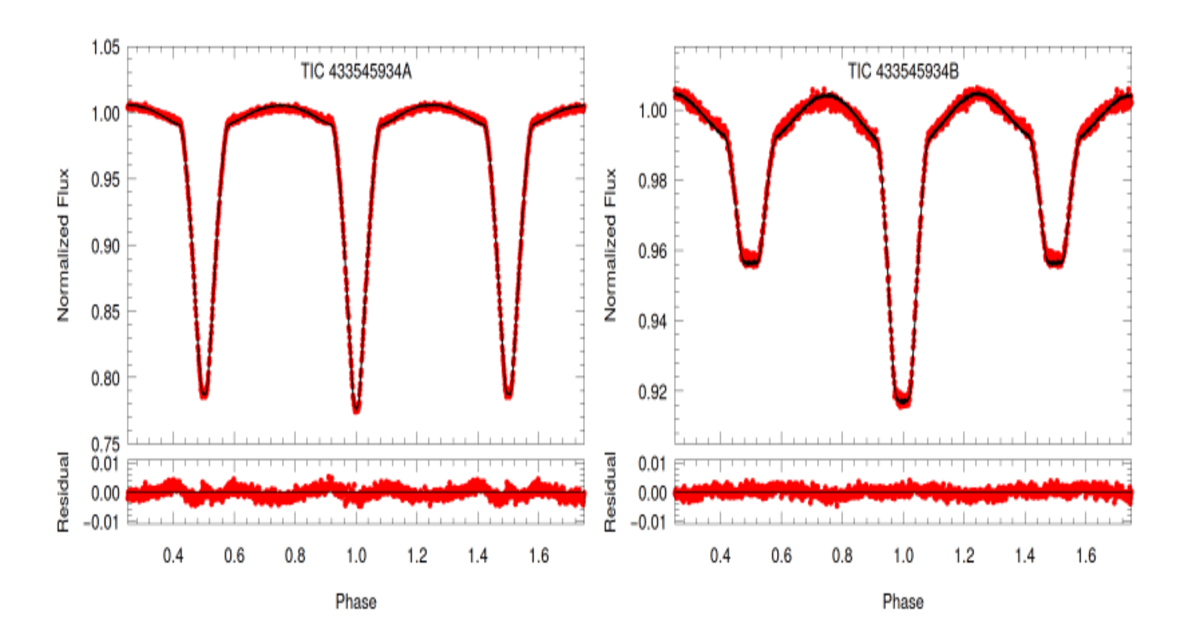
TESS watched TIC 433545934 several times over the years and recorded how its brightness changed. During a 27-day period when TESS observed one part of the sky (called Sector 38) to look for new planets, scientists observed a difference in the system's brightness. They noticed that the light dipped three times during one event.
The dips happened as the stars passed in front of one another. The two stars in each pair can block each other's light as they orbit one another. But here, there was another possibility. One of the pairs could also move in front of the other pair, causing an extra dip in the system's overall brightness.
To check if this was a regular occurrence, the researchers looked at observations from ASAS-SN and ATLAS—networks of automated telescopes that regularly observe the night sky—and found that the data showed more of these extra eclipses. The researchers found that the extra eclipse occurs only once as the two pairs complete their larger orbit, because the outer orbit is highly elongated and only one pair ever passes in front of the other. Along with the TESS observations, this gave them more evidence that the two binary pairs are not separate systems but are connected as one four-star system.
Why is this discovery important?
Stars can have more than one companion, so astronomers have found systems with three, four or even more stars. But when several stars are moving together, it can be difficult to work out how they affect one another. TIC 433545934 gives astronomers a near-perfect way to look at this because the stars keep passing in front of each other.
Each time that happens, the brightness of the system changes. By following these changes, scientists can work out more about the movement of the stars and compare it with what they see in other multiple-star systems.
More on Starlust:
Researchers discover the most compact 3+1-type quadruple star system till date