A supermassive black hole dimmed its galaxy 20-fold—in just 20 years
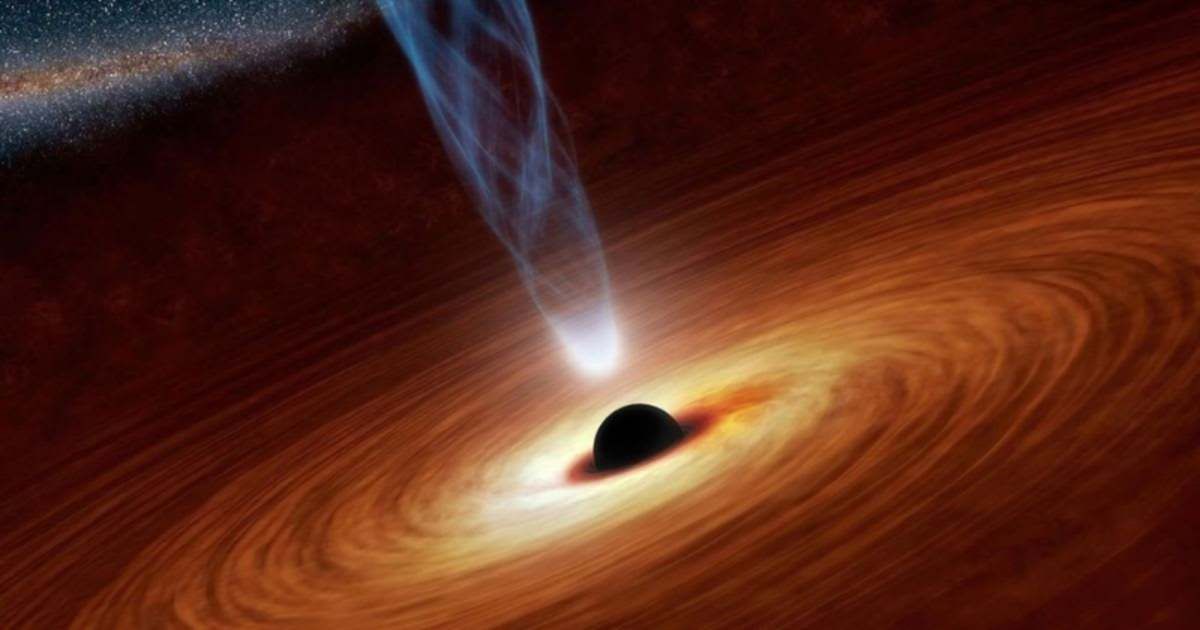
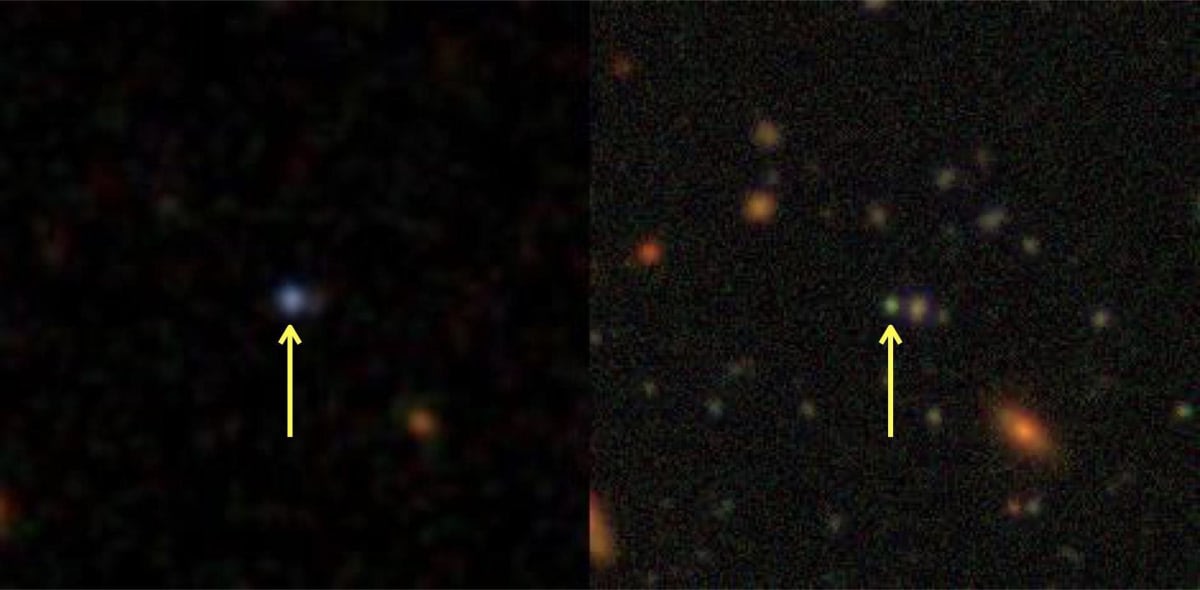
J0218−0036, a galaxy about 10 billion light-years away, has experienced a massive dip in its brightness, which has shrunk to 1/20th of its original level. And it all happened over a short span of about 20 years. An international research team, consisting of researchers from the Chiba Institute of Technology (CIT) and other institutes around the world, has linked the fading to a rapid decrease in the gas flow into the supermassive black hole that resides at the heart of the galaxy. The discovery, published in the Publications of the Astronomical Society of Japan, shows that supermassive black holes can change significantly on timescales observable by humans. "It is fascinating that an active galactic nucleus can change its brightness so dramatically over such a short period of time, and that this fading appears to be caused by a large change in the accretion rate onto the supermassive black hole," said Tomoki Morokuma, Principal Researcher (Center for Astronomy, Chiba Institute of Technology), who led the study, in a statement.
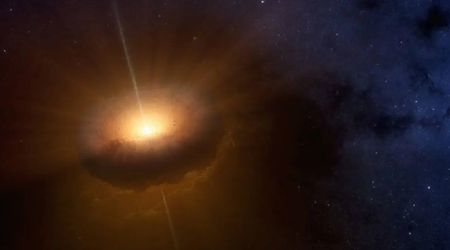
A supermassive black hole, hundreds of millions of times heavier than the Sun, sits at the center of most galaxies. Such a huge mass contributes to the strong gravity that allows it to suck in gaseous matter from the surroundings. Gas continuously falls into the black hole, creating a structure known as an accretion disk. Friction between gas molecules in the disk generates heat, resulting in high temperatures. This creates energy as well as radiation, causing the galactic center to shine brightly. Such light-emitting regions are known as active galactic nuclei (AGN).
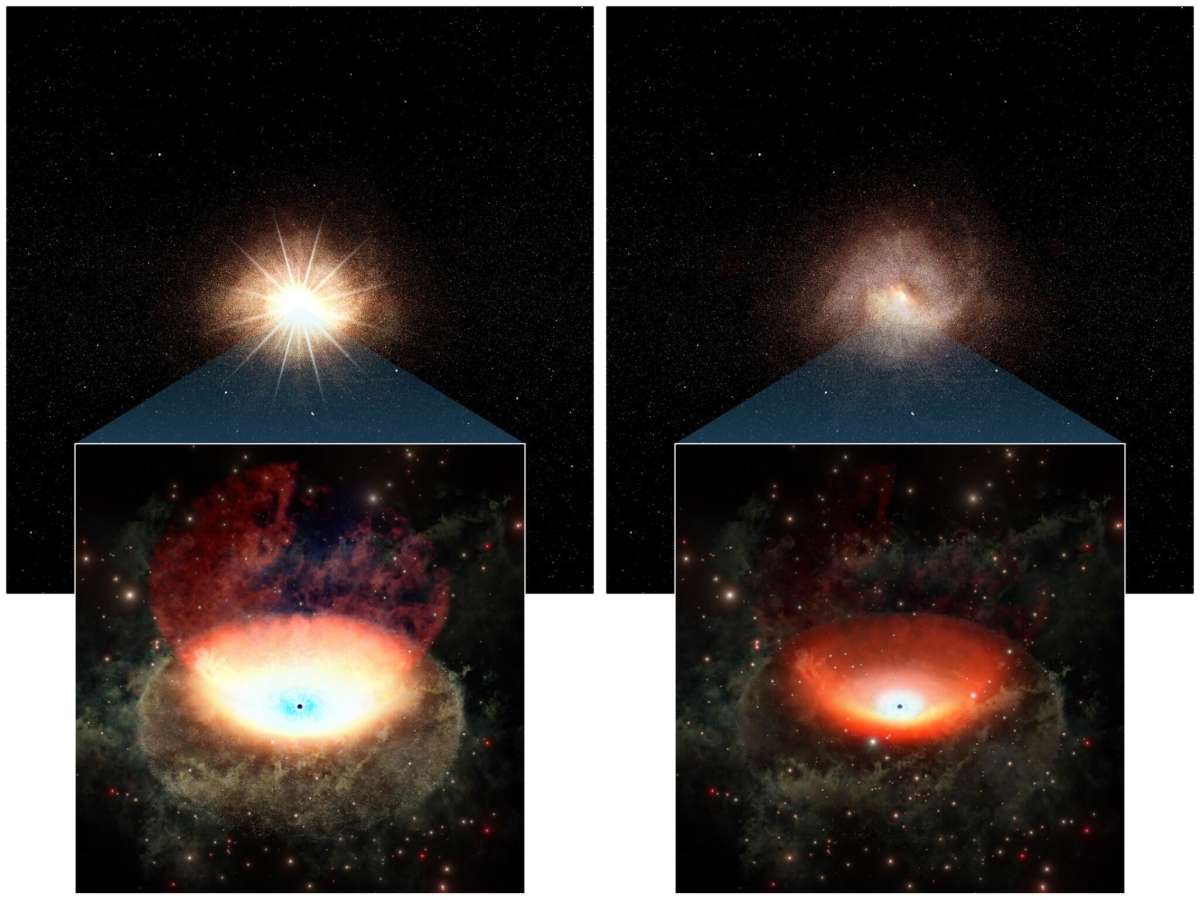
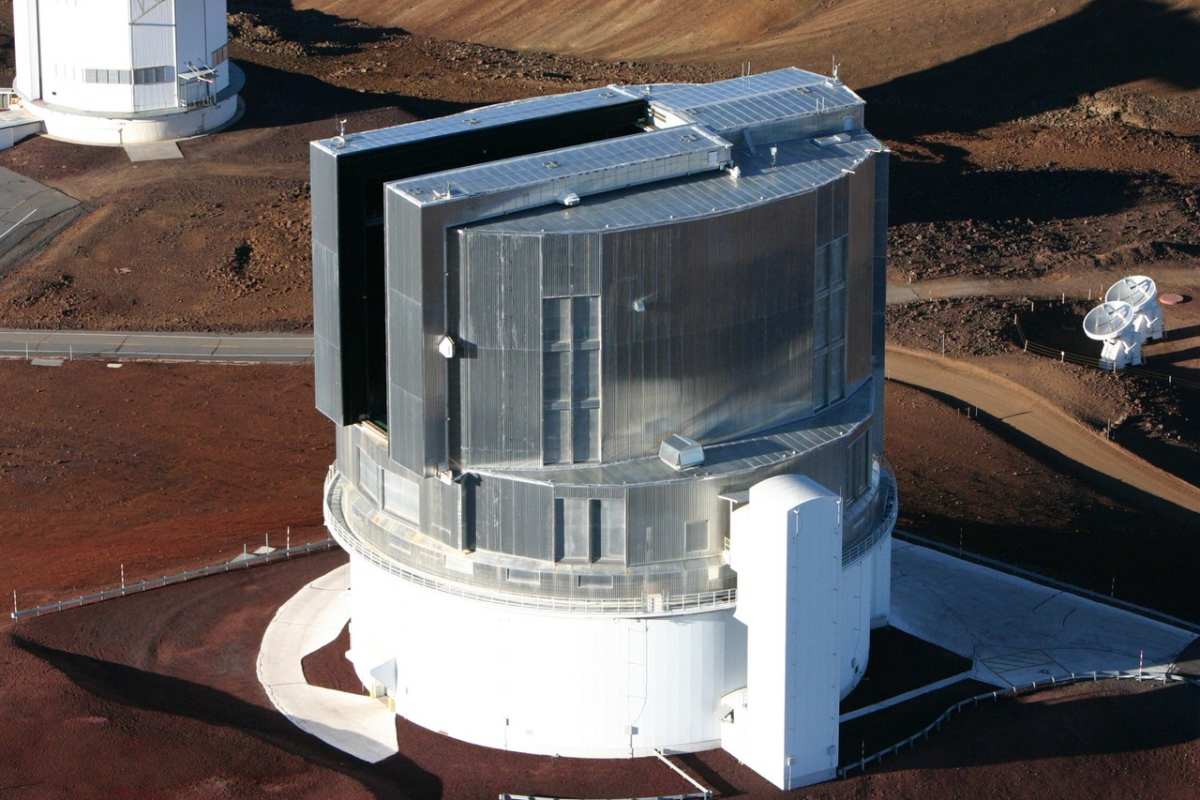
The researchers detected the huge drop in the brightness of J0218−0036 by comparing the wide field survey images provided by the Sloan Digital Sky Survey (SDSS) and the Subaru Telescope's Hyper Suprime-Cam (HSC). A galaxy dimming to 1/20th of its original brightness level is an extremely rare event, considering the ballpark for AGN brightness fluctuations is usually 30%. As a result, the international team conducted follow-up observations with the Canary Islands Telescope and imaged the galaxy in both visible and near-infrared light using the Subaru Telescope and the Keck Observatory. The team also examined archival X-ray and infrared data, including photographic plates taken about 70 years ago.
The analysis revealed that the rate of gas flow from the accretion disk into the black hole has declined. This has caused the galactic center to dim. One possible reason for the dimming could have been a cloud of dust hovering in front of the accretion disk. But the researchers ruled it out because it failed to explain the emission changes observed at wavelengths from optical to infrared. Results point toward a dramatic change in the accretion disk. However, they are still not sure about the mechanism that brought about this change. “This object shows rapid variability that cannot be explained by standard models. It provides an important test case for developing new theoretical models. We will investigate what physical conditions could reproduce the observed behavior," said co-author Toshihiro Kawaguchi of the University of Toyama, who worked mainly on the theoretical interpretation in the statement.
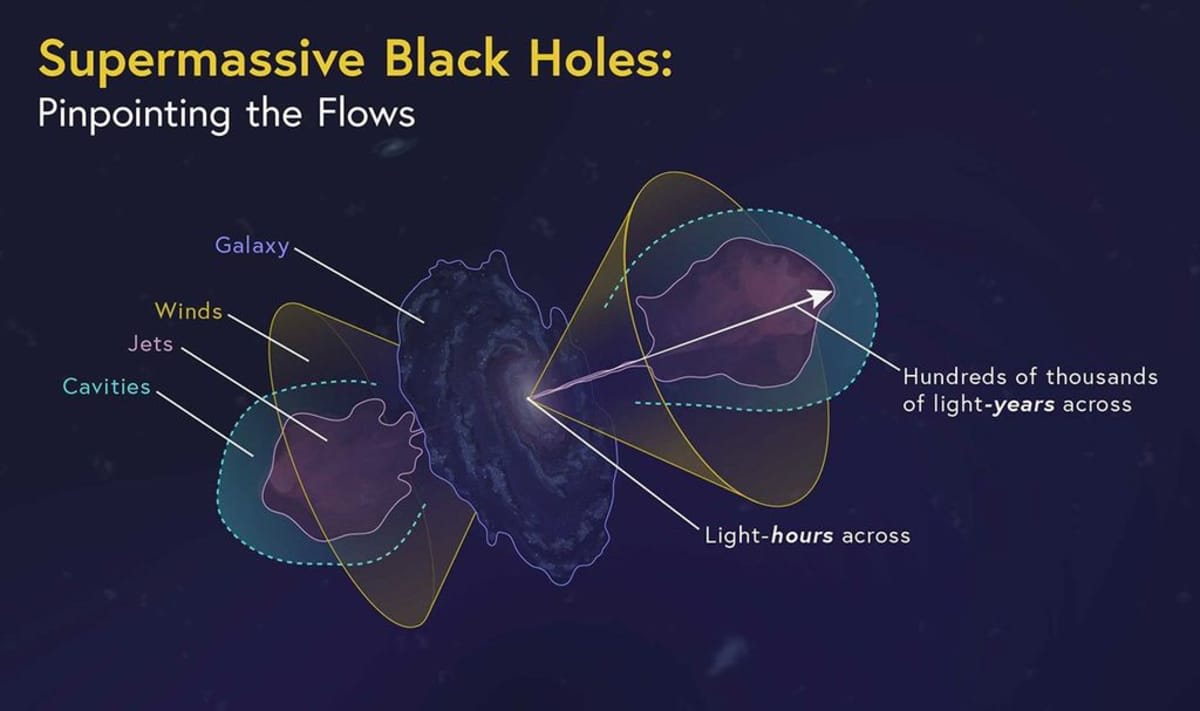
Until now, researchers thought that mass accretion onto supermassive black holes in AGN changed slowly over tens of thousands of years. The new evidence shakes up this long-established view. “Using wide-field survey data, such as those from Hyper Suprime-Cam, we hope to discover more objects like this and learn how the activity of supermassive black holes shuts down and restarts," said Morokuma.
More on Starlust
Astronomers stunned by unprecedented short and hot flares emitted by a supermassive black hole
Why don't black holes grow as fast as they once did? NASA's Chandra helps find the answer