NASA tests its most powerful electric propulsion system yet for sending astronauts to Mars
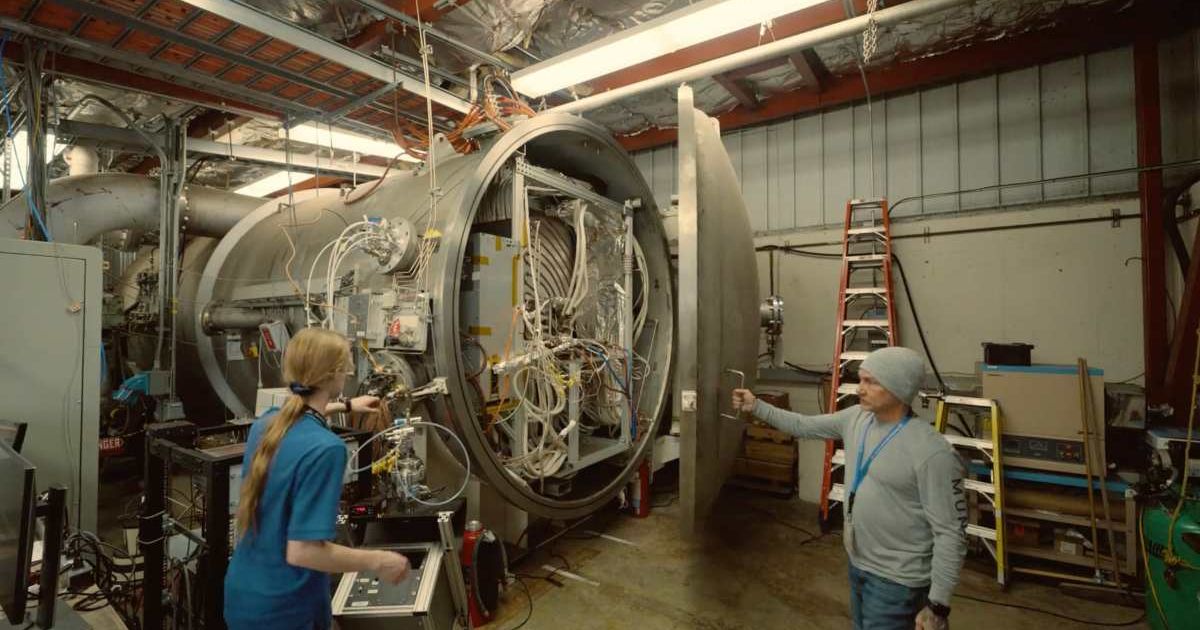
NASA's Jet Propulsion Laboratory recently achieved a major technological milestone by successfully testing a powerful new electromagnetic thruster that could eventually ferry astronauts to Mars. On February 24, 2026, a team of engineers in Southern California fired up a prototype magnetoplasmadynamic (MPD) thruster that runs on lithium metal vapor. It reached record-breaking power levels of up to 120 kilowatts, which is more than 25 times the power of the thrusters currently in use on NASA's Psyche mission. "The successful performance of our thruster in this test demonstrates real progress toward sending an American astronaut to set foot on the Red Planet," said NASA Administrator Jared Isaacman in a statement.
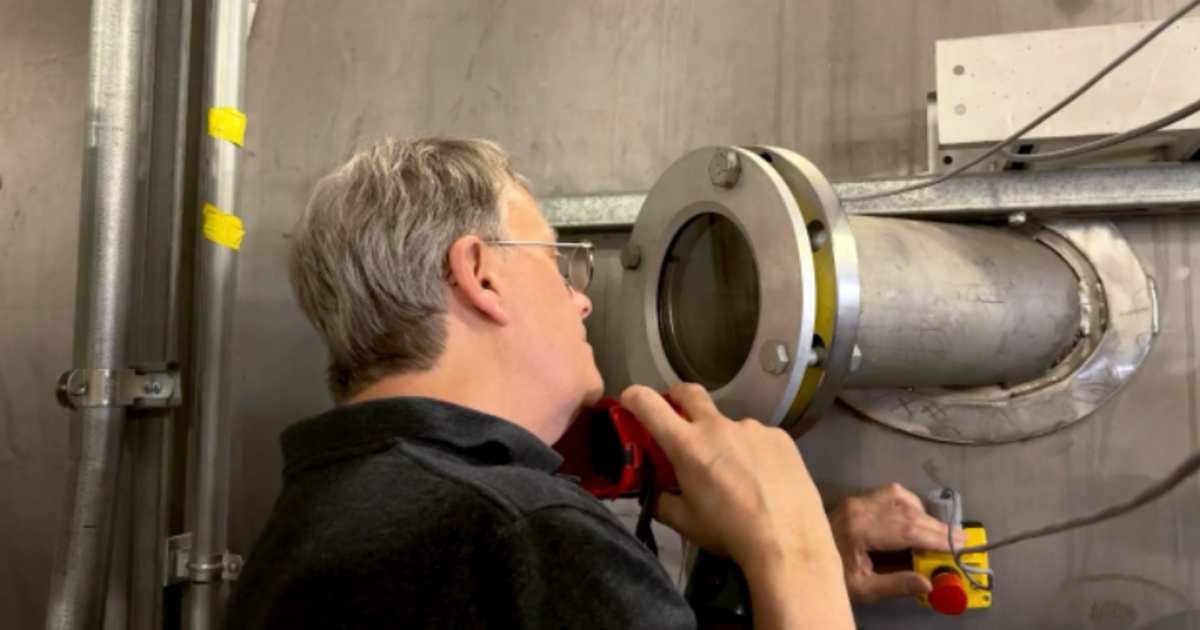
The test took place inside a specialized 26-foot-long water-cooled vacuum chamber at JPL's Electric Propulsion Lab. This is a facility uniquely designed to handle the intense heat of metal vapor propellants. During five separate ignitions, the thruster’s internal tungsten electrode glowed a brilliant white, reaching temperatures exceeding 5000 degrees Fahrenheit. James Polk, a senior research scientist at JPL, who viewed the test through a small portal in the chamber, noted a vibrant red plume as the thruster came to life, confirming that the hardware could function at extreme power levels. “It’s a huge moment for us because we not only showed the thruster works, but we also hit the power levels we were targeting," said Polk, who has spent decades researching this technology. "And we know we have a good testbed to begin addressing the challenges to scaling up."
The primary advantage of the lithium-fed system is its extreme efficiency. Electric propulsion can use up to 90% less propellant than the chemical rockets used for traditional launches. While the current electric thrusters on robotic missions like Psyche provide a steady force that can eventually accelerate a spacecraft to 124,000 mph, they lack the power needed to carry payloads associated with crewed flights to Mars. The MPD thruster aims to close this gap by combining high power with efficient fuel consumption. “At NASA, we work on many things at once, and we haven’t lost sight of Mars," Isaacman noted, highlighting that the 120 kilowatts generated is just a part of strategic investments meant to enable the “next giant leap” for humanity.

Despite the successful first firing, engineering hurdles remain. To support a crewed mission, NASA estimates that a spacecraft would require between 2 and 4 megawatts of total power. This would necessitate multiple MPD thrusters working in unison, operating for more than 23,000 hours. The upcoming development phases will focus on scaling this technology so as to reach power levels between 500 kilowatts and one megawatt per thruster. Because these engines operate at such intense temperatures, proving that the internal components can withstand the heat over thousands of hours of continuous use will be a central focus for the researchers at JPL, Princeton University, and NASA’s Glenn Research Center, who have been working on this capability for over two years.
This thruster technology is being developed as a critical component of a larger nuclear electric propulsion program funded by NASA's Space Nuclear Propulsion project since 2020. The goal is to eventually pair these high-power thrusters with a nuclear power source. Such a combination would drastically reduce the launch mass of a spacecraft, making it feasible to carry the heavy supplies and equipment on crewed missions to Mars. While the recent test at JPL focused specifically on the electric propulsion system, this work is one of five vital technology elements being managed at the Marshall Space Flight Center. NASA also has plans to build efficient sources of power for long-duration missions on the Moon, with the European Space Agency also looking at lasers as a means of propulsion. All of this is to ensure that future astronauts have the reliable, efficient, and high-speed transportation necessary to explore the solar system.
More on Starlust
NASA's Skyfall helicopters to travel to Mars aboard '1st nuclear-powered interplanetary spacecraft'
China and Russia sign agreement for lunar nuclear power station, aim to outpace U.S. moon efforts