NASA’s Nancy Grace Roman Telescope: SpaceX shares glimpse of Falcon Heavy at the hangar ahead of August 30 launch

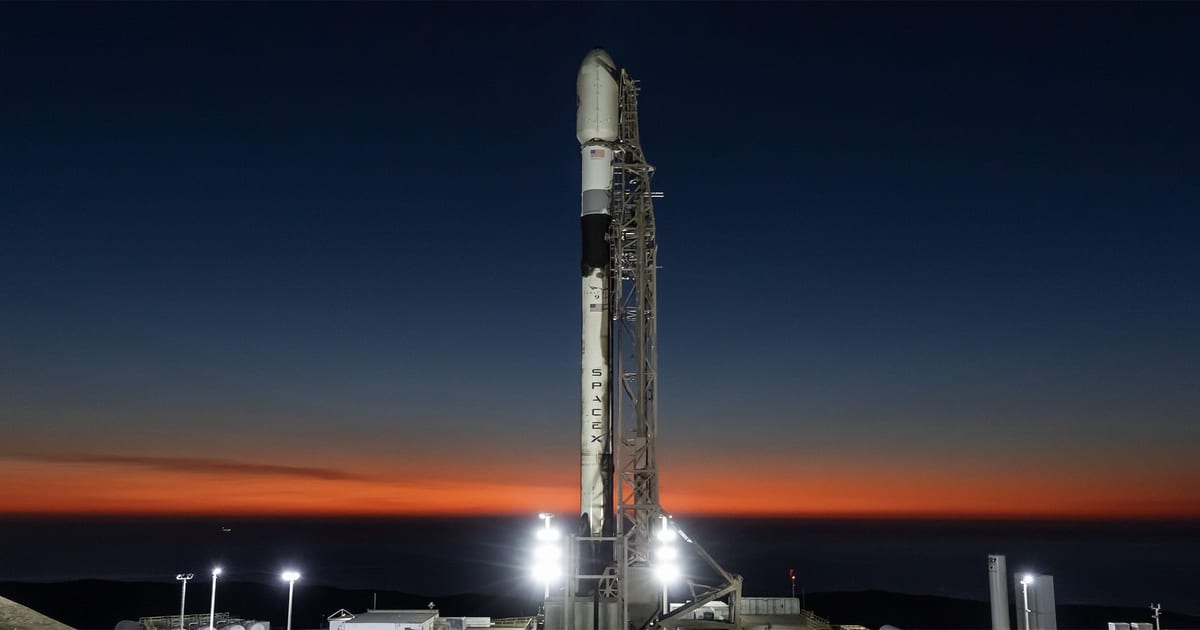
We are just days away from the launch of NASA’s powerful new Nancy Grace Roman Space Telescope that is set to revolutionize the study of the dark universe. The observatory is scheduled to launch at 7:26 am EDT on August 30 atop SpaceX’s Falcon Heavy rocket from the Kennedy Space Center (KSC) in Florida. On Wednesday, SpaceX shared a glimpse of the rocket, which has arrived at the hangar at pad 39A at the KSC, hinting it is on track for launch this Sunday.
Falcon Heavy in the hangar at pad 39A in Florida ahead of Sunday’s launch of @NASA’s Nancy Grace Roman Space Telescope pic.twitter.com/Dvu5XnVxKX
— SpaceX (@SpaceX) August 26, 2026
“Falcon Heavy in the hangar at pad 39A in Florida ahead of Sunday’s launch of NASA’s Nancy Grace Roman Space Telescope,” SpaceX posted on X with visuals of the triple booster rocket.
The Falcon Heavy is one of the world’s most powerful rockets in existence. Its 27 Merlin engines on three boosters can generate more than 5 million pounds of thrust at liftoff, allowing it to lift nearly 64 metric tons (141,000 lbs) to orbit. Launching the Roman telescope will be its 13th mission to date and the fourth under NASA’s Launch Services Program after Psyche, GOES-U (Geostationary Operational Environmental Satellite U), and Europa Clipper.
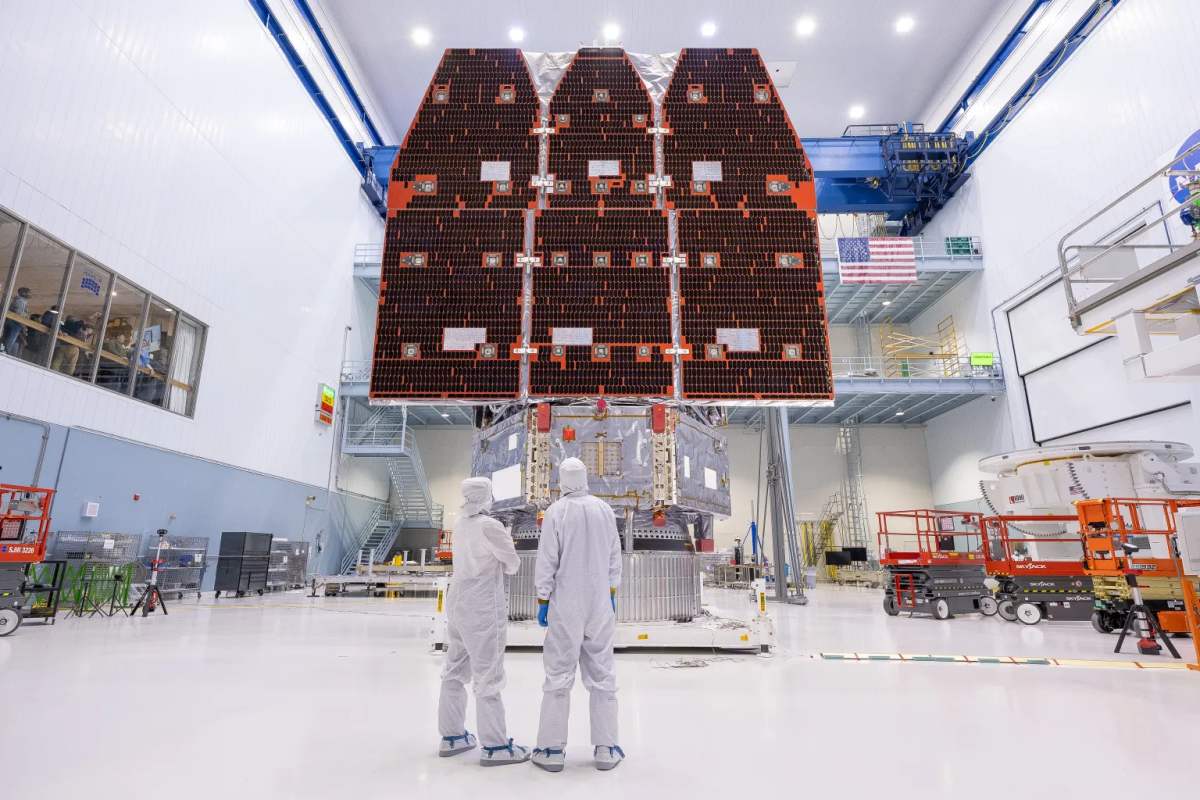
On Tuesday, NASA updated that the telescope had arrived at KSC and was shipped to the hangar encapsulated in Falcon Heavy’s payload fairing. It will soon be mated with the rocket, and teams at NASA and SpaceX will host a launch readiness review to conduct a final “go/no go” poll on August 28 before committing to the launch.
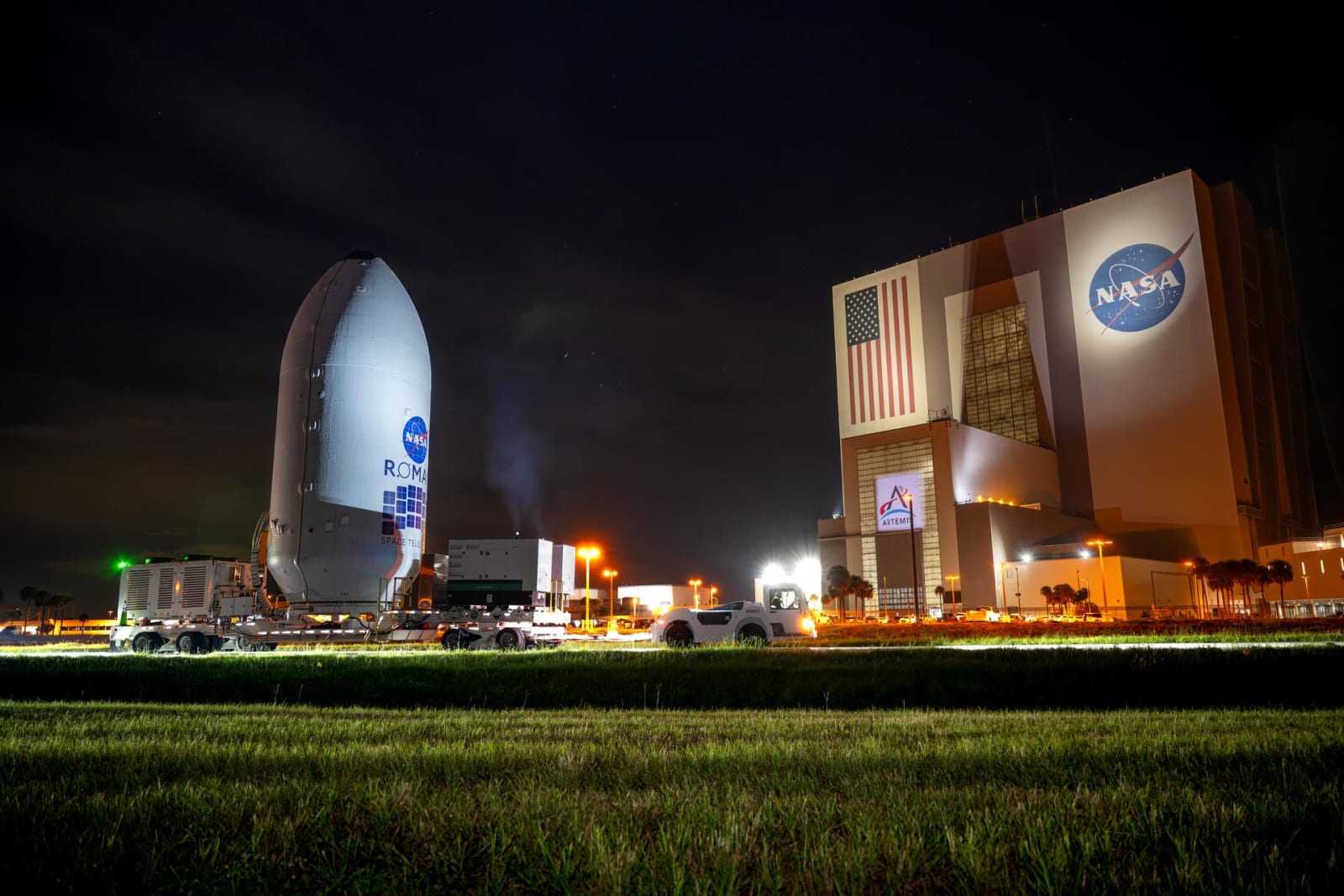
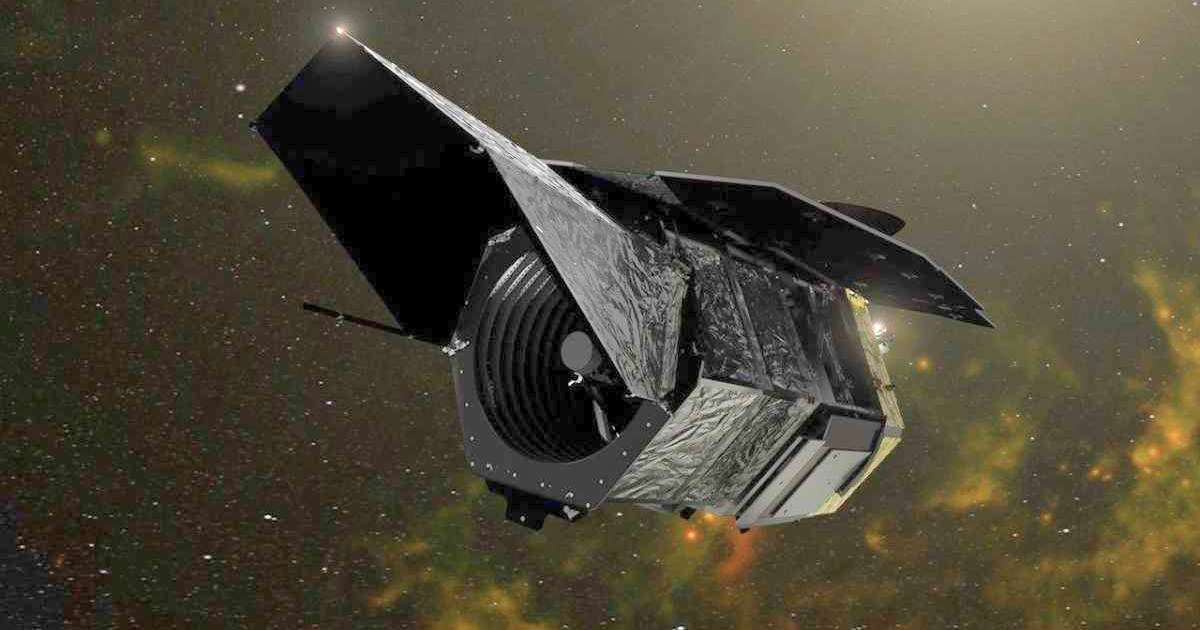
The Roman telescope is launching nine months ahead of schedule in its five-year primary mission—with a potential five-year extension (10 years in total). It will operate at the second Earth-Sun Lagrange point, which is approximately 930,000 miles (1.5 million kilometers), in order to carry out a large-scale sky survey without any obstructions.
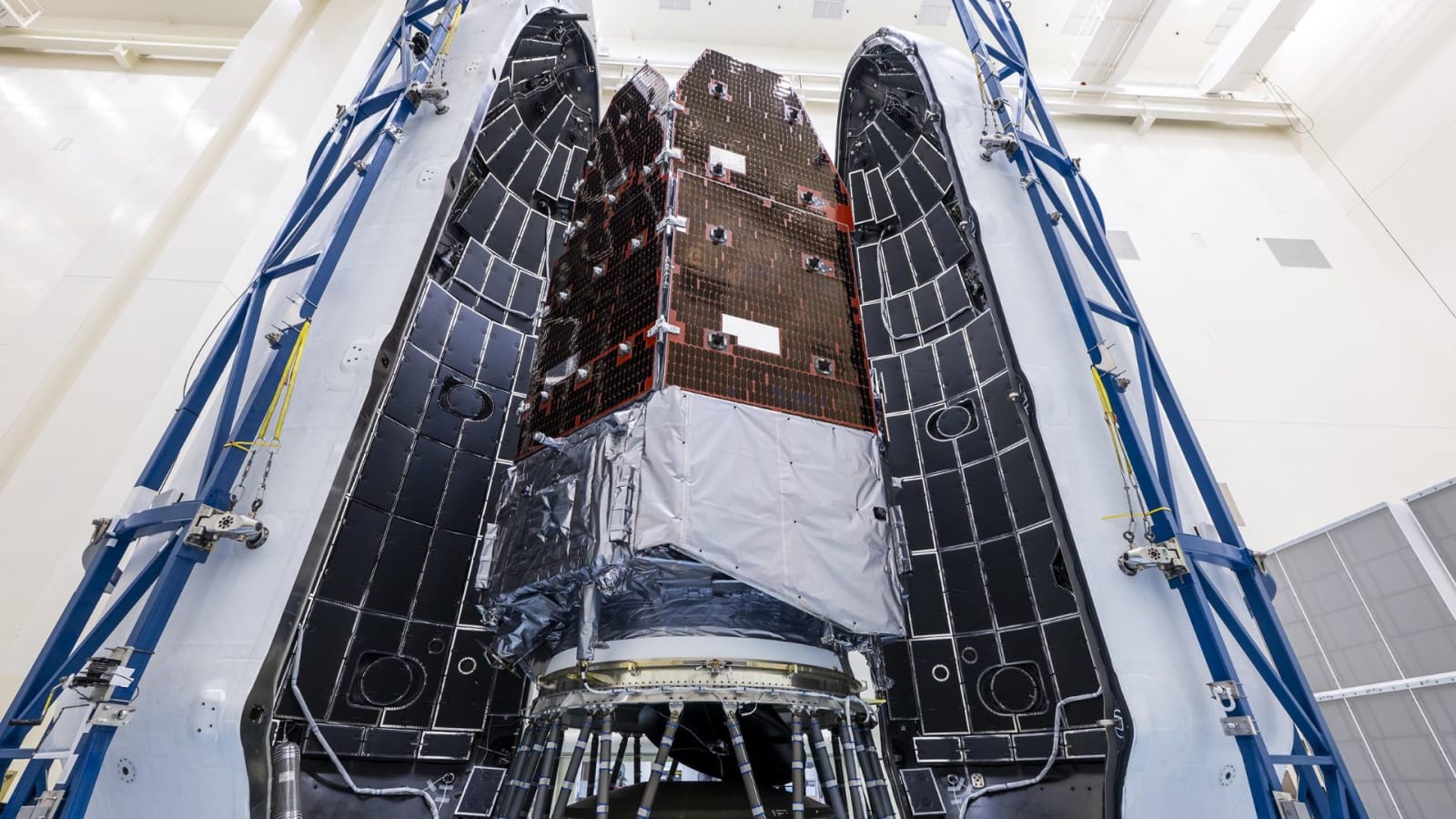
The Roman telescope measures over 42 feet (12.7 meters) long and more than 14 feet (4.4 meters) wide, but it has a primary mirror the same size as the Hubble telescope (2.4 meters/7.9 feet). Roman’s field of view, however, is at least 100 times greater than Hubble's, and it will image 50 times as much sky (from visible light to infrared) as Hubble captured in 30 years. Explaining the objectives of the telescope, NASA said, “Roman is designed to investigate dark energy, the mysterious force accelerating the universe’s expansion. It will also map how galaxies form, cluster, and evolve by tracing the influence of dark matter. In addition, Roman will discover and study planets beyond our solar system with the precision needed to complete a statistical census of planetary systems in our galaxy.”

The live coverage of Roman’s launch will begin at 6:20 am EDT, and you can watch the event on NASA’s official Facebook, Instagram, Twitch, X, Discovery+, Amazon Prime, YouTube, NASA+.
More on Starlust
Who was Nancy Grace Roman—the ‘Mother of Hubble’ NASA’s brand new space telescope is named after?
NASA's Roman Telescope to map dark matter and dark energy more precisely than ever