Where is interstellar comet 3I/ATLAS now: Current visibility and position on October 23
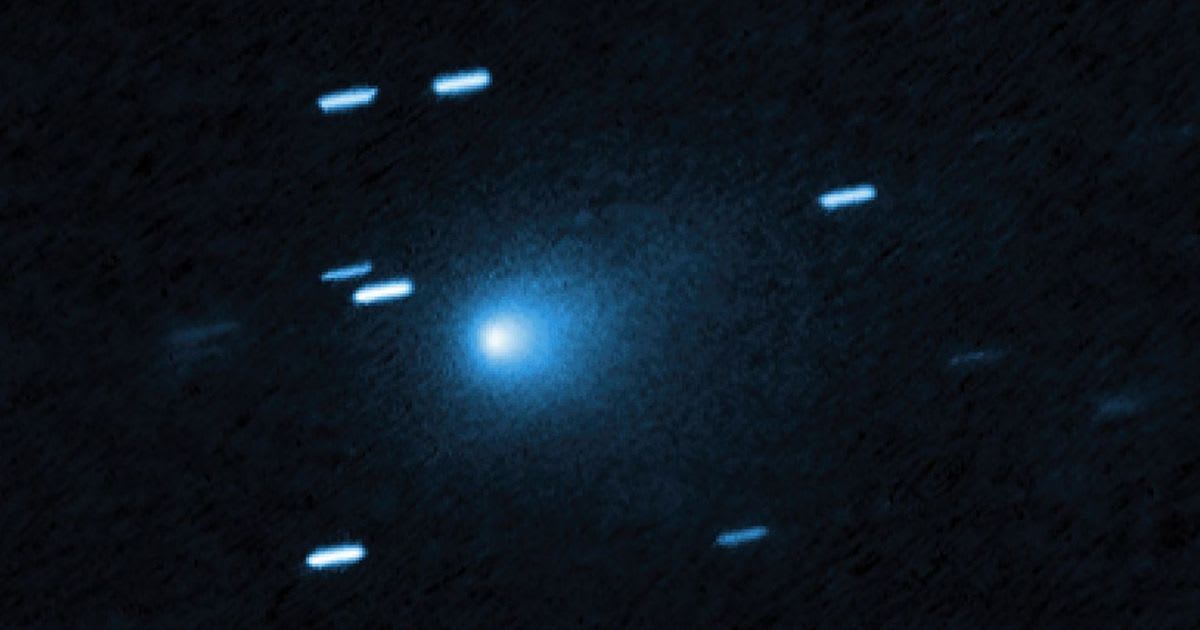
As the interstellar comet 3I/ATLAS navigates the solar system's inner region, it is currently too faint and distant to be detected by the naked eye or even standard binoculars. However, a stunning new observation has confirmed the comet is not entirely hidden, as per Space Weather.
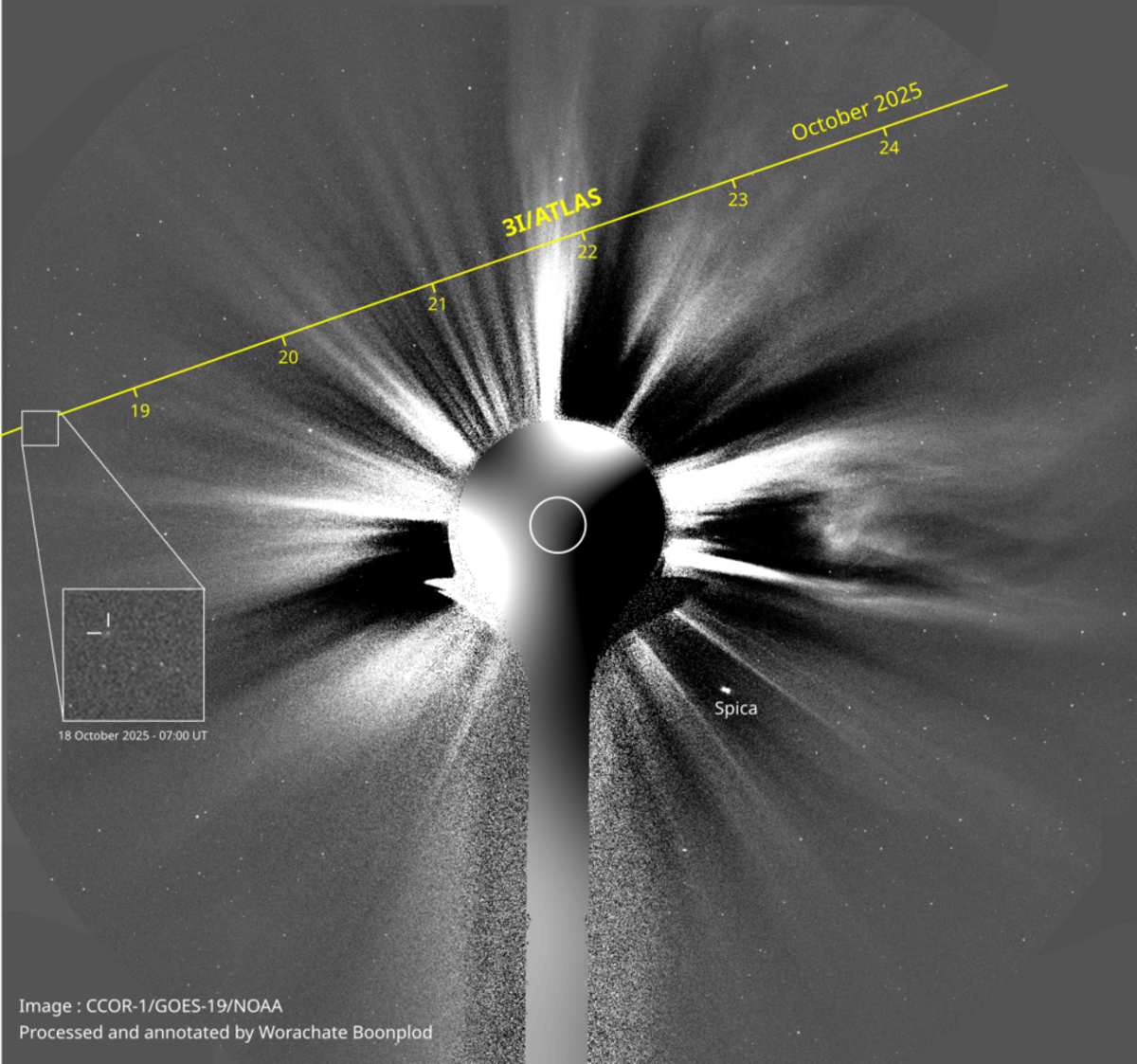
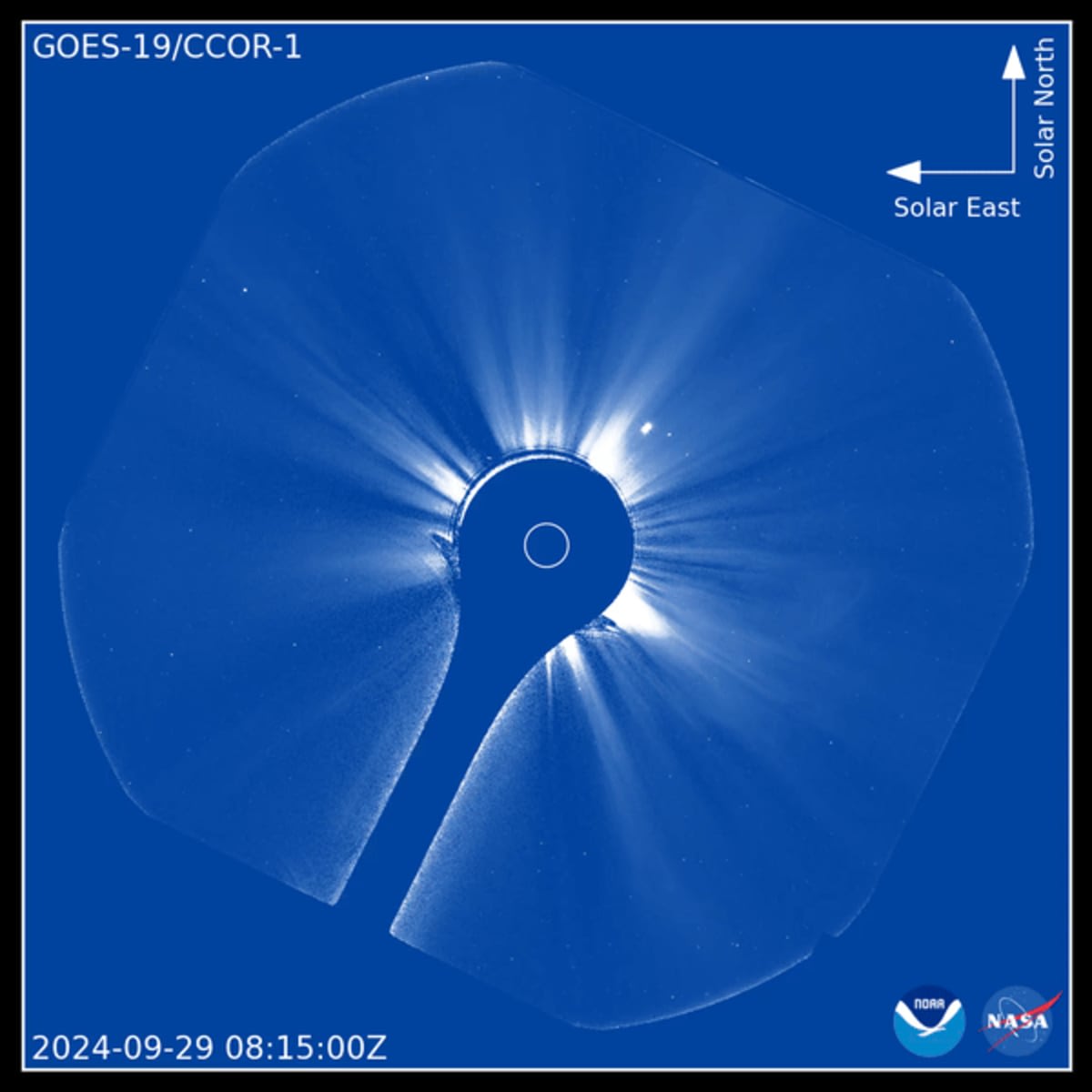
While it was widely anticipated that the object would be lost to terrestrial view as it passed behind the sun this month, Thai amateur astronomer Worachate Boonplod successfully located it in daily imagery. Boonplod utilized data from NOAA's Earth-orbiting CCOR-1 coronagraph, allowing for the continued monitoring of the comet's position and brightness as it approaches perihelion.
As of October 23, the celestial visitor is situated in the constellation of Virgo, positioned 353,938,928.4 kilometers from Earth, as mentioned on Sky Live. Its current celestial coordinates are Right Ascension 13h 43m 43s and Declination 08°02’52”, with an estimated magnitude of 14.79. The comet's current distance from Earth is more precisely measured at 353,935,469.5 kilometers, or just over 2.365 Astronomical Units (AU). Due to this vast separation, the light observed from the interstellar object today actually left the comet 19 minutes and 40.602 seconds ago. Future calculations show the comet's closest pass to Earth will occur on Friday, December 19, 2025, at a distance of 268,898,938 kilometers (1.797478 AU).

The object, formally designated 3I/ATLAS (C/2023 A3), was initially discovered in early July 2025 by the Asteroid Terrestrial-impact Last Alert System (ATLAS) telescope network, a project primarily focused on identifying potential threats to Earth. Its rapid motion along an unbound, escape trajectory immediately confirmed its status as an interstellar visitor, only the third ever confirmed, following ʻOumuamua (2017) and 2I/Borisov (2019). Since its detection, 3I/ATLAS has become the center of a heated scientific debate, fueled by claims that it could be an extraterrestrial probe. Harvard astrophysicist Dr. Avi Loeb notably cited the object's size, trajectory, and chemical signatures as potential indicators of an engineered, rather than natural, origin.

However, new analysis published in the scientific community has since offered a compelling astrogeological explanation that strongly counters the alien hypothesis. The research model suggests that the object, estimated to be roughly seven miles in diameter, is not artificial, but a lithified clastic fragment, essentially a piece of cemented rock from a sedimentary basin on a long-lost exoplanet that may have once supported life.
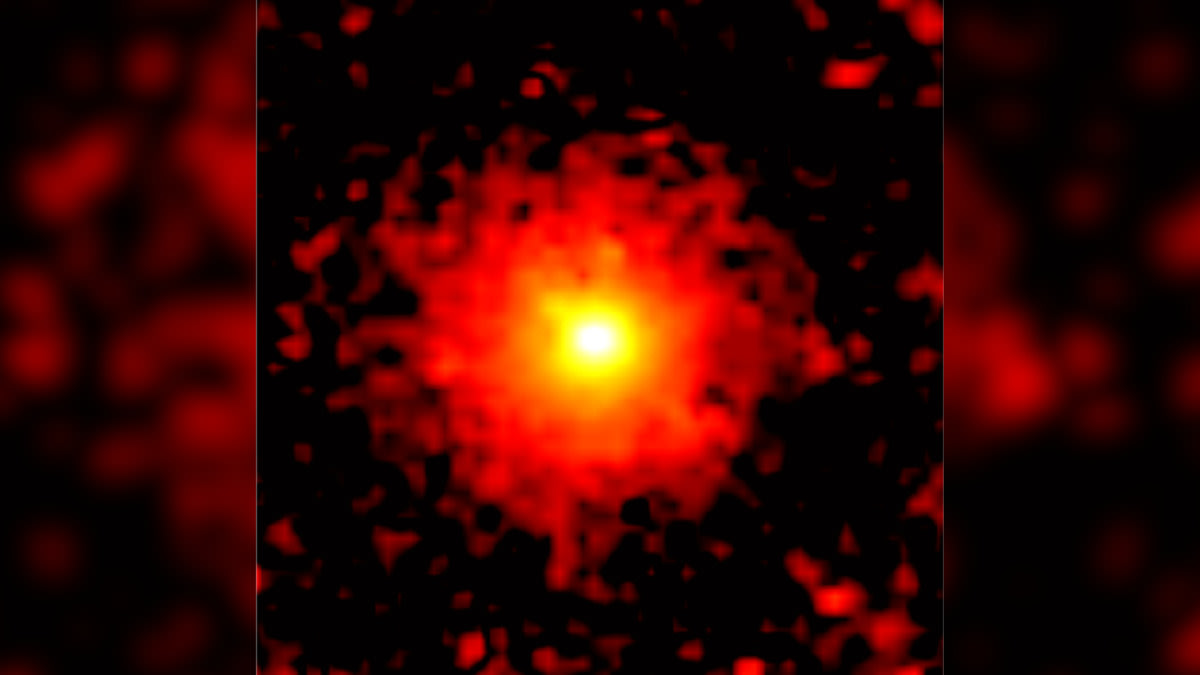
The study posits that the comet's distinct features, including its compact coma and spectral signature, are consistent with the properties of stratified siliciclastic strata (layered, cemented rock), providing a non-intelligent-based explanation for the observed anomalies. These findings suggest 3I/ATLAS is a valuable piece of exoplanetary geology, and the scientific community is now calling for future high-resolution studies to conclusively validate this natural origin. The continued tracking of 3I/ATLAS offers astronomers a unique, fleeting chance to unlock the secrets of geology and planet formation far beyond our solar system.
More on Starlust
Europa Clipper predicted to intercept charged material stream from comet 3I/ATLAS
Keck Observatory detects rare 'anti-solar tail' on interstellar comet 3I/ATLAS
Our third interstellar visitor, comet 3I/ATLAS, has a largely carbon dioxide-infused 'coma