What is a Total Solar Eclipse? How it works, its history and why it still matters today
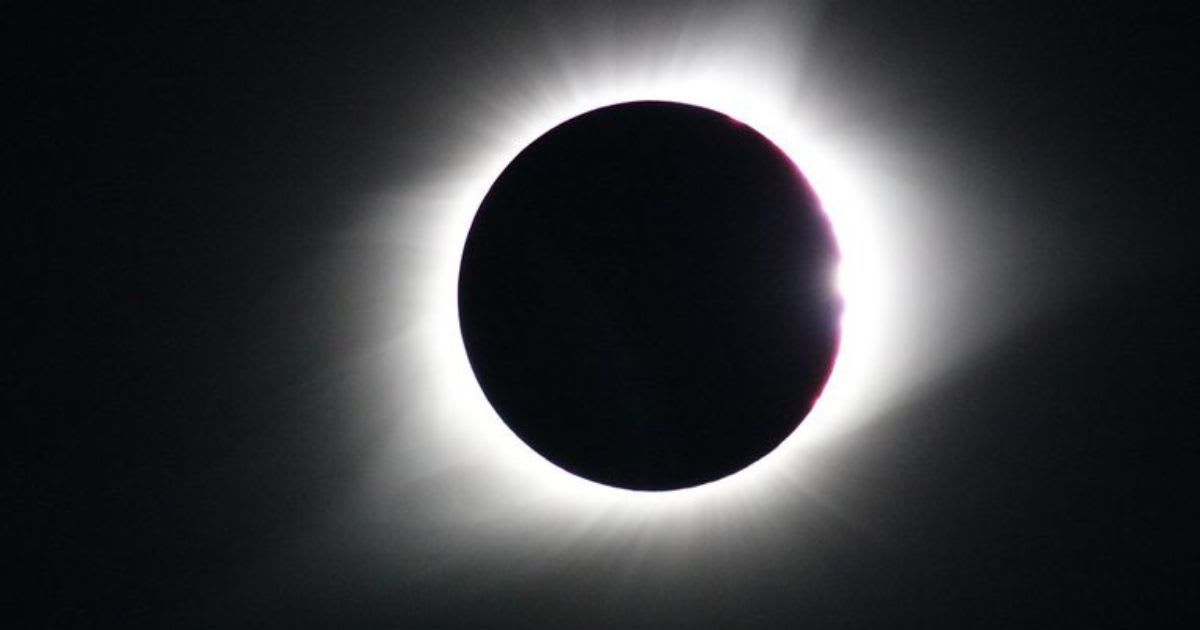
Skywatchers, get ready! The total solar eclipse this year will fall on August 12, 2026. On this day, the Moon will pass directly between the Earth and the Sun, and this will cause the Moon to block the Sun completely for anyone watching it from below. This year, the event will be visible to people from across Greenland, Iceland, northern Russia, the Atlantic Ocean, Spain, and a small corner of Portugal. Other places, such as regions in the U.S. spanning from Alaska to North Carolina, Canada, Africa, and Europe, will be able to witness a partial solar eclipse this day.

So, what exactly happens during a total solar eclipse?
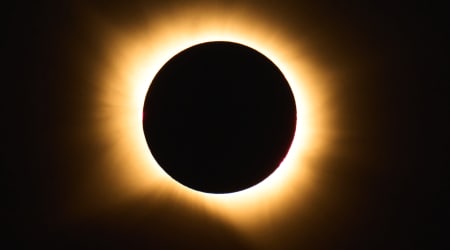
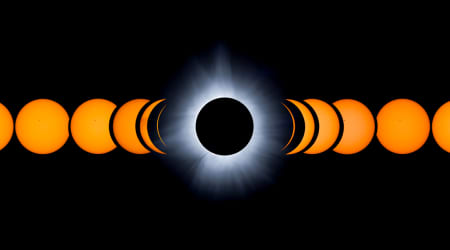
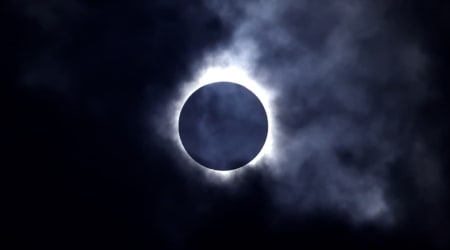
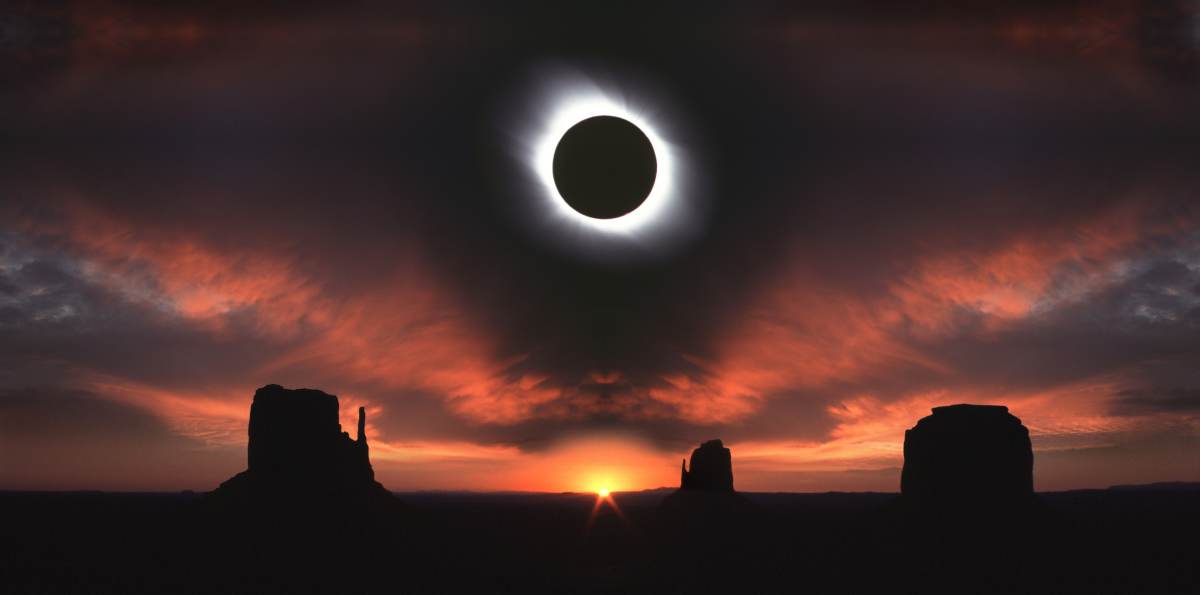
A total solar eclipse only comes around once every 18 months somewhere on Earth, and for the people standing in exactly the right spot, it turns midday into a few minutes of true darkness. This happens because the Moon lines up precisely between the Sun and Earth. Anyone standing inside that shadow sees the Sun fully blocked out, and that’s called totality.
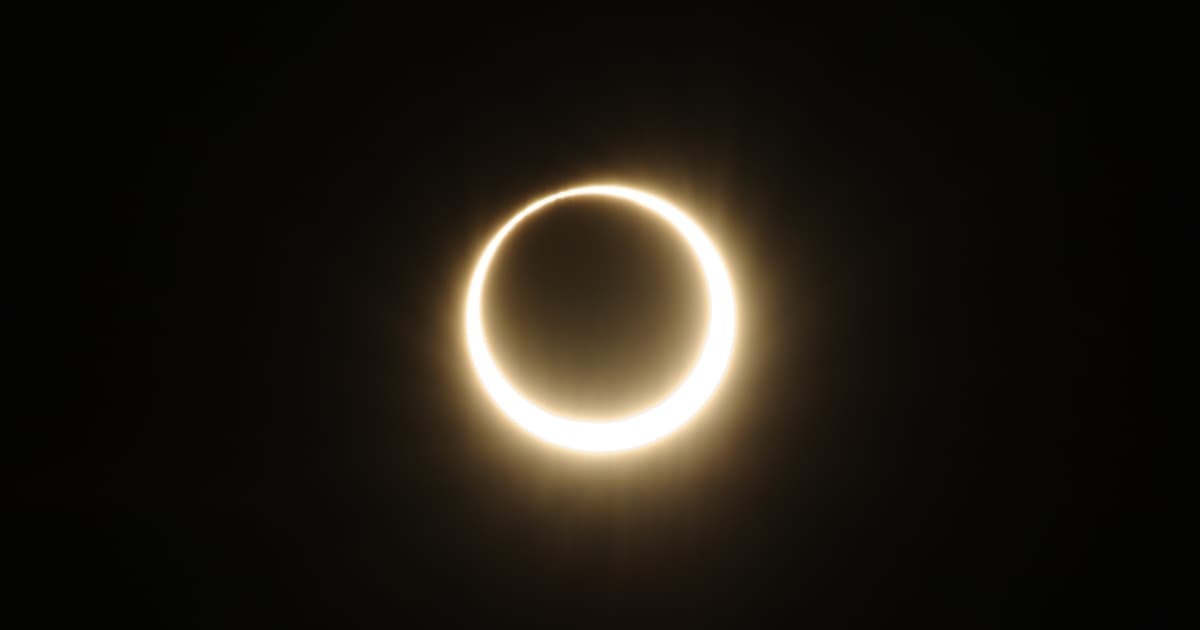
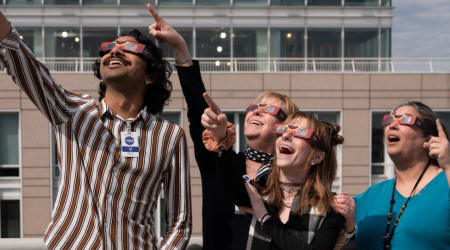
Totality is the only moment during the entire eclipse when it's safe to look directly at the Sun. Every other phase, which is before totality begins and after it ends, requires you to put on your eclipse glasses or a handheld solar viewer, as even a thin sliver of exposed sunlight can damage the eyes. For anyone who doesn't have solar glasses handy, a pinhole projector works too. It lets you watch the eclipse indirectly by projecting the Sun's image onto a surface instead of looking up at it.
History and significance of a total solar eclipse
In some cultures across the world, a solar eclipse is seen as a "bad omen," according to Britannica. One of the oldest known records is believed to be carvings at the Loughcrew Megalithic Monument in Ireland, which date to roughly 3340 B.C.E. On the other side of the world, in Anyang, China, what are believed to be eclipse records were carved onto tortoiseshell fragments called oracle bones around 1200 B.C.E., later studied by astronomers at NASA's Jet Propulsion Laboratory. These artifacts left behind the phrase, “The Sun has been eaten."
In ancient China, people believed a dragon had swallowed the Sun during a solar eclipse. To bring the Sun back, they would then bang drums and make noise. The Inca civilization of South America, which worshiped Inti (the Sun god), saw a solar eclipse as a sign of his anger, and would offer sacrifices and try to figure out what had upset him. Various mythological explanations for the vanishing Sun were also found in cultures across Native America, West Africa, and India.
Why do solar eclipses still matter today?
An eclipse actually ended up proving one of the biggest ideas in modern physics. Albert Einstein's general theory of relativity, published in 1915, asserted that massive objects like the Sun warp the fabric of space and time itself, and bend the path of light along with it. To test this theory, astronomer Arthur Eddington led a team and traveled to the island of Príncipe off West Africa in 1919 to observe an eclipse and check whether starlight passing near the Sun got bent in the way Einstein predicted. With the Moon blocking the Sun's glare, Eddington's team could see that nearby stars appeared shifted from their expected positions, which was exactly the effect Einstein's math suggested.
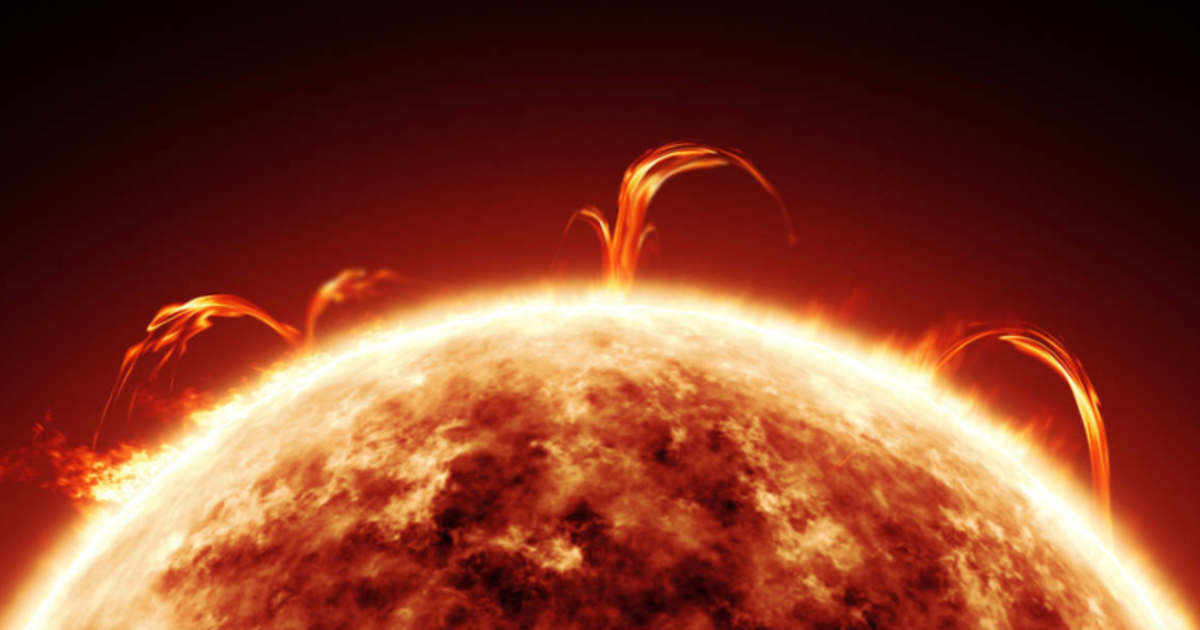
Even today, NASA scientists study the solar eclipse to understand the Sun’s atmosphere and make discoveries about space. As per NASA’s official website, “Today, NASA scientists still study eclipses to make new discoveries about the Sun, Earth, and our space environment. Total solar eclipses are particularly important because they allow scientists to see a part of the Sun’s atmosphere (known as the corona) that’s too faint to see except when the bright light of the Sun is blocked.”