We may have overlooked one of the biggest clues to alien life, says expert
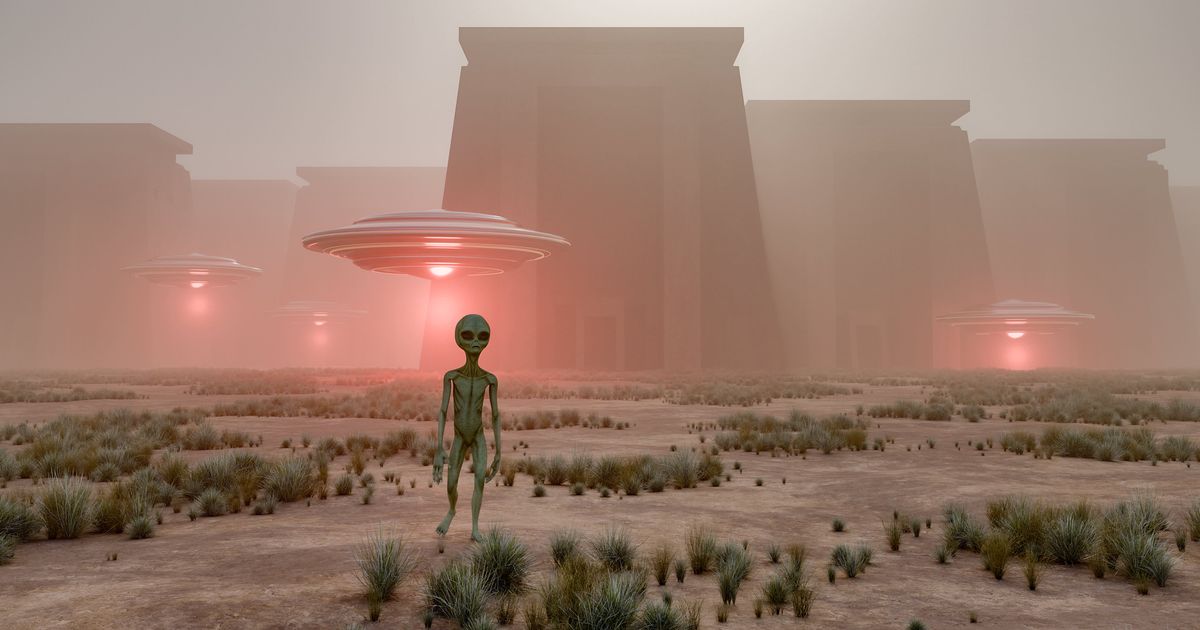
For years, scientists across the world have searched for the signs of life beyond our home planet in two main ways. They have either looked for signs of biology on other worlds, known as biosignatures, or clues to advanced alien technology, known as technosignatures. But now, researchers think that we may be overlooking something important. If these are the only signs we're looking for, we may be missing intelligent life that's more advanced than microbes but doesn't have the kind of technology we'd expect.
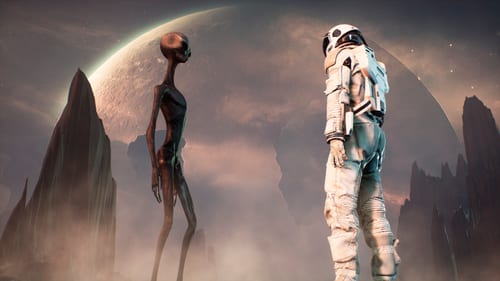
Astrobiologist Julia DeMarines, who has worked on both biosignature and technosignature research, is now working on a new area of study called noosemiotics. The term comes from "nous," which is the ancient Greek concept for the theory of mind. This is built around an idea that anything shaped by a conscious mind carries a signature of intelligence, whether or not it involves circuitry. "We want to figure out if we can detect signatures of intelligence that occur before the invention of radio communication," DeMarines told Space.com. "We're looking at the ways that mind can be imprinted on matter."
The idea actually comes from an assignment she took on while working for a company applying Assembly Theory, a chemistry framework built by scientists Sara Walker and Lee Cronin, to look for complexity thresholds in online data and AI systems. As a thought exercise, DeMarines applied that thinking to 'bread as a technosignature.’ "I know how that sounds," she said, laughing. "I get weird looks when I tell people about it!" DeMarines explained, “Bread doesn't just pop out of a molecular cloud, it requires technology, it requires history, it requires intelligence." In other words, the history of bread reflects the history of human intelligence. “Say that you have samples of bread at different human and hominin archaeological sites throughout time, dating back 14,000 years—the bread would be a signature of intelligence changing over time as the type of bread, its ingredients, and how it is made also change,” she added.
What does this mean for the search for aliens?
The implications reach well beyond archaeology. Long before humans invented radio, farming was already changing the planet's atmosphere. Roughly three-quarters of all human-generated nitrogen emissions were released before industrialization even began, largely from farming practices like fertilizer use and microbes in the soil. That disruption to Earth's nitrogen cycle started thousands of years ago.
Humans have only been broadcasting radio signals for about 100 years, and that's usually treated as the moment Earth became "visible" to the rest of the universe as an intelligent civilization. But if disruptions to the nitrogen cycle are also detectable from afar, then alien observers watching Earth could, in theory, have been privy to the existence of intelligent life on Earth for longer than we expected, simply by noticing the chemical fingerprint agriculture leaves behind.
The framework also makes room for intelligence that never becomes technological, like dolphins, which show remarkable social sophistication but lack the physical means to build tools. DeMarines hasn't worked out how to detect noosignatures on other worlds yet. For now, she's focused on defining the metrics and thresholds. Her research is detailed in a paper published on the open-source repository arXiv. If this holds up, it could change how we look for extraterrestrial life. So, instead of looking for only radio signals, we can start looking for signs that hint at intelligent life, such as disrupted atmospheric chemistry that even non-technological civilizations might trigger. It also hints that intelligent life might be more common than we think, but simply overlooked because we've been searching for the wrong kind of evidence all along.
More on Starlust
Astronomer reveals one of the biggest misconceptions about alien life
Size matters: A planet needs to be at least as big as Mars for alien life to survive on it