Water vapor plumes on Europa? New study questions earlier 'evidence' gleaned from Hubble data
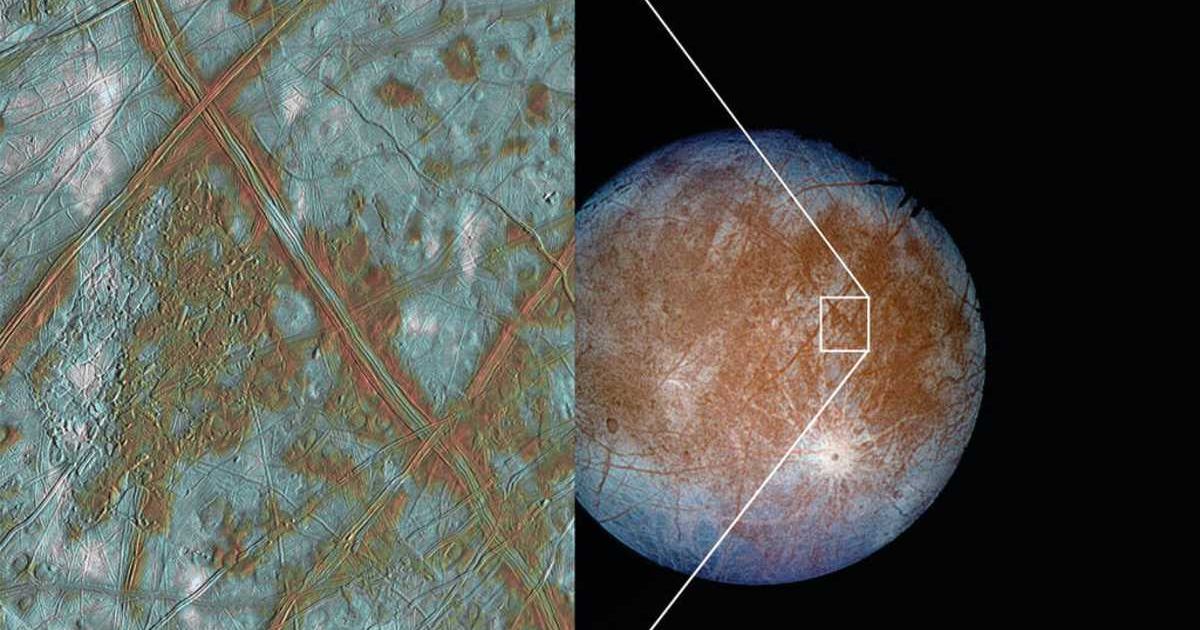
Scientists at the Southwest Research Institute (SwRI) have published new research that disputes previous claims of Jupiter's moon Europa actively releasing water vapor plumes into space. Researchers, in a 2012 paper, had interpreted Hubble Space Telescope (HST) data and hypothesized that Europa's subsurface ocean was venting water through the moon's crust. However, a recent re-analysis of 14 years of Hubble data suggests otherwise, showing that the evidence of water vapor plumes is not as strong as the researchers believed earlier.
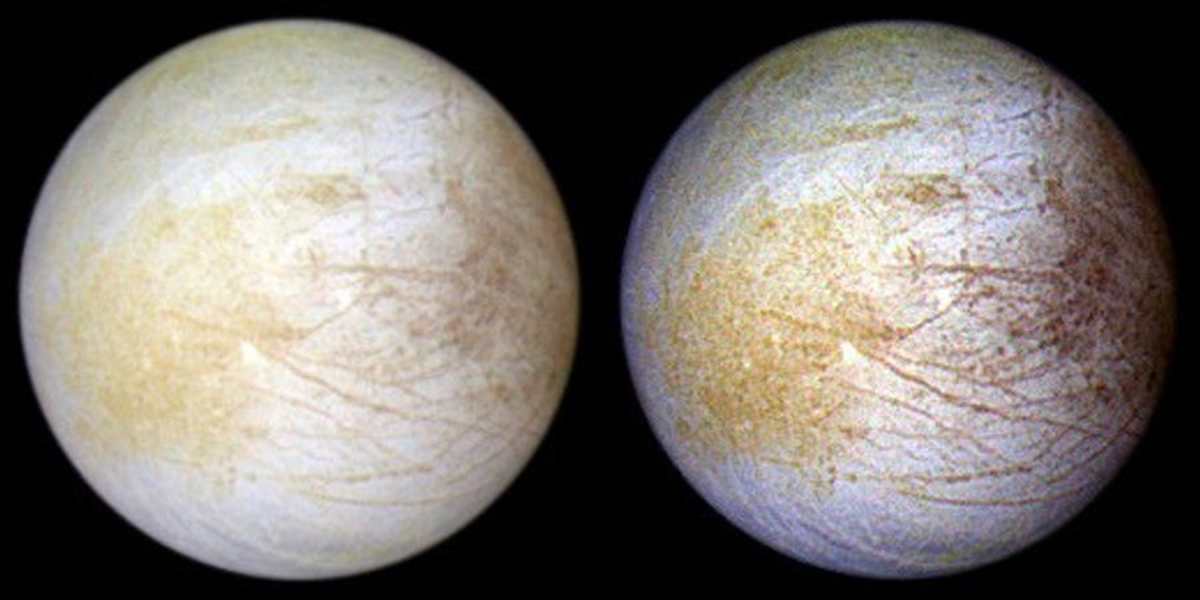
In 2012 and 2014, Hubble's observations were used to examine Europa's Lyman-alpha emissions, a specific wavelength of ultraviolet light emitted and scattered by hydrogen atoms. At the time, the researchers believed the data pointed to strong evidence of intermittent water vapor plumes erupting through cracks in Europa's crust. However, the new analysis raises questions about the earlier interpretation, revealing uncertainties about how Jupiter's moon was positioned within the HST's field of view at the time. As per SwRI scientist Dr. Kurt Retherford, a major challenge was accurately pinpointing Europa's location within the Hubble images: even a tiny shift of one or two pixels relative to the image's center could drastically alter how the data was interpreted.
Hubble detected water vapor in the atmosphere of Jupiter’s icy moon Europa! 💧
— Hubble (@NASAHubble) October 14, 2021
Previously, Hubble saw 60-mile-high plumes of water vapor on Europa. This new result shows water vapor over a larger area, suggesting a long-term water vapor atmosphere.
More: https://t.co/dpnrgAVHIA pic.twitter.com/RMkMOutHQQ
Having reanalyzed the same data, Dr. Retherford and his colleagues recently published an updated study in the journal Astronomy and Astrophysics. The new study focused on refining the analysis of Europa's Lyman-alpha emissions and found a notable difference in the statistical confidence about the existence of Europa's water vapor plumes. "The evidence for water vapor plumes on Europa isn't as strong as we first understood it," said Dr. Retherford, one of the authors from SwRI who had contributed to the original 2014 paper. "One of the difficulties in interpreting the data back then was determining where to place Europa within its context," Retherford added, commenting on the earlier analysis. The new study substantially lowered the confidence reported earlier: "Our reanalysis took our original 99.9% confidence in the plumes' existence and reduced it to less than 90% confidence," said Dr. Lorenz Roth of the Royal Technical Institute, Sweden, and the lead author of the study. The possibility of Europa venting water through its surface, however, has not been entirely ruled out yet.
Commenting on the new study, Retherford emphasized, "The description of the phenomena just doesn't hold up the same way anymore. The new data made us reconsider the strength of the previous paper's conclusion regarding water vapor plumes. However, the recent analysis also provides improved information about the neutral hydrogen atom component of Europa's escaping atmosphere, originating from its water ice surface." Scientists believe a vast saltwater ocean lies beneath Europa's thick ice shell, and if plumes do exist, they would offer an opportunity to sample the moon's ocean without the need to drill through miles of ice. NASA's upcoming Europa Clipper mission, slated to arrive in the Jupiter system in 2030, is equipped to observe Europa in unprecedented detail and may finally solve the mystery of whether the moon truly vents its ocean into space.
More on Starlust
New study shows how Jupiter's moon Europa gets life-supporting nutrients for its ocean
Jupiter’s moon Europa may lack geological spark needed for life, new study finds