Venus is about to disappear from the evening sky soon—spot it in September while you still can
As Venus sinks deeper with each passing night, here's when you can view it in the evening sky in the coming weeks.
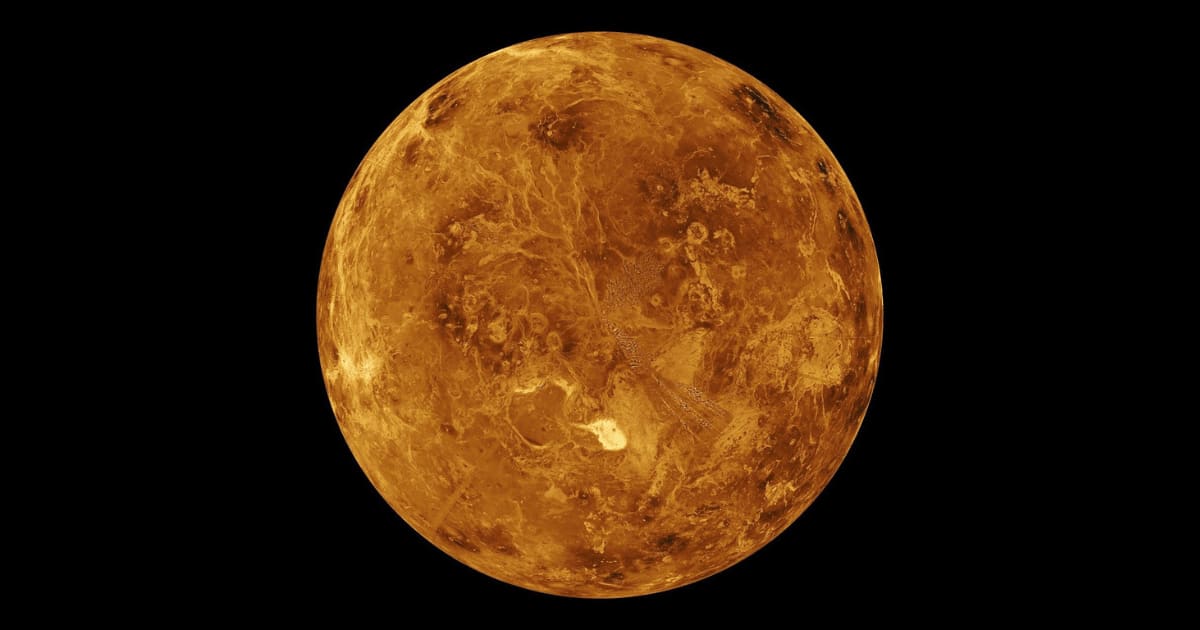
The northern hemisphere of Venus is displayed in this global view of the planet created with data from NASA's Magellan spacecraft. (Cover Image Source: NASA/JPL-Caltech; Resized by Starlust Staff)

Venus has been the post-sunset show-stealer since late March this year, enthralling skywatchers as the 'Evening Star'. However, this evening show is gradually nearing its end. Venus is sinking with each passing night, and by the end of the first week of October, it is expected to almost disappear from the evening sky. So make sure you catch a glimpse of the planet at least once before then.
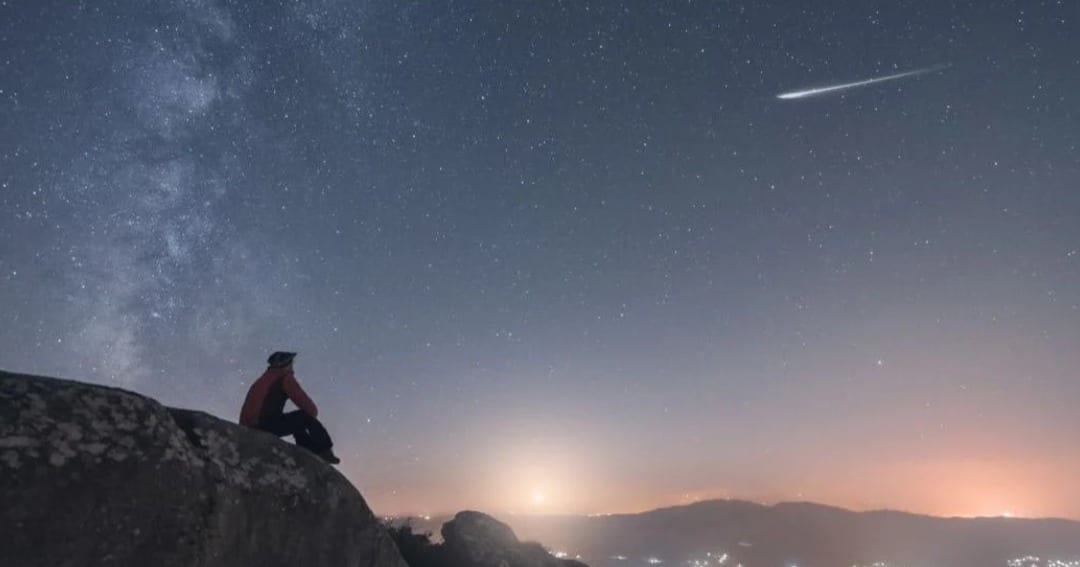
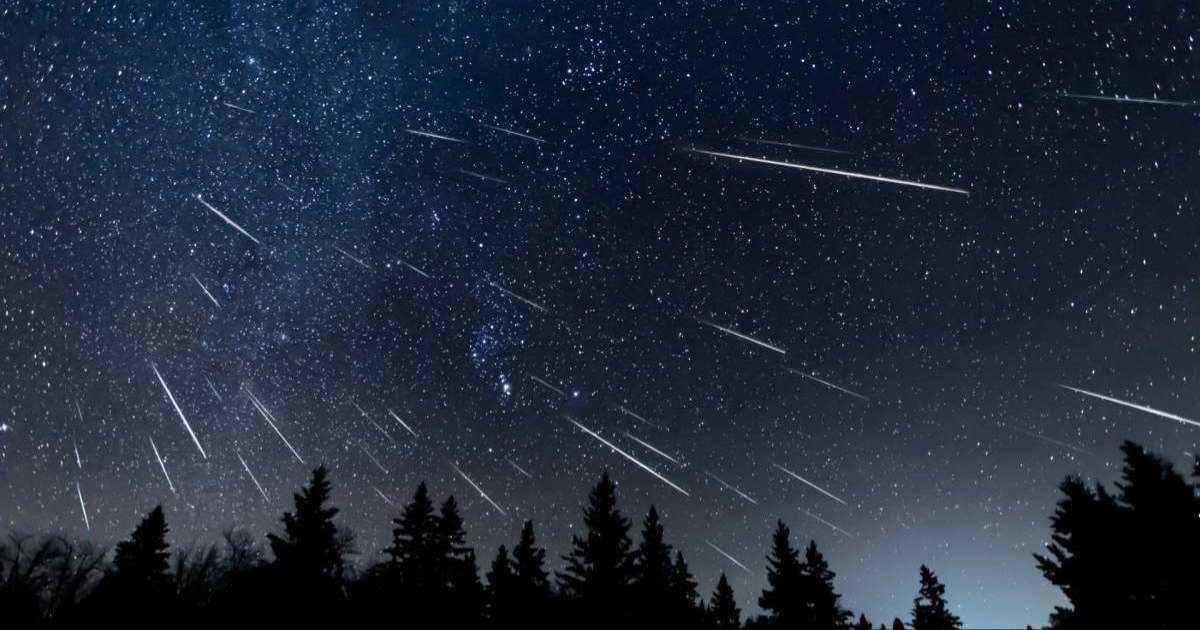
THE COTSWOLDS, UNITED KINGDOM: Multitude of stars and a shooting star in night sky with Venus at its brightest stage this year in prominent view over southern England, United Kingdom.  (Photo by Tim Graham/Getty Images)
Venus at its brightest stage in 2020 shines over southern England, United Kingdom. (Image Source: Tim Graham/Getty Images)

The narrowing crescent view of Venus

When the part of Venus illuminated by the Sun moves away from the Earth, Venus' crescent thins down and elongates, taking the shape of a brilliantly lit arc. You can catch a glimpse of this delicate arc in the coming weeks using a pair of binoculars or a telescope, with the thin crescent appearing low above the southwestern horizon. However, the image can be blurred due to Venus' low altitude.
CHONGQING, CHINA - AUGUST 14: Jupiter (top) and Venus (bottom) are seen shining brightly in the eastern sky before sunrise on August 14, 2025, in Chongqing, China. The two planets appeared close together in a celestial event visible to the naked eye, with scattered clouds adding depth to the early morning scene. (Photo by Cheng Xin/Getty Images)
Jupiter (top) and Venus (bottom) are seen shining brightly in the eastern sky before sunrise on August 14, 2025, in Chongqing, China. (Image Source: Cheng Xin/Getty Images)

Important dates to view Venus this September

Although Venus is sinking lower as September progresses, the second half of the month will be a good time period to spot the planet, according to Space.com.

September 7, 2026: While it won't be sticking around till 11 pm anymore as it did in June, it's still expected to linger for around 1¼ hours after sunset tonight.

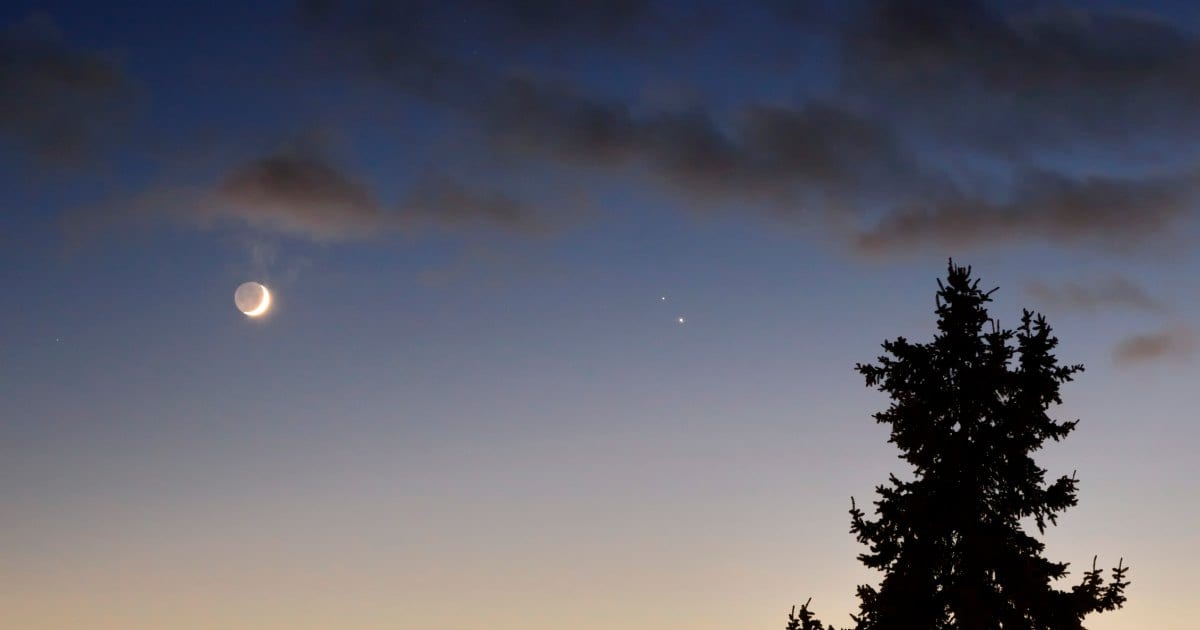
September 14, 2026: Look for Venus in the west-southwest direction about 30 to 45 minutes following sunset. You'll also get to see a Venus-Moon conjunction on the day, with a slim waxing crescent Moon appearing just around 5½ to the left of the Evening Star.
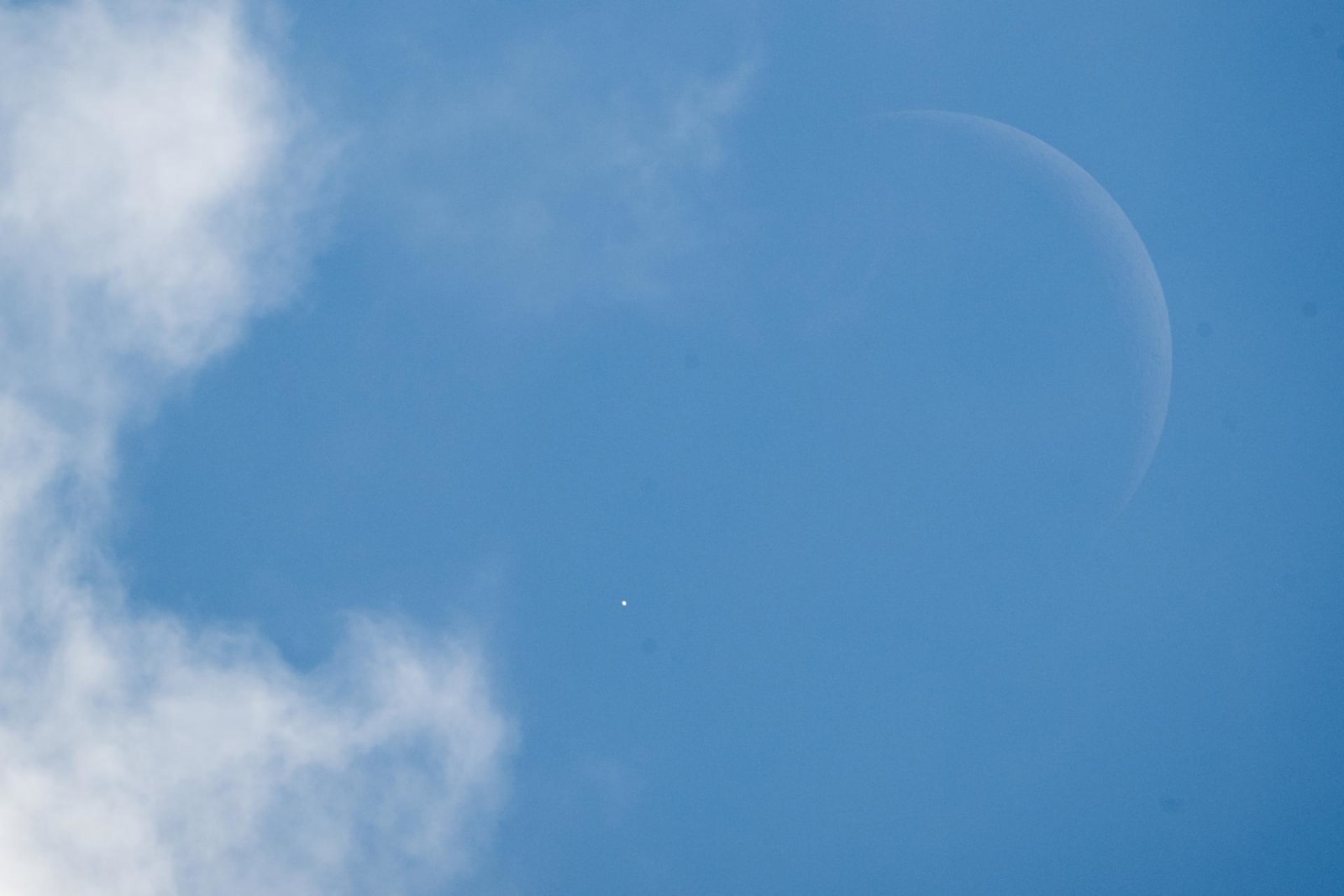
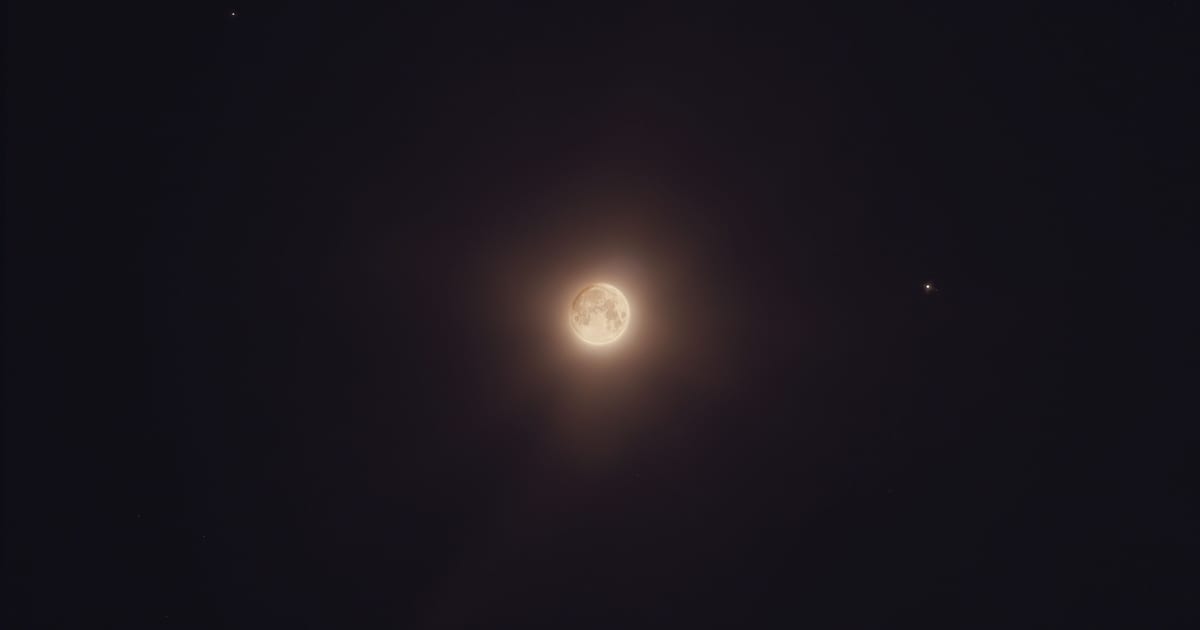
Venus is seen as it disappears behind the Moon at the start of the occultation on June 17, 2026, from the Mary W. Jackson NASA Headquarters building in Washington
Venus is seen as it disappears behind the Moon at the start of the occultation on June 17, 2026, from the Mary W. Jackson NASA Headquarters building in Washington. (Image Source: NASA/Joel Kowsky)

September 18, 2026: Venus attains greatest brilliancy, glowing brightly at a magnitude of -4.8 near the horizon. This phenomenon of Venus sinking lower into the sunset and yet attaining a remarkable level of brightness offers an interesting contrast. By the time September comes to an end, Venus' time in the evening sky will have come down to just around 35 minutes. To track when Venus will be rising and setting over your location, you can refer to Time and Date.

Watch out as Venus enters the Morning Star phase soon

Venus is currently marching towards the point of inferior conjunction, when it will pass between Earth and the Sun, thereby undergoing a transition from being an Evening Star to a 'Morning Star'. This happens once about every 19 months (1.6 years). This year, the planet will arrive at inferior conjunction on October 24, when it passes around 6 degrees south of the Sun as a slim crescent during the daytime. At this point, skywatchers would find it difficult to view the planet either during the mornings or evenings. It's also not wise to look up at the Sun trying to look for Venus in the morning.
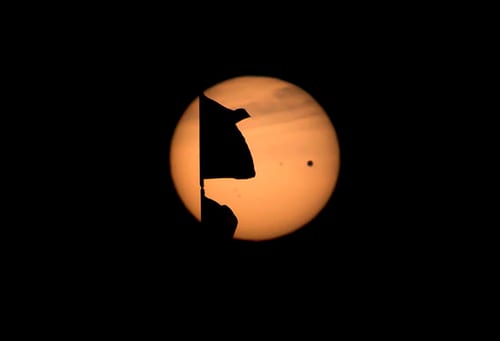
The transit of Venus over the skies of Santa Monica beach. The little black dot in the upper right hand of the sun is the planet Venus beginning it's transit across the sun. (Photo by Ted Soqui/Corbis via Getty Images)
The transit of Venus over the skies of Santa Monica Beach. The little black dot in the upper right hand of the Sun is the planet Venus beginning its transit across the Sun. (Image Source: Ted Soqui/Corbis via Getty Images)

However, Venus' brilliance cannot be hidden for long, as it will make an appearance again in November before dawn. As the winter sets in, you will be able to see it high in the eastern sky as a 'Christmas star' coming into view around two hours prior to daybreak and four hours before the Sun.

More on Starlust

From September 14-20, the Moon can help you find the Milky Way center: Here's how

September Full Moon 2026: How and when to watch this year's Harvest Moon
MORE STORIES

The geomagnetic storm is understood to be a result of an C9-class solar flare that hurled a coronal mass ejection towards Earth.
4 hours ago
Comet McNaught, which showed 2 dramatic flare-ups this summer, can fade out as it travels farther from the Sun.
6 hours ago
Let's have a look at timings of upcoming total lunar eclipses and their visibility across the U.S.
2 days ago
Conditions must be ideal, with dark skies, for one to spot the galactic center.
2 days ago
Tiangong will make several bright evening passes over the eastern U.S. over the next week.
3 days ago
Here are reasons for why you should definitely mark this annual event in your calendar.
4 days ago
The Moon will hide Jupiter from view on September 8 in a rare skywatching event. Check city-wise timings here.
4 days ago
This year’s Harvest Moon will peak on Sept. 26. Here's how you can catch its glow from the U.S.
6 days ago
Memorable skywatching events start right from the first day, and the next few weeks will bring meteors, a Full Moon and multiple celestial meet-ups to the night sky.
7 days ago
Missed the August lunar eclipse? The next one arrives in February 2027.
Aug 28, 2026